Southeast Asian countries that relied on Gulf crude are diversifying suppliers after two months of disruptions tied to the Iran conflict. Thailand and Vietnam are sourcing oil from Brunei, Libya and the United States as trade routes shift. While regional exports—led by the tech sector—have remained resilient, analysts warn U.S. production and inventories may struggle to sustain higher export volumes.
Oil Crisis Reshapes Global Flows — Southeast Asia Diversifies Suppliers After Gulf Disruptions
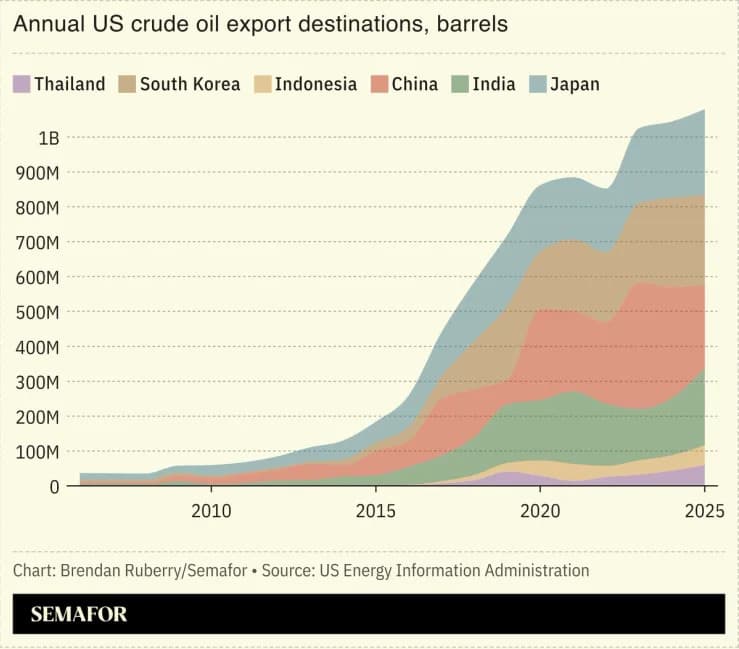
Chart showing annual US crude oil export destinations
After two months of supply disruptions linked to the Iran conflict, several Southeast Asian countries that long relied on Gulf crude are broadening their supplier mix. Data show buyers such as Thailand and Vietnam are sourcing barrels from Brunei, Libya and the United States as trade routes and market dynamics shift.
Regional Impact: The disruptions have raised concerns about energy security across Southeast Asia. Governments and trading firms are actively seeking alternative sources and cargoes to reduce dependence on traditional Gulf suppliers and to keep refineries and transport sectors running smoothly.
Economic Resilience: So far, the region’s economies have been resilient. Exports—particularly from the technology sector—have largely held up despite the turmoil in energy markets, helping cushion broader economic effects.
U.S. Role And Risks: The United States has once again become the world’s top crude exporter, filling gaps in global supply. However, analysts warn that U.S. production may not be able to sustain elevated export levels indefinitely and that domestic inventories could be drawn down too quickly if disruptions persist.
What This Means Going Forward: The shifts highlight how geopolitical tensions can quickly reshape global energy flows. Policymakers and industry players in Southeast Asia are likely to continue diversifying suppliers, building strategic stocks and exploring longer-term measures to improve energy resilience.
Data and reporting indicate a rapidly changing market: buyers are already adapting their sourcing, but questions remain about how long alternative flows can be sustained without broader impacts on prices and inventories.
Help us improve.