Saudi Arabia's export options have narrowed after attacks closed its 1,200 km East‑West pipeline and Iran‑aligned groups tightened control of key sea routes. The kingdom has shifted shipments through Yanbu, the Suez Canal and Egypt's Sumed pipeline, but Houthi strikes and a maritime blockade have severely limited Red Sea passages. Analysts warn the disruptions are pushing up global fuel prices and complicating repairs, while Saudi production has reportedly fallen to its lowest level since 1990.
Saudi Arabia's Oil Lifelines Strained: East‑West Pipeline Closed and Red Sea Routes Choked
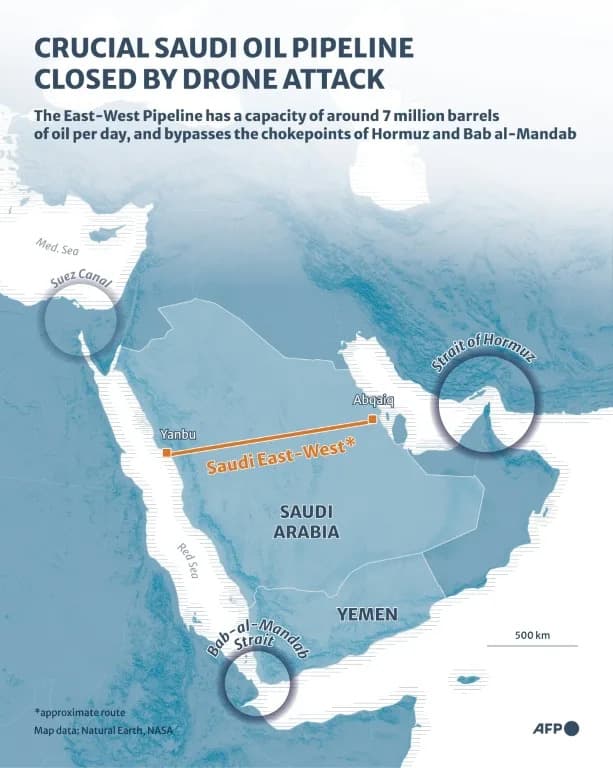
Infographic with map showing route of Saudi Arabia's East-West pipeline, which could transport up to 7 million barrels of oil per day and bypass the chokepoints of Bab-al-Mandab and the Strait of Hormuz, before it was closed by a drone attack
Saudi Arabia is facing a narrowing set of export options after a series of attacks forced the shutdown of its 1,200‑kilometre East‑West pipeline and Iran‑aligned forces tightened control over the kingdom's two main maritime corridors.
Pipeline Shutdown
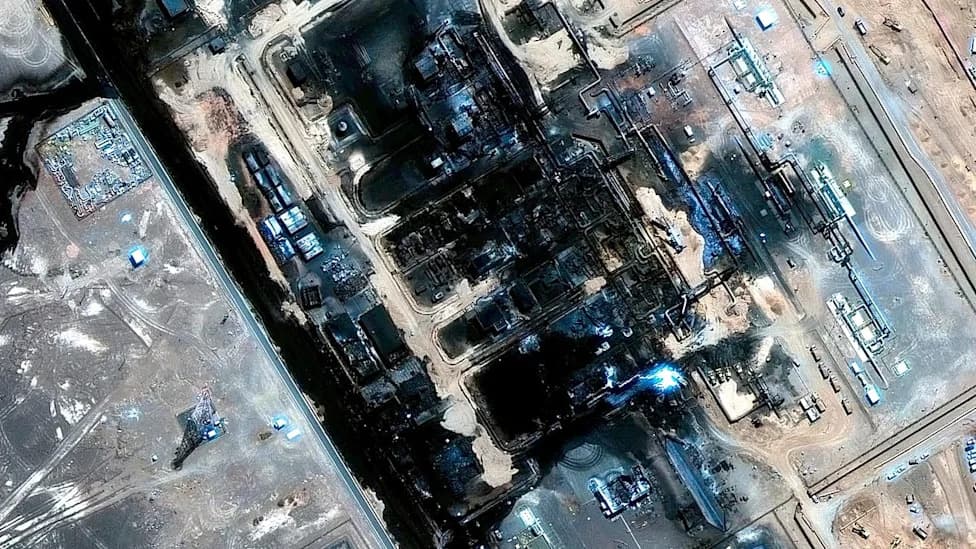
The East‑West pipeline, which runs roughly 1,200 km (700 miles) from Saudi Arabia's eastern oilfields to the Yanbu terminal on the Red Sea, was taken offline after strikes on energy infrastructure traced to groups operating from Iraq. Riyadh had grown increasingly reliant on the route after disruptions in the Strait of Hormuz pushed more cargo westward.
Maritime Choke Points
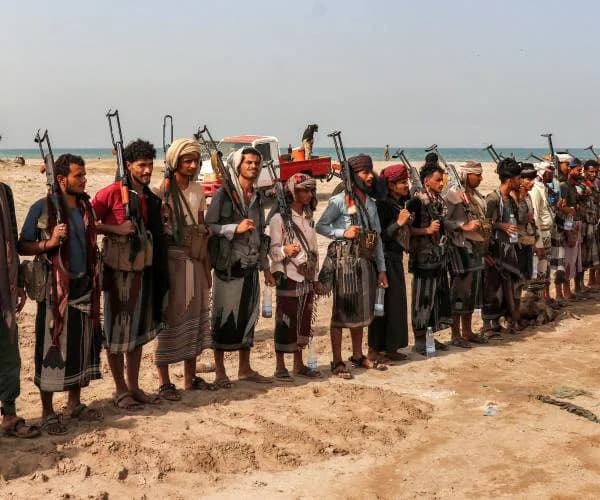
That Red Sea outlet has been under growing pressure from Houthi attacks emanating from Yemen, including a self‑declared maritime blockade that has targeted vessels servicing Saudi ports. As a result, transits through the Bab al‑Mandab Strait dropped close to zero by August, according to market tracker Kpler.
To compensate, Saudi shipments have been rerouted through the Suez Canal and Egypt's Sumed pipeline to the Mediterranean. Kpler data show Saudi crude transits through Suez rose to roughly 500,000 barrels per day (bpd) at the end of July after being nearly negligible the month before. In theory, combined Suez/Sumed flows could bypass up to about 3.4 million bpd, though that scale has not been tested in practice.
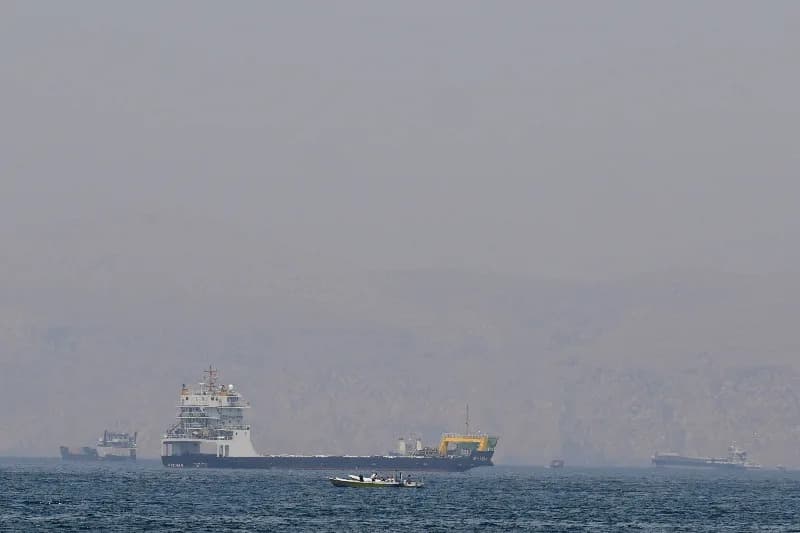
Some cargoes have continued to use the Strait of Hormuz despite the risks, where incidents and attacks have made transits volatile. Verisk Maplecroft reports that daily volumes via Hormuz remain roughly half of their pre‑war levels, with vessels sometimes switching off tracking transponders and relying on ship‑to‑ship transfers to move crude out of the Gulf.
Market Effects
The squeeze on Saudi export routes has already filtered into markets. Brent crude jumped toward $110 per barrel after the pipeline shutdown, and average diesel prices in the United States reached a record near $6.27 per gallon, with the Ukraine war also contributing to elevated diesel demand and prices.
"The East‑West pipeline is a critical energy artery for Saudi Arabia, especially within the current geopolitical context," said Robert Mogielnicki of the Arab Gulf States Institute, noting how central the link became after Hormuz disruptions.
Analysts warn that damaged infrastructure and restricted maritime access are creating a feedback loop: attacks reduce exports now and complicate the repairs needed to restore capacity later. Repairs to the pipeline could be delayed by wider conflict‑related disruptions to maritime transport and delayed delivery of specialized equipment, industry risk assessors say.
Outlook
Saudi Arabia has adapted by increasing use of Suez and Sumed but faces longer voyage times for Asian shipments and untested throughput at large scale. With production reportedly at its lowest level since 1990 and regional tensions continuing, observers say global fuel markets will remain sensitive to further disruptions.
Sources cited in reporting include Kpler, Verisk Maplecroft, the Arab Gulf States Institute and market commentators.
Help us improve.