Senegal's President Bassirou Diomaye Faye warned that the ruling party could collapse unless its supporters change direction, while saying Prime Minister Ousmane Sonko will remain in his role as long as he performs satisfactorily. The remarks, made on state television, come amid signs of tension between the two leaders and growing economic pressure after the IMF froze a $1.8bn programme in 2024. Faye also cautioned that higher global oil prices linked to the Iran war — from an assumed $64.5 to around $119 per barrel — are forcing the government to divert investment funds to fuel purchases, slowing growth and delaying projects.
Senegal's Faye Warns Ruling Party Could 'Collapse' — Keeps PM Sonko In Place For Now
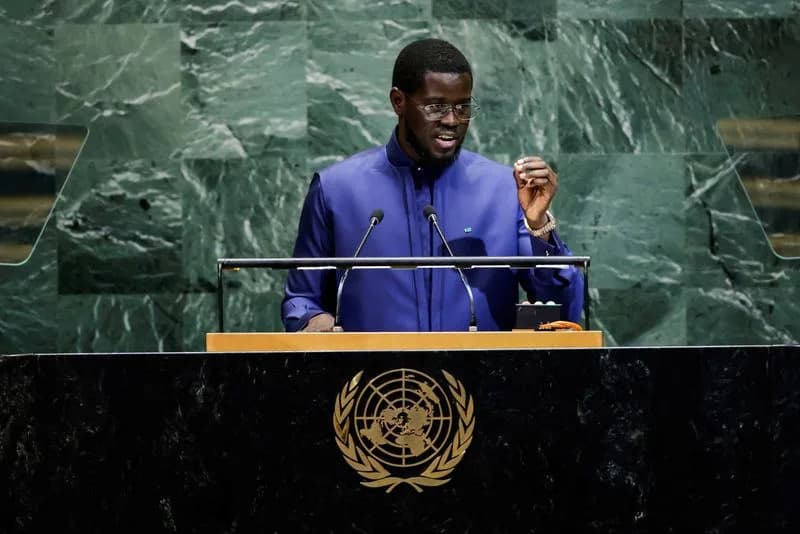
FILE PHOTO: Senegal's President Bassirou Diomaye Faye addresses the 80th United Nations General Assembly at U.N. headquarters in New York, U.S., September 24, 2025. REUTERS/Eduardo Munoz/File Photo
Senegalese President Bassirou Diomaye Faye warned on May 4 that the ruling coalition risks sliding toward collapse unless its supporters change course, but said Prime Minister Ousmane Sonko will remain in office as long as he continues to perform satisfactorily.
Political Tensions Rise
Faye made the comments on state television amid growing speculation that his political alliance with Sonko is strained. Sonko, a former opposition leader who was barred from contesting the 2024 presidential election after a legal conviction, was the coalition's original figurehead. When he could not run, the relatively unknown Faye — a longtime ally and member of the Pastef party — replaced him as the presidential candidate and subsequently appointed Sonko prime minister.
Signs of friction have emerged since then. In March, Sonko said he would consider withdrawing Pastef from the government and returning to opposition if Faye departed from the party's political vision. Faye pushed back but emphasised his prerogative to appoint or dismiss ministers.
'If Pastef’s supporters do not change course, the party risks collapsing,' Faye said. 'As long as (Sonko) remains prime minister, it's because he is doing his job properly, and I am satisfied with that. However, the day I am no longer satisfied, I will put Senegal's interests first.'
Economic Headwinds: Debt, IMF, and Rising Oil Costs
Senegal is also grappling with economic pressures that complicate the political landscape. The International Monetary Fund froze a $1.8 billion programme for Senegal in 2024 after authorities uncovered previously misreported debts from the prior administration. Negotiations on a replacement programme have shown limited visible progress.
Faye told viewers that Senegal's economy was managing without IMF support but warned that the wider fallout from the war in Iran — including a sharp rise in global oil prices — could dampen growth. The government had based growth projections on an oil price of $64.5 per barrel; when prices rose toward $119 per barrel, Faye said, funds originally earmarked for investment were redirected to cover fuel imports, delaying planned projects.
What’s At Stake
The comments underscore two simultaneous pressures on Faye's administration: an emerging rift within the ruling coalition and external economic shocks that constrain policy choices. How the president and prime minister manage the divide within Pastef and the country's fiscal challenges will shape Senegal's political and economic stability in the coming months.
Source: Reuters reporting by Diadie Ba and Thiam Ndiaga; Writing by Robbie Corey-Boulet; Editing by Toby Chopra.
Help us improve.