Climate groups warn that extending the operating lives of South Africa’s coal-fired power plants could cause up to 32,000 avoidable deaths between 2026 and 2050 and severe harms to children, including 41,000 pre-term births and 17,000 new asthma cases. Gauteng — home to Pretoria and Johannesburg — is projected to carry the biggest health burden due to cross-border pollution. The report also estimates an economic cost of about 721 billion rand (~$38 billion) and calls for accelerated retirements and just transition measures for affected workers and communities.
Report: Delaying South Africa’s Coal Phase-Out Could Trigger Up To 32,000 Premature Deaths
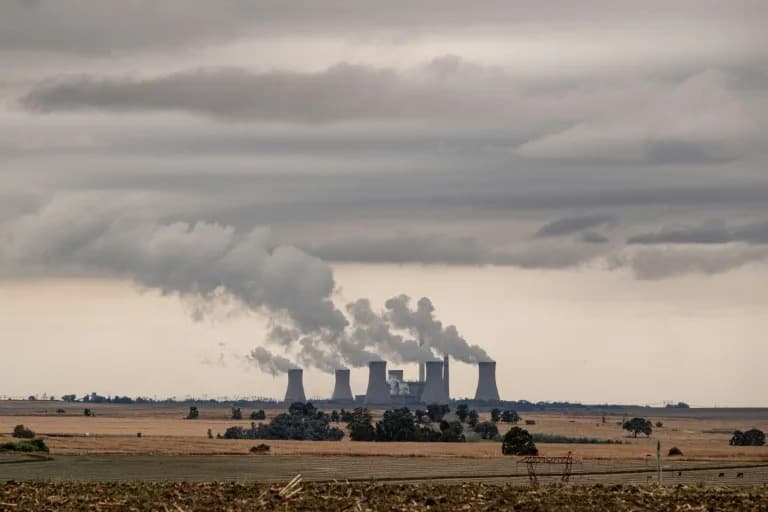
South Africa generates 80 percent of its power from coal (EMMANUEL CROSET)(EMMANUEL CROSET/AFP/AFP)
Climate and health groups warn that postponing the retirement of South Africa’s coal-fired power plants could cause thousands of avoidable deaths and severe long-term health impacts, according to a new joint analysis by Greenpeace, the Centre for Research on Energy and Clean Air and GroundWork.
Key Findings
The report estimates that continued delays in decommissioning state coal plants could lead to as many as 32,000 preventable deaths between 2026 and 2050. Coal still supplies roughly 80% of South Africa’s electricity (OECD), and the sector directly employs more than 90,000 people, making plant closures politically and economically sensitive.
Health Impacts
Children are expected to face particularly severe consequences: the report projects approximately 41,000 pre-term births, 17,000 new cases of childhood asthma, and 370 deaths of children under five tied to the delayed coal exit. Gauteng province — home to Pretoria and Johannesburg and without state-owned coal plants — is forecast to suffer the largest toll, with an estimated 15,000 premature deaths over the same period due to cross-border pollution flows.
“Pollution does not stay where it is made, it travels,”
— Cynthia Moyo, Greenpeace climate campaigner
Local Testimonies
At the report launch, residents from Middelburg in Mpumalanga described widespread respiratory illness, early-onset asthma in children, frequent respiratory flare-ups and skin conditions. One mother said she had to send her infant to another province after doctors linked the child’s breathing problems to environmental pollution.
Economic Costs And Policy Context
The organisations estimate the economic cost of delaying the coal exit at about 721 billion rand (≈ $38 billion), which combines lost working days and increased pressure on public health services. South Africa — a coal-rich, energy-constrained nation and the continent’s most industrialised economy — signed a Just Energy Transition Partnership (JETP) in 2021 to support a shift from coal, securing $8.5 billion in commitments from wealthy partners.
While that deal represented an important step, the report notes that international support and domestic progress have faced setbacks and uncertainty in recent years, and the energy transition has been hampered by political disputes and long-standing ties between the government and labour unions representing mineworkers.
Why This Matters
Beyond emissions reductions, the timing of coal-plant retirements has immediate public-health consequences. The report’s authors urge policymakers to prioritize accelerated retirement schedules, stronger pollution controls and socially just plans to protect coal-dependent workers and communities during the transition.
Sources: Greenpeace, Centre for Research on Energy and Clean Air, GroundWork, OECD.
Help us improve.