Study Warning: The Climate Impact Lab projects that the strong El Niño this year could cause up to 451,000 additional heat-related deaths worldwide from June 2026 through February 2027. The heaviest burden is expected in poorer, hotter regions — notably the Sahel, parts of South and Southeast Asia, and areas of Latin America. Researchers estimate global land temperatures may rise about 1.2°C, producing roughly 44% more extremely hot days, and urge rapid actions such as heat-warning systems, cooling centers and anticipatory financing to avert many of these deaths.
Strong El Niño Could Add Up to 451,000 Heat-Related Deaths, Study Warns
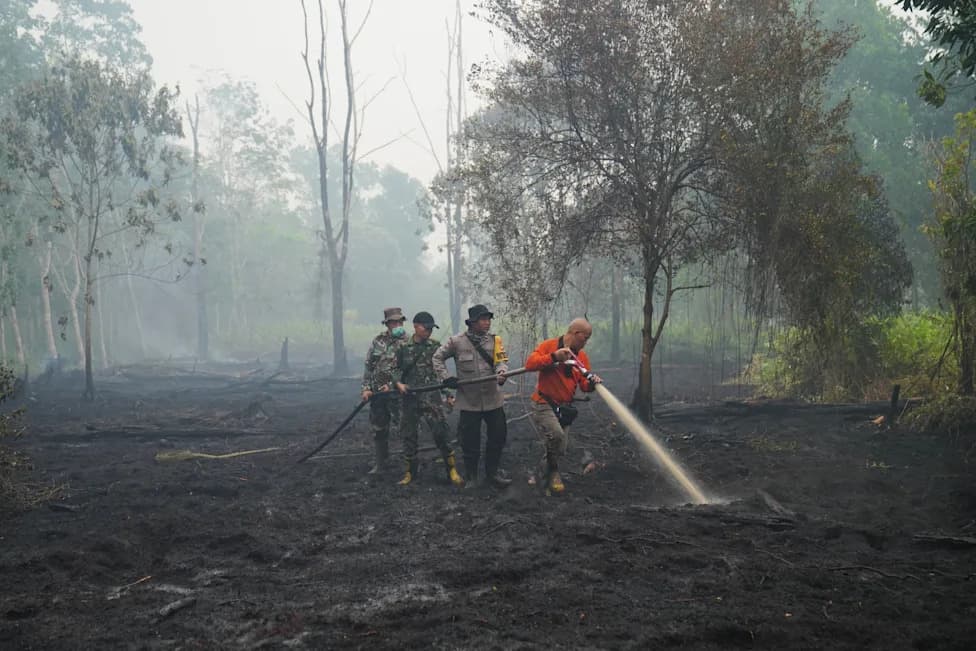
FILE - Firefighters spray water to put out wildfires burning through peatland forest in Kubu Raya, West Kalimantan, Indonesia, Sept. 12, 2026. (AP Photo/Tatan Syuflana, File)(AP Photo/Tatan Syuflana)
A University of Chicago-affiliated research group warns that this year's unusually strong El Niño — combined with record global heat, droughts, wildfires and shrinking water supplies — could cause as many as 451,000 additional heat-related deaths worldwide between June 2026 and the end of February 2027.
Key Findings
Researchers at the Climate Impact Lab combined seasonal temperature forecasts with localized estimates of how high temperatures affect mortality across more than 24,000 regions. They calculated excess deaths by comparing the forecast El Niño-driven temperatures with a 30-year baseline of typical conditions.
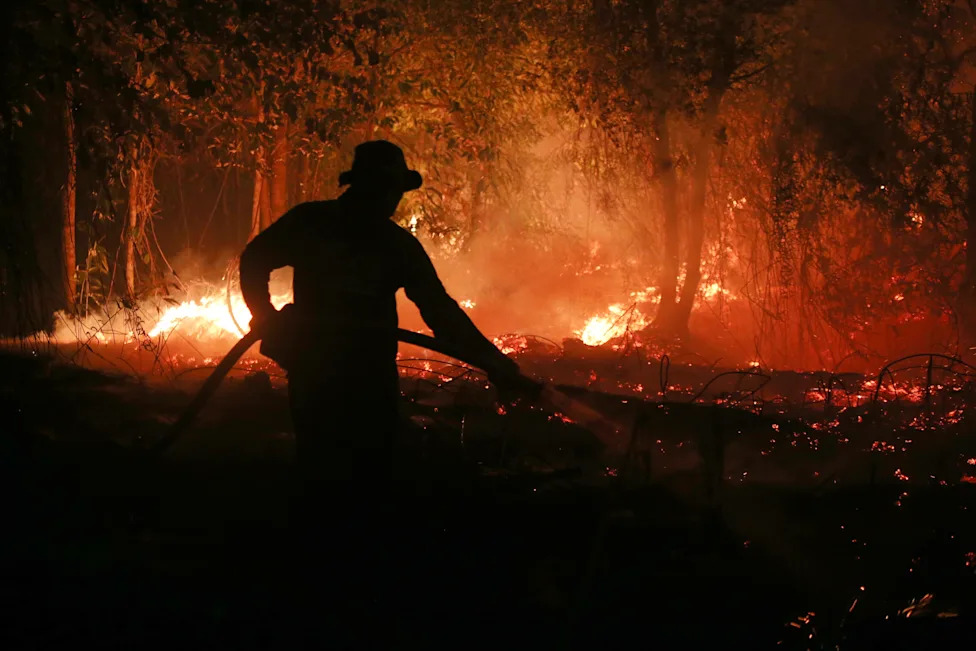
FILE - A firefighter sprays water in an attempt to extinguish a wildfire burning through a peatland forest in Pulang Pisau, Central Kalimantan, Indonesia, Sept. 5, 2026. (AP Photo/Regina Safri, File)(AP Photo/Regina Safri)
The study finds the greatest human toll will fall on poorer, hotter regions with limited access to cooling, reliable water and robust health systems. The report highlights the Global South — a broad term referring to developing countries — as shouldering the largest share of excess mortality.
- Sahel (Africa): About 66,800 additional deaths projected.
- Philippines, Vietnam, Thailand, Cambodia (combined): ~19,400 additional deaths.
- Indonesia: ~19,300 additional deaths.
- India: ~15,800 additional deaths.
- Brazil: ~13,300 additional deaths.
If you're already in a hot place, the extra couple of degrees are going to be much more dangerous, said Michael Greenstone, co-founder of the Climate Impact Lab.
The report estimates global land temperatures during this El Niño could be roughly 1.2°C (2.1°F) higher than in a typical year, producing about 44% more extremely hot days. The authors note these conditions may resemble climates that could become more common in roughly two decades if warming continues.

FILE - Revelers cool off with the help of spray truck showering water into the crowd of partiers amid the extreme heat, Feb. 15, 2025. (AP Photo/Bruna Prado, File)(AP Photo/Bruna Prado)
What Governments Can Do
To reduce preventable deaths, the study recommends immediate actions that can be implemented before heat peaks:
- Heat-warning systems and clear public-risk communications;
- Cooling centers and hydration stations in vulnerable communities;
- Legal protections and rest provisions for outdoor workers;
- Expanded hospital and emergency capacity;
- Targeted outreach to elderly people and other high-risk groups;
- Anticipatory financing and pre-positioning of resources to respond quickly.
Abhiyant Tiwari, a heat expert at NRDC India who was not involved in the study, said the projections should be a call to action rather than just an alarm: "The real measure of our preparedness is not how many heat warnings we issue, but how effectively we protect people and reduce preventable deaths." He added that turning plans into on-the-ground protections and raising funds remain major challenges.
Context: El Niño is a natural climate pattern. This year's event is occurring on a planet already warmed by human emissions, which amplifies the risks of extreme heat. The Climate Impact Lab framed the El Niño as both a near-term threat and a preview of conditions that may become more common with continued warming.
Source: Climate Impact Lab (University of Chicago); reporting by The Associated Press.
Help us improve.