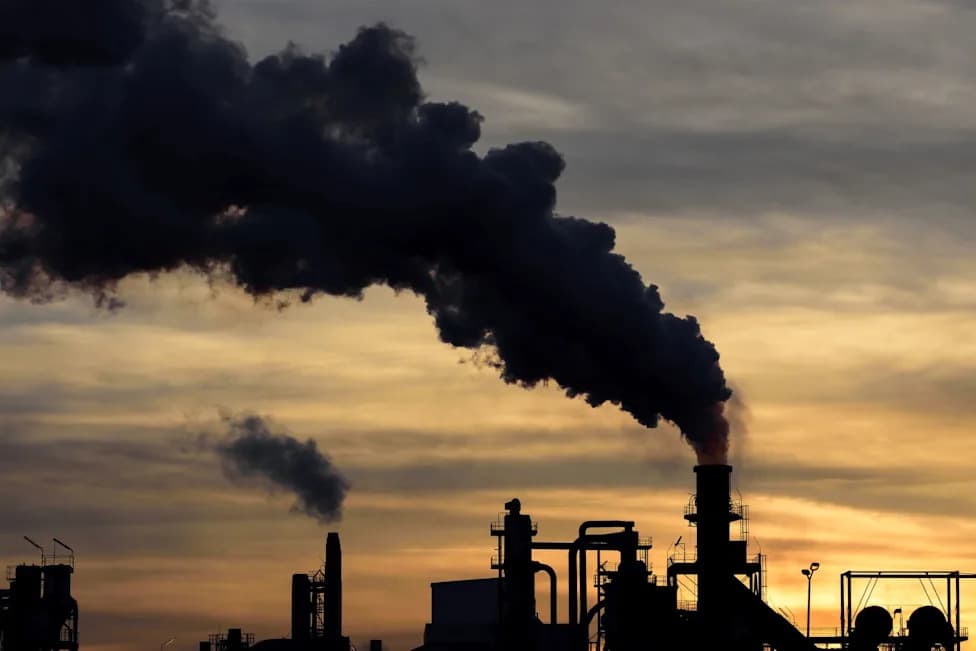
A Nature study finds that carbon emissions have caused economic damages in the tens of trillions of dollars and assigns portions of those losses to specific emitters. The U.S. (1990–2020) is linked to $10.2T in damages, China $8.7T, the EU $6.4T, and Saudi Aramco $3T (1988–2015). Because CO2 persists in the atmosphere, most damages from past emissions are expected to occur in the future: a tonne emitted in 1990 caused ~$180 of harm by 2020 and is projected to cause about ~$1,840 more through 2100.
New Nature Study Ties Major Emitters to Tens of Trillions in Global Climate Costs
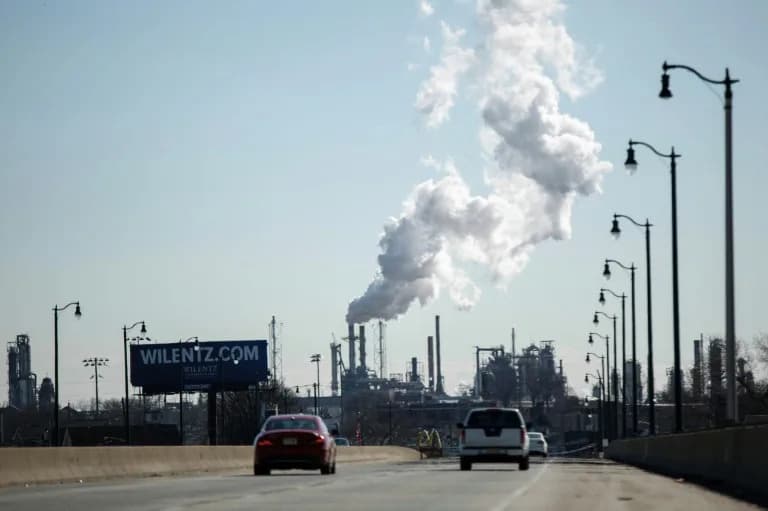
Carbon lingers in the air, causing damage for years to come, the study said (kena betancur)(kena betancur/AFP/AFP)
A major study published in Nature finds that the economic cost of carbon emissions is far higher than earlier estimates, linking major emitters — from nation-states to oil companies — to tens of trillions of dollars in climate-related damages worldwide.
Using a model that quantifies how human-caused warming alters economic growth, the research apportions shares of global damages to specific emitters. The analysis accounts for impacts on labour productivity, agricultural output and some climate-driven extreme weather, and it provides a framework for estimating how emissions from particular actors at particular times translate into economic harm.
Stanford professor Marshall Burke, the study's lead author, told AFP that the paper was driven by scientific goals rather than legal judgments. "Our goal was first and foremost scientific, but we hope to contribute to the broader policy discussion of how to measure loss and damage and what to do about it," he said. The authors emphasize that the study does not resolve legal or ethical questions about compensation.
Key Findings
Between 1990 and 2020, U.S. emissions were linked to the largest estimated share of global damages at $10.2 trillion, followed by China at $8.7 trillion and the European Union at $6.4 trillion. Emissions tied to Saudi Aramco from 1988 to 2015 were estimated to have produced about $3 trillion in cumulative global economic damages by 2020.
Settling Debts — Most Damages Are Yet To Come
The researchers found that the biggest portion of climate damages stemming from past emissions lies in the future: one tonne of CO2 emitted in 1990 caused roughly $180 in global damages by 2020, but is projected to inflict about $1,840 more through 2100. Carbon dioxide’s long atmospheric lifetime means past emissions will keep driving costs for decades.
Because of this persistence, the authors caution that "settling debts for past damages will not settle debts for past emissions." Even under conservative assumptions, the study’s per-tonne damage estimates exceed many government valuations of the social cost of carbon.
The paper also highlights how high-emitting behaviours add up over time: authors estimate that taking one long-haul flight a year for a decade could translate into roughly $25,000 in global economic losses by 2100. As emissions continue, poorer countries are expected to bear a disproportionate share of the harms, placing greater scrutiny on wealthy nations and fossil fuel companies.
Last year, a separate Nature study estimated that extreme heat linked to emissions from 111 fossil fuel companies caused about $28 trillion in global economic losses between 1991 and 2020. Fossil fuel firms have argued that attributing specific harms to individual emitters is impractical, and courts have generally been cautious about awarding compensation.
Bottom line: This study strengthens scientific pathways for attributing economic harms to specific emitters and raises the scale of potential costs, but it does not itself determine legal liability or compensation.
Help us improve.