Translated Old Tamil and Sanskrit graffiti in Egypt’s Valley of the Kings show that visitors from India reached the site between the 1st and 3rd centuries CE. Scholars Charlotte Schmid and Ingo Strauch identify eight Old Tamil inscriptions by a traveler named Cikai Korran across five tombs and a Sanskrit inscription by Indranandin, who calls himself a messenger of King Kshaharata. Some marks are written 5–6 meters above tomb entrances, and the graffiti were recognized, translated and dated during renewed investigations. The finds highlight the Valley’s role as an ancient tourist destination and testify to early India–Egypt contacts.
Ancient Graffiti in Egypt’s Valley of the Kings Shows Indian Visitors 1st–3rd Centuries CE
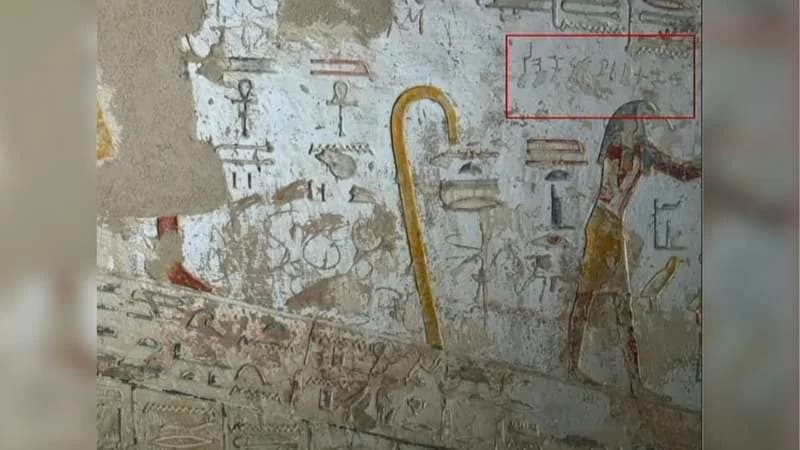
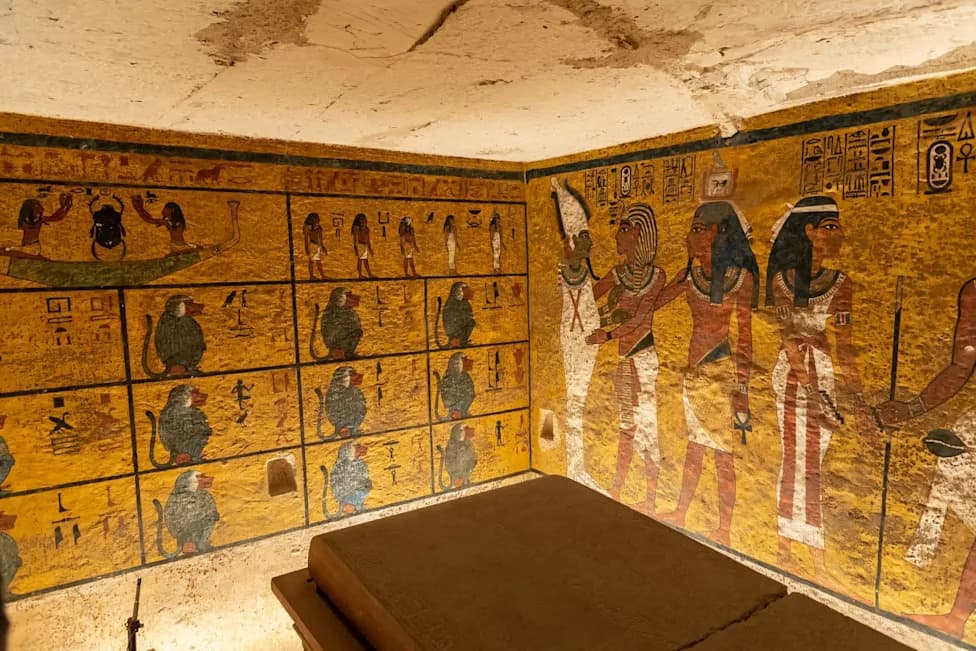
Screengrab of Indian graffiti in a tomb in the Valley of the Kings, Luxor, Egypt, March 20, 2026. (photo credit: Screenshot/Youtube/State Department of Archaeology Tamil Nadu)
Newly translated Old Tamil and Sanskrit graffiti in Egypt’s Valley of the Kings provide strong evidence that visitors from India reached the site between the first and third centuries CE. French scholar Charlotte Schmid and Swiss professor Ingo Strauch report that an individual identified as Cikai Korran scratched his name in Old Tamil eight times across five tombs, while a separate inscription in Sanskrit names a man called Indranandin, who styles himself a "messenger of King Kshaharata."
What the Inscriptions Say
Schmid and Strauch translate the Old Tamil formula as meaning roughly, “Cikai Korran came [here] and saw.” The Sanskrit graffito by Indranandin identifies him as a messenger of a Kshaharata ruler — a dynasty known to have ruled parts of India in the first century CE — though the exact king is unspecified.
Where and When
The scholars presented their findings at a February 2026 conference in Chennai and published them in the volume Tamil Epigraphy: A Four-Day International Conference 11–14 February 2026, Proceedings Volume 1. The inscriptions were identified, translated, and dated to between the first and third centuries CE during renewed investigations of graffiti that earlier Egyptologists had recorded but could not read because they did not recognize the languages.
Notable Details
Several of the graffiti are written unusually high on tomb walls. Schmid noted that one Old Tamil inscription sits about 5–6 meters above a tomb entrance, and researchers are still unsure how the writer reached that height. One of Korran’s signatures appears at the entrance of a tomb linked to New Kingdom pharaohs Tausert and Setnakhte; it is the only graffito recorded in that chamber, suggesting the tomb may have still been largely sealed when he visited.
Broader Context
Strauch also notes that archaeologists have recorded 132 Greek and Roman inscriptions and one example in the Kharosthi script across tombs in the Valley of the Kings. At the time these Indian visitors wrote their graffiti, Egypt was a Roman province and the Valley of the Kings appears to have functioned as a tourist destination much as it does today.
“The newly translated graffiti prove not just the mere presence of Indians in Egypt, but also their active interest in the culture of the land,” — Alexandra von Lieven, University of Münster (not involved in the study).
While the precise identities and travel routes of Cikai Korran and Indranandin remain uncertain, Strauch suggests it is plausible that Indian travelers arrived by ship at Red Sea ports such as Berenike and then continued inland to the Nile valley. The inscriptions add an important chapter to our understanding of long-distance connections across the ancient Indian Ocean and Mediterranean worlds.
Help us improve.