Paul R. Ehrlich, a Stanford biologist who died on March 13, 2026, spent his career warning that population growth and consumption put severe pressure on Earth’s life-support systems. His 1968 bestseller The Population Bomb galvanized public debate by predicting mass famine and societal collapse, making him one of the most visible and divisive figures in environmentalism. Although the Green Revolution and technological advances averted many of his immediate forecasts, Ehrlich continued to warn about climate change, biodiversity loss and pollution and argued that scientists have a duty to engage publicly.
Paul Ehrlich, Provocative Environmental Scientist, Dies at 86 — A Life Spent Warning About Population and Consumption

Biologist Paul R. Ehrlich in 2010.Paul R. Ehrlich/Wikipedia,CC BY
Paul R. Ehrlich, a Stanford University biologist who spent decades sounding alarms about population growth, resource limits and environmental decline, died on March 13, 2026, in Palo Alto, California. A public-facing scientist and prolific scholar, Ehrlich combined academic research with outspoken advocacy that helped shape — and polarize — modern environmental debate.
Career and Public Impact
Ehrlich founded Stanford’s Center for Nature and Society in 1984 and authored more than 40 books and over 1,100 scientific articles on ecology, population dynamics and environmental problems. He rose to broad public prominence with the 1968 bestseller The Population Bomb, coauthored with his wife, conservation biologist Anne H. Ehrlich, which was reprinted more than 20 times and translated into multiple languages.
Warnings, Controversy and Influence
The Population Bomb opened with an uncompromising verdict — “The battle to feed all of humanity is over” — and argued that unchecked population growth could exhaust resources and trigger famine, social collapse and conflict. Those stark forecasts made Ehrlich a leading public voice in the environmental movement and drew both admiration and scorn. Critics labeled him a doomsayer when his most extreme predictions did not materialize, while supporters praised his willingness to confront uncomfortable possibilities.
Intellectual Roots and Debate
Ehrlich’s thinking drew on a long tradition of concern about population and resource limits, including Thomas Malthus and mid-20th-century authors such as William Vogt. He also engaged in substantive debates with peers who emphasized other drivers of environmental harm: for example, Barry Commoner argued that faulty and polluting technologies were the primary problem. Ehrlich and collaborator John Holdren summarized a broader view of environmental impact with the formula I = P × A × T (Impact = Population × Affluence × Technology), noting that population, consumption and technology together shape human pressure on ecosystems.
Policy Positions and Controversy
To slow population growth, Ehrlich advocated wider access to contraception and abortion and at times discussed more contentious, coercive measures such as forced sterilization — positions that drew ethical objections and intensified criticism. His public interventions often mixed scientific analysis with forceful policy prescriptions, a style that brought him frequent media exposure — including more than 20 appearances on The Tonight Show with Johnny Carson in the 1970s and early 1980s.
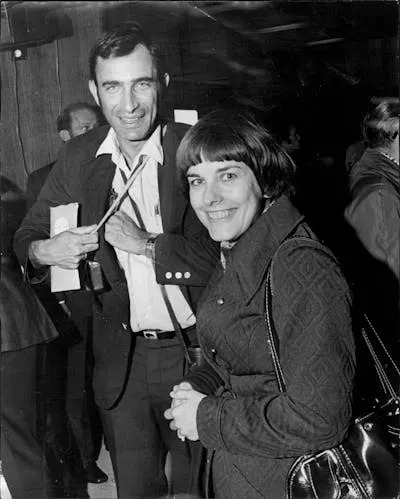
Paul Ehrlich and his wife, biologist Anne Ehrlich, arrive in New Zealand for a series of talks on population on Aug. 22, 1971.George Lipman/Fairfax Media via Getty Images.
What Happened Next: Green Revolution and Market Optimism
Many of the famines and collapses Ehrlich warned about did not occur on the scale he predicted. A major reason was the Green Revolution: coordinated efforts to introduce high-yield crop varieties, fertilizers, pesticides and mechanization to boost harvests worldwide. Agricultural leader Norman Borlaug won the Nobel Peace Prize in 1970 for those advances, which sharply reduced famine risk in many regions.
At the same time, economists like Julian Simon promoted a more optimistic, market-driven view. Simon famously bet Ehrlich in 1980 that the inflation-adjusted prices of five raw materials would fall over the next decade; the prices declined between 1980 and 1990, Simon won the wager and Ehrlich paid US$576.07 — a symbolic exchange that underscored disagreements about scarcity, markets and innovation.
Later Reflections and Legacy
In later years Ehrlich acknowledged limits and mistakes in his early rhetoric. He said in 2009 that The Population Bomb had been “way too optimistic” about some outcomes — a candid, if paradoxical, assessment of his own forecasts — and in his 2023 memoir Life he described both gratitude for a long scientific career and frustration at the difficulty of getting scientific understanding to influence political culture.
Whether praised or criticized, Ehrlich was a consequential public scientist whose career highlighted the tensions between urgent environmental warnings and the uncertainties of long-term prediction. His passing marks the loss of a provocative voice who, alongside peers such as Carl Sagan, E.O. Wilson and Jane Goodall, helped bring science into public conversation about humanity’s future.
This article has been updated to correct the date of Ehrlich’s death.
Help us improve.