Lawmakers in several U.S. states are proposing rules that would force 3D printer makers to build in software or other safeguards to block printing firearm parts. Experts say automated detection is technically fragile—algorithms can miss real gun parts or flag harmless designs, and the hackable nature of printers makes workarounds easy. Enforcement actions are also targeting distributors of digital blueprints, raising free-speech questions. Historical parallels with Soviet photocopier controls suggest broad, intrusive device regulation may prove ineffective and burdensome for legitimate users.
Politicians Propose Soviet-Style Controls on 3D Printers — Will They Work?
Politicians Consider Soviet-Style Controls on 3D Printers
Governments have long feared technologies that let individuals bypass centralized control. In the Soviet era, photocopiers were tightly restricted because they enabled citizens to reproduce dissenting ideas; those controls ultimately collapsed as people found ways to distribute forbidden material. Today, lawmakers in several U.S. states are reviving that impulse—this time targeting 3D printers and CNC machines that can fabricate gun parts—and those measures may face similar technical and social limits.
What Lawmakers Are Proposing
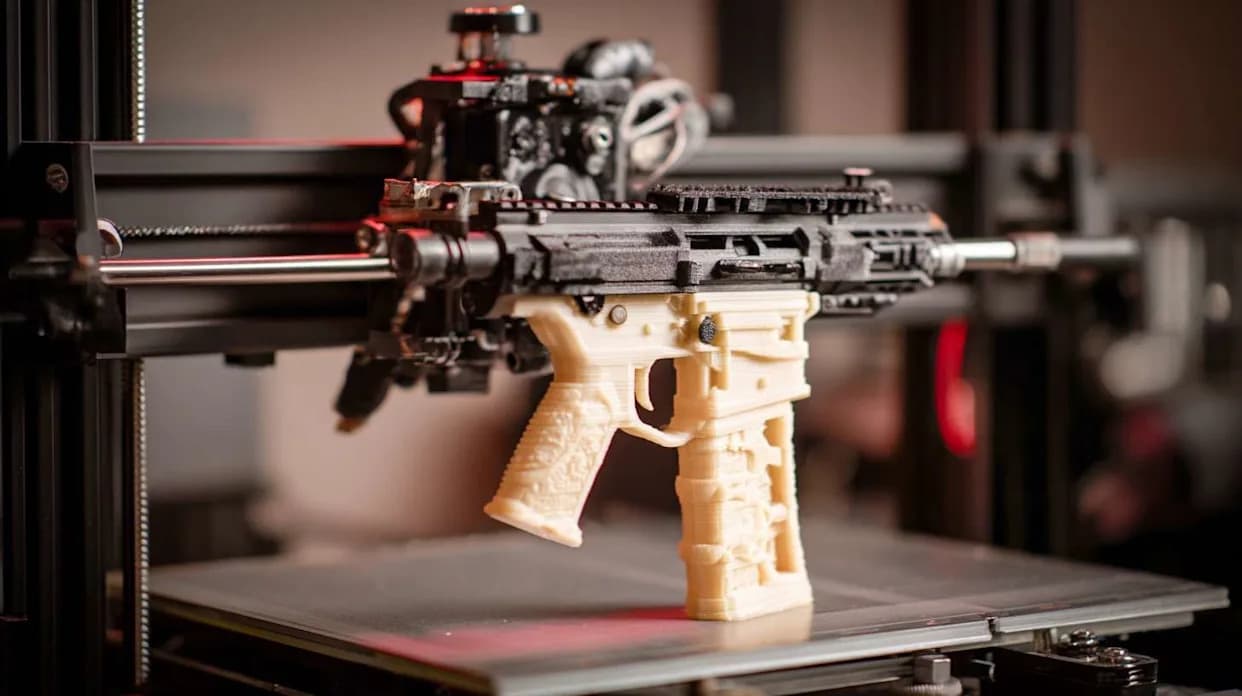
California legislators are considering bills that would require manufacturers of 3D printers to include software or other technical safeguards that detect and block the printing of firearm parts. Similar proposals have been floated in New York, Washington and Colorado. California's AB-2047, for example, would make it unlawful to "knowingly disable, deactivate, uninstall, or otherwise circumvent any firearm blocking technology."
Origins And Growing Concern
Concerns about 3D-printed firearms date to 2013, when Cody Wilson released the single-shot "Liberator" pistol design. Wilson later marketed the Ghost Gunner CNC milling machine, a computer-controlled device capable of producing gun components or other small parts. Since then, designs have evolved into semi- and fully automatic concepts such as the FGC-9 and Urutau, which combine printed elements with off-the-shelf parts. In conflict zones, including Myanmar, rebel groups have reportedly deployed 3D-printed weapons.
Journalists Lizzie Dearden and Thomas Gibbons-Neff argued in The New York Times (2024) that accessible additive manufacturing spreads a kind of DIY empowerment—similar to how photocopiers widened dissemination of ideas—allowing individuals to produce tools that can challenge state authority.
Technical And Practical Limits
Experts warn automated detection is difficult. Michael Weinberg, executive director of NYU's Engelberg Center for Innovation Law and Policy, says "accurately identifying gun parts is incredibly hard, and the hackable nature of desktop 3D printers makes it trivial to circumvent any requirements to try." Detection algorithms may miss parts intended for guns and false-flag harmless items, while simple workarounds or out-of-state devices would likely proliferate.
A 2018 RAND Corporation report by Trevor Johnston, Troy D. Smith and J. Luke Irwin noted that the low cost and simplicity of additive manufacturing could alter production and security dynamics, enabling everything from replacement components to items that previously required centralized control. The report warned that traditional points of sale would no longer be reliable chokepoints for regulating risky goods.
Enforcement And Free-Expression Issues
Regulators have not limited themselves to hardware. California Attorney General Rob Bonta and San Francisco City Attorney David Chiu recently sued distributors of digital files that contain designs for gun parts, including Gatalog Foundation Inc. Such actions raise free-speech and publisher-liability questions: historically, technical manuals and even encyclopedias included instructions for weapon-related processes long before the internet made distribution instantaneous.
Who Gets Affected?
Mandating built-in restrictions would affect a wide range of users: hobbyists, makers, repair shops and small manufacturers who rely on the ability to print parts on demand. Those legitimate users would likely face usability limits, false positives and compliance burdens, while determined actors would seek or create workarounds.
"Any attempt to identify gun parts will miss many parts that are actually for guns, and may flag a number of parts that have nothing to do with guns," Michael Weinberg warns. "Workarounds for a screening mandate would be easy to develop, distribute, and implement."
Historical Parallel And Likely Outcome
Photocopier controls in the Soviet Union were intrusive and ultimately ineffective: authorities discovered they lacked the resources to police widespread reproduction. That historical lesson suggests tools that enable decentralized production are difficult to constrain through device-level controls alone. Technical measures may slow some misuse, but they are unlikely to be airtight—and they risk imposing burdens on large numbers of lawful users.
Conclusion
Lawmakers face a genuine policy challenge: how to reduce the risk that modern fabrication tools facilitate untraceable weapons without stifling innovation, repair, and legitimate manufacturing. Proposed "firearm blocking" mandates capture this tension—balancing public safety against practicality, free expression and technological resilience. History and expert analysis both suggest that heavy-handed, device-level controls will be hard to enforce and easy to evade.
Help us improve.