Archaeologists studying Iron Age burials at Dong Xa in Vietnam found chemical evidence that people deliberately blackened their teeth about 2,000 years ago. Noninvasive analyses (XRF and SEM-EDS) detected elevated iron and sulfur in darkened enamel, pointing to iron salts used with tannin-rich plant extracts. Ethnographic parallels (often involving betel-related materials) suggest repeated applications produced a lifelong glossy black finish that required occasional touch-ups. The practice persists in parts of Southeast Asia and likely spread as iron tools and materials became widely available during the Iron Age.
2,000-Year-Old Skulls Show Ancient Vietnamese Practiced Lifelong Tooth Blackening — A Beauty Trend That Endures
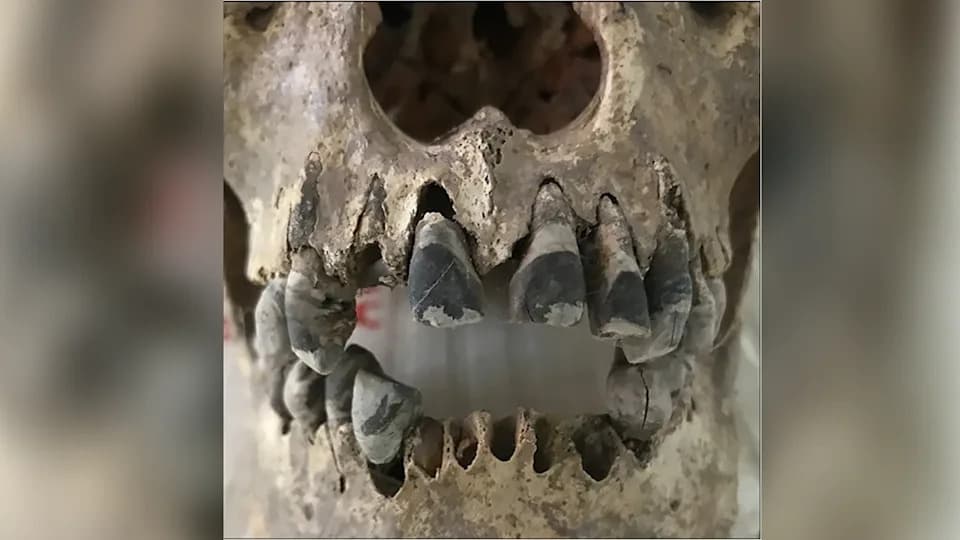
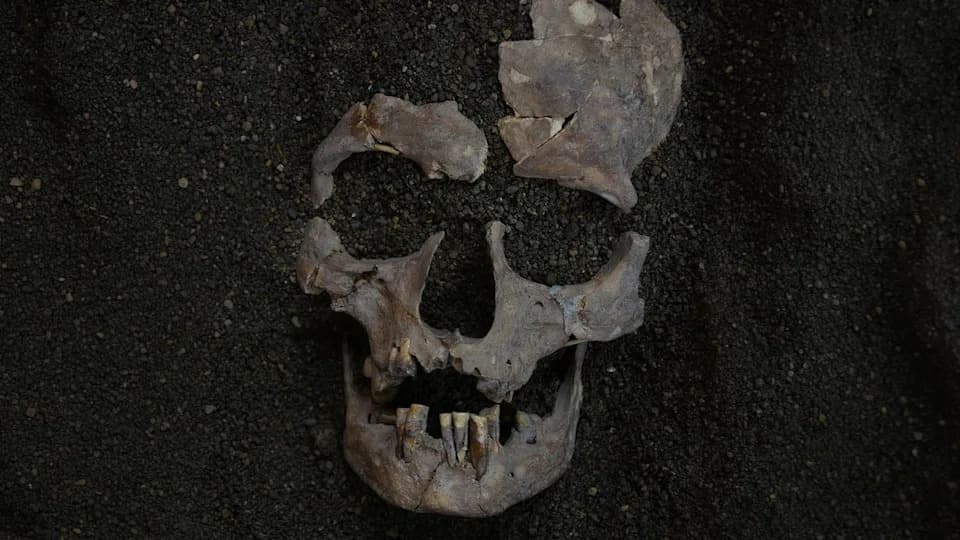
A 2,000-year-old skull shows a layer of black pigment on the teeth of an individual from Dong Xa, Vietnam. | Credit: © 2026 Zhang et al., Archaeological and Anthropological Sciences
Gleaming black teeth have been prized in parts of Vietnam for centuries — and new archaeological research pushes the origin of this cosmetic practice back about two millennia. Scientists analyzing Iron Age burials at Dong Xa in the Red River delta found chemical evidence that people intentionally darkened their enamel using iron-based compounds combined with plant materials.
What the Study Found
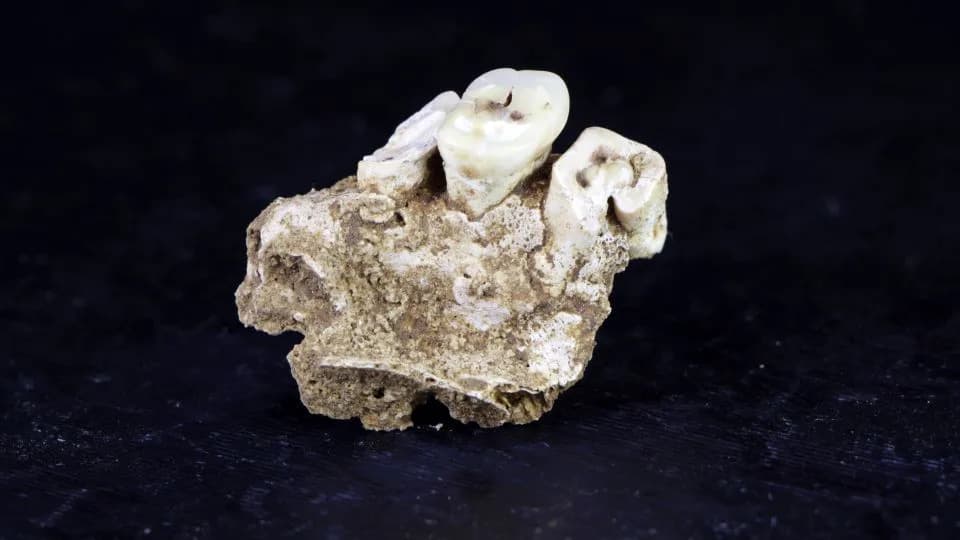
The study, published Jan. 22 in Archaeological and Anthropological Sciences, examined human remains from Dong Xa, a settlement and cemetery occupied roughly between 550 B.C. and A.D. 50. Several skeletons displayed unusually dark dental enamel. Rather than sampling destructively, researchers used noninvasive techniques to analyze the discoloration in situ.
Analytical Methods
First, X-ray fluorescence (XRF) scans of the darkened enamel revealed elevated concentrations of iron oxide. The team then used scanning electron microscopy with energy-dispersive spectrometry (SEM-EDS) to confirm elemental composition and found signals for iron (Fe) and sulfur (S) in the discolored regions.
“We believe that the combined presence of Fe and S signals is a strong indicator of the involvement of iron salts,” said Yue Zhang, the study’s lead author and an archaeologist at the Australian National University.
How Tooth Blackening Likely Worked
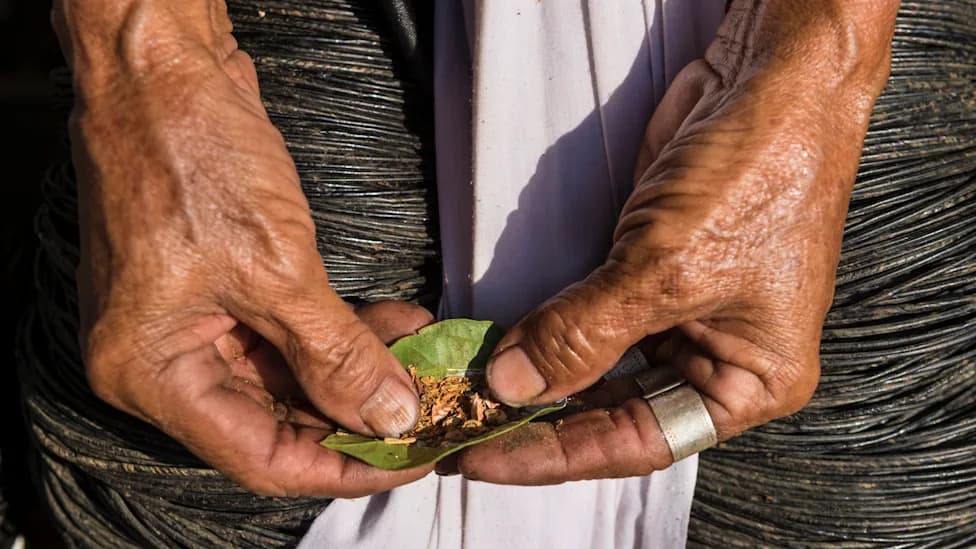
Ethnographic parallels suggest the ancient recipe combined an iron-based substance with tannin-rich plant extracts — commonly derived in the region from betel-related materials. Betel-nut chewing, widespread across Southeast Asia for millennia, can stain teeth reddish-brown; however, when tannins react with iron salts in the presence of air they form a deep black pigment. The researchers infer that repeated applications of an iron–tannin paste over several days or weeks produced the intense, long-lasting black seen on the Dong Xa teeth.

A woman in Vietnam carries her grandson on her back. | Credit: Getty Images
Once applied, the blackening generally persisted for life, though periodic touch-ups every few years were likely needed to maintain the glossy finish.
Why It Matters
The study links archaeologically recovered blackened teeth directly to living tooth-blackening traditions and identifies a chemical signature — iron salts together with sulfur — that can serve as a diagnostic marker of intentional blackening in other archaeological contexts.
Why communities began the practice remains unresolved. The authors suggest several possibilities: it may have been a less-destructive alternative to tooth ablation (ritual removal of otherwise healthy teeth), a way to formalize or enhance staining from betel-nut use, or a marker of social identity or beauty. The researchers also note tooth blackening likely became more widespread during the Iron Age as iron tools and materials became more accessible for preparing dye pastes.
Continuity and Cultural Context
Today, intentional tooth blackening persists in parts of Southeast Asia, reflecting long-standing cultural preferences and regional continuity in cosmetic practices. The Dong Xa evidence adds an important archaeological chapter to that story by showing the practice was established at least 2,000 years ago.
Key takeaway: Noninvasive chemical analyses of Dong Xa teeth reveal iron- and sulfur-bearing compounds consistent with intentional iron–tannin blackening, linking ancient cosmetic technology to living traditions across Southeast Asia.
Help us improve.