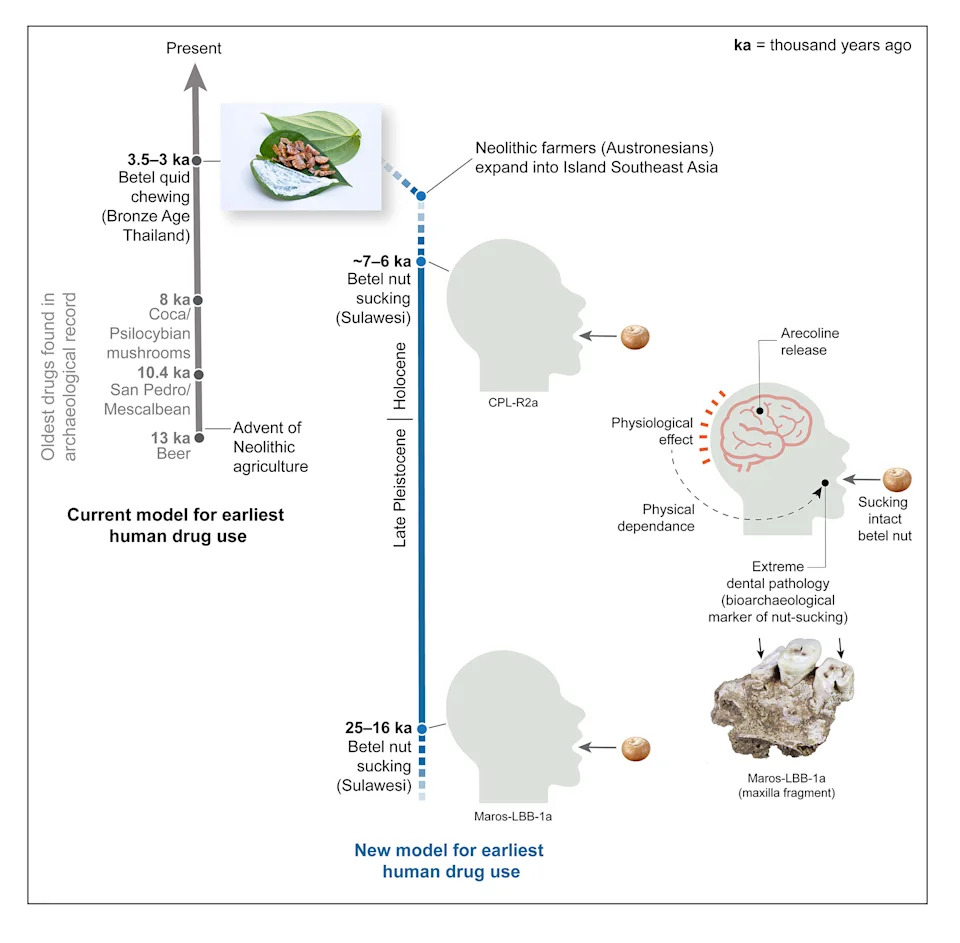
A new study in Science Advances reports the earliest known habitual plant-drug use: ice-age hunter-gatherers on Sulawesi repeatedly sucked betel nuts, producing deep grooves in their teeth. Radiocarbon dating places one individual between about 25,000 and 16,000 years ago, with a second dated to 7,600–6,300 years ago. Chemical residues and neuroreceptor assays support a neuroactive effect. The practice likely began as a crude remedy for toothache and later evolved into the stimulant quid tradition when slaked lime was added during the Neolithic.
25,000-Year-Old Evidence of Habitual Betel Use Found on Sulawesi

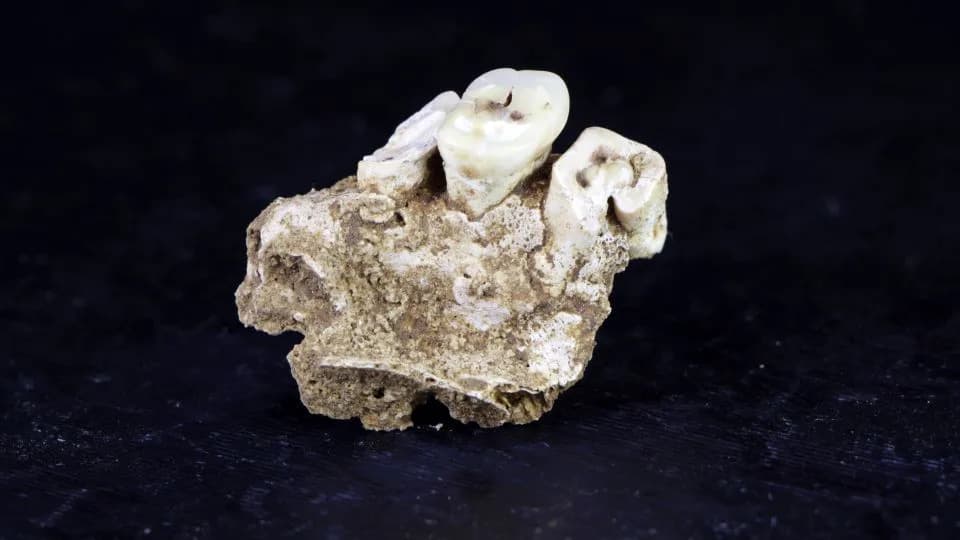
This skull of a prehistoric hunter-gatherer that was found in Sulawesi, Indonesia shows extreme dental wear caused by sucking on betel nuts. | Credit: Fakhri
Ice-age hunter-gatherers on the Indonesian island of Sulawesi routinely sucked betel nuts, leaving distinctive, deep grooves in their teeth. A new study published in Science Advances reports this as the earliest known case of habitual plant-drug use, pushing back the timeline for regular psychoactive substance use by thousands of years.
What the Study Found
Researchers examined partial skeletons recovered from Sulawesi and identified severe, progressive dental wear that the team attributes to long-term suction of intact betel (Areca catechu) nuts. One individual — likely a man aged 40–50 at death — lived sometime between roughly 25,000 and 16,000 years ago, a period that overlaps the Last Glacial Maximum. A second individual, of undetermined sex, dated to about 7,600–6,300 years ago.
How They Reached the Conclusion
The researchers combined multiple lines of evidence: the distinctive groove morphology on teeth, chemical analyses of dental samples that revealed residues consistent with betel, and functional assays using genetically engineered frog eggs bearing human neuroreceptors that showed a measurable neuroactive response to betel compounds. Taken together, these methods support the interpretation that the grooves resulted from habitual betel-nut suction and that the practice had biological effects even before the later custom of chewing with slaked lime.
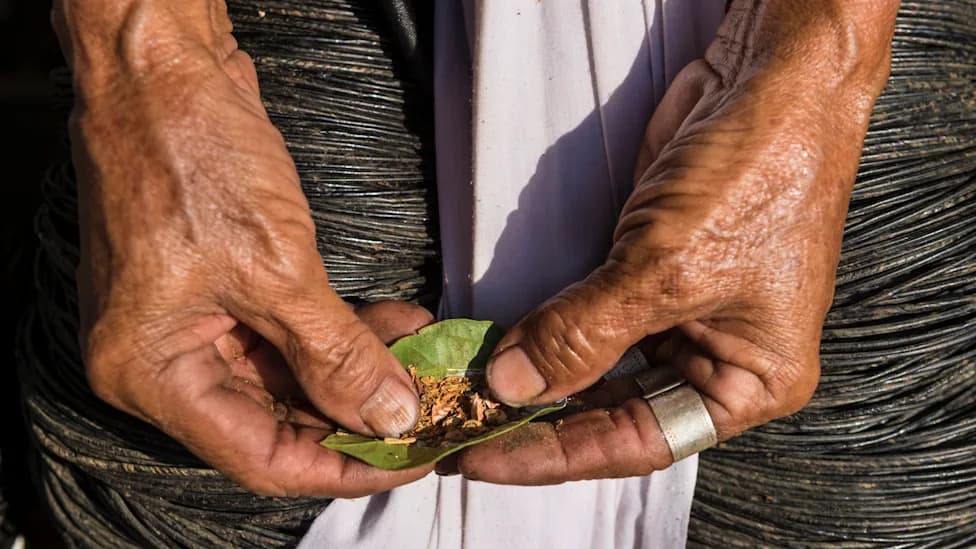
Sucking betel nuts is the earliest-known addictive behavior. Modern betel nut users make them into a chewable wad with slaked lime. | Credit: A. Brumm
“The more they sucked on the nut to relieve toothache, the worse the damage to their teeth became,” said study lead author Adam Brumm of Griffith University. In one case the groove exposed the pulp cavity, a condition that would have been intensely painful.
Context and Cultural Significance
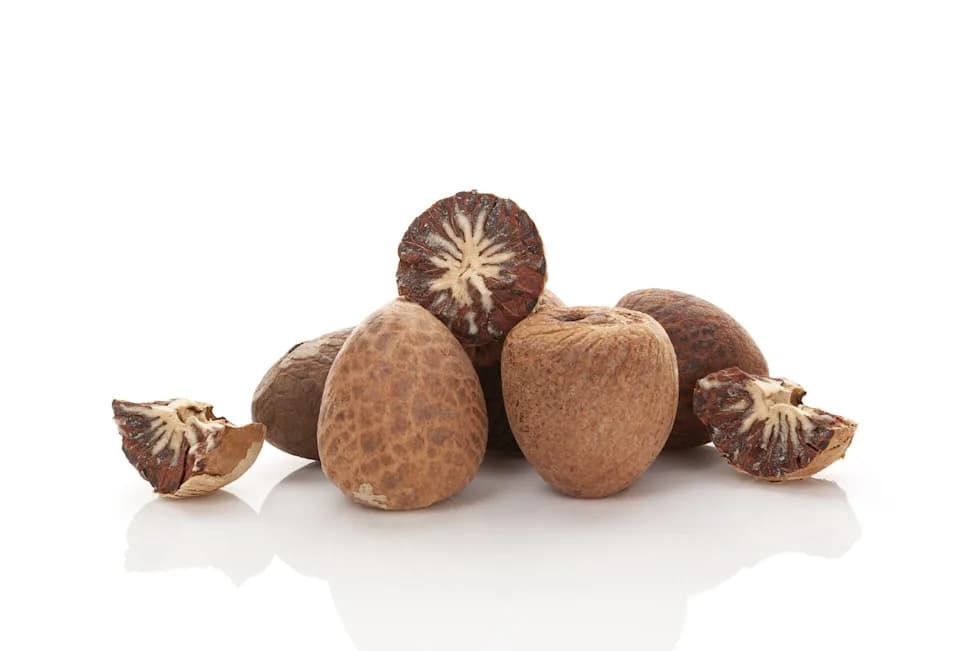
Betel nuts contain arecoline, a neuroactive alkaloid. When combined with slaked lime and chewed as a quid, they produce a potent stimulant effect. The new findings suggest an earlier, simpler behavior — sucking intact nuts for local numbing or mild relief — preceded the later, more stimulating quid tradition. The authors propose that the routine addition of slaked lime may have developed during the Neolithic, perhaps around 4,000 years ago on Sulawesi, when lime began to be used in pottery production.
Modern Relevance and Health Risks
Today, betel (areca) nut use remains widespread in parts of South Asia and Oceania, reaching an estimated 600 million users worldwide. Modern quid chewing is strongly addictive and poses serious health risks: arecoline is carcinogenic, and quids are often mixed with tobacco, increasing rates of oral cancer and other diseases.
Why This Matters
This discovery provides particularly direct evidence that prehistoric peoples not only used plants for food and medicine but integrated psychoactive substances into their cultural lives long before the advent of agriculture. External experts have praised the study for its clear, multi-disciplinary evidence and for illuminating the deep historical roots of a widespread cultural practice.
Citation: Study published in Science Advances (published Sept. 9). Photo credit: Fakhri / A. Brumm.
Help us improve.