The Colorado River supplies water to more than one in 10 Americans but is shrinking under a decades-long drought and record-low snowfall. Agriculture consumes about 75% of the river’s water, and nearly half is used to grow alfalfa and other hays for cattle feed, according to a 2024 study. Legal water-rights rules and entrenched agricultural practices complicate reallocation, and the seven Compact states failed to meet a Valentine’s Day deadline for a new deal. Without reforms that address livestock-driven water use, household conservation may not be enough to secure the river’s future.
Why the Colorado River Is Running Out of Water — And How Cattle Farming Drives the Crisis
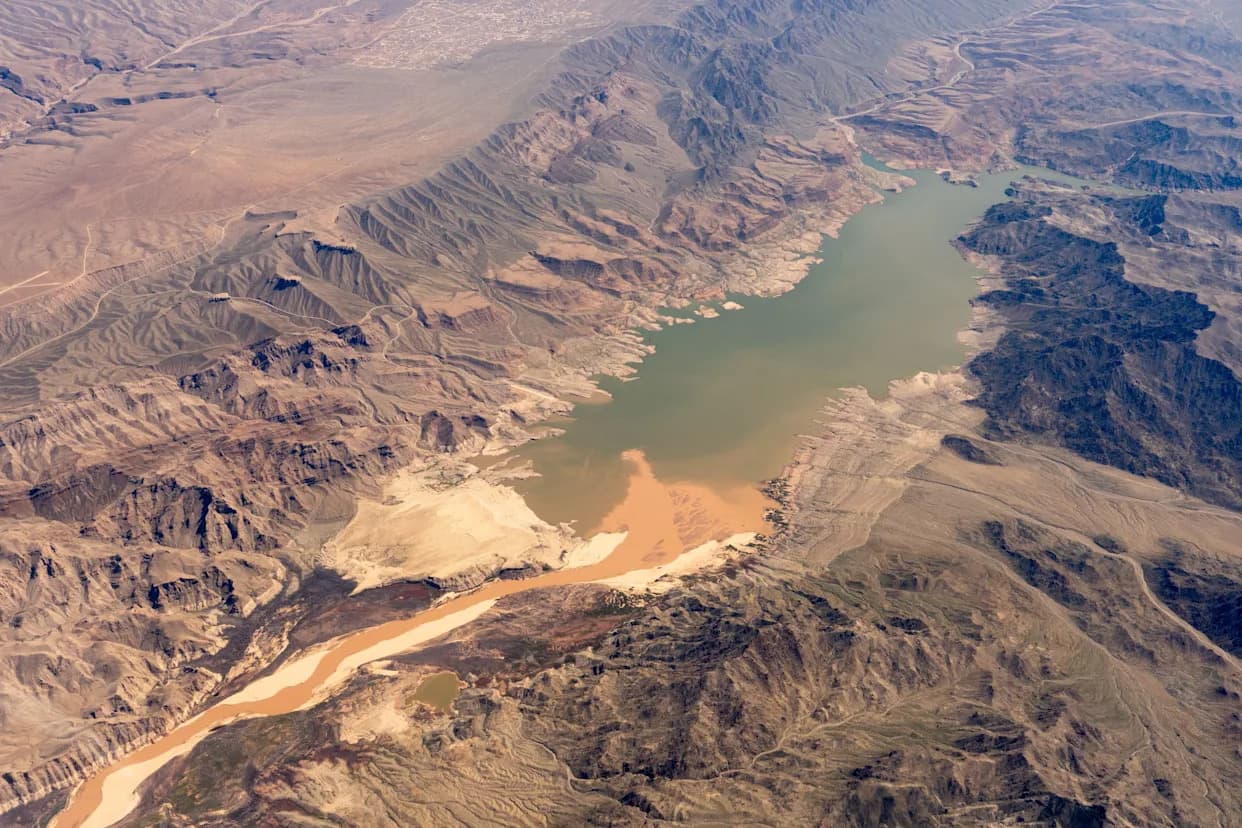
An aerial view of the Colorado River emptying into Lake Mead at the Nevada-Arizona border. | Marli Miller/UCG/Universal Images Group via Getty Images
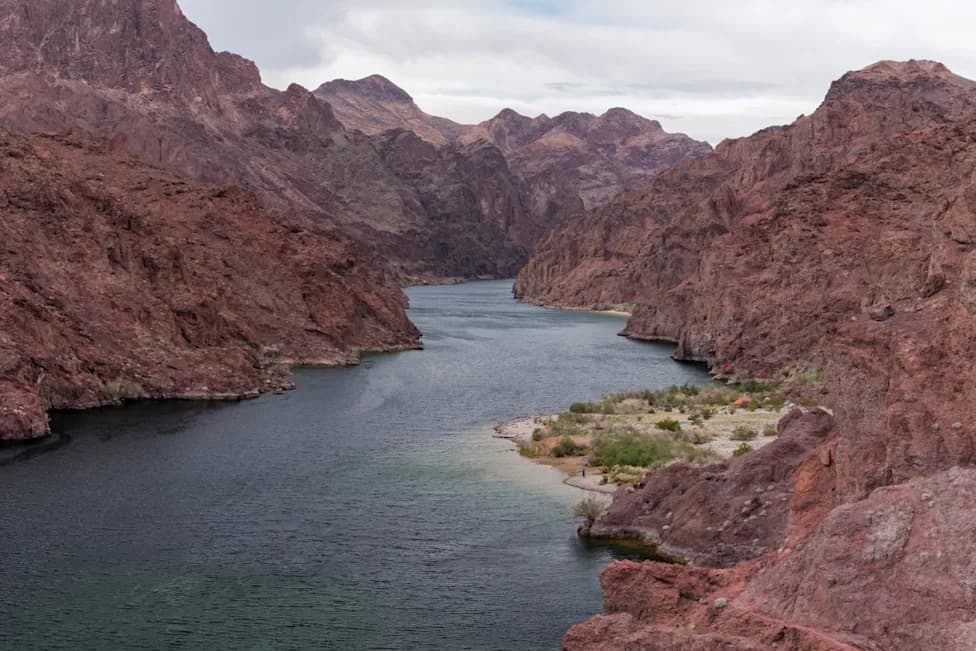
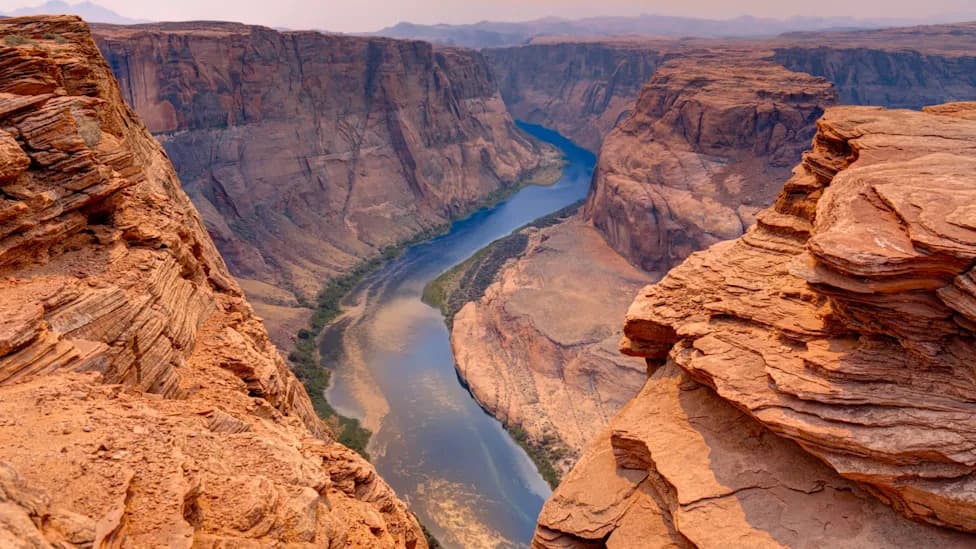
More than one in 10 Americans depend on the Colorado River for drinking water, irrigation and household use. But a decades-long drought, record-low winter snowfall and rapidly falling reservoir levels have pushed the river — which supplies roughly 1.9 trillion gallons of water per year — into a crisis that is inflaming bitter disputes over who must cut back.
The fight centers on the seven states that share the Colorado River Compact — California, Arizona, Colorado, Utah, Nevada, New Mexico and Wyoming — along with a portion of Mexico and more than 20 tribal nations. The Compact states missed a Valentine’s Day deadline to agree on new water apportionments for the next two decades; if they cannot reach a deal, the federal government may intervene.
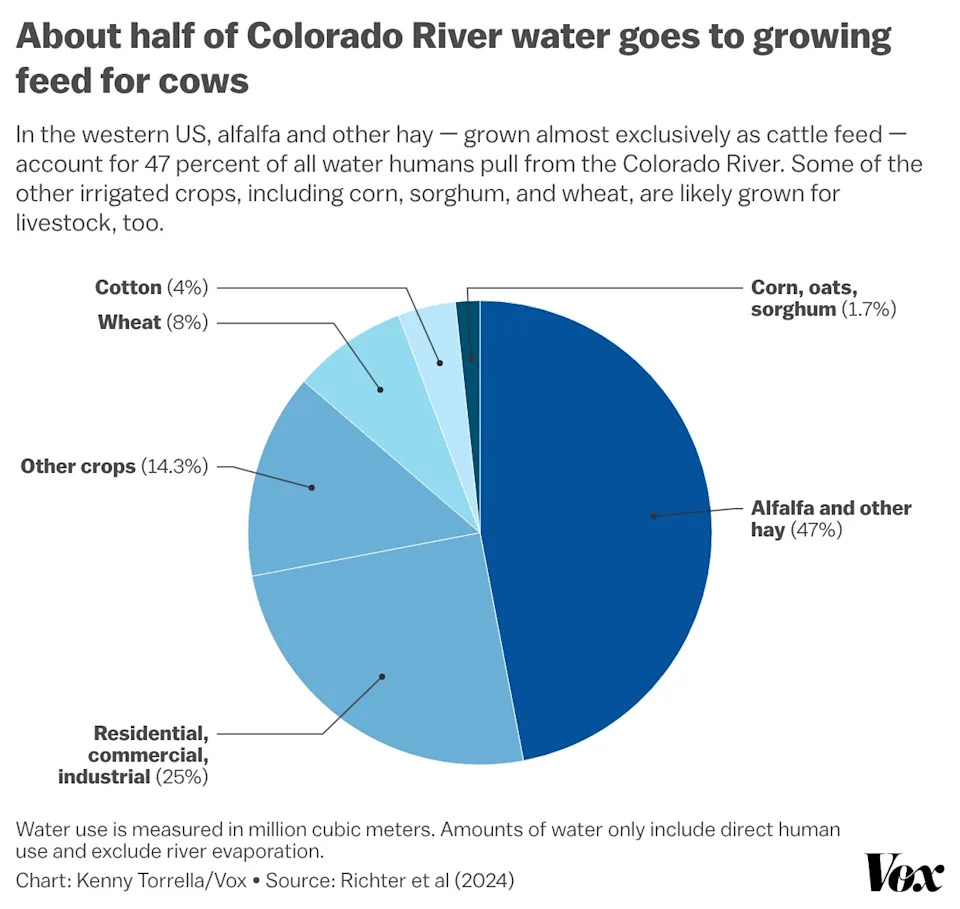
A pie chart that shows where water taken from the Colorado River goes. 47% for alfalfa/hay, 25% for residential/commercial/industrial use, 8% for wheat, 4% for cotton, 1.7% for corn/oats/sorghum, and 14.3% to “other crops.”
Why Agriculture Is the Biggest Thirst
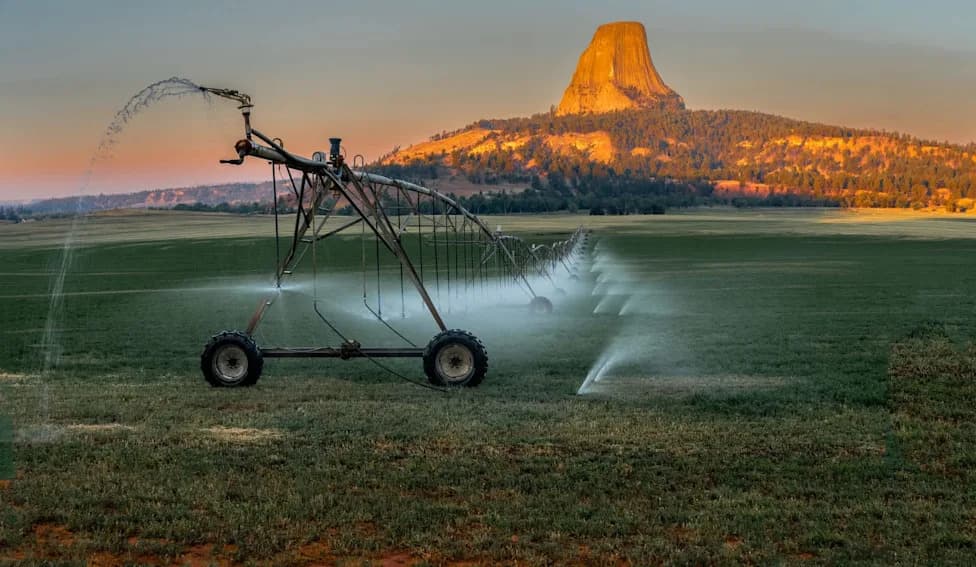
Most people first picture household and commercial uses when they think about water: showers, toilets, lawns, golf courses and data centers. But agriculture is by far the largest user of Colorado River water. A 2024 paper in Nature Communications Earth & Environment estimates that farming consumes roughly 75% of the river’s annual withdrawals.
That agricultural water is not spread evenly. Small volumes irrigate fruits and vegetables, but nearly half of the river’s water is used to grow alfalfa and other hays — crops that are fed almost exclusively to beef and dairy cattle. Including corn, wheat and other feed crops, animal feed accounts for at least 47% of all Colorado River withdrawals.
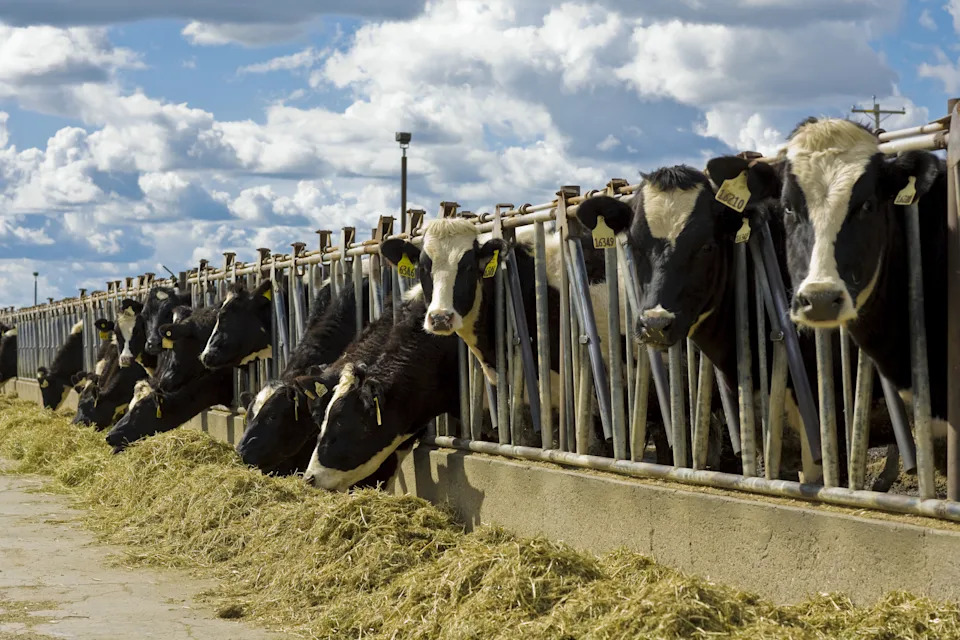
Dairy cows feed on haylage at a dairy farm in San Joaquin County, California.|Bill & Brigitte Clough/Design Pics Editorial/Universal Images Group via Getty Images
“It is a stupid system, but the problem is that people are really heavily invested in that system,” said John Matthews, executive director of the Alliance for Global Water Adaptation, describing the region’s legacy water-rights rules.
Legal and Economic Barriers to Rapid Change
Rapidly reallocating water is difficult because many Western states follow the "prior appropriation" doctrine: water rights belong to whoever first put the water to beneficial use, and senior rights holders take priority over junior users. These rights were largely established in the 19th and early 20th centuries and remain legally protected.
The result: large-scale alfalfa production can persist even where it contributes little economic value. For example, almost 70% of Utah’s water is used to grow alfalfa, a crop that represents roughly 0.2% of the state’s GDP.
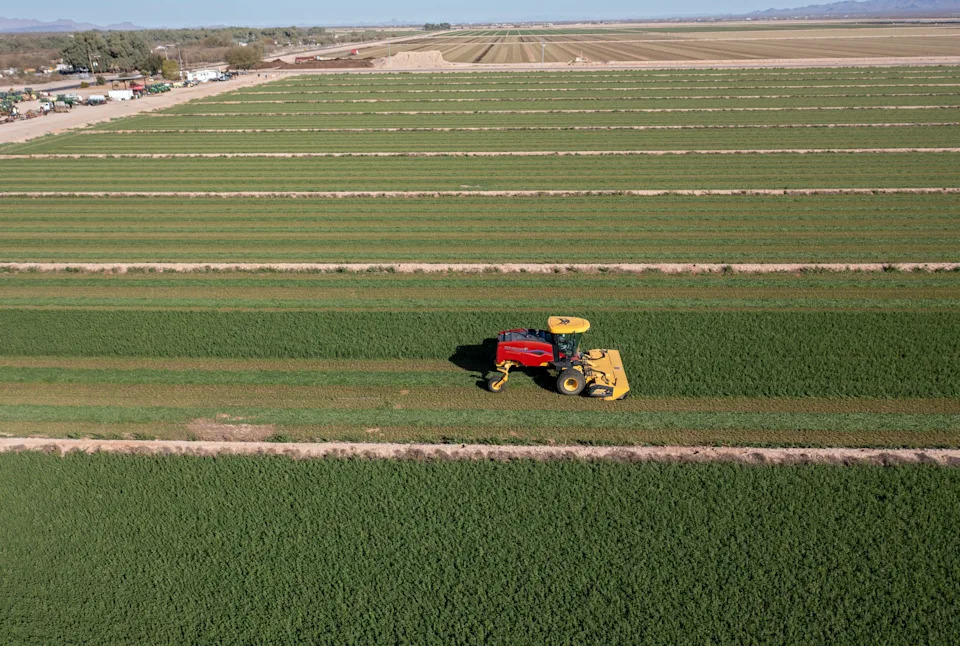
A tractor cuts alfalfa on a farm in the Arizona desert.|Jim West/UCG/Universal Images Group via Getty Images
Choices on the Table
The U.S. Department of the Interior has outlined several possible paths forward, mixing voluntary agreements, incentive-based programs and mandatory cuts — and one option that effectively does nothing. Meanwhile, states and municipalities are experimenting with local fixes: paying farmers to fallow fields, expanding water recycling, removing lawns and hiking prices for excessive residential use.
But these measures may not be enough unless policymakers, agribusiness and consumers confront the central role of livestock production. Reducing water devoted to feed crops — through smaller herds, shifts in diets, improved feed efficiency and water markets that allow transfers from agriculture to cities — could free large volumes of H2O for other uses.
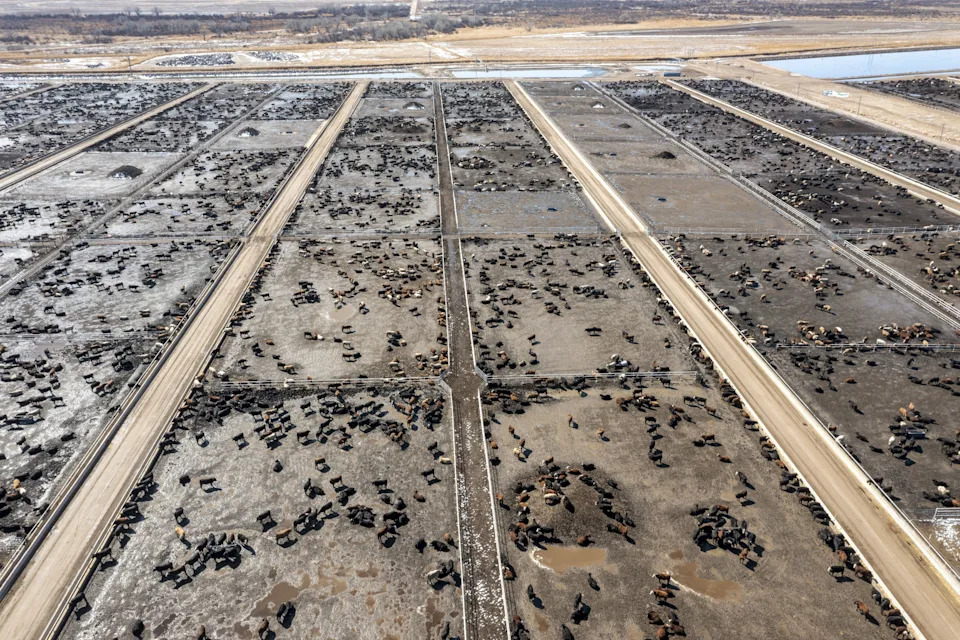
A cattle feedlot operated by Five Rivers Cattle Feeding-Colorado Beef. The company feeds 61,000 cattle here, and nearly a million cattle at a dozen locations in the western United States.|Jim West/UCG/Universal Images Group via Getty Images
Broader Climate Feedbacks
Ranching and dairy production also contribute to greenhouse gas emissions — notably methane from cattle — which accelerates warming and drought risk, creating a feedback loop that further stresses the Colorado River.
What Residents Should Expect
Negotiations between the Lower Basin (California, Arizona, Nevada) and the Upper Basin (Colorado, Utah, New Mexico, Wyoming) remain deadlocked, with the Upper Basin resisting deep cuts and arguing the Lower Basin has historically overused its share. Without bold policy choices, residents will continue to be urged to conserve — remove lawns, take shorter showers and install efficient fixtures — even though much of the river’s water is tied up in feed production for cattle.
Possible near-term solutions include scaling water markets, expanding voluntary fallowing programs, offering targeted buyouts or leases of senior water rights, promoting less water-intensive crops, and encouraging food-system changes that reduce demand for irrigated feed.
Addressing those options will be politically and legally complex, but any long-term plan to secure water for tens of millions of people must confront how much of the Colorado River is allocated to cattle feed.
Help us improve.