Russia has unveiled a prototype anti-drone system that uses four rotating discs, each fitted with nine to ten steel cables, mounted on a Courier unmanned ground vehicle. Built by mechanics from the 70th Motor Rifle Regiment and patented in December 2023, the device is being trialled in occupied Zaporizhzhia and aims to knock down or deflect FPV drones. Analysts say cables are lighter and cheaper than blade-based alternatives but warn of entanglement risks and that televised demos do not prove battlefield effectiveness.
Russia Tests Spinning-Cable Anti-Drone System Mounted On Courier UGV
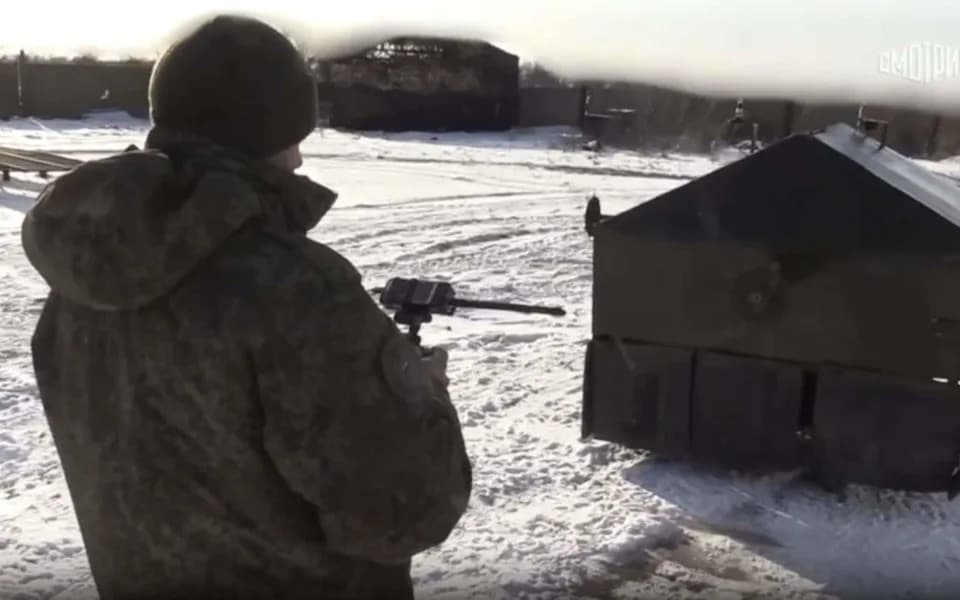
The device can be operated with a remote control - Telegram
Russia has revealed a prototype counter-drone system that uses spinning steel cables mounted on an armoured unmanned ground vehicle (UGV).
How It Works
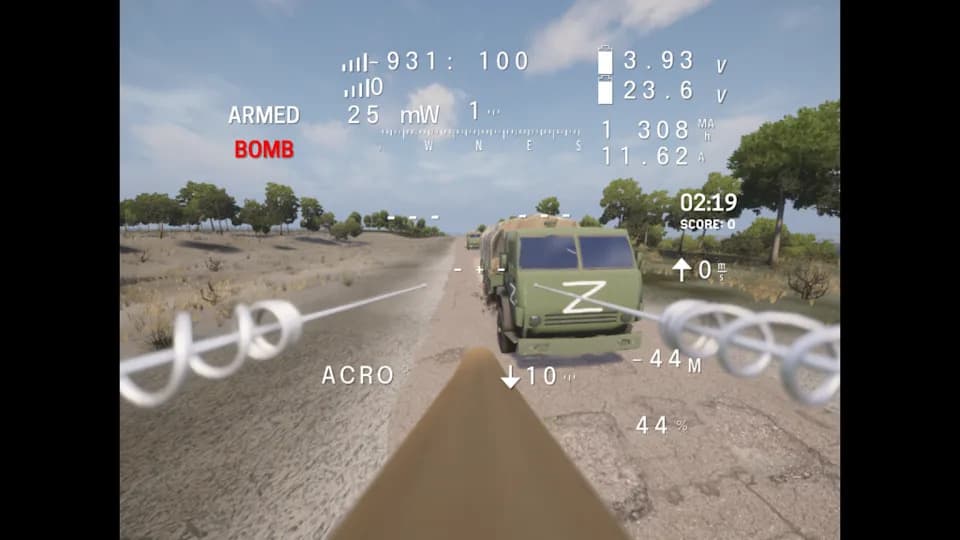
The motor-driven device features four rotating discs, each fitted with about nine to ten thin, spaghetti-like steel cables that sweep the air like a fan. Developers say the rotating cables can deflect or physically strike first-person-view (FPV) drones, causing them to fall or be diverted before they hit a vehicle.
Prototype And Demonstration
The system was demonstrated on Russian state television’s War Correspondents programme, shown mounted on a multi-purpose Courier UGV. According to the broadcast, mechanics from the 70th Motor Rifle Regiment built the prototype and it is being trialled in occupied areas of Zaporizhzhia. On-screen footage showed presenters throwing blocks of ice at the device; in the clip, one block reportedly bounced off the outer shell while another was struck and sent flying by the rotating cables.
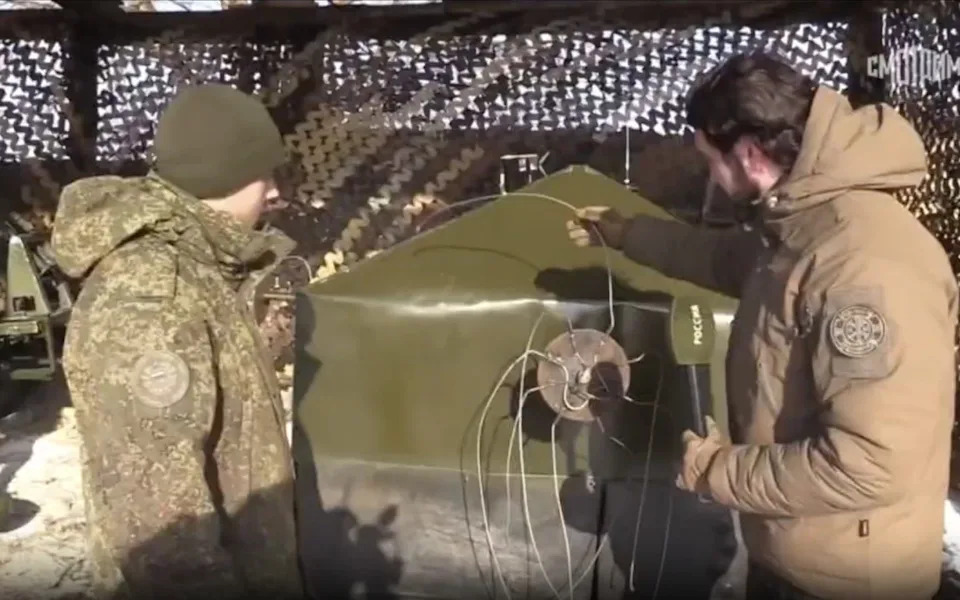
A member of the Russian military shows off the steel cables - Telegram
“At first glance, it’s a rather strange machine... By the standards of conventional weaponry, it has no cargo bay, no machine gun and no conventional armour,” the programme presenter said.
“The idea is that, as the discs rotate, they set in motion this — let’s call it a fan with cables. When an FPV drone tries to strike, the cables either knock it down or deflect it,” a squad leader operating the system said.
Patents And Design Evolution
Moscow formalised the cable-based concept with a patent in December 2023. A related patent filed in May 2025 proposed using multiple propellers and electric motors on UAZ-452 Bukhanka vehicles. Designers reportedly favour cables over blade-based systems because cables are lighter, cheaper and more durable.
Limitations And Practical Concerns
Analysts have highlighted several practical issues: the rotation mechanism occupies most of the vehicle’s internal space, available footage does not show roof-mounted protection, and cables risk becoming entangled in trees, bushes or rough terrain. The televised demonstration did not include a confirmed interception of an actual hostile drone in combat conditions, so battlefield effectiveness remains unproven.
Broader Context
The rotating-cable system joins a suite of anti-drone adaptations used in the Russia–Ukraine conflict, such as tanks equipped with dense clusters of frayed steel wires (nicknamed “dandelion” or “hedgehog”) and so-called “turtle tanks” fitted with armoured shells designed to absorb FPV strikes. Both sides continue to experiment with unconventional countermeasures against low-flying, small drones.
Key facts: the system is mounted on a Courier UGV (platforms of this type can carry payloads of up to 250 kg), was built by the 70th Motor Rifle Regiment’s mechanics, and is currently being trialled in occupied Zaporizhzhia.
Help us improve.