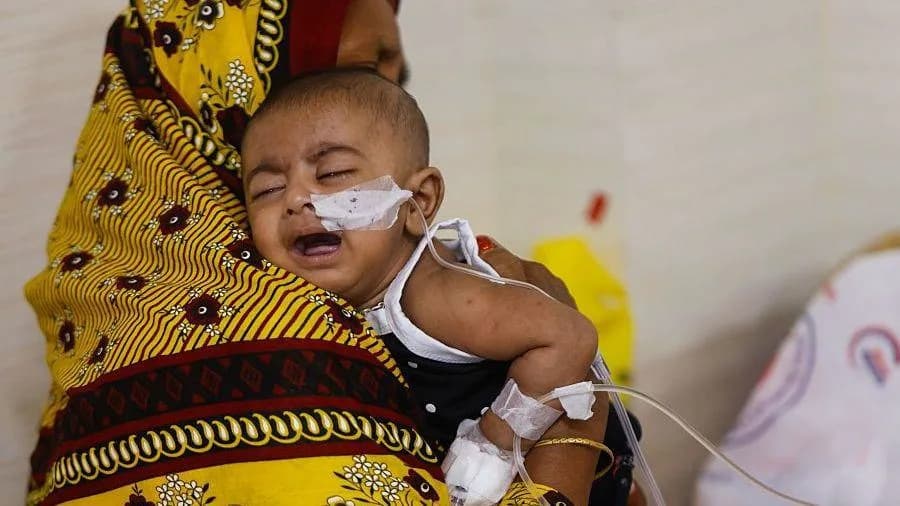
WHO confirmed a fatal Nipah virus infection in a woman from Naogaon district, Bangladesh; laboratory confirmation followed hospital admission on 28–29 January 2026. The agency says the risk of international spread is low, despite recent cases in neighboring West Bengal, India. Thirty-five contacts have been tested with no additional cases detected so far. Bangladesh has recorded about 348 Nipah cases since 2001, often linked to drinking raw date palm sap, and there are no licensed vaccines or specific antiviral treatments.
WHO Confirms Fatal Nipah Case in Bangladesh; International Spread Risk Remains Low
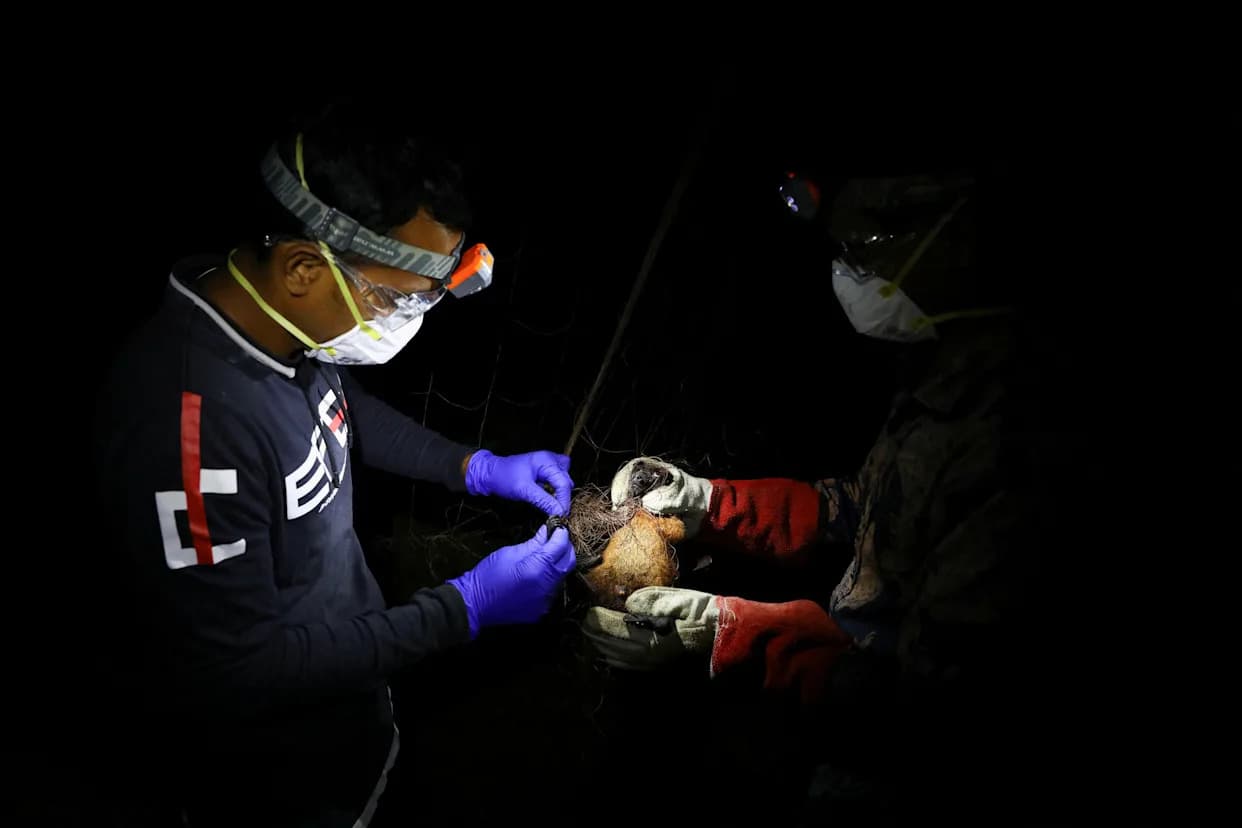
Field lab assistants catch a bat in their net as they collect specimens for their Nipah virus research in the Shuvarampur area of Faridpur, Bangladesh, on September 14, 2021 [File: Mohammad Ponir Hossain/Reuters]
The World Health Organization (WHO) has confirmed a fatal Nipah virus infection in Bangladesh and says the risk of the disease spreading internationally is low.
Case Details and Timeline
WHO reported that the patient, a woman aged about 40–50 from Naogaon district in Rajshahi Division, was admitted to hospital on 28 January 2026. Clinical teams collected throat swabs and blood samples at admission; laboratory testing confirmed Nipah virus infection on 29 January 2026. The International Health Regulations National Focal Point (IHR NFP) for Bangladesh notified WHO on 3 February 2026.
Symptoms and Exposure
The patient first experienced fever and neurological symptoms on 21 January. She reported no recent travel but had recently consumed raw date palm sap, a known exposure risk in past outbreaks.
Contacts, Surveillance and Regional Context
Authorities have tested 35 identified contacts of the patient; no additional cases have been detected so far. The announcement follows reports of two confirmed Nipah cases in West Bengal, India, roughly a week earlier. Those cases prompted some countries — including China and several Southeast Asian states — to increase airport health screening, although WHO does not currently recommend travel or trade restrictions based on available information.
“WHO assesses the overall public health risk posed by NiV to be low at the national, the regional and global level,” the agency said.
Background on Nipah in Bangladesh
Since 2001, Bangladesh has reported about 348 Nipah virus cases, with roughly half of those infections occurring in people who reported drinking raw date palm sap. Outbreaks in Bangladesh tend to be seasonal, occurring from December through April, which coincides with the date palm sap harvest and consumption season.
Treatment, Fatality and Public Health Measures
There are currently no licensed antiviral medicines or vaccines specific to Nipah virus. Reported case-fatality rates for Nipah vary but have been high, ranging from about 40% to 75%. WHO and local authorities have increased surveillance and testing, strengthened infection prevention and control measures in healthcare settings, and are informing the public about ways to reduce risk.
Practical Advice
Public-health guidance during seasonal outbreaks typically emphasizes avoiding consumption of raw date palm sap and following infection prevention measures in healthcare and community settings.
“Authorities have increased disease surveillance and testing, implemented prevention and control measures in health care settings, and are keeping the public informed about how to protect themselves,” WHO Director-General Tedros Adhanom Ghebreyesus said.
Help us improve.