The CIA has been restoring an A-12 reconnaissance aircraft, Article 128, displayed outside its Langley headquarters to address long-term damage from exposure. The 39,000-pound A-12 — one of 15 built and one of nine survivors — arrived in 2007 and has required repeated conservation work, including a major recoating in 2018 and a fresh restoration in 2025 informed by consultations with other museums. Conservators used durable automotive paint and restored historical details such as the red tail number; the plane remains a memorial to fallen pilots and a rare artifact of Cold War intelligence.
Inside the CIA's Restoration of the A-12: Preserving a Cold War Icon at Langley
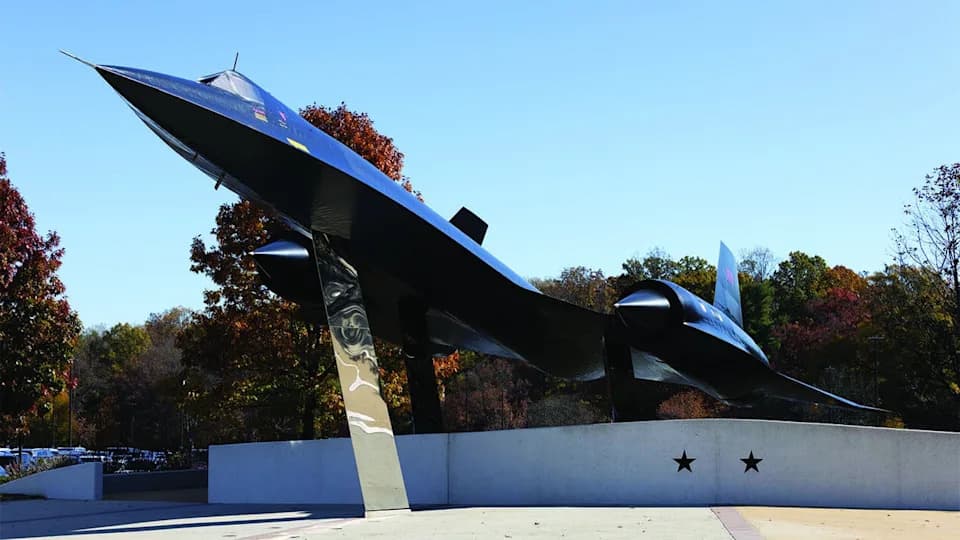
An A-12 spy aircraft at the entrance to CIA headquarters in Langley, Virginia. / Credit: Courtesy of CIA(Courtesy of CIA)
Outside the main entrance to CIA headquarters in Langley, Virginia, an imposing Cold War–era reconnaissance aircraft — the A-12 known on campus as Article 128 — stands on display, exposed to weather, insects and time. Once designed to cruise at Mach 3 and near 80,000 feet, the 39,000-pound airframe now faces a very different challenge: long-term outdoor preservation.
Conservation Challenges Of A High‑Speed Design
"The A-12 is prime real estate here at CIA headquarters," said Robert Byer, the agency's museum director, noting that employees pass the aircraft daily. He added, "This plane was not built with the idea of being outside 24/7," which has created unique conservation problems.
Developed in the late 1950s and flown in the early 1960s as a top-secret reconnaissance platform, the A-12 was engineered with seams and gaps that let titanium and other metals expand at extreme speeds and temperatures — ideal in flight but problematic for a static, outdoor display. Over time, insects, moss and mold migrated into joints and the cockpit, while exterior paint experienced repeated adhesion failures.
Stabilization And Restoration Efforts
Article 128 arrived at Langley in 2007, transported on five wide-load trucks and mounted on pylons sunk 40 feet into the ground. Since then, CIA conservators have undertaken a series of preservation efforts to stabilize the airframe and slow deterioration. A major cleaning and recoating in 2018 improved conditions temporarily, but ongoing wear prompted further research.
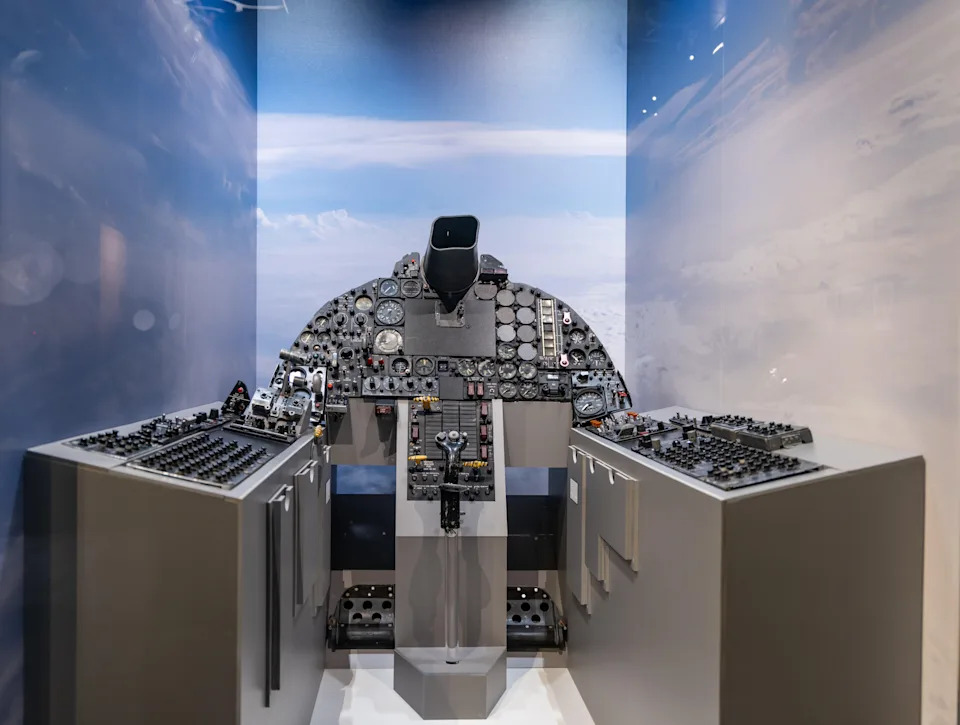
The cockpit of an A-12. / Credit: Courtesy of CIA
In summer 2025, CIA experts visited peer institutions — including the Intrepid Museum in New York and the U.S. Space & Rocket Center in Huntsville — to consult on long-term outdoor protection strategies for A-12 airframes that are publicly displayed. Those exchanges informed the CIA's decision to use durable automotive-grade paint for the latest recoating because of its flexibility, UV resistance and weather durability.
Recent Work And Historical Details
The most recent restoration, completed just ahead of the 60th anniversary of the A-12's operational readiness in November 1965, included stripping failing paint, repairing water damage, and a careful cockpit inspection. Conservators also restored the aircraft's tail number color to red, a historically supported detail confirmed by archival research and consultation with a former Area 51 engineer who noted that red tail numbers were used during active flights and were sometimes changed to complicate outside observation.
"The A-12 was not built for technology's sake; it was built to get us information on the Soviet Union that we couldn't get anywhere else," Byer said, underscoring the aircraft's intelligence significance.
Although the A-12's operational life was relatively short — satellites and the Air Force's SR-71 Blackbird soon supplanted its role — the aircraft remains a key artifact of Cold War intelligence. Article 128 also functions as a memorial to CIA pilots Walt Ray and Jack Weeks, who were killed flying for the agency in the late 1960s.
Because Article 128 sits on the CIA's secure main campus, it is not open to the public. The agency says it will continue conservation efforts to protect the aircraft as both a piece of aerospace engineering and institutional memory.
Help us improve.