The Jan. 29 collision between an Army Black Hawk and an American Airlines regional jet over the Potomac killed 67 people and prompted extensive federal probes. First responders worked in freezing, near-zero-visibility conditions using sonar, dive lines and cranes to recover victims. Authorities prioritized family support and responder mental-health resources; more than 500 personnel joined the unified response. Private site visits and commemorations gave families moments of closure while investigations — including an NTSB finding about helicopter flight paths and crew perception — advanced.
One Year After the Potomac Midair Collision, Families Honor First Responders’ Compassion and Courage
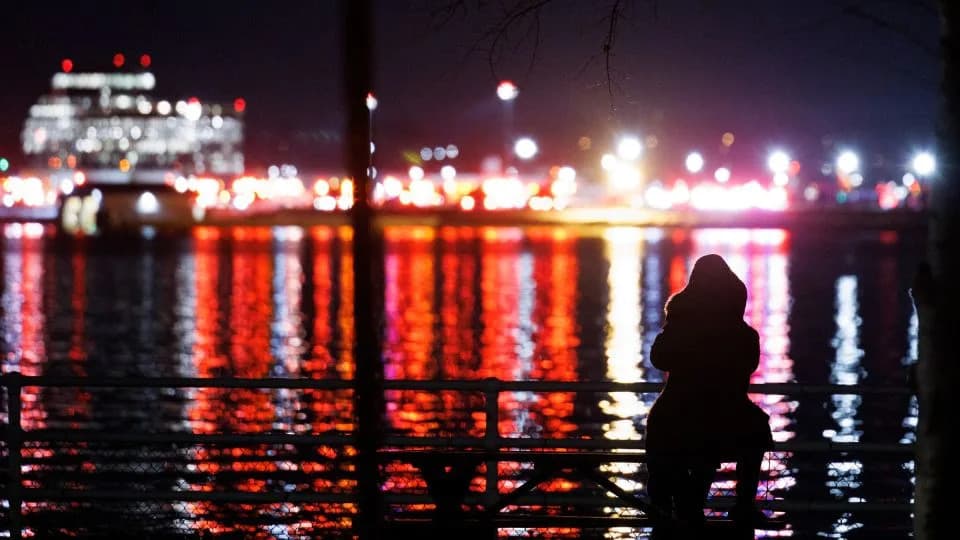
A person watches as crews search the Potomac River outside Washington Reagan National Airport on January 29, 2025, following the midair collision between a Black Hawk helicopter and a commercial airplane. - Aaron Schwartz/Sipa USA/AP
One year after the midair collision over the Potomac River on Jan. 29 — when an Army Black Hawk on a training flight and an American Airlines regional jet collided less than a mile from Ronald Reagan Washington National Airport — families of the victims continue to praise first responders for their professionalism, compassion and bravery.
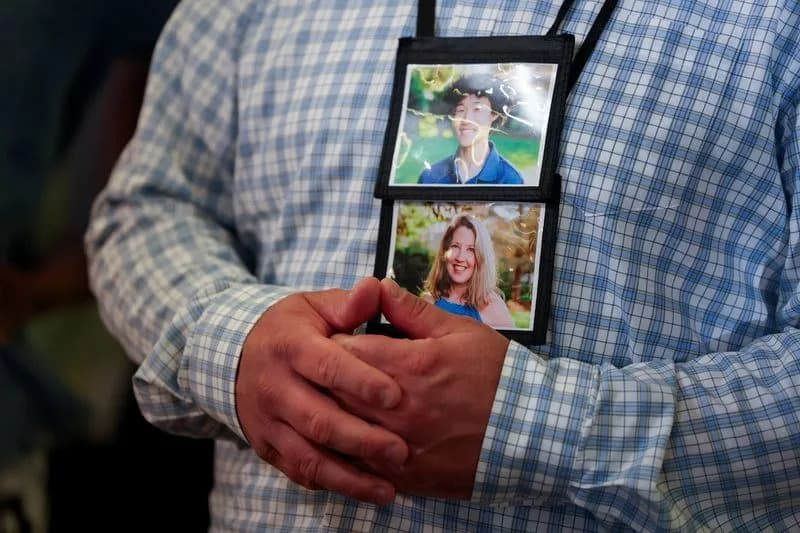
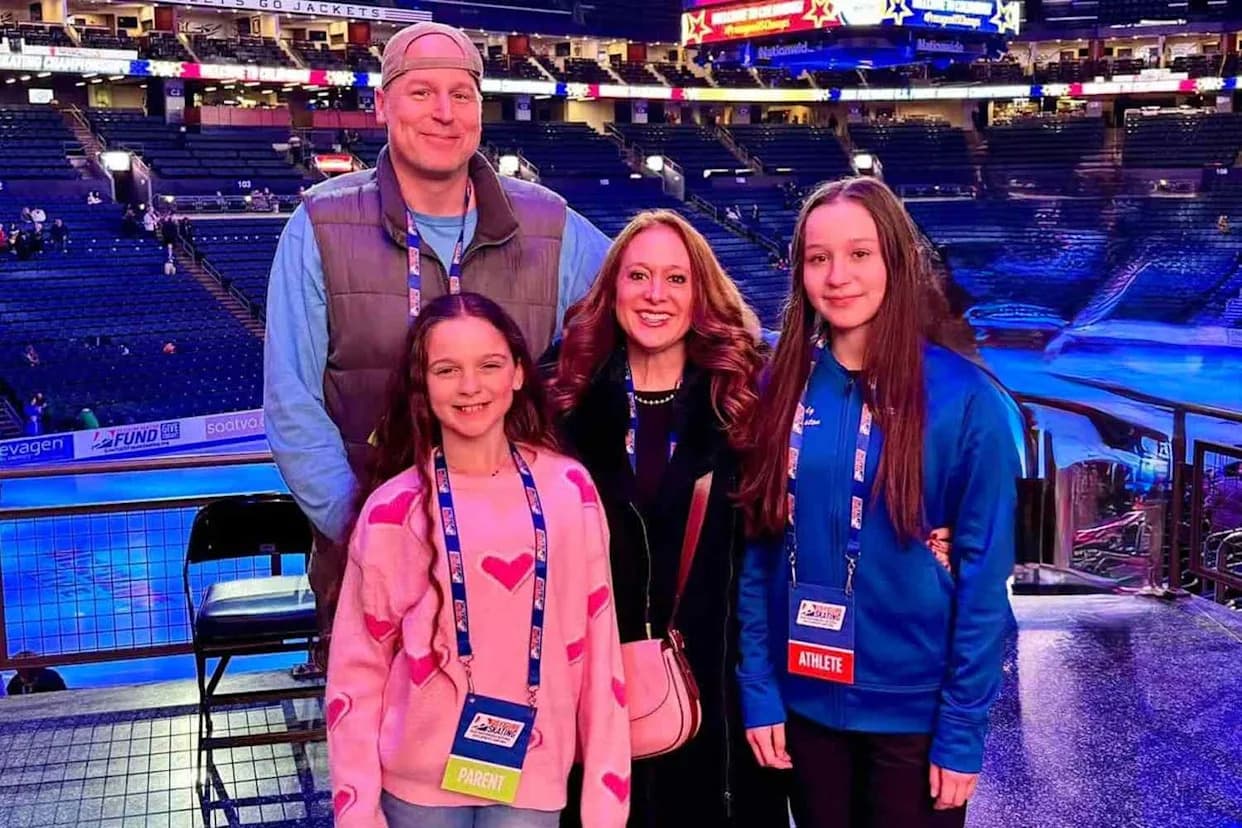
Doug Lane faced one of the hardest choices of his life that night. His wife, Christine, and their 16-year-old son, Spencer — an award-winning figure skater — were aboard the commercial flight. Lane was more than 400 miles away at home in Rhode Island with their younger son, and ultimately left the younger boy with relatives while he traveled to Washington with his sister.
The collision killed 67 people: 64 passengers and crew on the jet and three soldiers aboard the helicopter. In the year since, federal and congressional investigations and hearings have examined what happened; the National Transportation Safety Board has cited the helicopter’s close flight paths and the Army crew’s mistaken perception of a different aircraft as the probable cause.
Freezing Conditions, Technical Challenges
Rescuers arrived to a scene of cold, dark water that smelled of jet fuel and showed a rainbow sheen. Divers from the Metropolitan Police Department’s Harbor Patrol and other agencies worked in near-zero visibility and thick mud despite the wreckage resting in only a few feet of water. Veteran DC diver Malcom Gaines described the night as "icy, cold and dark" and said the operation was "chaotic but organized." Hand-held sonar, dive lines and methodical team rotations were critical as crews navigated jagged metal, exposed wiring and leaking jet fuel.
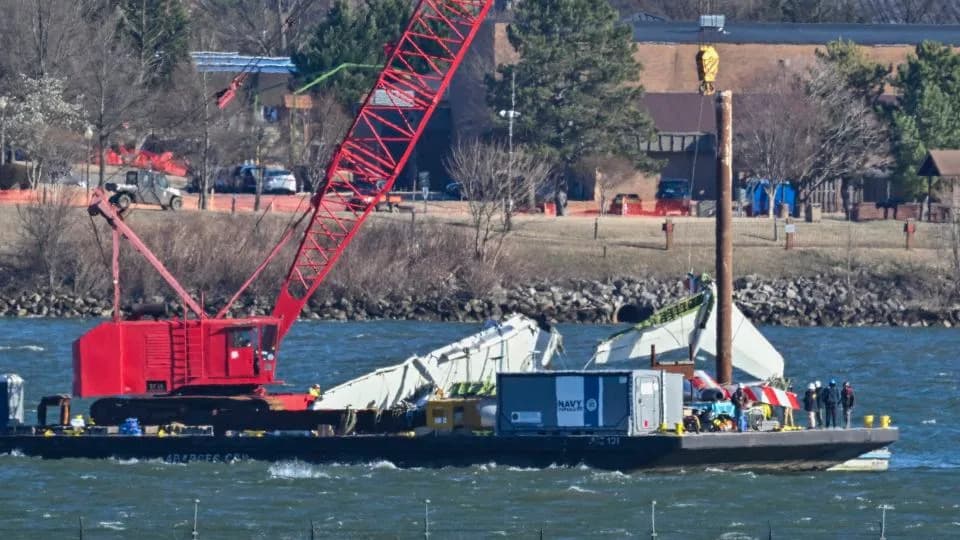
"When one person would get tired, there was somebody else to get in the water and take over," said Timothy Ochsenschlager, a Harbor Patrol diver who was among the first teams dispatched. Later, a crane was brought to the site to lift sections of wreckage that divers could not safely access.
Priorities Shift: Families, Notifications and Responder Care
Within an hour, first responders concluded there were no survivors. Leadership then shifted priorities to caring for victims' families, making personal notifications, and supporting their own personnel. DC Fire and EMS Chief John Donnelly Sr. said the Metropolitan Police Department's homicide division took on family notifications and that unified command activated peer support to address responder trauma. More than 500 personnel ultimately participated in the multiagency response.
Donnelly and Dr. Francisco Diaz, DC’s chief medical examiner, made themselves available to answer families’ questions. Lane singled out the lead forensic investigator for the DC Office of the Chief Medical Examiner for taking time to know the family and showing genuine care.
Moments Of Closure And Lasting Gratitude
The NTSB arranged private boat visits to the wreckage for families in the days that followed. Lane recalled seeing a boat posted at the site with personnel watching over the wreckage — a gesture that brought comfort to grieving relatives. Sheri and Tim Lilley, parents of First Officer Sam Lilley, asked the Harbor Patrol to lay a wreath at the crash site near what would have been their son’s birthday. The small ceremony, held on a dreary, drizzly day with music and prayers, offered a measure of closure for both the family and responders.
"They put their lives on the line to get our loved ones out with dignity," Tim Lilley said. "They did what they could. They tried really hard. … We are always going to be in their debt." Families and rescuers alike still carry the emotional weight of the response, but many say the compassion and professionalism they witnessed helped sustain them through the long recovery and investigative process.
The NTSB’s findings and continued federal review have advanced technical understanding of the crash, while personal moments — private site visits, returned belongings and conversations with responders — have helped families honor their loved ones and recognize the sacrifices of those who answered the call that night.

Spencer Lane - Doug Lane

Christine Lane - Doug Lane
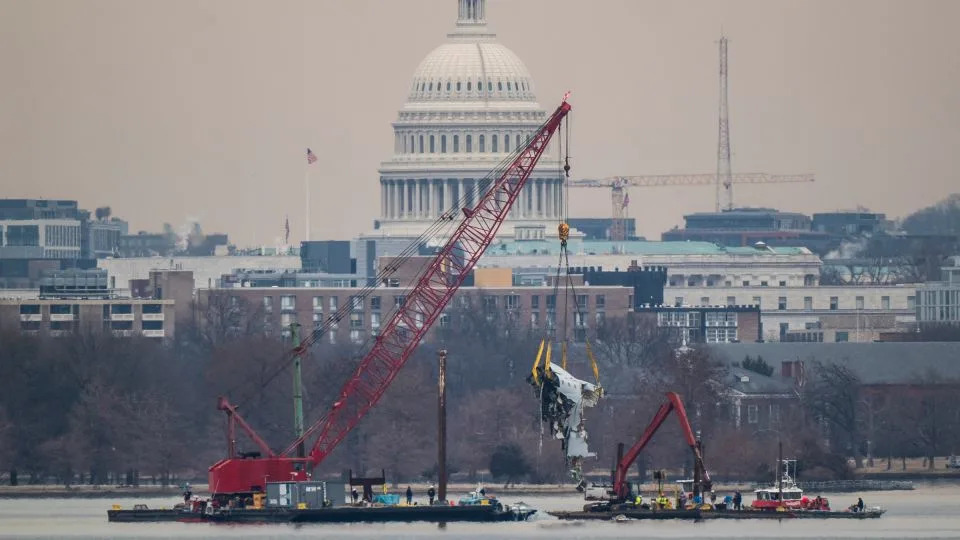
A crane is seen as it removes airplane wreckage from the Potomac River, where American Airlines flight 5342 collided with a US military Black Hawk helicopter, near Ronald Reagan Washington National Airport, on Monday, February 03, 2025. - Jabin Botsford/The Washington Post/Getty Images
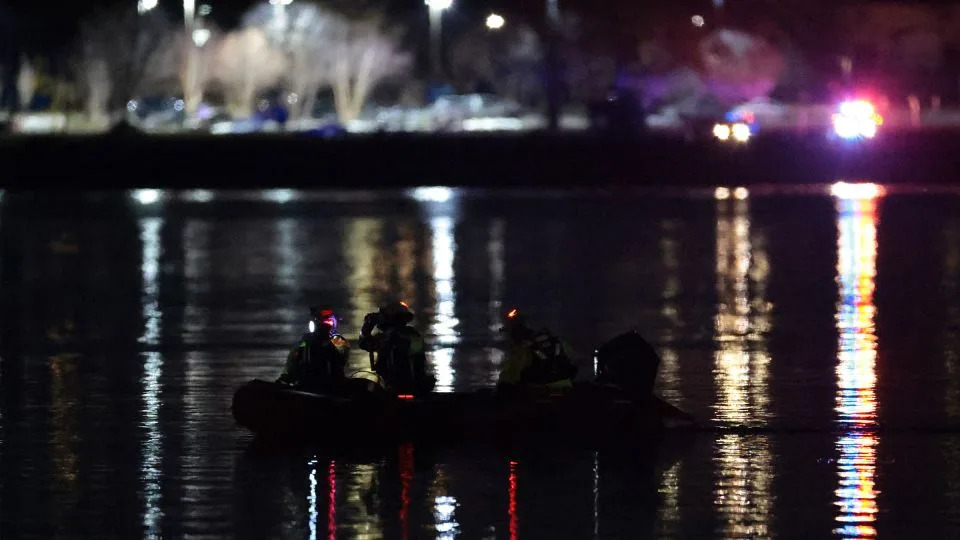
Emergency response units conduct search and rescue operations in the Potomac River near Ronald Reagan Washington National Airport on January 30, 2025. - Win McNamee/Getty Images
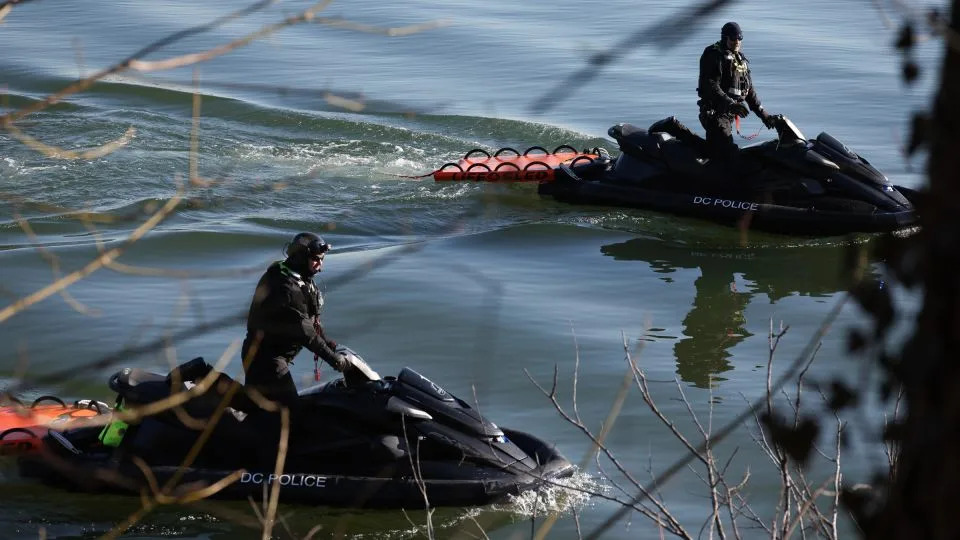
Washington, DC police help investigate near the crash site of the American Airlines plane on the Potomac River after the plane crashed into a military helicopter while on approach to Ronald Reagan Washington National Airport on January 30, 2025. - Tasos Katopodis/Getty Images
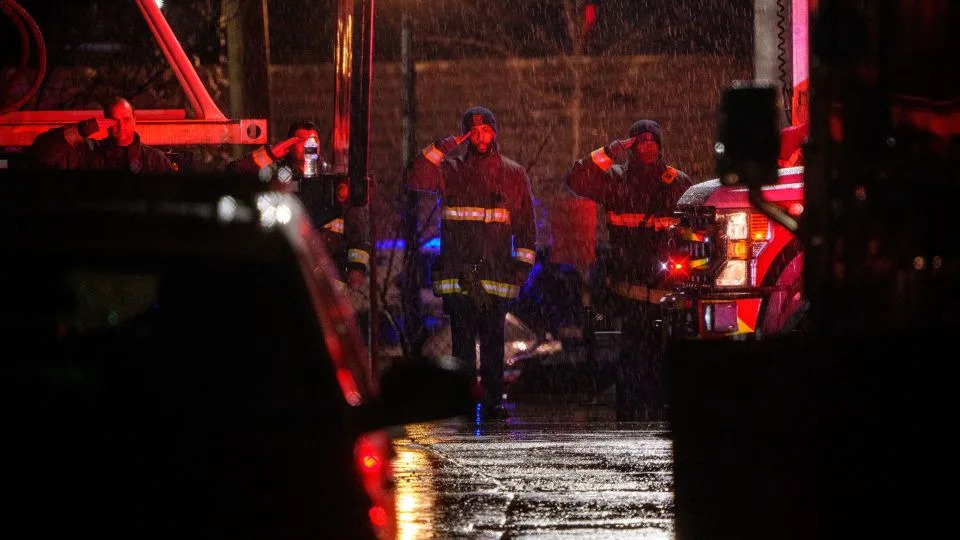
First responders salute as two ambulances carrying the flag draped bodies of service members killed in a midair collision depart a temporary emergency disaster site at Buzzard Point on January 31, 2025 in Washington, DC. - Andrew Harnik/Getty Images
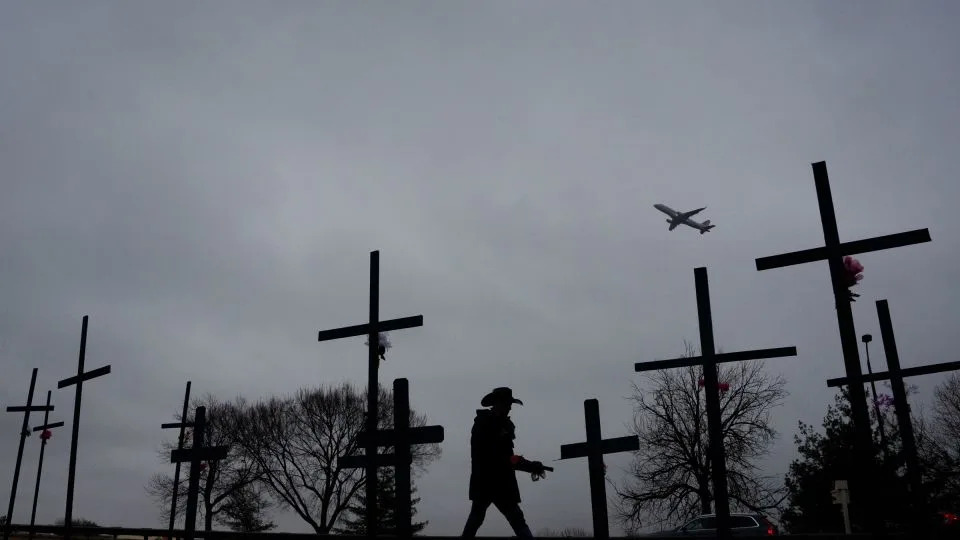
An airplane takes off from Ronald Reagan Washington National Airport as Roberto Marquez from Dallas, puts up crosses as part of a memorial for the victims of the midair collision between an American Airlines plane and a military helicopter earlier this week in the Potomac River, January 31, 2025 in Arlington, Virginia. - Andrew Harnik/Getty Images
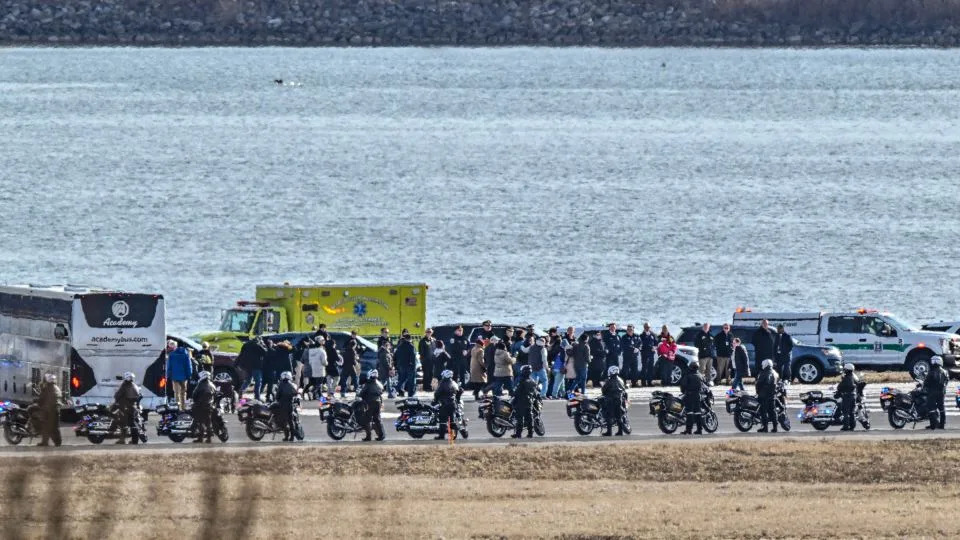
Family members visit the crash site on the banks of the Potomac River, where American Airlines flight 5342 collided with a US Army military helicopter, at Ronald Reagan Washington National Airport in Arlington, Virginia, on February 2, 2025. - Roberto Schmidt/AFP/Getty Images
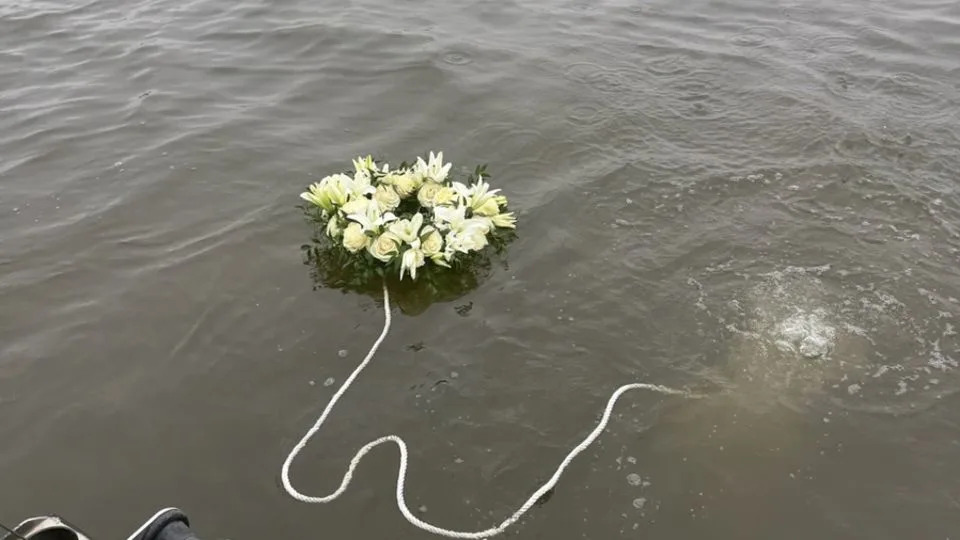
The wreath laid by the Lilley family in honor of their son Sam Lilley, the first officer on American Airlines flight 5342, at the site of the midair collision between the airplane and a US military helicopter. - Tim Lilley
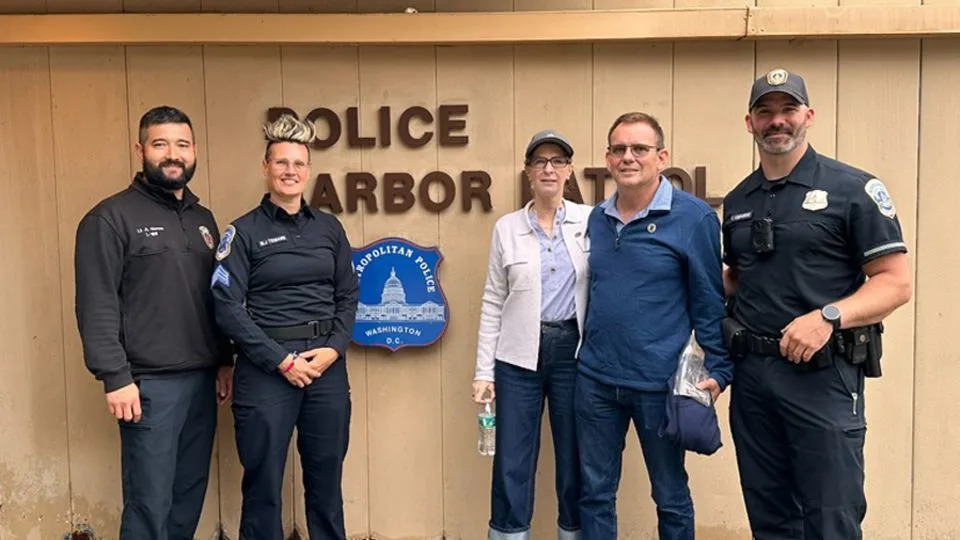
Tim and Sheri Lilley with first responders that worked the midair collision on January 29, 2025 and took them to lay a wreath at the crash site. - Tim Lilley
Help us improve.