The inaugural Surf Academy in Dakar’s Xataxely links surfing lessons to school enrolment to encourage girls to return to education. The four-month programme, run by Black Girls Surf with local support from pro surfer Khadjou Sambe, enrolled 23 girls aged 7–17, most of whom had never attended or had dropped out of school. Participants receive surf instruction, fitness and meditation during the day and attend night classes for out-of-school students, with the educational component continuing through July. Organisers say the initiative promotes broader personal development amid local economic and environmental challenges.
Dakar Surf Academy Uses Waves To Bring Girls Back To School
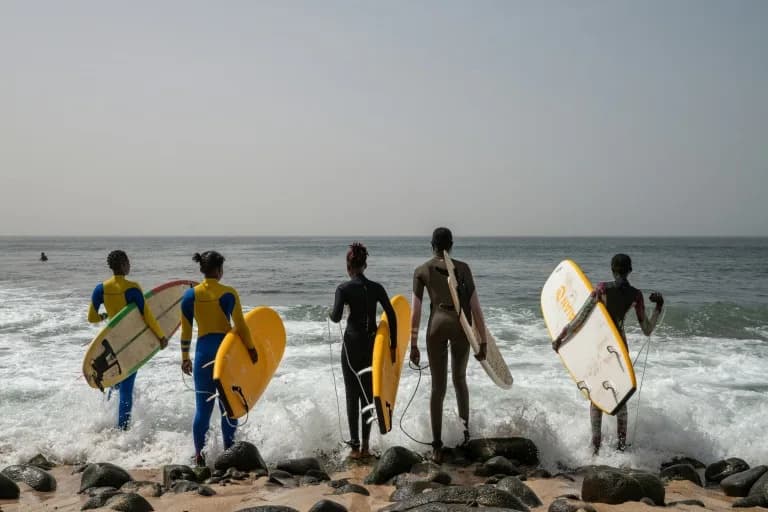
Surf Academy pupils train in Dakar's Ngor neighbourhood (NICOLAS REMENE)(NICOLAS REMENE/AFP/AFP)
For generations the people of Xataxely have lived by the sea — fishing, diving and rowing off Dakar’s coast. Now a new community initiative is using those same waves to help girls return to the classroom. The inaugural Surf Academy, run by US-based Black Girls Surf with support from Senegal’s first female professional surfer Khadjou Sambe, links surfing lessons to school enrolment as an incentive for education.
The first Dakar cohort included 23 girls aged 7 to 17, of whom 17 had never attended school or had dropped out. Nearly all participants are members of the Lebou fishing community and live within about 20 metres of the ocean. Over four months the programme provided surfboards, wetsuits and daytime sessions focused on surfing, fitness and meditation, while participants attended night classes through a local literacy centre for out-of-school students.
Holistic Development And Local Support
Black Girls Surf describes the Surf Academy as more than sport: it is a development programme aimed at nurturing confidence, life skills and educational attainment, said founder and director Rhonda Harper, 57. Khadjou Sambe — vice president of the Dakar chapter and a Lebou native of Xataxely — helps coach and promote local participation. Six girls who were already enrolled in formal schooling participated as an after-school and weekend activity, while the academy’s classroom portion continues through July following the end of practical sessions in January.
Barriers And Opportunities
Many families in Xataxely face economic constraints: fathers commonly work as divers searching for fish that have become scarcer because of industrial trawling, while mothers run small food stalls. As a result, some girls had to stop school; one participant, 14-year-old Seynabou Tall, left formal schooling nearly four years ago and has been "just staying at home" until joining the programme.
“We don’t have the means to pay for her studies,” said Seynabou’s mother, adding that surfing might ‘open doors’ for her daughter.
Basic education gaps are widespread nationally: UNESCO’s International Institute for Capacity Building in Africa reported 2022 primary completion rates of about 60% for girls and 55% for boys. The Surf Academy aims to address such gaps by combining practical skills, coaching and literacy classes; 16-year-old Soukeye Ndoye, a programme alumna who began with Black Girls Surf in 2019, now coaches younger participants and says the role has boosted her confidence.
Looking Ahead
Senegal will host the Youth Summer Olympic Games later this year — the first Olympic event held on African soil — but surfing will not be included among the 25 competition sports in Dakar, disappointing the local surf community. Sambe, who grew up just metres from the beach in Xataxely, remains determined: she is already eyeing qualification for the 2028 Los Angeles Olympics and continues to mentor girls who are now competing nationally.
The Surf Academy illustrates how community-driven sport programmes can tackle educational exclusion, build local leadership and create new opportunities for girls in coastal communities facing economic and environmental pressures.
Help us improve.