At the REAIM summit in A Coruna, just 35 of 85 participating countries endorsed a non-binding set of 20 principles to guide military use of AI, while the United States and China declined to join. The principles emphasize human responsibility, clear command-and-control, risk assessments, testing, and personnel training. Delegates said strained transatlantic relations and strategic caution discouraged wider support, and experts warned rapid AI advances risk outpacing governance.
US and China Opt Out as One-Third of Nations Back Non-Binding Military AI Principles at REAIM Summit
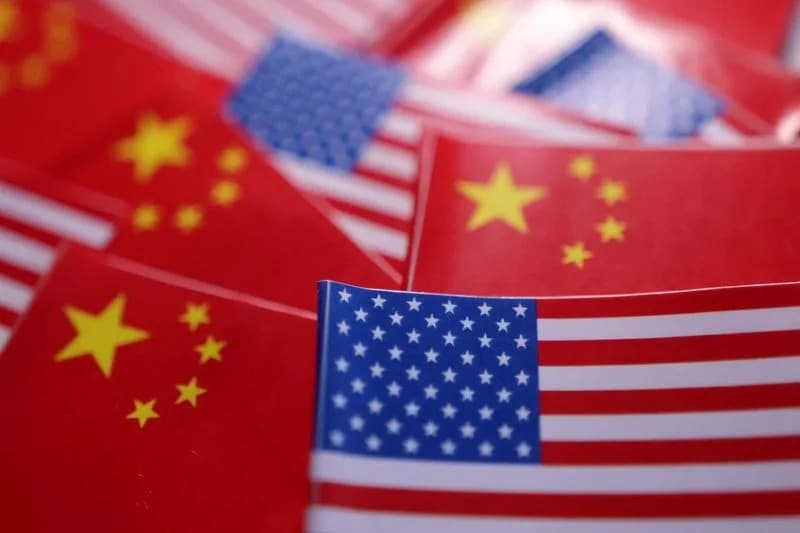
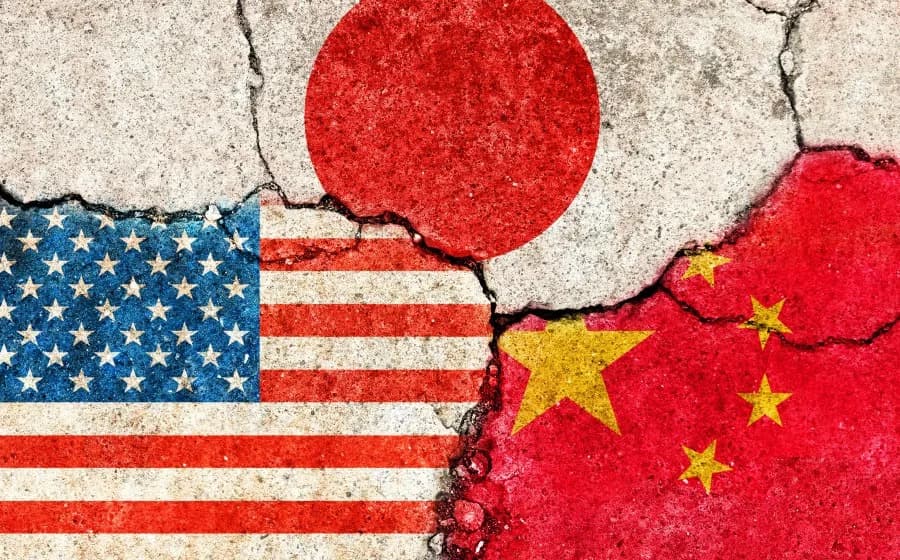
Illustration shows U.S. and Chinese flags
A Coruna, Spain, Feb 5 (Reuters) - Only 35 of the 85 countries attending the Responsible AI in the Military Domain (REAIM) summit in A Coruna on Thursday endorsed a non-binding set of 20 principles intended to guide the deployment of artificial intelligence in warfare. Major military powers the United States and China declined to join the declaration.
Delegates said tensions between the United States and some European partners — and uncertainty about the future shape of transatlantic cooperation — made several governments reluctant to commit to shared policies that might limit their strategic options.
The declaration reflects rising concern among governments that rapid advances in AI could outpace rules for military use, increasing the risk of accidents, miscalculation or unintended escalation.
What the principles say
- Affirm human responsibility for AI-enabled weapons and systems.
- Encourage clear chains of command and control.
- Promote information sharing about national oversight arrangements "where consistent with national security."
- Stress the importance of risk assessments, robust testing, and training and education for personnel operating military AI capabilities.
Dutch Defence Minister Ruben Brekelmans framed the dilemma facing states as a "prisoner's dilemma": governments must balance the need to adopt responsible limits with the fear of falling behind rivals.
"Russia and China are moving very fast. That creates urgency to make progress in developing AI. But seeing it going fast also increases the urgency to keep working on its responsible use. The two go hand-in-hand," Brekelmans told Reuters.
At earlier gatherings on military AI in The Hague (2023) and Seoul (2024), roughly 60 nations — excluding China but including the United States — endorsed a modest, non-binding "blueprint for action." Although this year's text was also non-binding, some participants remained uneasy about endorsing more concrete policies, said Yasmin Afina, a researcher at the U.N. Institute for Disarmament Research who advised the process.
Major signatories on Thursday included Canada, Germany, France, Britain, the Netherlands, South Korea and Ukraine. Organizers and attendees said the pledge represents a step toward greater coordination on responsible military AI, even as deep geopolitical fault lines limit broader consensus.
(Reporting by Victoria Waldersee; editing by Aislinn Laing and Mark Heinrich)
Help us improve.