The Oklahoma Statewide Charter School Board is expected to deny an application from the Ben Gamla Jewish Charter School Foundation, a decision officials say is shaped by recent state-court precedent and a split U.S. Supreme Court ruling in a related Catholic-charter case. Parallel lawsuits are underway in Tennessee (Wilberforce Academy) and Colorado (Riverstone Academy), raising similar questions about whether charter programs may include faith-based schools. Attorneys general and legal scholars are sharply divided, and many observers expect the dispute to return to the U.S. Supreme Court.
Oklahoma Charter Board Likely To Reject Jewish School Bid — Ruling Could Trigger Another Supreme Court Test On Religious Charters
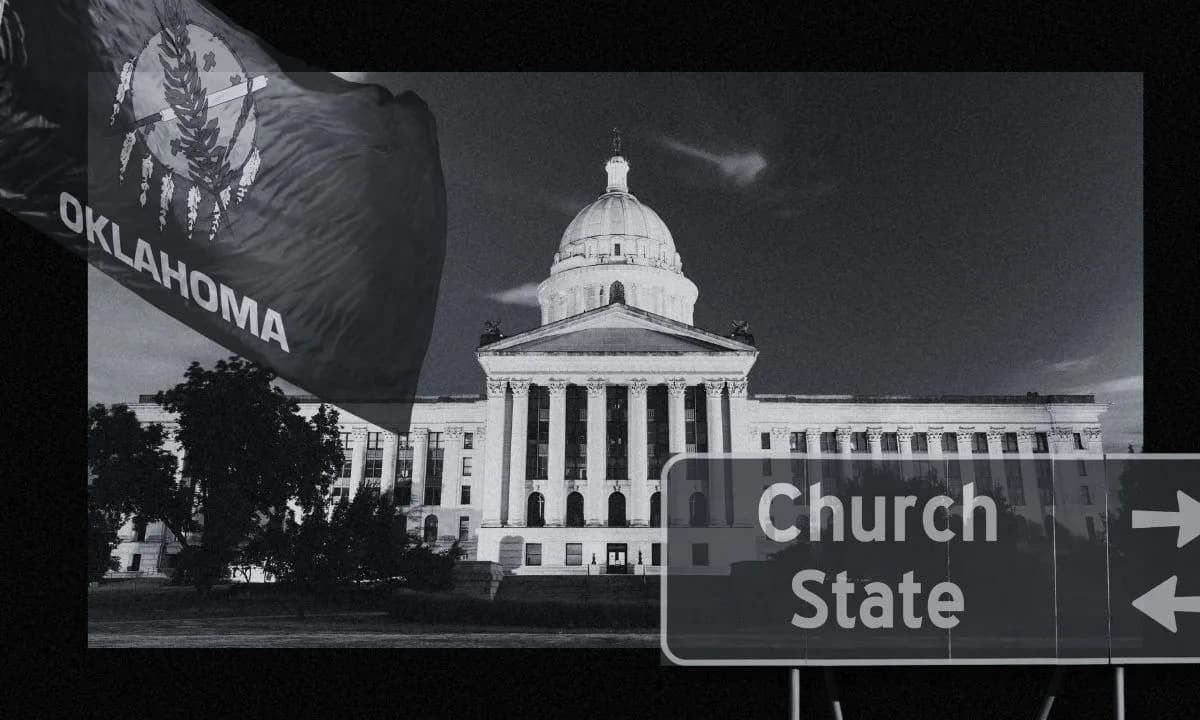
The Oklahoma Statewide Charter School Board is expected to deny an application from the Ben Gamla Jewish Charter School Foundation on Monday, though board leaders say they are prepared for the legal battle that refusal would likely invite.
Background
Peter Deutsch, founder of the Ben Gamla foundation and a former Democratic congressman, presented the proposal in January, saying the school would offer "a rigorous, values-driven education" for Jewish families in Oklahoma. Brian Shellem, chair of the statewide charter board, told The 74 that while the board "would like to grant" the application, it feels constrained by state-court precedent: "But we can’t snub our nose at the court either." He was referring to an Oklahoma Supreme Court decision last year that struck down the nation’s first Catholic charter school.
Legal Context And National Stakes
The Oklahoma ruling remains in force after the U.S. Supreme Court deadlocked 4–4 in the case involving St. Isidore of Seville Catholic Virtual School, after Justice Amy Coney Barrett recused herself. Legal observers say the Ben Gamla application — and any denial of it — is likely to produce further litigation that could again reach the U.S. Supreme Court and test the scope of the Establishment Clause in the charter context.
“It is hard for me to imagine the court doesn’t take the issue again when it comes to it,” said Derek Black, a constitutional law professor at the University of South Carolina. He added that justices inclined to allow religious charters would likely want a particularly strong factual record before agreeing to review another case.
Parallel Cases Around The Country
The debate over religious charters is already playing out in other states.
Tennessee — Wilberforce Academy
Wilberforce Academy of Knoxville, a nonprofit seeking to open a K–8 Christian charter, sued the Knox County school board after the district refused to accept its letter of intent. Tennessee law prohibits charter schools from being explicitly religious. Wilberforce’s filing asks for expedited relief and describes a religious curriculum — including early biblical literacy, catechism lessons by third grade and daily prayer and scripture readings at assembly — and argues the nonprofit is a private actor whose charter approval would not convert it into a government entity.
U.S. District Judge Charles Atchley Jr. allowed a group of opposing Knox County parents and religious leaders to intervene, writing that the case "has the potential to reshape First Amendment jurisprudence in the educational context" and benefits from "vigorous advocacy on both sides." Local opponents, such as retired school psychologist Amanda Collins, say the organization lacks local charter experience and suspect its legal strategy is designed to force a Supreme Court review.
Colorado — Riverstone Academy
Riverstone Academy in Pueblo County markets itself as having a "Christian foundation" and was permitted to operate within district boundaries. Reporting by Chalkbeat, including emails between district lawyers and the conservative Alliance Defending Freedom, suggests the school may have been founded at least in part to test legal boundaries about public funding for religious schools. After state education officials threatened to withhold funding because of Riverstone’s religious mission, the Colorado Department of Education funded the school’s 31 students but launched a thorough audit that could take up to a year to conclude. Riverstone also recently closed its building due to health and safety violations; it is unclear whether instruction is continuing remotely or elsewhere.
Officials And Legal Views
State attorneys general have taken contrasting positions. Colorado Attorney General Phil Weiser and Oklahoma Attorney General Gentner Drummond — both of whom have opposed St. Isidore — argued last year that public funding for explicitly religious charter schools threatens the constitutional boundary between church and state. Tennessee Attorney General Jonathan Skrmetti, by contrast, has argued that categorically excluding faith-based schools from public charter programs may violate parents’ free exercise rights.
Conservative legal scholar Ilya Shapiro frames the dispute in equity terms, arguing that excluding religious charters limits options for lower-income families who rely on publicly funded alternatives. Derek Black emphasizes the constitutional threshold question: whether approving religious charters involves state action that would trigger the Establishment Clause.
What Happens Next
With similar litigation active in Tennessee and Colorado and the Oklahoma board likely to deny Ben Gamla’s application, the legal dispute over religious charter schools appears destined for more courtroom battles — and potentially another definitive ruling from the U.S. Supreme Court. How those cases are framed factually and procedurally will be critical for any justices considering whether to revisit the issue.
Key players: Ben Gamla founder Peter Deutsch; Board Chair Brian Shellem; Wilberforce Academy; Riverstone Academy; Judges and state attorneys general including Phil Weiser, Gentner Drummond and Jonathan Skrmetti; legal scholars Derek Black and Ilya Shapiro.
Help us improve.