NATO navies are stepping up anti-submarine patrols off Norway to counter Russian submarines departing the Kola Peninsula and transiting the GIUK gap. Operation Arctic Dolphin — a multi-nation exercise — aims to detect, track and, if necessary, neutralize these threats while preserving alliance cohesion. Rising tension over Greenland and U.S. criticism of allies complicate collaboration even as NATO begins planning an "Arctic Sentry" mission to boost vigilance in the High North.
NATO Intensifies Arctic Patrols as Allies Hunt Russian Submarines Amid U.S. Frictions
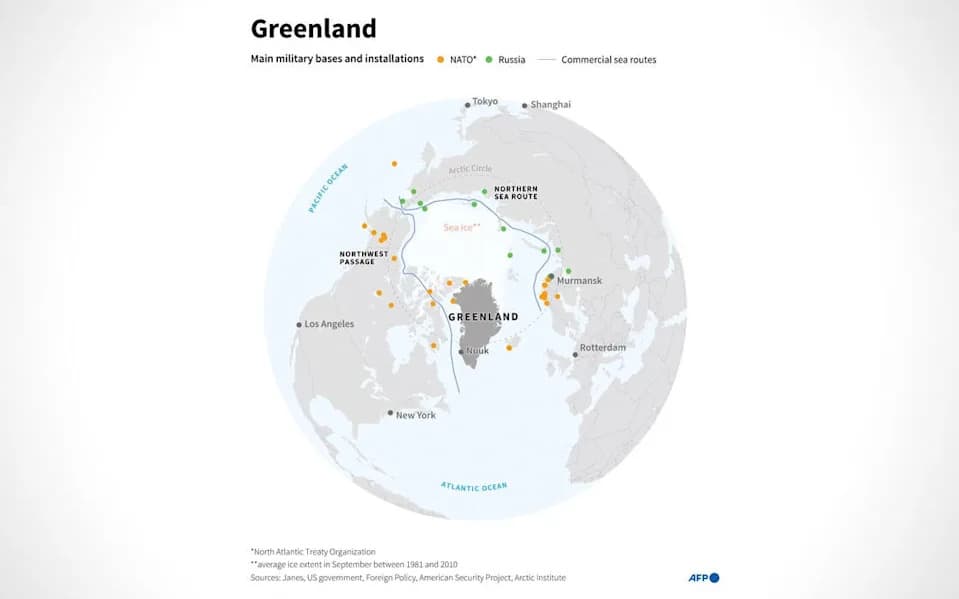
Arctic map shows Greenland and the Northern Hemisphere with locations of NATO and Russian military bases. / Credit: AFP via Getty Images
Bergen, Norway — In the icy waters off Norway's coast, NATO navies are intensifying anti-submarine operations to detect and deter Russian activity in the High North.
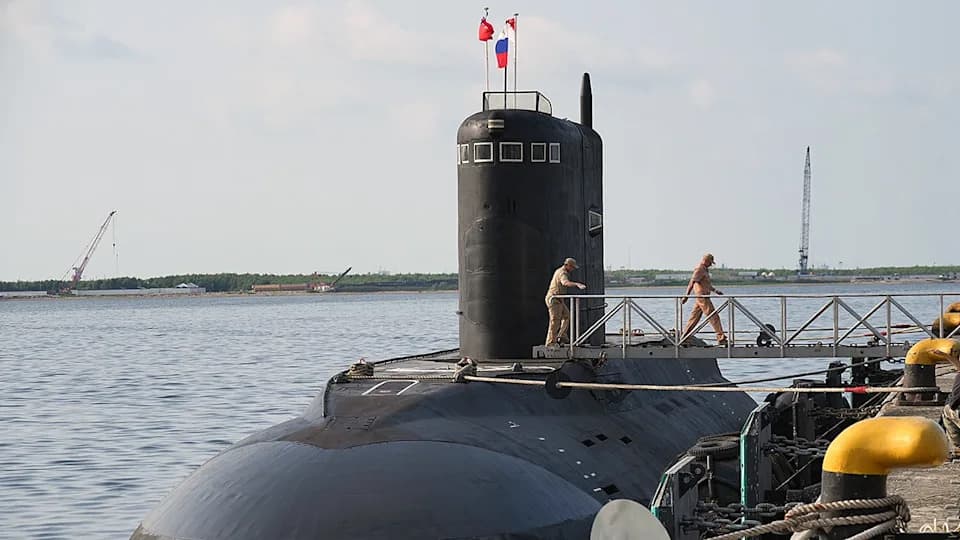
The sea lanes here, considered a gateway to the Arctic, mark where Europe's far north meets Russia's northern flank and the Kremlin's Northern Fleet. Nuclear-capable Russian submarines regularly deploy from the sprawling naval base on the Kola Peninsula, slipping under the waves and entering the North Atlantic toward the Greenland-Iceland-United Kingdom (GIUK) gap — a strategic corridor that could be a chokepoint in any wider conflict.
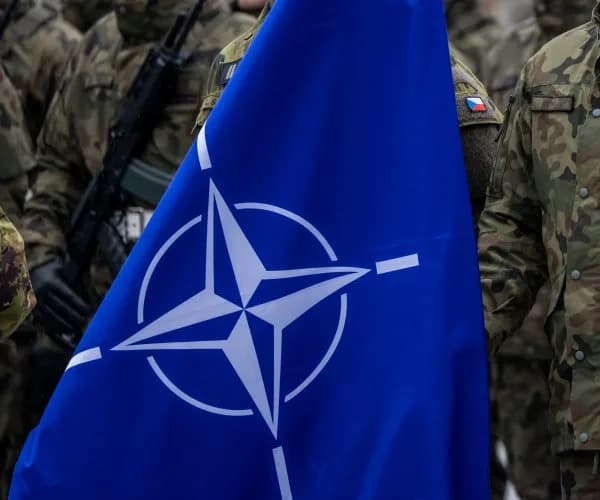
CBS News embedded with the crew of a NATO warship participating in Operation Arctic Dolphin, an exercise that brings together ships, submarines and aircraft from Spain, Germany, France, the U.K. and other partners. The drills are designed to detect, track and, if necessary, neutralize hostile submarines before they can transit into the Atlantic.
Why the High North Matters
Commanders stress that the region has regained urgency for both European and U.S. security. "Norway has the great advantage of being part of such a huge alliance," said Commodore Kyrre Haugen, who commands the Norwegian Fleet assigned to Arctic Dolphin. "But every nation is taking advantage of being part of something that is bigger than themselves."
"Those missiles can attack Europe, can attack America by being deployed in the deep seas, all into the Atlantic,"
— Commodore Kyrre Haugen, Norwegian Fleet
U.S. Air Force General Alexus Grynkewich, NATO's Supreme Allied Commander in Europe, has called the Arctic a "front line for strategic competition." Moscow has been testing hypersonic weapons in the region and expanding its Arctic presence. Seven of the eight Arctic states are NATO members; Russia controls more than half of the Arctic coastline and maintains numerous permanently manned bases across the region.
Alliance Cohesion, Domestic Politics
The drills come amid political friction with the United States. President Trump provoked allies by publicly proposing U.S. moves on Greenland and threatening tariffs on partners, then later announced a vaguely defined "ultimate long-term deal" over Greenland while continuing to criticize allies for insufficient defense spending.
On the Spanish frigate ESPS Almirante Juan de Borbón, Rear Admiral Joaquín Ruiz Escagedo pushed back on claims that Spain is not contributing to NATO: "I'm not going to dig into political dynamics," he told CBS News. "But I would say the contribution of Spain, you can see here." He stressed that Spain is committed to NATO's collective defense and that unity is the alliance's strength.
Looking Ahead: Arctic Sentry
NATO planners have begun developing Arctic Sentry, an enhanced vigilance activity intended to strengthen the alliance's posture in the Arctic and the High North. A NATO spokesperson said planning has "only just begun" and that more details will follow. The idea was first mentioned publicly by U.K. officials during negotiations that eased tensions over Greenland and has been compared to existing regional efforts such as Baltic Sentry and Eastern Sentry.
Officials say Arctic Sentry would bring together Arctic states and other NATO members to coordinate surveillance, exercises and shared security measures in a rapidly changing and increasingly contested region.
Reporting Note: CBS News reported from onboard NATO vessels and interviewed senior commanders involved in Arctic operations.
Help us improve.