Russia controls about half the Arctic landmass and has refurbished Soviet-era bases while keeping Novaya Zemlya and the Kola Peninsula as key nuclear and submarine hubs. The U.S. and Canada defend North America under NORAD and are modernising Arctic surveillance, with U.S. forces concentrated in Alaska and a base in northern Greenland. Denmark maintains a small Joint Arctic Command in Nuuk and Greenland patrols; Sweden, Finland, Norway and Iceland host a mix of air, naval and coastguard capabilities and are deepening NATO cooperation.
Factbox: Military Assets Across the Arctic — Who Holds What and Why It Matters
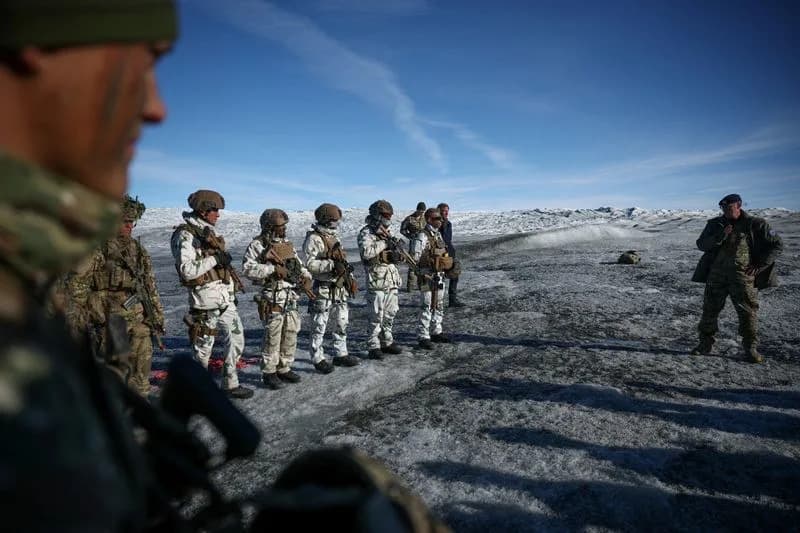
FILE PHOTO: Chief of Joint Arctic Command, Major General Soren Andersen speaks to members of the Danish and French armed forces during a military drill as Danish, Swedish, and Norwegian home guard units together with Danish, German and French troops take part in joint military drills in Kangerlussuaq, Greenland, September 17, 2025. REUTERS/Guglielmo Mangiapane/File Photo
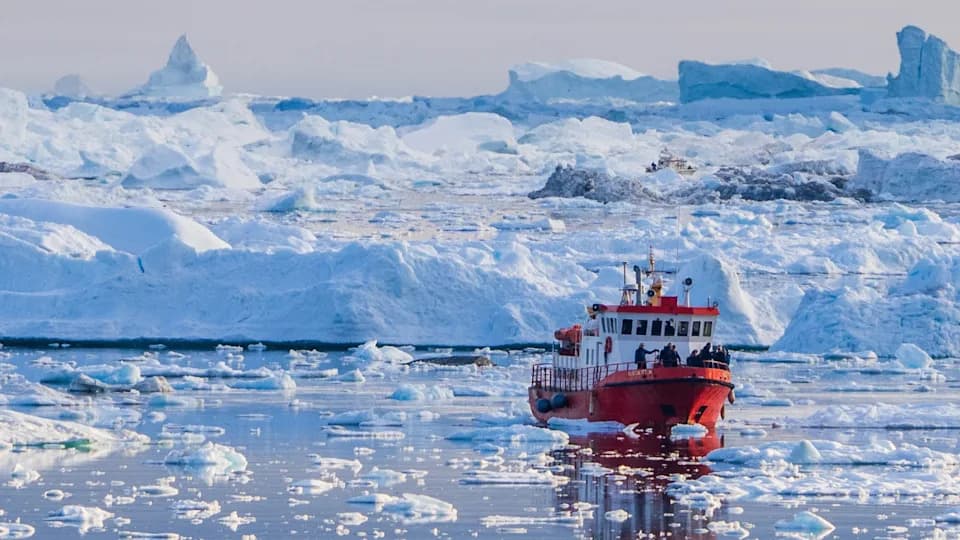
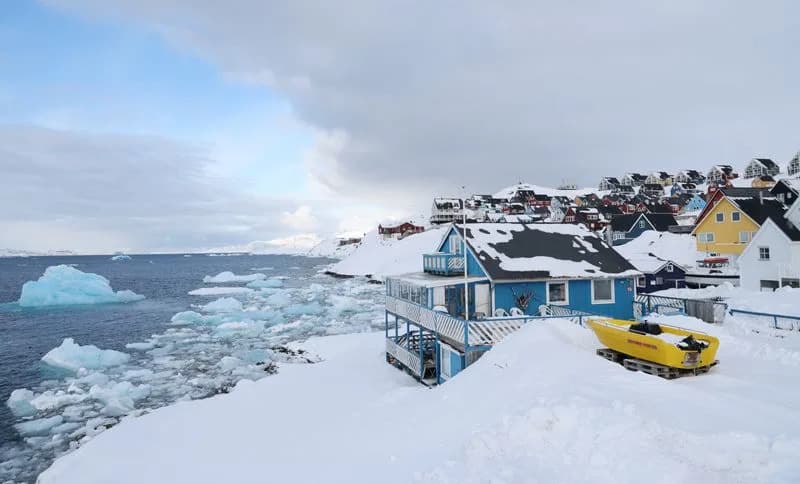
U.S. proposals to buy Greenland reignited attention on the Arctic's strategic importance. Denmark and Greenland rejected the idea, saying existing defence arrangements address security concerns. Eight countries have territory or major security interests in the Arctic — Russia, the United States, Canada, Denmark (Greenland), Norway, Sweden, Finland and Iceland — each with distinct military footprints and priorities.
Russia
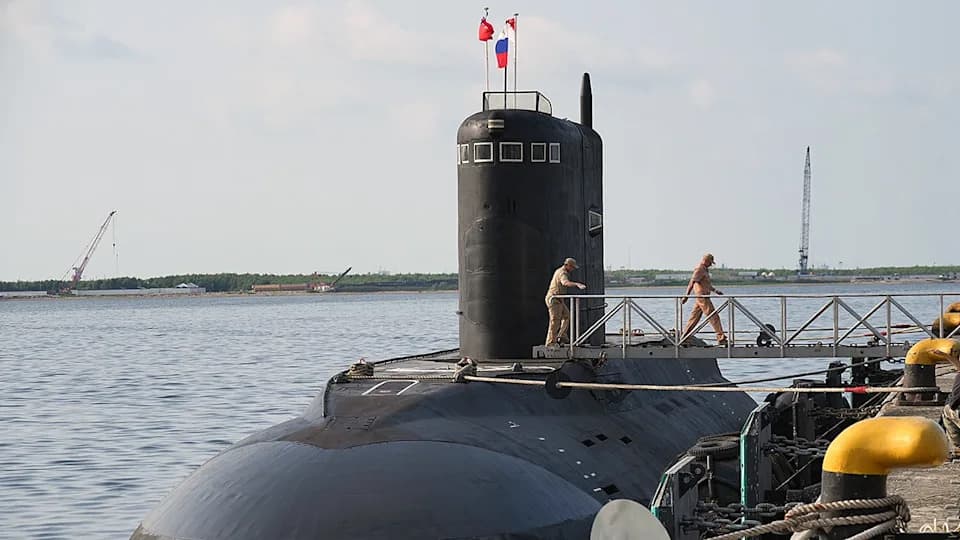
Russia controls roughly half of the Arctic landmass and, since 2005, has reopened and modernised many Soviet-era military facilities on both the mainland and offshore islands. Moscow maintains the Novaya Zemlya nuclear test site at a high state of readiness; in October 2019 it conducted a test launch of the nuclear-powered Burevestnik cruise missile from that archipelago.
The Kola Peninsula concentrates about two-thirds of Russia's second-strike nuclear forces, according to Mathieu Boulegue of the Wilson Center's Polar Institute. The Northern Fleet, headquartered in Severomorsk, operates six of Russia's 12 nuclear-armed submarines, while the Pacific Fleet in Vladivostok operates the others. The Northern Fleet's only route to the North Atlantic runs through the Barents Sea, making uninterrupted access through that corridor strategically vital for Moscow.
United States and Canada
Since 1957 the United States and Canada have jointly defended North America via the North American Aerospace Defense Command (NORAD). NORAD is being modernised: the International Institute for Strategic Studies reports Canada is procuring two over-the-horizon radar systems to cover Arctic and polar approaches, with the first expected to reach initial operating capability by 2028.
The United States operates the Pituffik Space Base (also known as Thule) in northern Greenland under a defence agreement with Denmark. Most U.S. Arctic forces are based at eight installations in Alaska and number roughly 22,000 personnel, according to IISS and U.S. Northern Command. Canada maintains five Arctic bases, including Alert on Ellesmere Island, the world's northernmost permanently inhabited station and an important signals-intelligence site. Canada is also developing a Baffin Island facility to refuel offshore patrol ships, a project that has experienced delays.
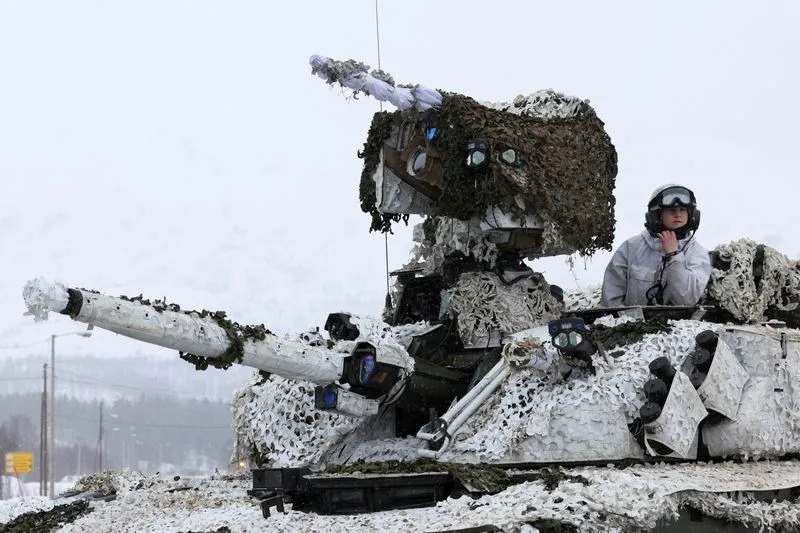
FILE PHOTO: A member of the Norwegian army participates in a military exercise called "Cold Response 2022", gathering around 30,000 troops from NATO member countries as well as Finland and Sweden, amid Russia's invasion of Ukraine, in Setermoen in the Arctic Circle, Norway, March 25, 2022. REUTERS/Yves Herman/File Photo
Denmark (Greenland)
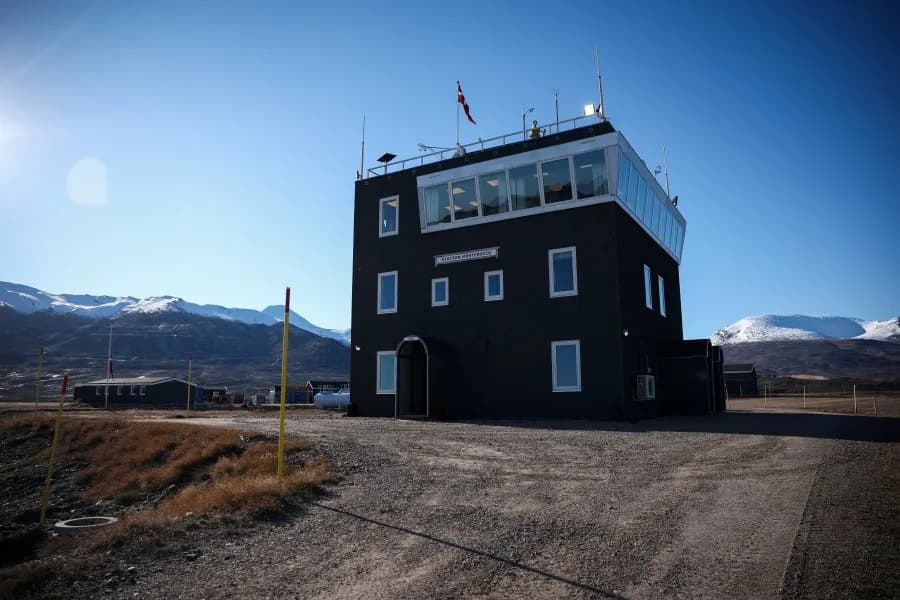
Denmark's Joint Arctic Command, headquartered in Nuuk, Greenland, comprises about 150 military and civilian personnel. The command operates from Kangerlussuaq air base and four smaller stations across eastern and north-eastern Greenland, and it maintains a liaison presence at Pituffik. Denmark's Sirius dog-sled patrol conducts long-range reconnaissance across polar terrain and remains a notable Arctic capability.
Sweden and Finland
Sweden has no bases north of the Arctic Circle but fields an air base at Lulea on the Gulf of Bothnia and an army garrison in Boden. Finland operates an air base at Rovaniemi on the Arctic Circle and a Jaeger Brigade further north in Lapland. Since joining NATO, both countries have been progressively integrating their forces with alliance exercises and command structures.
Norway
Norway acts as NATO's surveillance nation for a maritime area of roughly 2 million sq km (770,000 sq mi) of the North Atlantic, including Arctic zones. Many Norwegian military facilities lie north of the Arctic Circle: the country operates four air bases (one configured for F-35 fighters), two naval bases, a network of army installations and a reception centre for allied reinforcements. There are no military installations on the Svalbard archipelago under the treaty regime.
Iceland
Iceland is a NATO member with no standing military, only a coastguard. It hosts rotational deployments of U.S. Navy P-8A Poseidon maritime-patrol aircraft and periodic NATO fighter rotations at Keflavik air base near Reykjavik to maintain airspace security; these deployments typically last two to three weeks and recur several times a year.
Strategic Context
Climate change, longer ice-free seasons and new shipping routes have increased the Arctic's geopolitical and military significance. Nations are upgrading surveillance, infrastructure and forces to protect territorial claims, sea lines of communication and strategic deterrence capabilities. While the region remains sparsely populated, its military posture is growing in importance for NATO members and Russia alike.
Sources: International Institute for Strategic Studies' Military Balance 2025; Mathieu Boulegue/Wilson Center; NATO; U.S. Northern Command; Icelandic Government; Reuters reporting.
Help us improve.