President Trump told CNN that "a state is an agent for the federal government in elections" and defended calls to "nationalize" voting, arguing the federal government should step in when states run elections poorly. He cited a recent FBI search of an Atlanta elections office amid a Justice Department probe and urged federal involvement if votes are not counted "legally and honestly." The White House said Trump was referencing the SAVE Act and a push for national voter ID requirements. Legal experts note that, under the Constitution, election administration is primarily a state and local responsibility.
Trump Says States Are "Agents" Of Federal Government In Elections, Calls For National Oversight
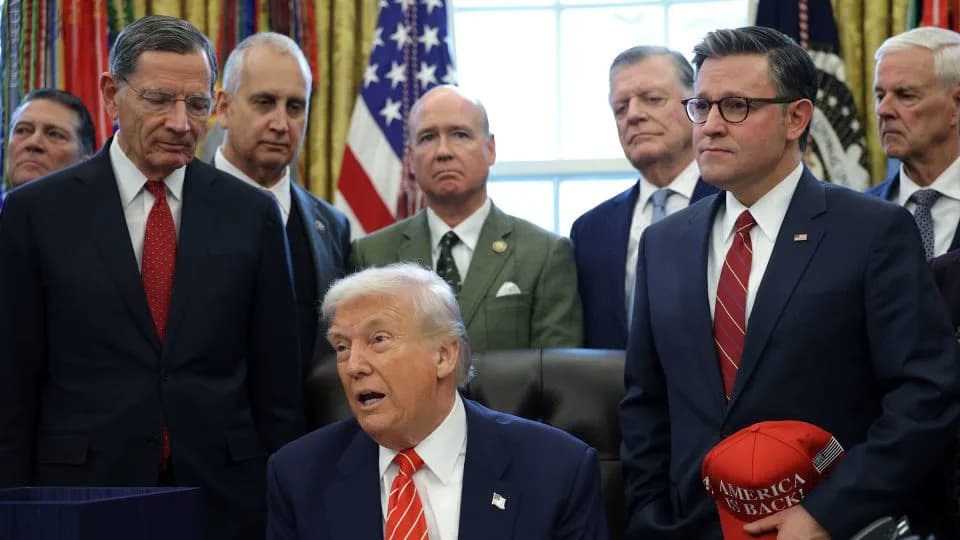
President Donald Trump attends a bill signing in the Oval Office of the White House on February 3, 2026. - Alex Wong/Getty Images
President Donald Trump on Tuesday defended his call for Republicans to "nationalize" elections, telling CNN's Kaitlan Collins during an Oval Office signing ceremony that "a state is an agent for the federal government in elections." He said he wants elections to be honest and suggested that when a state cannot run a fair vote, "the people behind me should do something about it."
"A state is an agent for the federal government in elections. I don't know why the federal government doesn't do them anyway," Trump said, calling it a "disgrace" that some states run elections so "horribly."
Under the Constitution and longstanding practice, elections are administered by state and local officials, with the federal government playing a limited role. Still, the Trump administration has pursued changes to how votes are cast and counted, arguing for greater federal oversight ahead of the midterm elections.
Trump singled out Atlanta — where the FBI searched an elections office less than a week earlier as part of a Justice Department probe into alleged voter fraud — and other Democratic-leaning cities as examples of "horrible corruption on elections." He said, "The federal government should get involved. These are agents of the federal government to count the votes. If they can't count the votes legally and honestly, then somebody else should take over."
Pressed on constitutional provisions that delegate election administration to state and local officials, Trump replied that local authorities may administer elections, "but they have to do it honestly." The White House later clarified that the president was referring to proposals such as the SAVE Act, which would require proof of citizenship to register to vote and includes voter ID measures.
Administration officials noted that noncitizens are already barred from voting in federal elections. Trump has repeatedly sought to change election rules, focusing on voting methods he says (without presenting conclusive evidence) enable fraud. His efforts also include promoting an uncommon mid-decade redistricting push intended to help Republicans win additional U.S. House seats.
Context: Legal scholars and election officials maintain that while the federal government can set certain standards and enforce protections (for example, through federal voting rights laws), day-to-day election administration is primarily a state and local responsibility. Proposals to "nationalize" elections or centralize control would face substantial legal and political challenges.
Help us improve.