New NAEP results show U.S. eighth graders performed worse in science and reported sharply lower interest and confidence compared with 2019: proficiency fell from 33% to 29% and average scores returned to 2009 levels. Declines occurred across physical, life and earth/space sciences, and fewer students reported hands-on inquiry experiences. Experts point to COVID-era disruptions and a focus on reading and math as major contributors; English learners showed a notable 6-point gain. The next eighth-grade science assessment is scheduled for 2028 with a redesigned test and more items for lower-performing students.
NAEP: U.S. Eighth-Grade Science Scores, Confidence and Interest Fall to 2009 Levels
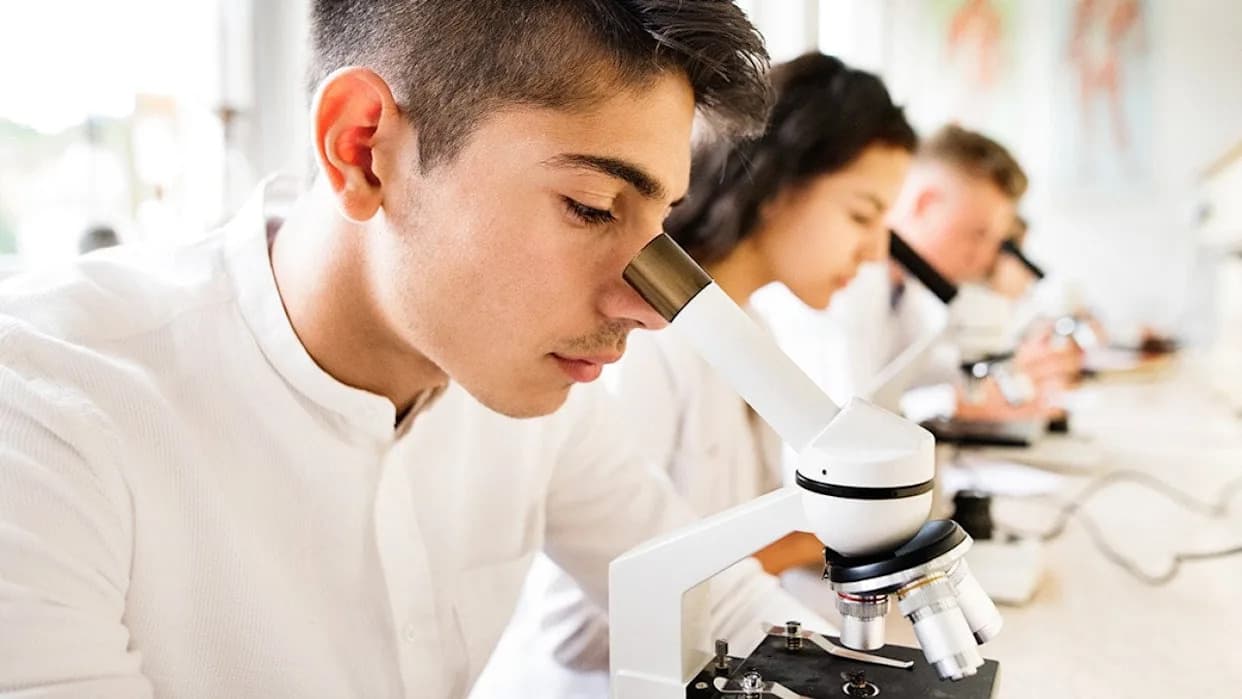
High school students working with microscopes in a laboratory. - Ground Picture // Shutterstock
U.S. eighth graders scored lower and reported far less enthusiasm for science in the first national NAEP science assessment since 2019, according to results released by the National Assessment of Educational Progress (NAEP).
Key Findings
NAEP found that the share of students scoring at the proficient level fell to 29%, down from 33% in 2019, and that the average score returned to levels last seen in 2009, when a revised test format was introduced. Students’ self-reported confidence also dropped: 28% now say they "definitely can do various science-related activities," compared with 34% in 2019.
Performance declined across all three tested domains — physical science, life science and earth and space science. For example, fewer than half of students could identify the major component of living cells (down from 55% in 2019), and the share who could name a characteristic of mammals dropped from 72% to 68%.
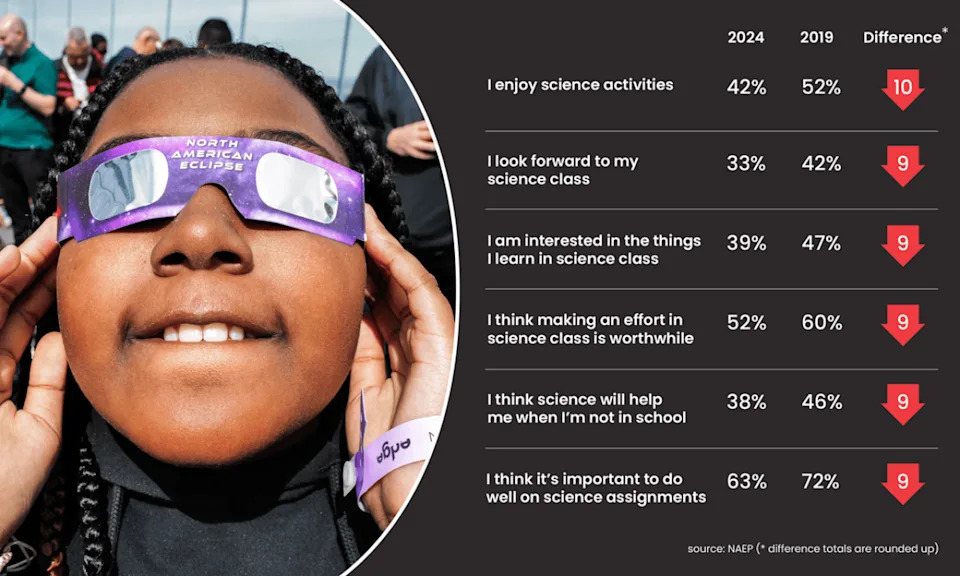
An infographic with survey results showing that students are significantly less interested in science and less motivated to do well in the subject than they were five years ago. - National Center for Education Statistics
Interest, Inquiry and Hands-On Learning
Perhaps most striking was the fall in students’ interest: the share who reported enjoying science activities fell from 52% to 42%. Students were also less likely than in 2019 to report participating in inquiry-focused tasks such as designing research questions, debating scientific ideas, or conducting experiments — activities that often spark engagement and deeper learning.
"If you’re not interested, it’s hard to learn," said Christine Cunningham, senior vice president of STEM learning at the Museum of Science in Boston and a member of the National Assessment Governing Board.
Why Scores Dropped
Experts point to COVID-era school closures and recovery priorities as major contributors. During remote learning, many districts prioritized reading and math recovery; a 2022 Public Policy Institute of California report found only about a quarter of districts emphasized science in recovery plans. Teachers also relied more on online, self-paced lessons that were difficult to make hands-on.
Teachers reported practical challenges: limited access to materials at home, weaker reading and math skills that make it harder to tackle science texts and data, and declines in consistent attendance and work habits. Autumn Rivera, a sixth-grade teacher in Colorado, described efforts such as family "kitchen chemistry" activities and simple experiments (like observing the water cycle in a plastic bag) to keep students engaged during remote instruction.
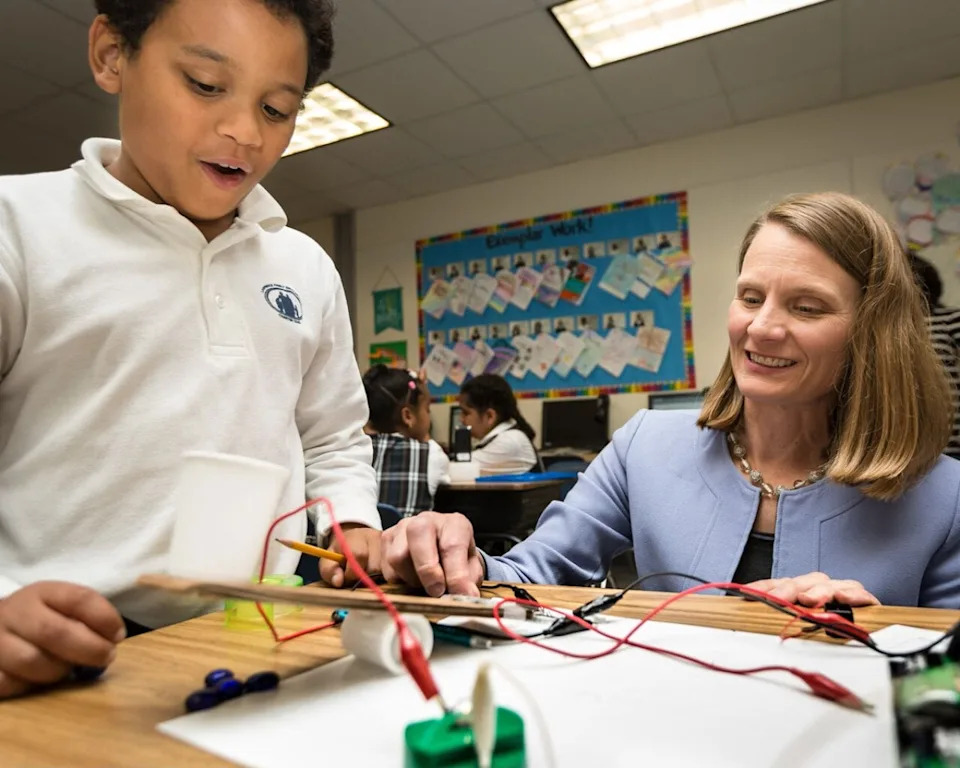
Christine Cunningham, a STEM learning expert and member of the National Assessment Governing Board, said lessons focused on inquiry are what make students excited about science. - Courtesy of Christine Cunningham
Subgroup Patterns And Gaps
The declines were widespread across demographics — suburban and urban students, wealthier and lower-income families, native English speakers and students without disabilities all saw lower average scores. However, one encouraging result was a 6-point gain for English learners, noted Matt Soldner, acting commissioner of the National Center for Education Statistics (NCES).
NAEP also shows a widening gap between high- and low-performing students: scores at the 90th percentile fell from 196 to 194, while the 10th percentile dropped from 106 to 101, with the 10th and 25th percentiles at historic lows.
Assessment Changes And Logistics
The next NAEP reading and math assessments are scheduled for 2026; the next eighth-grade science assessment is planned for 2028. That 2028 science test will use a redesigned instrument with greater emphasis on applying knowledge and expanded technology and engineering topics. The governing board also expanded the number of items that target lower-performing students to better understand what students below the basic level know; some items will be simpler and require less reading.
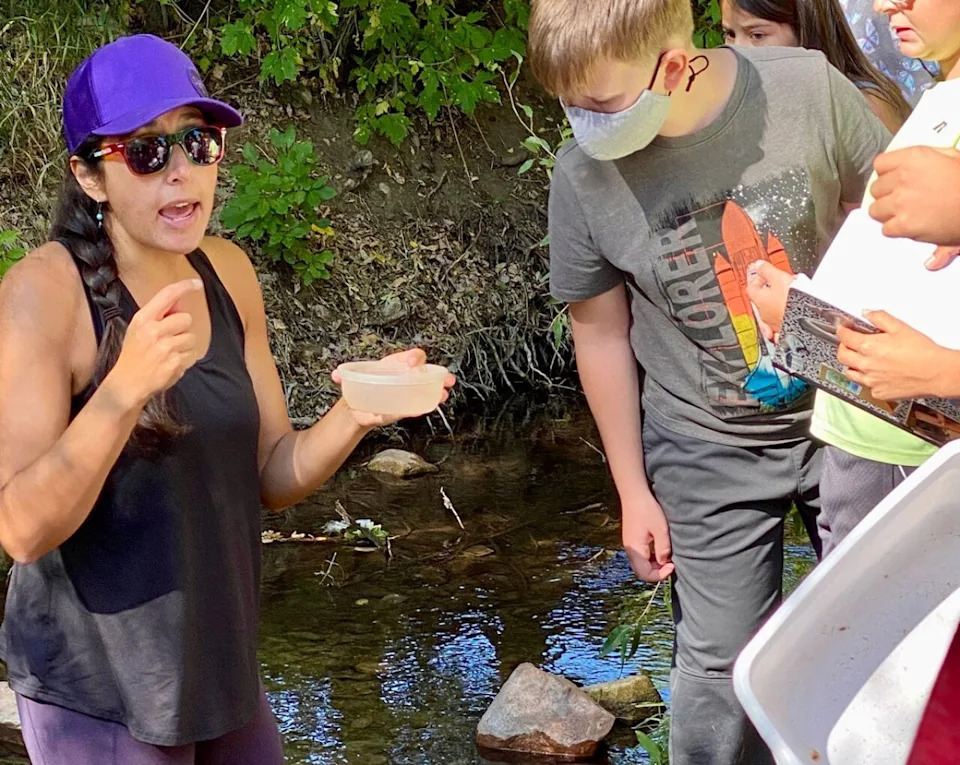
Colorado science teacher Autumn Rivera with students collecting specimens near a creek. - Courtesy of Autumn Rivera
Fourth graders were not included in the 2024 science administration and will not return to NAEP science until 2032 for budget reasons, a decision some experts said weakens early-grade monitoring. Staff reductions at NCES delayed the release of results, and officials said adequate staffing will be essential to administer future assessments.
Implications
Educators and policymakers said these results should prompt coordinated action to accelerate science learning, expand access to hands-on inquiry, and reinforce foundational reading and math skills that support science understanding. As technology and artificial intelligence reshape the workplace, several experts warned that weaker science preparation could hinder future workforce readiness.
Sources: NAEP results, National Center for Education Statistics, NWEA, Public Policy Institute of California, statements from education officials and classroom teachers.
Help us improve.