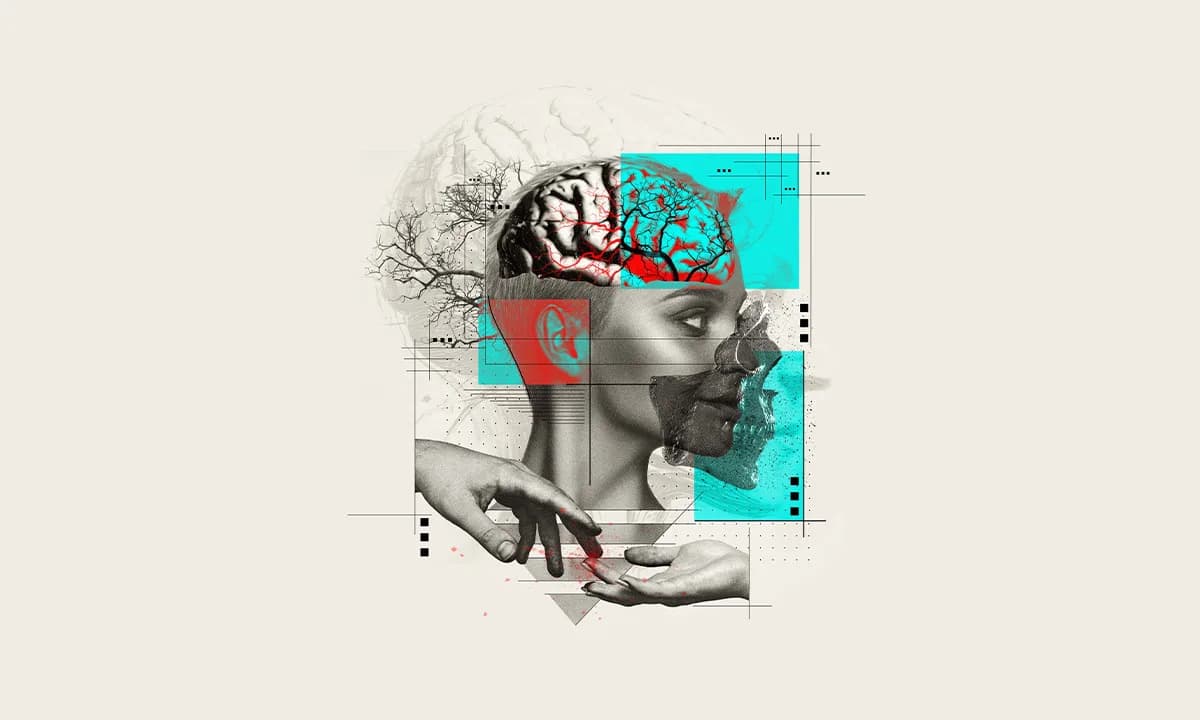
The Lewiston, Maine mass shooting raised questions about whether the shooter's extensive white-matter damage influenced his actions. New MRI connectivity methods let researchers map how damaged regions interact across decision-making and moral-emotion networks. A 2025 review of 17 cases found recurrent damage to the right uncinate fasciculus—the tract linking the amygdala and orbitofrontal cortex—in people who committed violent crimes after brain injury, but many caveats mean the relationship is contributory rather than deterministic.
Specific Brain Injuries May Increase Risk Of Violence — MRI Connectivity Maps Point To The Right Uncinate Fasciculus

Neurological evidence is widely used in murder trials, but it’s often unclear how to interpret it.gorodenkoff/iStock via Getty Images Plus
On Oct. 25, 2023, a mass shooting in Lewiston, Maine, left 18 people dead and 13 wounded. The shooter, Robert Card, was later found dead by suicide; his autopsy revealed extensive white-matter damage that some neurologists linked to a traumatic brain injury and suggested could have influenced his actions.
Why This Question Matters
Neurological evidence such as magnetic resonance imaging (MRI) is increasingly presented in criminal trials to assess whether brain damage may have contributed to violent behavior. Between 2014 and 2024, imaging evidence was introduced in about 12% of murder trials and 25% of death-penalty trials. Yet courts and scientists still debate how to interpret those images and which, if any, specific brain injuries can meaningfully alter behavior in ways that raise the risk of violence.
New Tools: Looking Beyond Structure to Networks
Advances in MRI and related connectivity-mapping techniques now let researchers go beyond static pictures of damaged tissue to examine how brain regions communicate. These tools reveal networks of gray- and white-matter connections that underlie complex functions such as decision-making, empathy and moral judgment.
Gray Matter vs. White Matter
Gray matter contains neuron cell bodies, dendrites and synapses where much of the brain's processing occurs. White matter is composed of myelinated fiber bundles that connect gray-matter regions and enable information flow—essentially the brain's highways.
The Right Uncinate Fasciculus: A Recurring Signal
Multiple imaging studies dating back to 2009 have implicated a white-matter tract known as the right uncinate fasciculus in some cases of violent or antisocial behavior. This tract connects the right amygdala, which processes emotion, with the right orbitofrontal cortex, which supports complex decision-making. But earlier work often left open whether the association was causal or incidental.
What the 2025 Review Found
In a 2025 review, we examined 17 published cases in which individuals with no prior criminal histories committed violent crimes (murder, assault, rape) only after sustaining focal brain damage from stroke, tumor or traumatic injury. We mapped each lesion onto a standardized atlas of healthy brain connectivity and compared these maps to imaging from more than 700 people with brain injuries who did not commit violent crimes and instead presented with other symptoms (for example, memory loss or depression).
Across the 17 criminal cases, damage to the right uncinate fasciculus recurred more frequently than any other locus. Because the violent behavior began only after the injury in these cases, the pattern supports the interpretation that damage to this tract can be a contributing—though not deterministic—factor in triggering violent acts.
Connections To Moral Emotion And Psychopathy
Other studies link damage to the right uncinate fasciculus with reduced empathy, suggesting the tract helps regulate emotional processes important for moral behavior. Research on psychopathy has reported abnormalities in the amygdala and orbitofrontal cortex—two gray-matter regions directly connected by the uncinate—further connecting this pathway to moral-emotional processing.
Caveats And Limits
Important qualifications apply. Many people with damage to the right uncinate fasciculus never commit violent crimes, and most violent offenders do not have damage to this tract. In short, injury to this pathway may increase risk in some individuals but is only one of many biological, psychological and social factors that influence violent behavior. Correlation does not equal inevitability or sole causation.
Practical Implications
Recognizing that focal brain injuries can elevate risk has several uses: it can help courts weigh neurological evidence when assessing criminal responsibility; guide clinicians in monitoring and managing patients with relevant injuries; and inform research into targeted interventions or rehabilitation strategies aimed at reducing risk.
Conclusions
Advances in MRI connectivity mapping are sharpening our understanding of how specific white-matter pathways contribute to decision-making and moral emotion. The right uncinate fasciculus has emerged repeatedly as a pathway of interest, but its role is complex and non-deterministic. Understanding these neural contributions helps bridge neuroscience and society by clarifying biological constraints on moral choice without excusing or oversimplifying human behavior.
Authors
Christopher M. Filley, University of Colorado Anschutz Medical Campus; Isaiah Kletenik, Harvard University; Patricia Churchland, University of California, San Diego.
Disclosures
Isaiah Kletenik receives funding from the NIH. Christopher M. Filley reports no relevant conflicts or financial interests.
Help us improve.