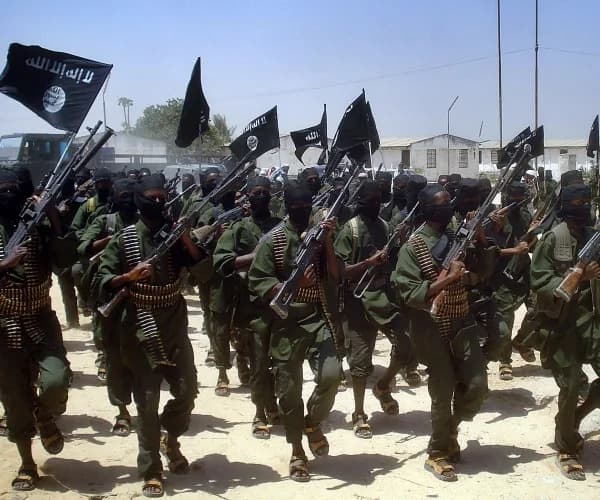
AFRICOM has stepped up airstrikes and intelligence support in Somalia to disrupt ISIS-Somalia and al-Shabab networks that U.S. officials say threaten the homeland. In 2025, AFRICOM and partners conducted 124 strikes, and January 2026 saw 26 additional attacks. Somali-based ISIS leader Abdulqadir Mumin is accused of directing global operations from the Golis Mountains, while Puntland forces — aided by U.S. ISR and air support — have reclaimed significant territory. The U.S. emphasis is on remote advise-and-assist, regional partnerships, and creating conditions for economic investment to reinforce security.
AFRICOM Escalates Airstrikes in Somalia to Disrupt ISIS, Protect U.S. Homeland
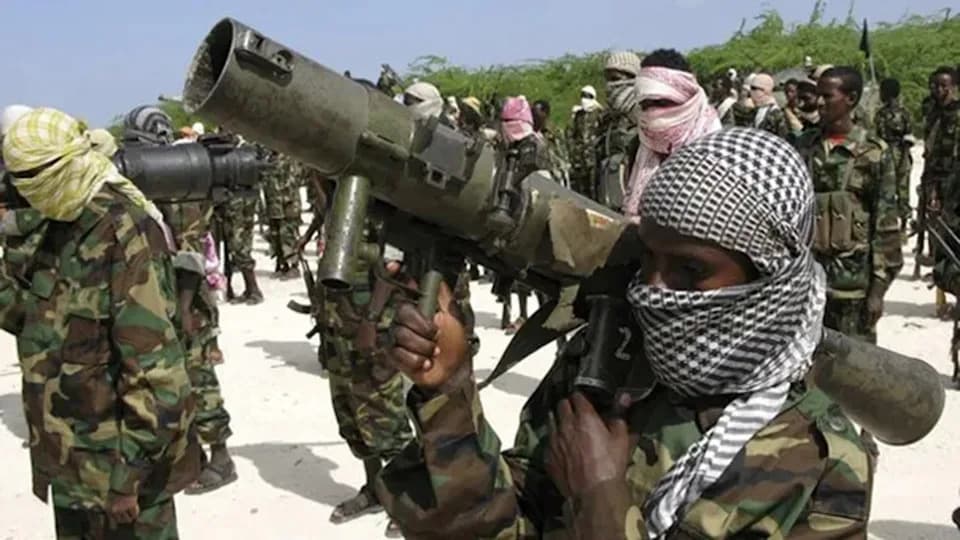
File from a handout released to Reuters by IntelCenter shows members of Somalia's Islamist rebel group al-Shabab in Mogadishu. Date unknown.(Reuters)
The U.S. Africa Command (AFRICOM) has sharply intensified airstrikes and intelligence support in Somalia to disrupt ISIS-Somalia and al-Shabab networks that U.S. officials say pose an external threat to the American homeland.
Lieutenant General John Brennan, AFRICOM’s deputy commander and a former Special Forces leader, told Fox News Digital that ISIS-inspired plots and organized ISIS resource cells remain capable of planning attacks beyond the region. He said the U.S. campaign focuses on denying militants time and space to plan operations and on enabling Somali and regional partners to reclaim territory.
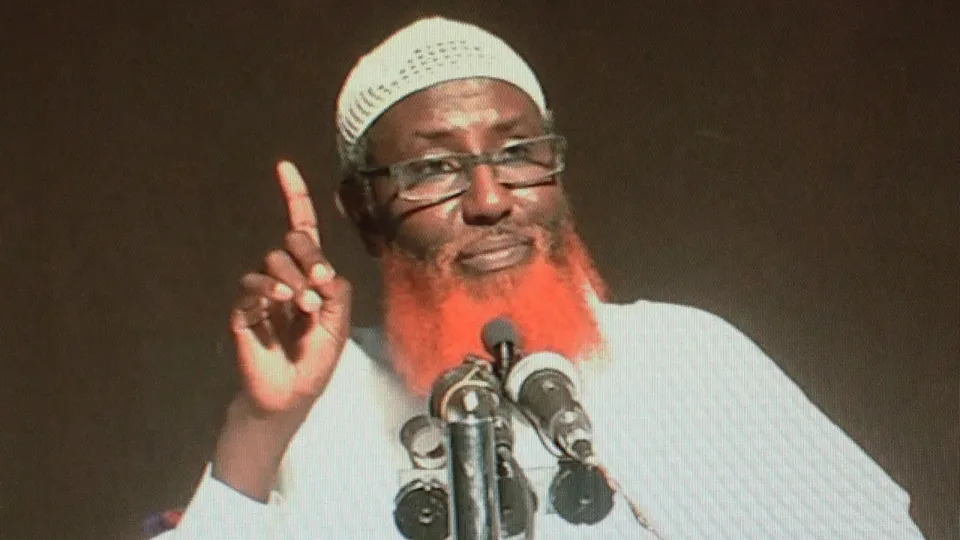
This picture taken on September 1, 2016, in Nairobi shows a computer screen displaying the portrait of Somali-born cleric Abdulqadir Mumin, accused of heading the Islamic State group in East Africa. He was put on a U.S. terror list.
"There's ISIS-inspired threats. They plot against the United States homeland as well as Europe... When you give a terrorist organization that has resourcing like ISIS time and space to plot and plan, those ISIS and terrorist-led attacks can happen," Brennan said.
AFRICOM reported that, in 2025, U.S. forces and partners conducted 124 airstrikes against ISIS-Somalia and al-Shabab positions and facilities — a figure AFRICOM describes as roughly 12 times the number of missions reported in 2024. In January 2026 alone, the command conducted an additional 26 strikes compared with 10 for all of 2024.
Who Is Leading ISIS-Somalia?
Brennan identified Somali-born Abdulqadir Mumin as a central ISIS figure operating from the Golis Mountains. AFRICOM officials say Mumin and his associates direct operations that extend beyond East Africa to Europe, the Far East and potentially the U.S. Brennan confirmed U.S. forces are actively pursuing him and said the goal is to deny him safe havens.
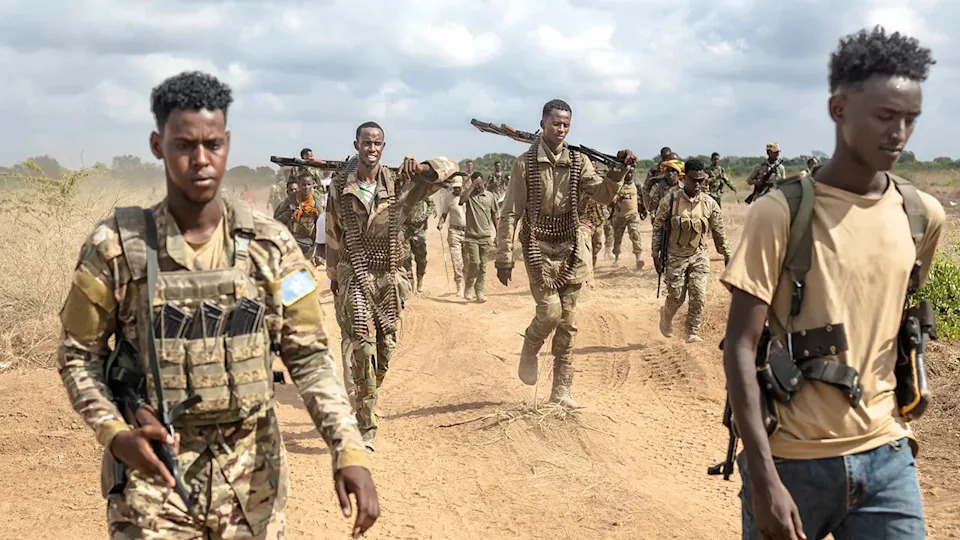
Soldiers of the Somalia National Army walk near Sabiid, one of the towns they have liberated from al-Shabab, in Somalia on Nov. 11, 2025.
Partner-Led Operations and U.S. Support
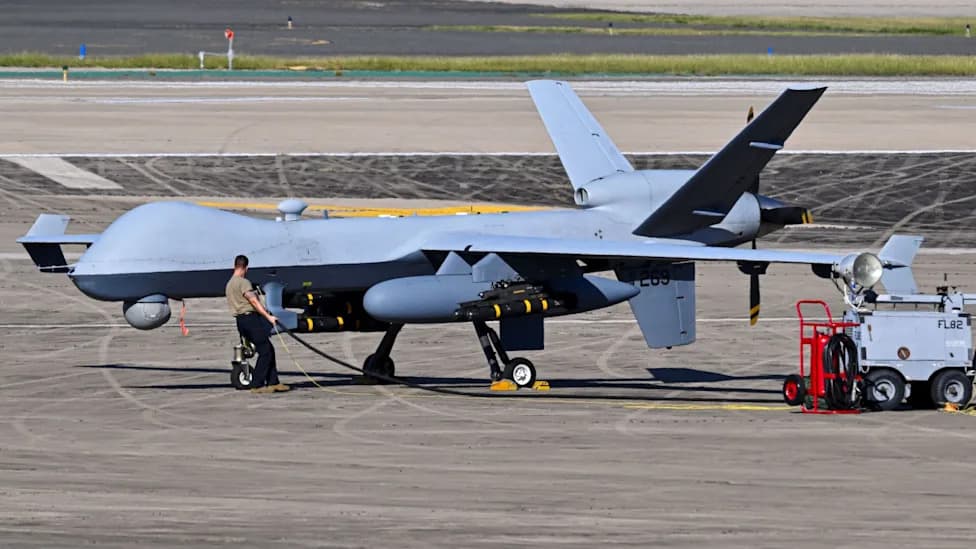
The U.S. role in Somalia in 2026 emphasizes "remote advise-and-assist" activities: providing ISR (intelligence, surveillance and reconnaissance), precision fires and capabilities that local forces use to plan and execute ground operations. Brennan credited the Puntland Defense Forces (PDF) with retaking large swaths of territory in Puntland with U.S. ISR and airstrike support, capturing fighters and seizing materiel.
AFRICOM also shares ISR feeds and moving-map displays with Somali units so partner commanders can see what U.S. aircraft observe in real time. U.S. helicopters sometimes transport Somali forces to operations and provide strike support when needed.
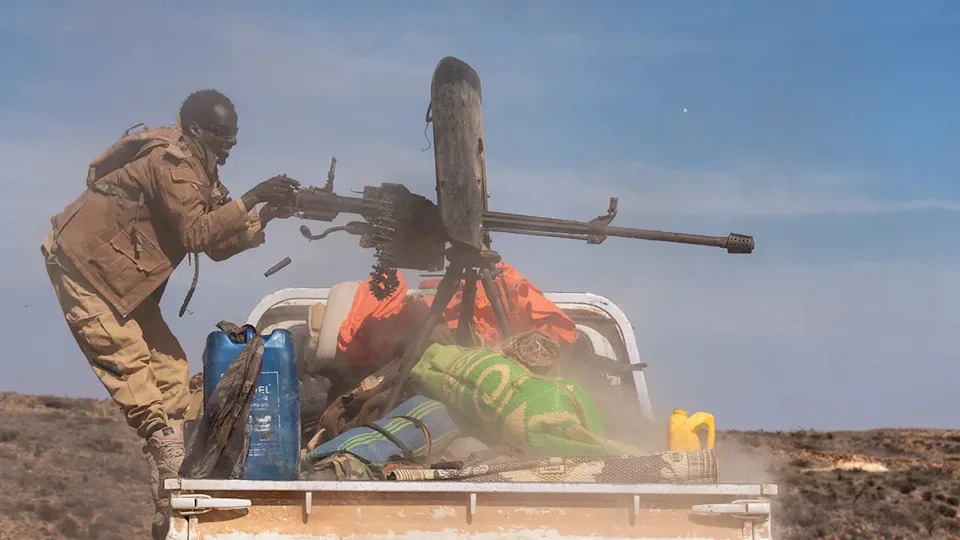
A soldier with the Puntland Defense Force fires a machine gun at a former Islamic State stronghold near Daabdamale, Puntland, Somalia on Jan. 25, 2025.
Al-Shabab and Regional Dynamics
Al-Shabab remains a potent and evolving threat in southern Somalia. Brennan said the group — al Qaeda’s most able affiliate in the region — has intensified coordination with the Houthis, expanding its regional footprint and aspirations to seize Mogadishu. While its external operations appear more limited than ISIS-Somalia’s, al-Shabab is described as well financed and intent on creating an al Qaeda stronghold.
Ambassador Robert Scott, AFRICOM’s deputy for civil-military engagement, highlighted regional cooperation: Kenya, Ethiopia, Uganda, Somaliland, Puntland and Jubaland have helped share the operational burden through joint engagements and support to Somali forces.
Security Gains and Economic Prospects
Brennan suggested that improving security could unlock economic opportunities for Somalia, including potential critical minerals and offshore liquefied natural gas (LNG) resources. He argued that private-sector investment, combined with security gains, could reinforce stability and provide a durable guarantor of prosperity.
Outlook: AFRICOM frames the intensified campaign as a preventive strategy to protect the U.S. homeland by degrading extremist networks in Somalia and enabling regional partners to hold and stabilize liberated areas. The command says continuing partner capacity-building and intelligence cooperation are critical to sustaining progress.
Help us improve.