The article explains the simulation hypothesis—the idea that our universe might be an advanced computer simulation—and traces it from philosophical scepticism (Zhuangzi and Plato) to Nick Bostrom’s modern probabilistic argument. It outlines why some think the idea is compelling (technological trends and apparent physical limits) and presents major objections, including the enormous computing power required and the lack of direct evidence. The piece concludes that the hypothesis is thought‑provoking but remains speculative.
Are We Living in a Simulation? What the Argument Means and Why It Still Matters
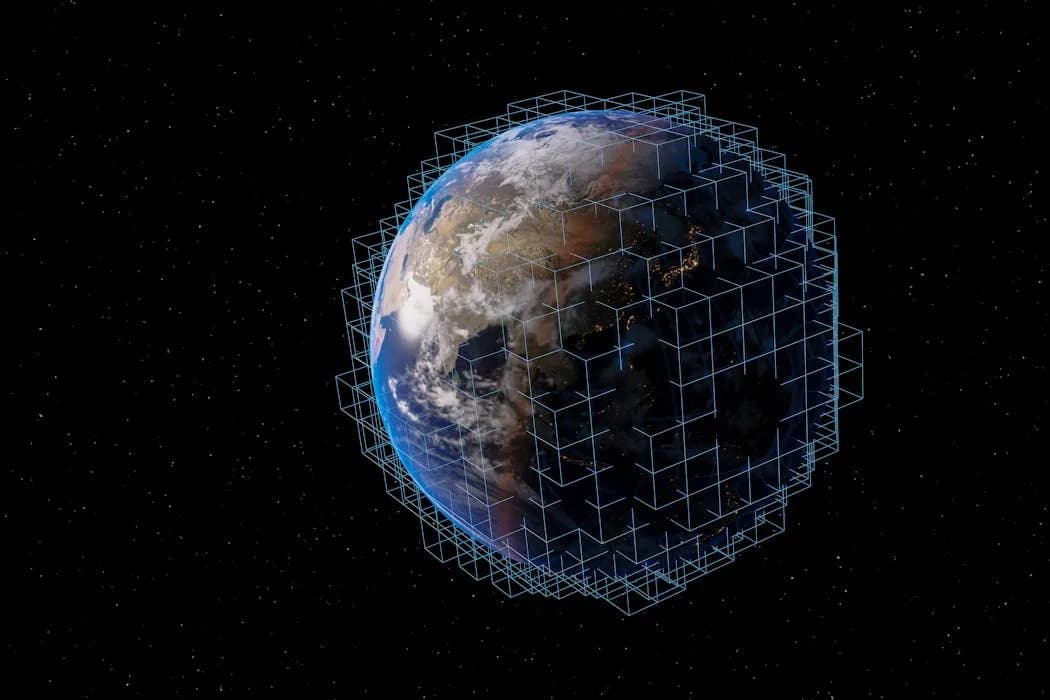
Could the Earth and everything on it – and even the whole universe – be a simulation running on a giant computer?OsakaWayne Studios/Moment via Getty Images
Question: Is the whole universe just a simulation? — Moumita B., Age 13, Dhaka, Bangladesh
How can we be sure anything is real? Some things you can check directly, like your fingers. Others—such as the underside of your chin—need a mirror or a camera. And many things are invisible to the senses but accepted because a parent, teacher or book told you they exist.
As a physicist, I use delicate instruments and advanced mathematics to test what is real. Yet none of these information sources is flawless: measurements can be wrong, calculations can contain mistakes, and even our eyes can be fooled—think of the viral dress that divided people about its colours.
What Is the Simulation Hypothesis?
The simulation hypothesis suggests our universe could be a very sophisticated virtual environment. Philosophers and scientists have long worried about how we know what’s real: Zhuangzi once wondered whether he was a human dreaming he was a butterfly, and Plato imagined that our perceptions might be shadows of a deeper reality. In our time the idea is often compared to living inside a video game or the film "The Matrix."
Nick Bostrom’s Probabilistic Argument
About twenty years ago, philosopher Nick Bostrom framed a clear and simple logical argument. He observed rapid progress in video games, virtual reality and artificial intelligence and asked us to imagine future civilizations that could run extremely realistic simulations of past people. If such civilizations ever run trillions of high-fidelity simulations that produce conscious beings, then statistically most observers with our experiences would live inside a simulation rather than on the single original historical world.
Key point: Bostrom’s claim is probabilistic and rests on the assumption that many realistic simulations will exist someday—not on direct evidence that we are already simulated.
Why People Find the Idea Compelling
Some features of modern physics and cosmology can feel suggestive. For example, physicists encounter a minimum length scale below which our current theories break down, and the observable universe has a finite radius of roughly 46 billion light-years because light hasn’t had time to travel farther since the Big Bang. These sorts of limits look a little like pixels or the visible edge of a game world.
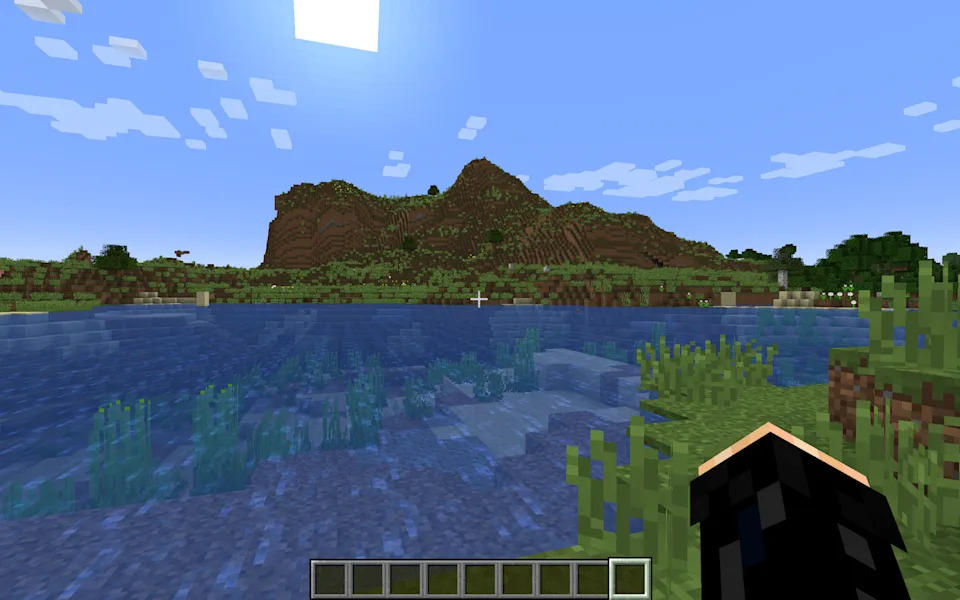
Are we living in a very sophisticated version of Minecraft?Tofli IV/Wikimedia Commons,CC BY-SA
Prominent public figures, including Elon Musk, and at times Neil deGrasse Tyson, have discussed the idea, which helps explain why it captures the public imagination.
Objections and Alternatives
There are several important objections. First, ordinary explanations often suffice for everyday mysteries—you probably misplaced your phone, not because a simulator glitched. Second, the computing resources required to simulate trillions of conscious beings in full detail would be enormous—so enormous that Bostrom calls the hypothetical simulators "godlike." It’s possible that such technology will never be developed.
Finally, the hypothesis is difficult to test empirically. Because Bostrom’s argument is mainly logical and probabilistic, it does not by itself provide experimental proof that we are simulated.
Could We Find Evidence?
Scientists have proposed ways to look for telltale signs—unexpected discreteness in physical laws, anomalous cosmic patterns, or constraints that look computational—but none of these would be definitive. Even if we found something odd, multiple explanations might still fit the data.
Bottom Line
The simulation hypothesis is an elegant philosophical idea that combines long-standing questions about reality with modern technological trends. It challenges how we think about consciousness and probability, but it remains speculative because it depends on assumptions about future technology and currently lacks empirical proof. Whether you find it thrilling or implausible, the idea provokes useful questions about what counts as evidence and how we reason about our place in the universe.
About the author: This article was written by Zeb Rocklin at the Georgia Institute of Technology and is republished from The Conversation, a nonprofit news organization. For Curious Kids questions, email CuriousKidsUS@theconversation.com.
Help us improve.