France is set to pass its delayed 2026 budget after the expected defeat of two no-confidence motions, giving Prime Minister Sebastien Lecornu's minority government a window of stability. Socialist support was secured through targeted concessions, notably postponing a raise in the retirement age to 64 until after the 2027 presidential election. The budget still implies a deficit near 5% of GDP, but markets welcomed the stability as the government debt premium over Germany narrowed. The pause in reforms gives Macron short-term breathing space while leaving his centrist bloc weakened ahead of a competitive presidential race.
France Poised to Approve Delayed 2026 Budget, Easing Strain on Lecornu's Minority Government
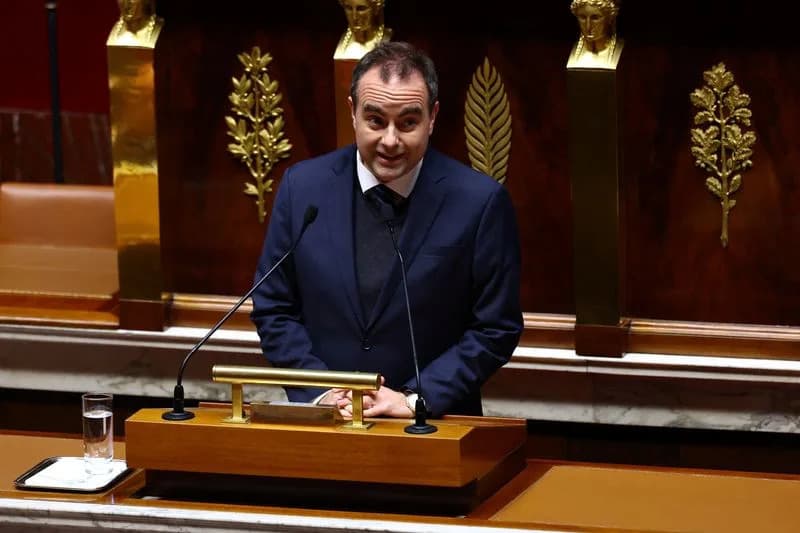
French Prime Minister Sebastien Lecornu delivers a speech to announce the use by the French government of article 49.3, a special clause in the French Constitution, to push the first part of the budget bill for 2026 (PLF 2026) through the National Assembly without a vote by lawmakers, during a new debate on the draft budget bill at the National Assembly in Paris, France, January 20, 2026. REUTERS/Sarah Meyssonnier
France is expected to approve its long-delayed 2026 state budget on Monday after the likely defeat of two no-confidence motions, a step that should bring a period of relative stability to Prime Minister Sebastien Lecornu's fragile minority government.
Budget negotiations have dominated French politics for nearly two years since President Emmanuel Macron's snap election in 2024 produced a hung parliament at a moment when a large hole in public finances made spending restraint more urgent. Those talks toppled two prime ministers, unsettled debt markets and raised concerns among France's European partners.
Despite a chaotic, two-stage nomination in October that drew international criticism, Lecornu secured Socialist backing through targeted — and costly — concessions, improving his political standing. The Socialists have said they will not back the no-confidence motions, clearing the way for the 2026 budget, which is already more than a month overdue, to be adopted once both votes are resolved.
"It's a political success and an economic failure," veteran commentator Alain Duhamel said on RTL radio.
Although the budget still envisions a deficit of around 5% of GDP, investors have responded positively to the new stability: the spread on French government debt over the German benchmark has narrowed back to levels last seen in June 2024, before Macron announced the snap election.
Key Concession: The main concession secured from the Socialists was the suspension of a controversial pensions reform. The planned rise in the retirement age to 64 has been postponed until after the 2027 presidential election.
Reforms On Pause Until The Presidential Election
With just over a year to go until the presidential vote in spring 2027, the temporary calm on budgetary issues gives Macron some breathing room as he approaches the end of his second term amid low approval ratings. Having lost control of the domestic agenda, Macron's push for supply-side reforms has largely stalled; substantial spending cuts are unlikely before he leaves office given lawmakers' reluctance to back unpopular measures during an election cycle.
Macron's supporters argue that Lecornu's willingness to compromise has helped avert a return of wealth taxes and preserved France's attractiveness for foreign investors. The president is increasingly focused on foreign policy, urging Europe to reduce dependence on external powers and advocating a firmer stance toward U.S. President Donald Trump on issues such as tariffs and the Greenland dispute.
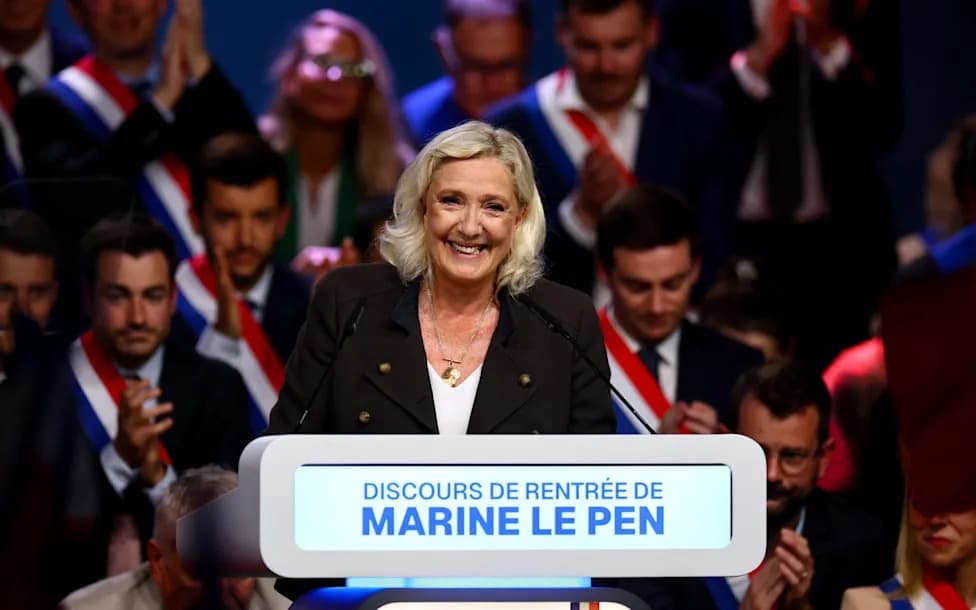
Domestically, Macron leaves his centrist coalition weakened and without a clear successor. Former prime ministers Edouard Philippe and Gabriel Attal are preparing presidential bids, while Lecornu has also seen his profile rise in recent months. If the centre remains fragmented and no primary is organised, it is uncertain whether a mainstream candidate will reach the election's second round to face the strengthened far right — potentially led by Jordan Bardella or Marine Le Pen.
Reporting by Michel Rose; editing by Ros Russell.
Help us improve.