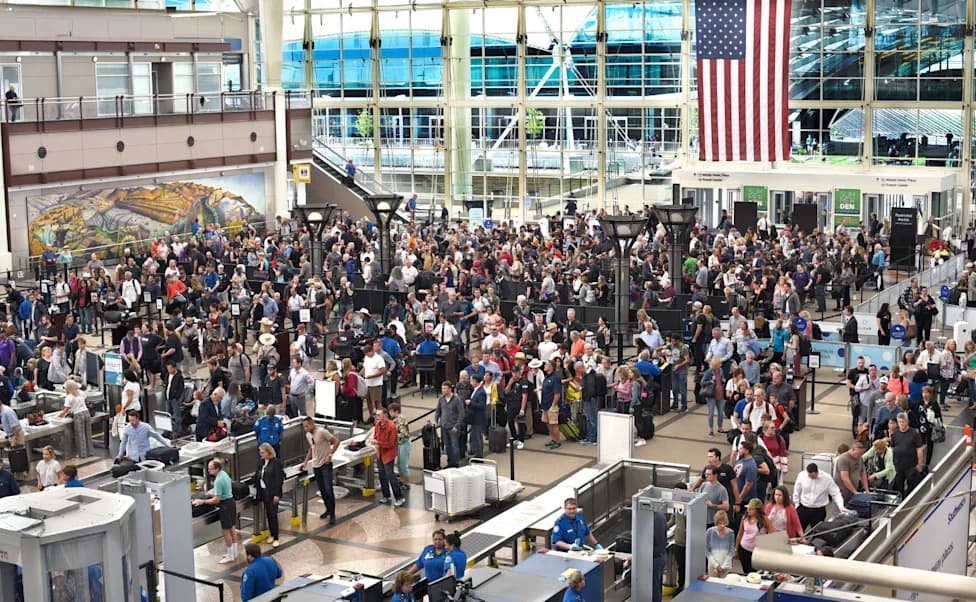
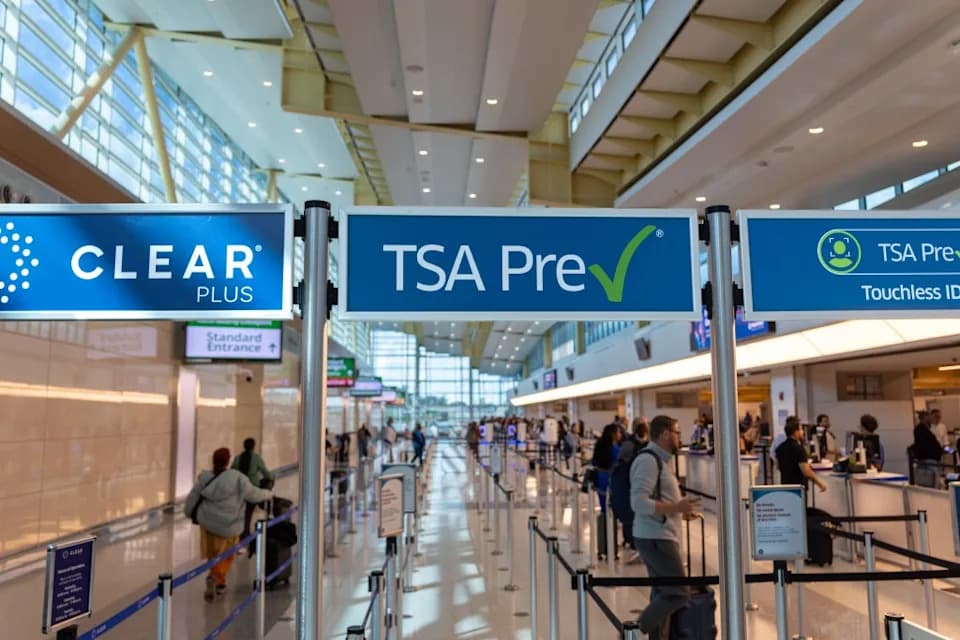
The Transportation Security Administration will begin charging a $45 fee on Feb. 1 for air travelers who board domestic flights without an accepted ID, such as a Real ID, passport, or tribal ID. The fee replaces a previously proposed $18 charge after TSA adjusted its cost estimates and requires affected passengers to register via TSA ConfirmID. About 94% of flyers already travel with compliant identification; travelers should check with their state DMV or carry an alternative accepted ID to avoid delays and the new fee.
TSA Will Charge $45 If You Fly Without a Real ID — Fee Begins Feb. 1
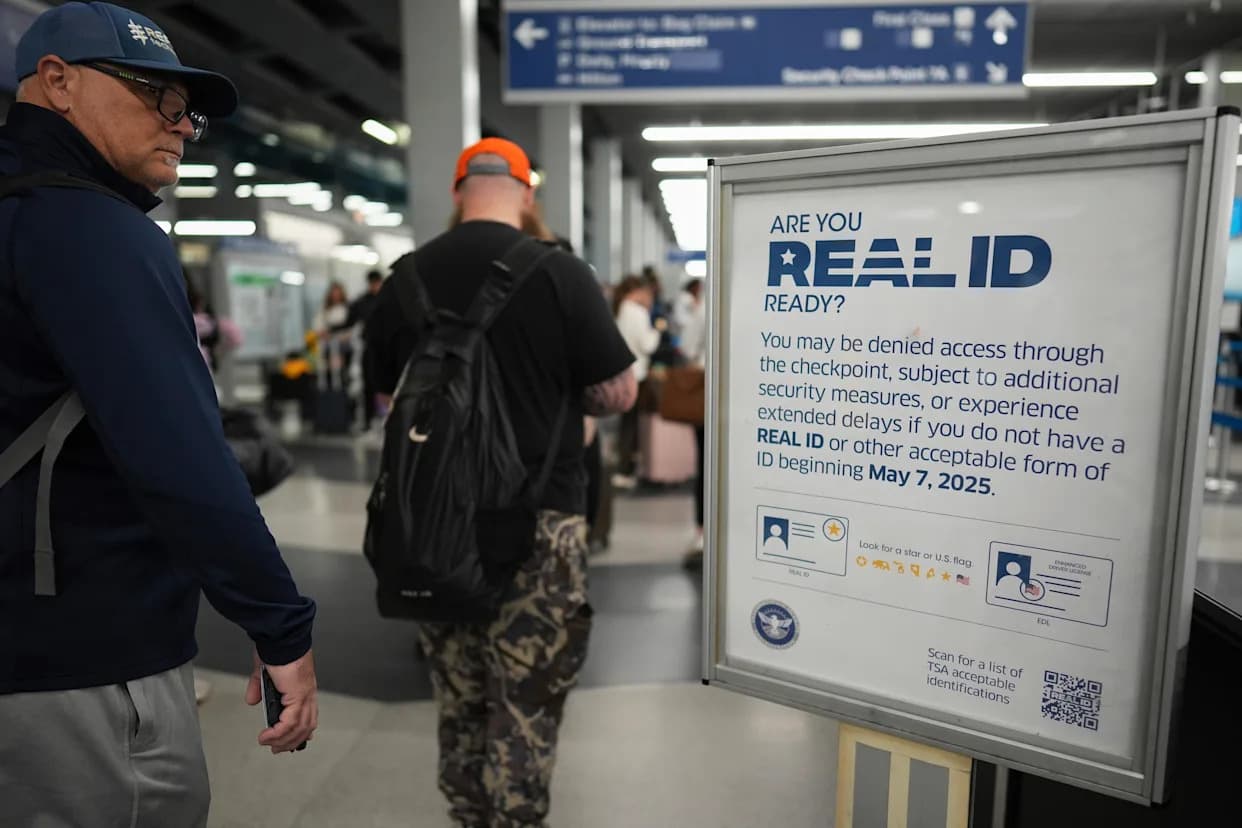
A traveler glances at a Real ID sign posted inside O'Hare International Airport in Chicago in May. (Nam Y. Huh/AP)
Beginning Feb. 1, airline passengers who board domestic flights without an accepted form of identification will be charged a $45 fee under a new Transportation Security Administration policy. The fee applies to travelers who cannot present a Real ID or another approved ID and instead require enhanced identity screening.
What the Policy Does
The $45 charge replaces an earlier proposed $18 fee after TSA officials determined the additional screening costs were higher than expected. Passengers who lack an accepted ID — which includes a Real ID–compliant driver’s license, a valid passport, a tribal ID, or certain other government-issued documents — must also register through the TSA ConfirmID online portal before travel.
Why TSA Is Changing the Rules
“Identity verification is essential to traveler safety, because it keeps terrorists, criminals, and illegal aliens out of the skies and other domestic transportation systems such as rail,” said Adam Stahl, a senior TSA official, in announcing the fee. TSA says the charge ensures the government’s extra screening costs are borne by the traveler rather than taxpayers.
Background
Congress passed the Real ID Act in 2005 to set national standards for state-issued driver’s licenses and similar identification following the Sept. 11, 2001, attacks. Although the law originally called for enforcement to begin in 2008, its implementation was repeatedly delayed; Real ID requirements began to be enforced in May 2025.
Who Is Affected
TSA estimates the policy will affect a small minority of flyers — roughly 6% — because about 94% of passengers already travel with a Real ID or other acceptable identification. Until now, travelers without a Real ID faced no fines or criminal penalties; they could only expect delays while TSA conducted additional screening.
Practical Tips for Travelers
- Check your state-issued driver’s license: All U.S. states and territories now issue Real ID–compliant licenses, but older cards may not meet current federal standards.
- If you don’t have a compliant ID, consider using a valid passport or tribal ID to avoid the fee and extra screening.
- If you must use the alternative identity process, register in advance through TSA ConfirmID and be prepared to pay the $45 verification fee at the checkpoint.
- Contact your state Department of Motor Vehicles if you’re unsure whether your license is Real ID–compliant.
“We must ensure everyone who flies is who they say they are,” Stahl said. “This fee ensures the cost to cover verification of an insufficient ID will come from the traveler, not the taxpayer.”
Travelers should plan ahead to avoid delays and unexpected fees: verify your ID now, and carry an accepted document when flying domestic routes after Feb. 1.
Help us improve.