Francis S. Collins, a Staunton native and former NIH director, will receive the National Academy of Sciences’ 2026 Public Welfare Medal for his leadership of the Human Genome Project and sustained contributions to genetics and public health. He advanced open-science practices such as the Bermuda Principles, helped develop GINA to protect genetic privacy, and led NIH through major health crises while launching initiatives including the BRAIN Initiative, Cancer Moonshot, and the All of Us program. The medal will be presented April 26 at the Academy’s 163rd annual meeting.
Staunton Native Francis S. Collins To Receive National Academy Of Sciences’ 2026 Public Welfare Medal
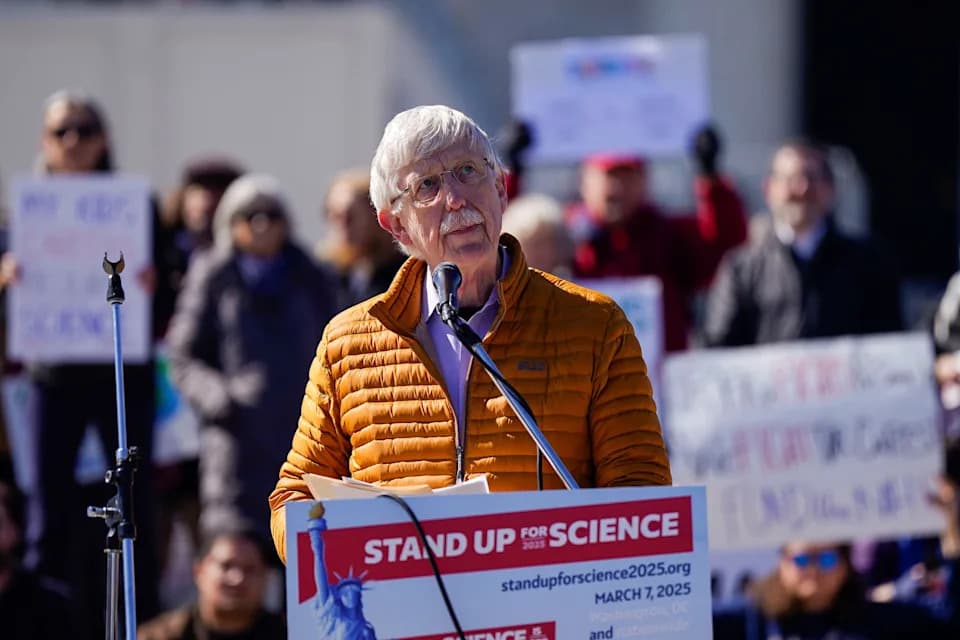
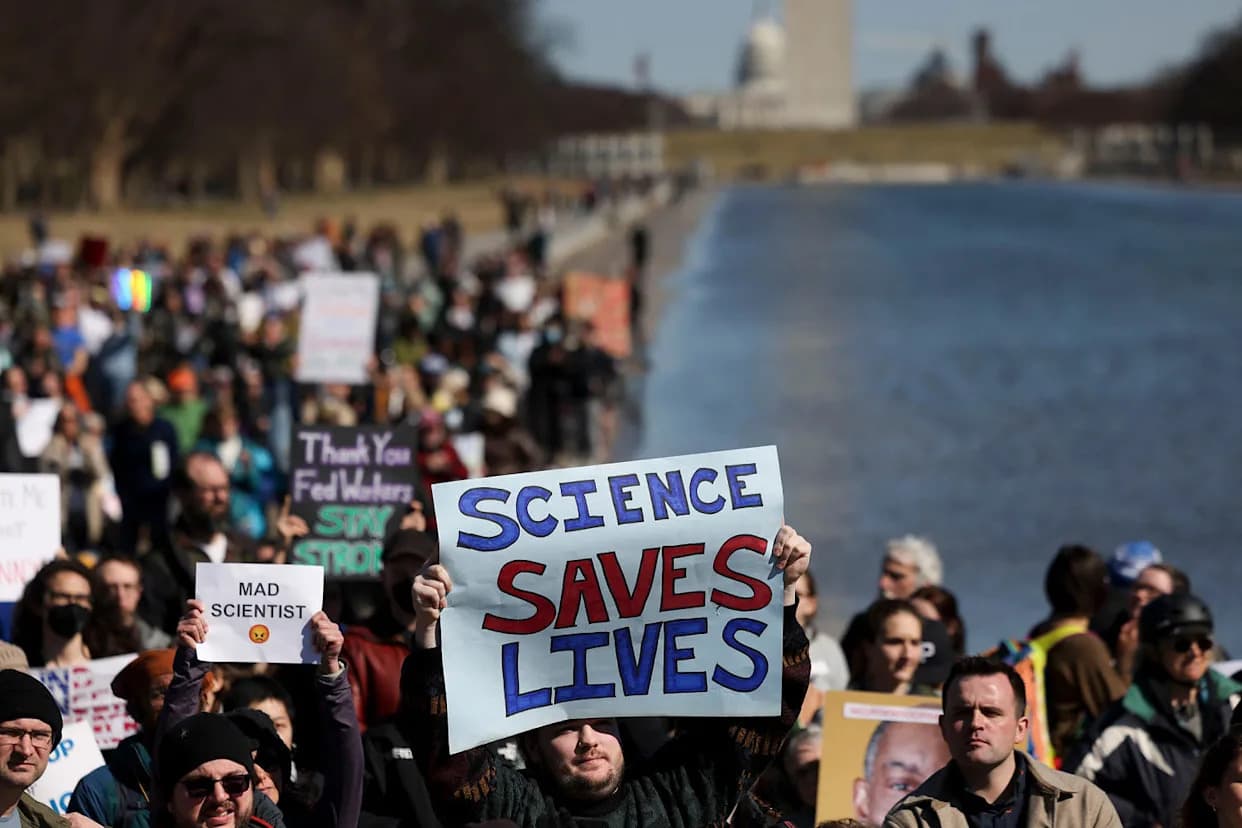
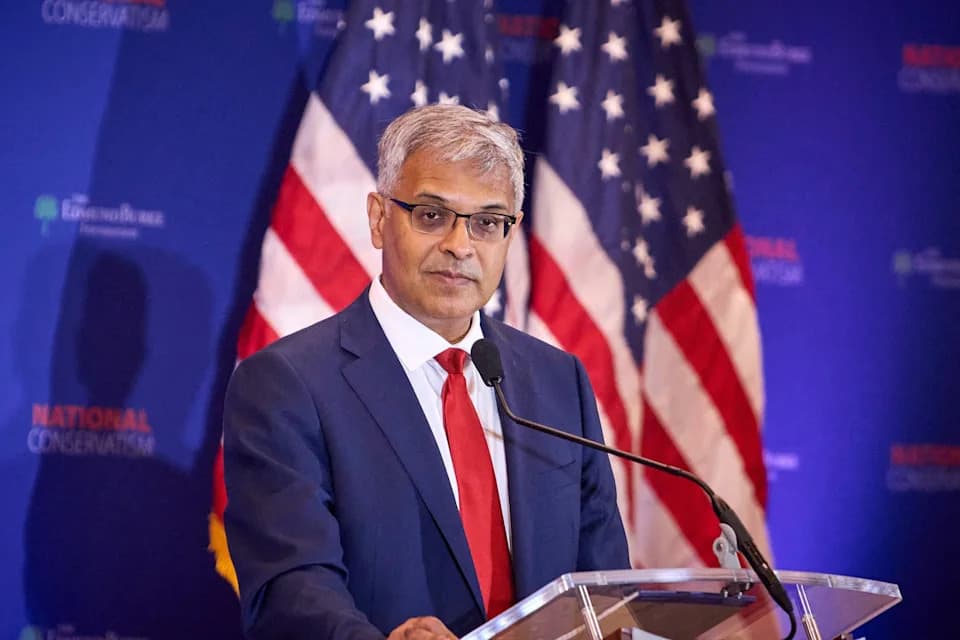
Dr. Francis Collins, former director at the National Institutes of Health, speaks on the day of a "Stand Up for Science" rally in response to the Trump's administration cuts and layoffs at federal agencies, in Washington, D.C., on March 7, 2025.
The National Academy of Sciences will award its 2026 Public Welfare Medal to Staunton native Francis S. Collins, the former director of the National Institutes of Health (NIH), in recognition of his pioneering work in human genetics and decades of public-service leadership, notably as head of the Human Genome Project.
Local Roots, Global Impact
Collins was born in Staunton. His parents, Fletcher and Margaret Collins, helped found the Oak Grove Theatre near Verona and were influential in the region’s arts community.
Leadership Of The Human Genome Project
In 1993 Collins became director of the NIH's National Center for Human Genome Research and took on responsibility for coordinating the Human Genome Project, a bold multinational effort involving hundreds of scientists and numerous sequencing centers. He helped design the collaborative model for large-scale science that balanced ambitious goals, technological innovation, and ethical responsibility.
Collins championed the Bermuda Principles, which required daily public release of genome sequence data, setting a new standard for transparency in big-science projects.
Policy, Ethics And Patient Protections
Collins played a key role in the development of the Genetic Information Nondiscrimination Act (GINA), legislation that protects people from discrimination based on genetic information. The Human Genome Project ultimately produced the first complete human genome sequence, a landmark achievement that transformed biomedical research and accelerated the arrival of precision medicine.
NIH Director And Public-Health Leadership
As NIH director from 2009 to 2021, Collins led the agency through three presidential administrations and guided national responses to major public-health crises, including the Ebola outbreak and the COVID-19 pandemic. He advocated for Alzheimer’s research, launched the BRAIN Initiative to advance neuroscience, initiated the Cancer Moonshot to accelerate cancer research, and helped create precision-health efforts such as the All of Us Research Program, the largest longitudinal cohort study ever undertaken by NIH.
From 2022 to 2023 Collins served as special advisor to the president, co-chairing the President’s Council of Advisors on Science and Technology and leading a national initiative to eliminate hepatitis C.
Research Contributions
Before his NIH leadership, Collins led laboratories at the University of Michigan and later at NIH that applied positional cloning and other genetic approaches to identify genes for inherited disorders including cystic fibrosis, neurofibromatosis, Huntington’s disease, multiple endocrine neoplasia, Alagille syndrome, and Hutchinson-Gilford progeria syndrome. His work also contributed to understanding complex conditions such as type 2 diabetes.
Honors And Recognition
Collins’ career has earned many honors: election to the National Academy of Sciences and the National Academy of Medicine, the Presidential Medal of Freedom, the National Medal of Science, the Gairdner Foundation International Award, the Templeton Prize, and election as a foreign member of the Royal Society (UK).
Background And Ceremony
Collins earned a B.S. in chemistry from the University of Virginia, an M.Phil. and Ph.D. in physical chemistry from Yale University, and an M.D. with honors from the University of North Carolina, where he completed residency and fellowship training. His early postdoctoral research at Yale on fetal hemoglobin persistence helped launch his career in human genetics.
The Public Welfare Medal will be presented to Collins on April 26 during the National Academy of Sciences’ 163rd annual meeting.
About The National Academy Of Sciences: Founded under a congressional charter in 1863, the private, nonprofit Academy recognizes scientific achievement through election to membership and—together with the National Academy of Engineering and the National Academy of Medicine—provides independent science, engineering, and health-policy advice to the federal government and other organizations.
Help us improve.