The Trump administration has announced an immediate ban on NIH funding for research using human fetal tissue from some abortions, with NIH director Dr. Jay Bhattacharya saying the agency will prioritize alternative technologies. Scientists warn the move could hinder studies of infectious and developmental diseases, slow vaccine and therapy development, and disrupt projects that rely on fetal tissue as a benchmark. While strict oversight and consent rules govern fetal-tissue research, experts say private funding and alternatives are unlikely to fully replace the NIH's role.
NIH Ends Federal Funding For Some Human Fetal Tissue Research — What Researchers Say It Could Cost Science

Dominic Gwinn/Middle East Images via AFP via Getty Images, FILE - PHOTO: In this Sept. 3, 2025, file photo, NIH Director Dr. Jay Bhattacharya speaks at the National Conservatism Conference in Washington, D.C.
Last week the Trump administration announced an immediate ban on using human fetal tissue from certain abortions in research that receives federal funding. The National Institutes of Health (NIH) said the change would take effect right away and that the agency intends to "advance science by investing in breakthrough technologies more capable of modeling human health and disease," NIH director Dr. Jay Bhattacharya said in a statement.
Why This Matters
Scientists told ABC News that research involving human fetal tissue has contributed to key advances in understanding infectious and developmental diseases and has played a role in developing vaccines and therapies. Researchers warn the policy could slow or block studies that depend on that tissue to model human development, immunity and disease progression.
How Fetal Tissue Has Been Used
Human fetal tissue has been used to study a wide range of conditions, including HIV/AIDS, Ebola, hepatitis C, dengue, cancer, Parkinson's disease, diabetes and spinal cord injury. Cell lines derived from fetal tissue contributed to vaccines for rubella, rabies, chickenpox, shingles and hepatitis A, and helped in development of drugs for HIV, hemophilia and sepsis. The tissue has also supported reproductive-medicine research into fertility, pregnancy complications and conditions such as pre-eclampsia.
"It's not a scientific decision. It's a moral decision that places the rights of fetal tissue that would be discarded above the rights of sick people who will benefit from that research," said Dr. Lawrence Goldstein, professor emeritus of cellular and molecular medicine at UC San Diego.
Special Research Uses: Humanized Mouse Models
One important application is the creation of humanized mouse models: mice engrafted with human blood-forming and immune-system tissue so human-tropic viruses and immune responses can be studied. Researchers say many pathogens do not replicate or behave the same way in ordinary mice, so fetal-derived tissue can be critical for testing therapies and vaccines.
Regulatory Protections and Consent
There are strict federal and, in some cases, state rules governing the use of fetal tissue. Projects using federally funded fetal-tissue research must undergo Institutional Review Board (IRB) review to confirm that donation was voluntary, uncoerced and uncompensated. Federal law also restricts when and how donation may be discussed with someone seeking to terminate a pregnancy.
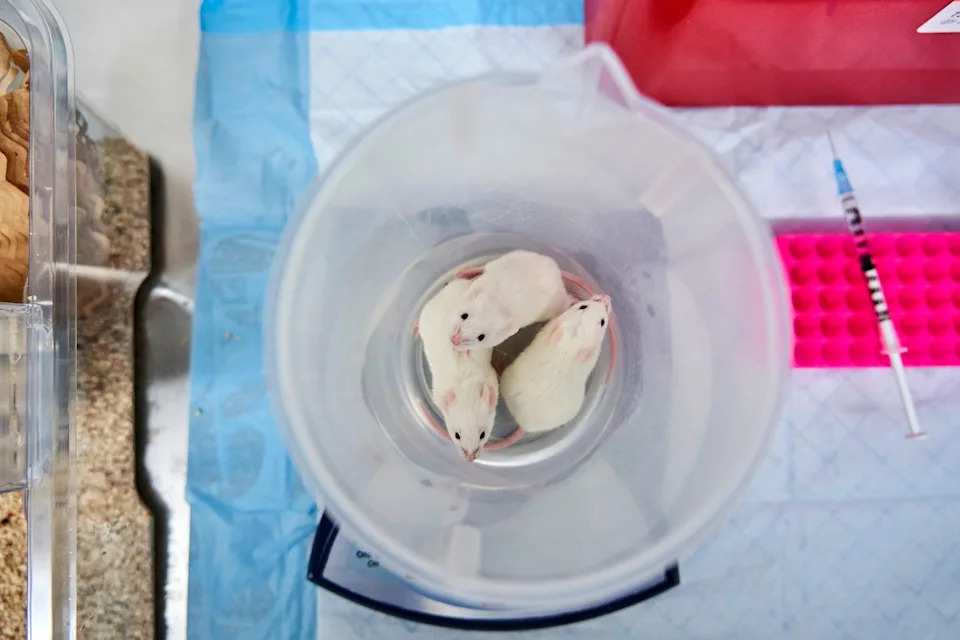
Philip Cheung for The Washington Post via Getty Images, FILE - PHOTO: In this Nov. 15, 2019, file photo, mice used for fetal tissue research are kept in the vivarium mice room at the Biomedical Sciences Research Building at the UCLA campus in Los Angeles.
Impact On Ongoing Research And Funding
The Trump administration previously moved to end NIH-funded fetal tissue research in 2019; that restriction was reversed by the Biden administration in 2021. The current policy stops NIH support for "grants, cooperative agreements, other transaction awards and research and development contracts" that involve certain fetal tissue sources.
Scientists warn that ending NIH funding will disrupt ongoing projects, block future studies and force labs to seek limited private funding. Although some foundations occasionally support fetal-tissue research, the NIH is the largest single funder of biomedical research in the United States and provides regulatory oversight and infrastructure that private donors typically cannot match.
Limits Of Alternatives
Researchers use alternatives such as human-induced pluripotent stem cells (iPSCs) and organoids, which can model many features of human tissues. However, many scientists say these tools do not yet fully reproduce the complexity of early human development and that fetal tissue often serves as the "ground truth" for validating models — for example, in studies of Down syndrome and neurodevelopmental disorders.
The NIH noted that tissue from spontaneous abortions (miscarriages) remains available, but researchers say this tissue is often unsuitable for study because miscarriages frequently result from genetic abnormalities, infection or damage that make the tissue unreliable as a control or model. Spontaneous losses are also unpredictable, complicating collection and experimental planning.
Responses And Outlook
Some advocacy groups praised the policy on ethical grounds, calling experiments on tissue derived from abortions unjustified. Many scientists, however, describe the change as a political decision with practical consequences for public health research. Labs that relied on NIH funding for fetal-tissue work face uncertain futures and may need to revise study designs, seek alternate donors, or accelerate development of validated alternatives.
Bottom line: The policy shift reduces federal support for a specific kind of biomedical research that many scientists consider essential for studying human-specific disease processes. Its practical impact will depend on how quickly researchers can substitute other models, obtain nonfederal funding, and whether private funders or new technologies can fill the gap left by NIH.
Help us improve.