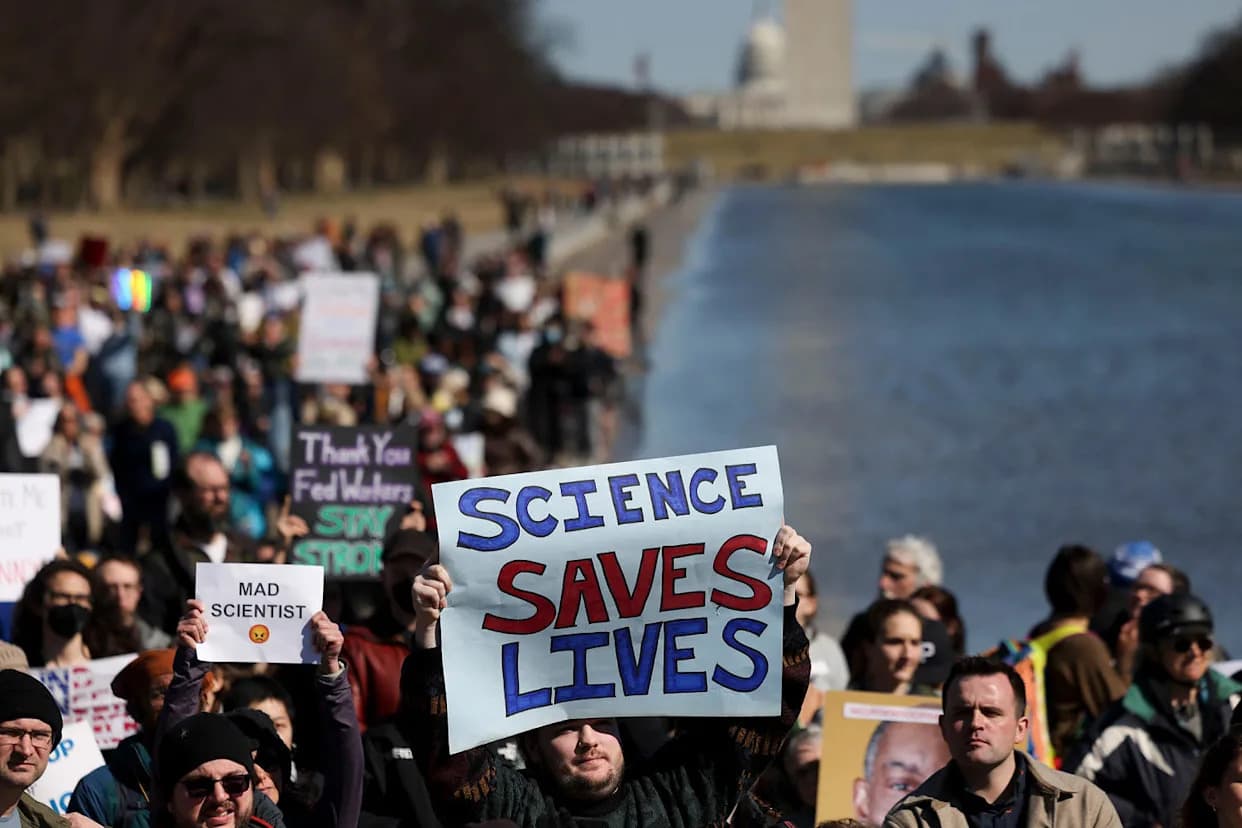
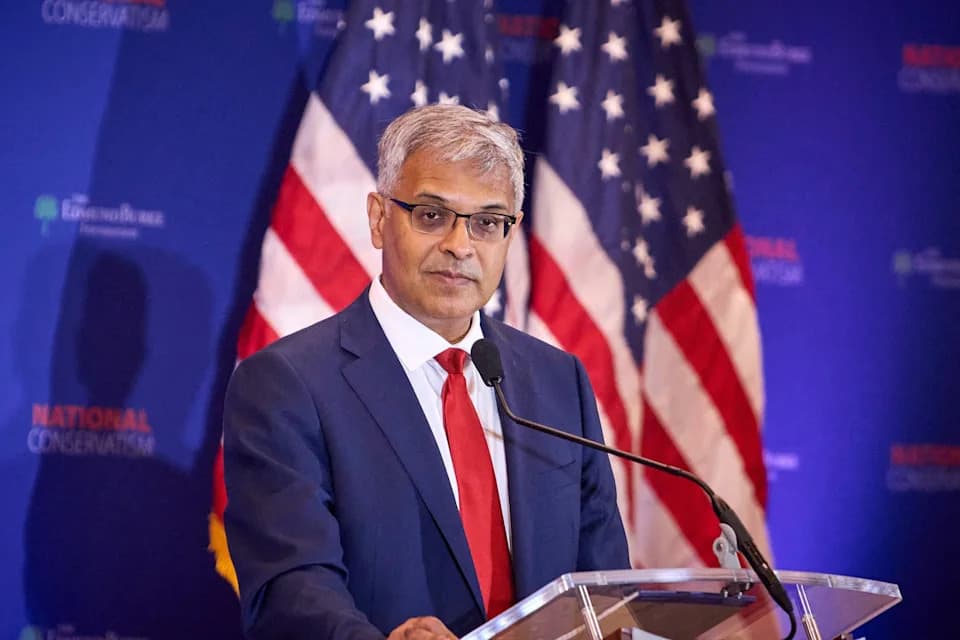
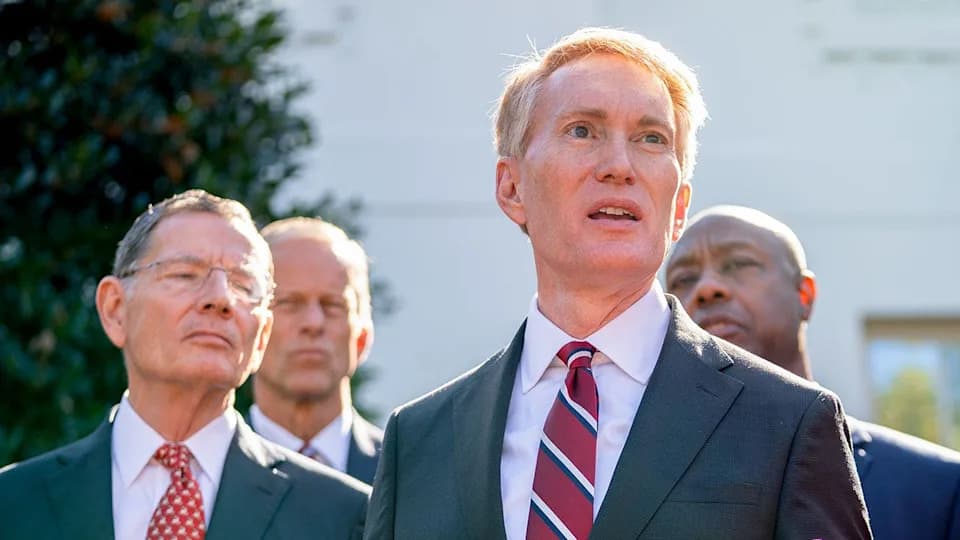
The newly signed law provides the NIH with about $20 billion more than the administration requested and preserves funding for all 27 of its institutes. But Health Secretary Robert F. Kennedy Jr. and NIH Director Jay Bhattacharya plan major reorientations — funding autism studies, trimming some disparity and transgender research, and shifting grants from elite coastal labs to underfunded heartland institutions. Bhattacharya proposes separating research and facility funding and prioritizing projects tied to measurable health outcomes, a change that could create winners and losers given near-flat NIH budgets.
Democrats Win $20B More for NIH — But RFK Jr. and NIH Director Jay Bhattacharya Could Redirect It

Democrats hailed a legislative victory after President Donald Trump signed a bill that provides the National Institutes of Health (NIH) with roughly $20 billion more than the administration had requested. But party leaders warned the gain could be tempered by how Health Secretary Robert F. Kennedy Jr. and NIH Director Jay Bhattacharya choose to spend the money.
What's at Stake
The law preserves funding for all 27 NIH institutes and directs support for more than 200 health programs — a sharp contrast to the administration’s prior proposal to shrink NIH to a small number of centers. Yet Congress provided broad discretion on how the agency allocates the additional billions, leaving the new NIH leadership with significant influence over research priorities.
Shifts in Priorities
Under the new leadership, the agency has already moved discretionary funds toward studies on autism — reflecting Secretary Kennedy’s public view that vaccines play a role — and scaled back funding for some research on health disparities and transgender health. The department has also used grant decisions as leverage in disputes with universities over campus protests and hiring and admissions policies. Now officials say they plan to redirect more grant dollars away from elite coastal institutions and into underfunded universities across the Midwest and rural states.
“Protecting these key federal investments is a big deal that will save lives,” Sen. Patty Murray, the top Democrat on the Appropriations Committee, said, while acknowledging the bill may not halt what she called Secretary Kennedy’s attacks on the health system.
Bhattacharya’s Argument
Jay Bhattacharya, a physician-scientist and health economist who rose to prominence during the COVID-19 pandemic, argues the traditional distribution of NIH grants concentrates funding at a few elite institutions (Harvard, MIT, Stanford, etc.) and produces “scientific group think.” He says reallocating funds to historically underfunded institutions will broaden participation and direct research toward pressing public-health problems in the heartland.
Bhattacharya has proposed separating research support (direct study costs) from facility support (infrastructure and overhead) so institutions would compete for each type of funding independently. That approach, he says, could favor institutions offering lower-cost, high-quality lab space and allow investigators to conduct work at less expensive sites.
Concerns From Coastal Research Hubs
Leaders at major research universities warn that decades of built infrastructure, expertise and staff cannot be easily replicated. They argue that shifting money away from established hubs could slow scientific progress and jeopardize breakthroughs in areas such as cancer, diabetes and Alzheimer’s.
“Cancer, diabetes, Alzheimer’s disease does not have a red or blue component,” Michael Collins, chancellor of UMass Chan Medical School, said. “We need to continue investing in the biomedical research enterprise where it exists.”
Political and Practical Limits
Bhattacharya’s proposal to delink research and facility funding would likely require congressional approval and faces skepticism on Capitol Hill. A related Trump-era attempt to cap universities’ indirect costs at 15%—projected to save about $4 billion a year—prompted lawsuits and an appeals court ruling that the administration could not unilaterally cut overhead without Congress.
With overall NIH appropriations essentially flat for the coming year, experts warn that redistributing existing dollars will inevitably create winners and losers. Critics say geographic reallocation done without increasing the total budget risks lowering quality or leaving key programs underfunded.
On-the-Ground Reactions
Some institutions in the Midwest, like the University of Nebraska Medical Center, welcome the prospect of more accessible NIH funding to build rural research capacity and address local health disparities. Others — including former NIH officials and science organizations — caution that merit, infrastructure and existing collaboration networks must remain central to funding decisions.
Bottom Line
Congress secured $20 billion more for medical research, preserving NIH’s broad structure. But the new spending could reshape who receives federal research support: the agency’s leadership has signaled priorities that emphasize the Make America Healthy Again (MAHA) agenda, geographic rebalancing, and outcome-focused funding — decisions that could change the landscape of U.S. biomedical research for years to come.
Help us improve.