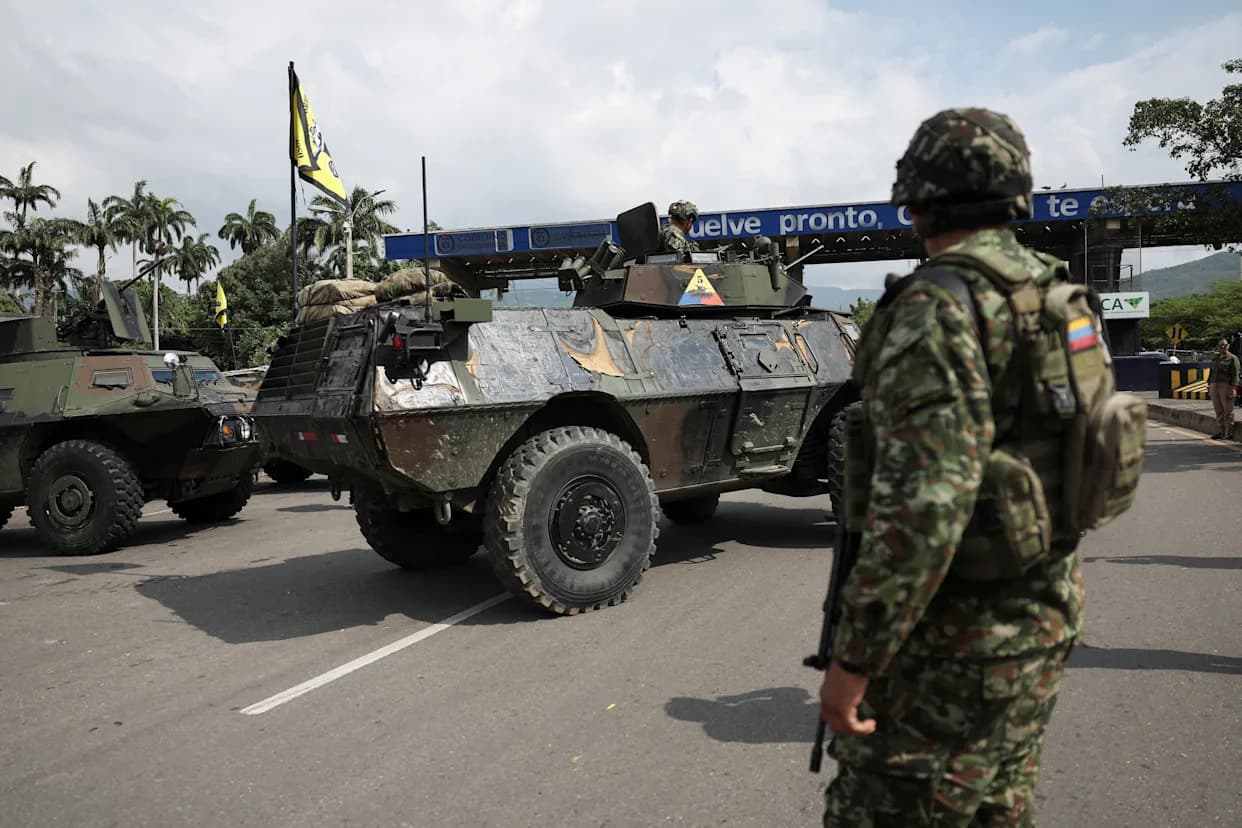
Colombia has restricted drone imports after a sharp rise in weaponized-drone attacks that killed 20 people and injured nearly 300 last year. A government decree bans postal and express shipments of drones and limits entry to customs at Bogotá's main airport and the Cartagena seaport. Authorities said roughly 8,000 drone attacks occurred in the past year, and officials suspect groups such as the ELN and FARC dissidents received outside training. The government has formed a drone battalion and President Gustavo Petro seeks large investments in counter-drone defenses.
Colombia Limits Drone Imports After Surge in Weaponized-Drone Attacks
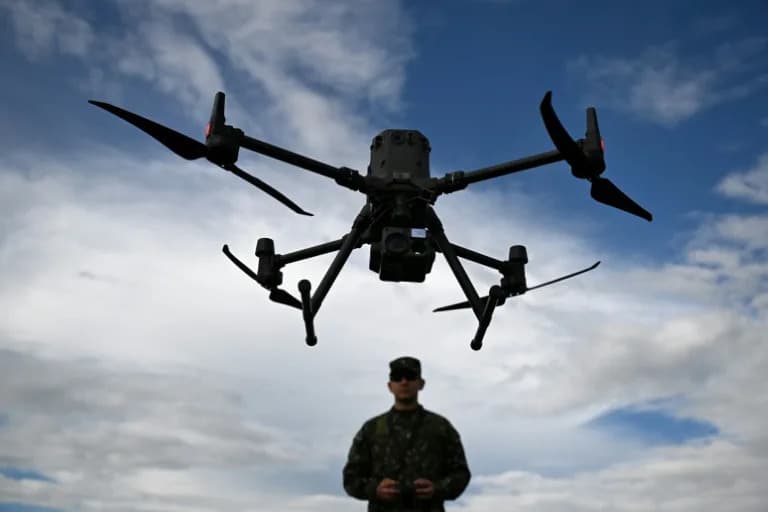
Colombian guerrilla fighters conducted 8,000 attacks with drones and explosives in 2025 (Raul ARBOLEDA)(Raul ARBOLEDA/AFP/AFP)
Colombia has moved to restrict drone imports after a surge in attacks that authorities say killed 20 people and injured nearly 300 last year. The government announced a decree Thursday aimed at curbing the growing use of commercially available drones that have been adapted to carry explosives.
What the Decree Says
Defense Minister Pedro Sánchez said the measure is intended to reduce the high risk these devices pose to national security and defense. The decree specifically bans drone imports via postal traffic and express shipments and requires that drones enter the country only through customs checkpoints at Bogotá's international airport and the northern seaport of Cartagena.
Why the Move Now?
Authorities say guerrilla groups, drug-trafficking organizations and rival armed factions have increasingly fixed explosives to commercial quadcopters and similar unmanned aircraft. While the improvised weapons are often dropped with little precision, their psychological and physical impact has been severe: public officials reported roughly 8,000 drone attacks in the past year.
Conflict Context
Colombia has endured more than six decades of armed conflict that has killed over a quarter of a million people and involved left-wing guerrillas, drug traffickers, paramilitaries and the military. Violence fell sharply after the Revolutionary Armed Forces of Colombia (FARC) reached a disarmament agreement in 2016, but FARC dissidents who rejected the peace deal continue clashing with other groups over control of the cocaine trade and territory.
Military officials say the National Liberation Army (ELN) and other guerrilla groups likely received outside training on weaponizing drones. Colombia is the world’s largest cocaine producer, a factor that intensifies competition among armed groups.
Government Response
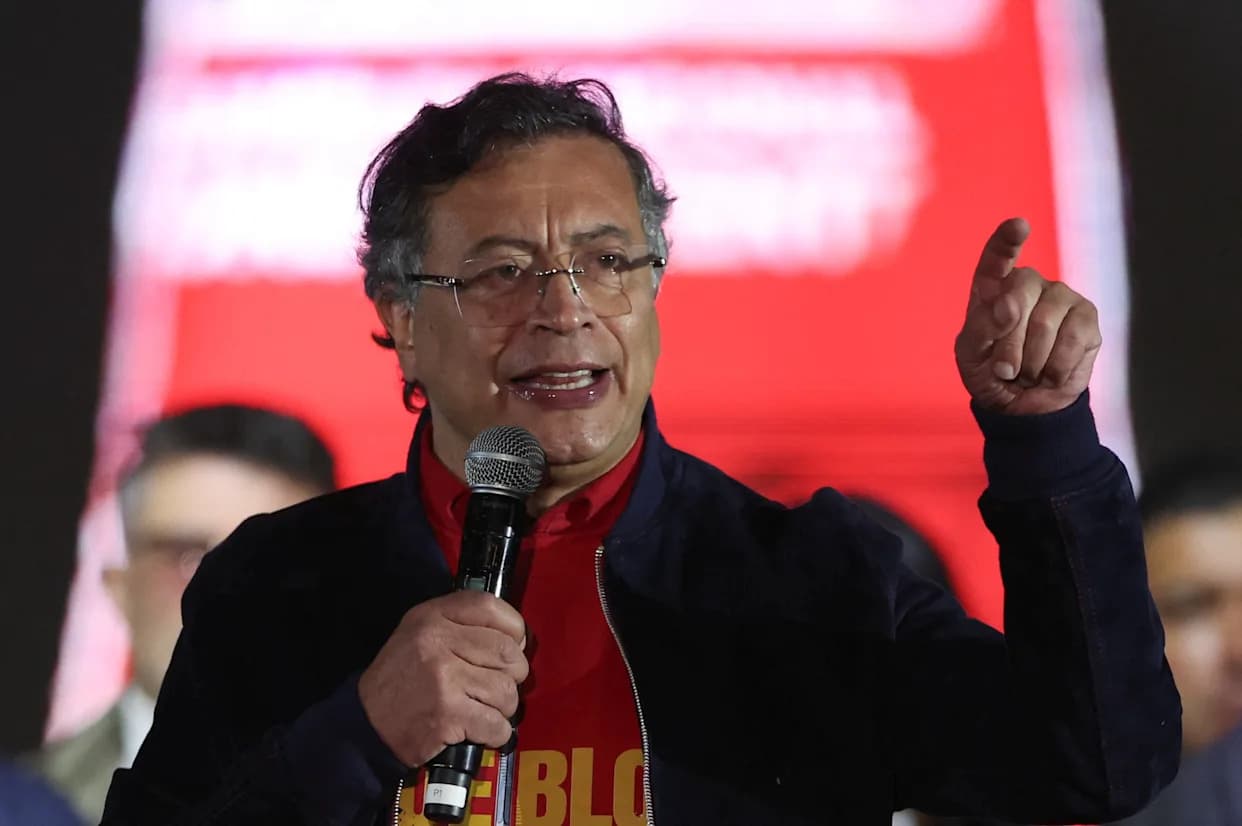
In October, Colombia unveiled its first dedicated drone battalion to detect and counter drone threats. President Gustavo Petro has called for a multibillion-peso investment in air-defense and counter-drone systems as part of a broader effort to achieve negotiated "total peace," a goal that has not yet been realized.
Bottom line: The new import restrictions are a tactical step to limit easy access to commercial drones by armed groups while Colombia ramps up its counter-drone capability.
Help us improve.