Philippine Foreign Secretary Theresa Lazaro urged ASEAN members to maintain restraint and uphold international law amid growing regional tensions and “unilateral actions” that threaten the rules-based global order. She warned that developments beyond Southeast Asia are eroding multilateral institutions and called for dialogue and legal adherence to preserve peace. The Philippines, as ASEAN chair this year, will press efforts on the stalled Myanmar five-point plan and push to finalize a China-ASEAN code of conduct for the South China Sea.
ASEAN Urged to Uphold Rule of Law Amid Rising “Unilateral Actions,” Philippines’ Top Diplomat Says
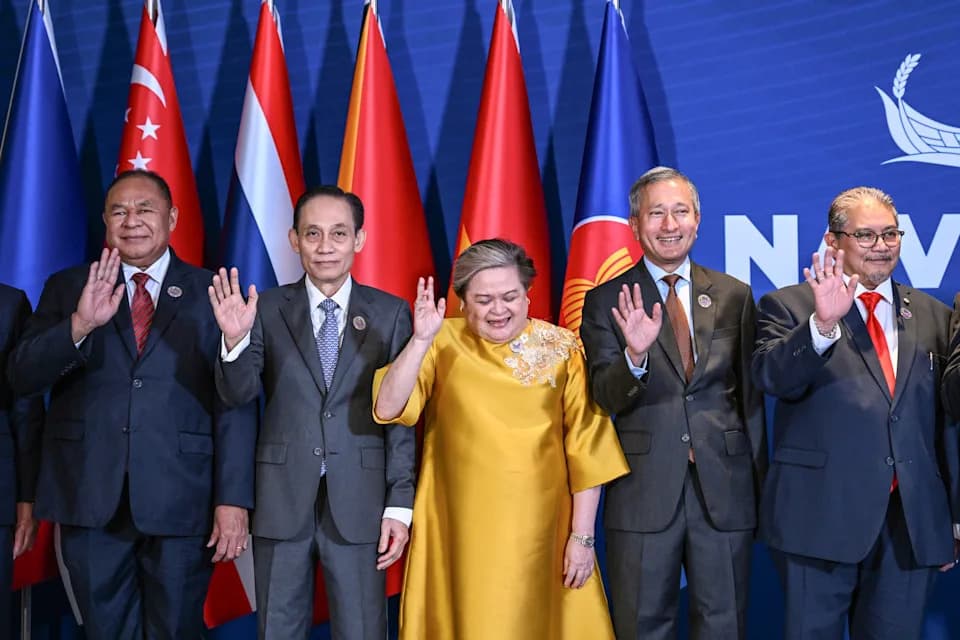
From left, East Timor's Foreign Minister Bendito dos Santos Freitas, Vietnam's Foreign Minister Le Hoai Trung, Philippine Foreign Secretary Theresa Lazaro, Singapore's Foreign Minister Vivian Balakrishnan and Brunei's Second Minister of Foreign Affairs Erywan Yusof pose for a group photo during the Association of Southeast Asian Nations (ASEAN) Foreign Ministers' Retreat in Cebu, Philippines Thursday, Jan. 29, 2026. (Jam Sta Rosa/Pool Photo via AP)(ASSOCIATED PRESS)
CEBU, Philippines — Southeast Asian nations must exercise restraint and remain committed to international law as acts of aggression across Asia and “unilateral actions” beyond the region threaten the rules-based global order, Manila’s top diplomat warned Thursday.
Philippine Foreign Secretary Theresa Lazaro did not detail the specific incidents she referenced when addressing her counterparts from the 11-member Association of Southeast Asian Nations (ASEAN), who were meeting behind closed doors for their first major discussions of the year in the central seaside city of Cebu.
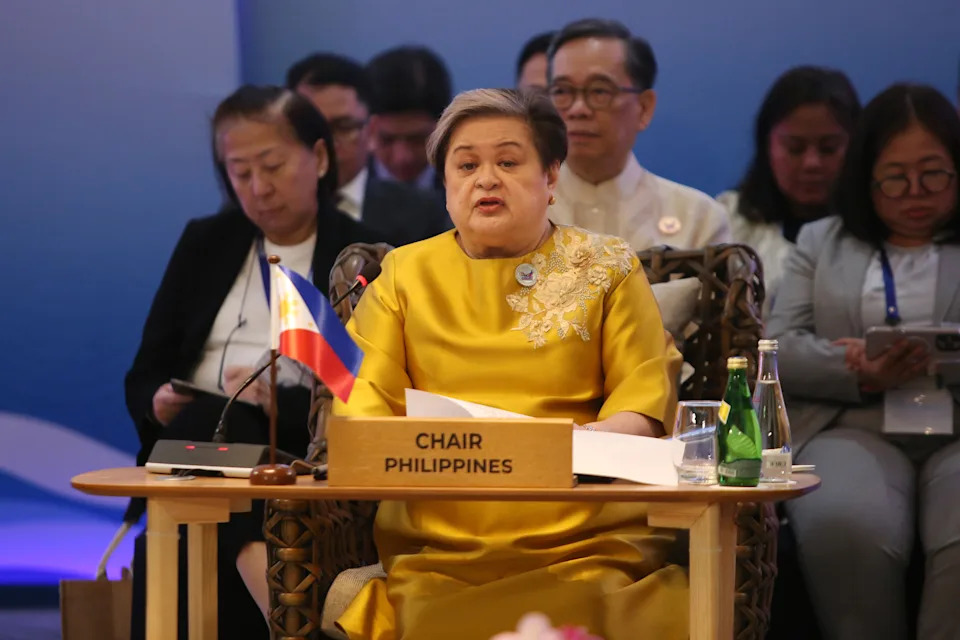
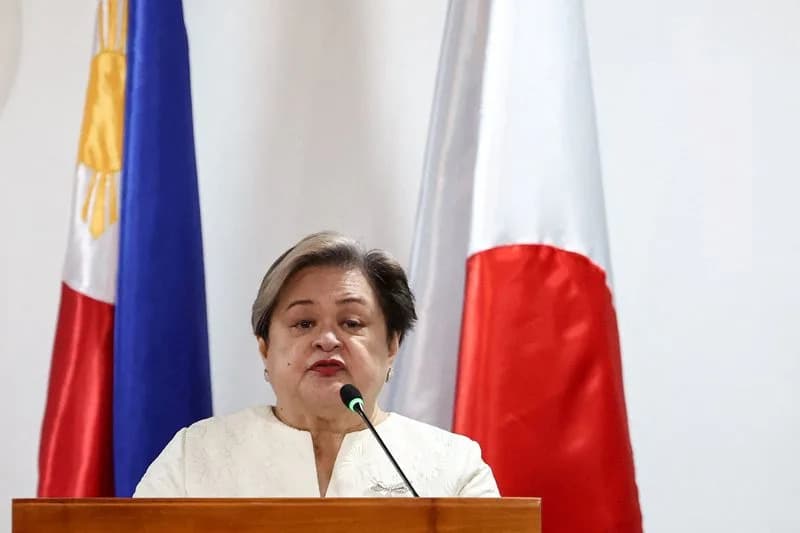
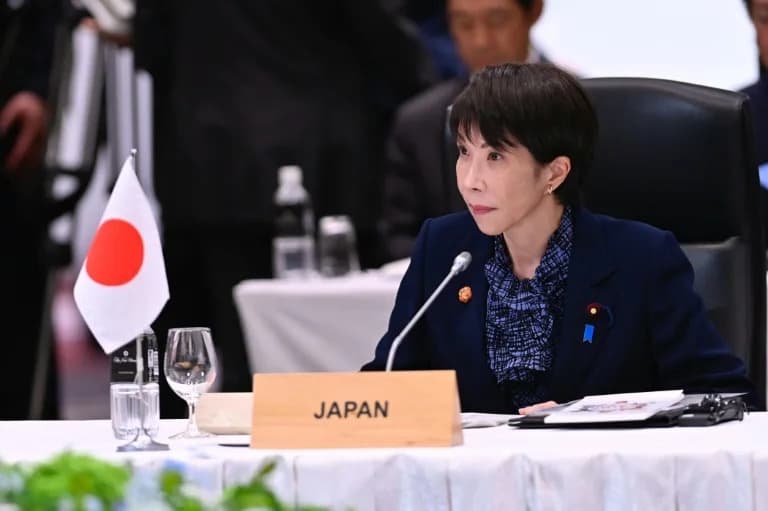
Philippine Foreign Secretary Theresa Lazaro delivers her speech during the Association of Southeast Asian Nations (ASEAN) Foreign Ministers' Retreat in Cebu, Philippines Thursday, Jan. 29, 2026. (AP Photo/Jacqueline Hernandez, Pool)(ASSOCIATED PRESS)
Several ASEAN members, however, have expressed alarm at a covert U.S. operation that reportedly led to the arrest of Venezuelan leader Nicolás Maduro on orders from U.S. President Donald Trump. Separately, Beijing’s increasingly assertive posture toward Taiwan and its activities in the disputed South China Sea have long unsettled countries in the region.
“Across our region, we continue to see tensions at sea, protracted internal conflicts and unresolved border and humanitarian concerns,” Lazaro told fellow foreign ministers. “At the same time, developments beyond Southeast Asia, including unilateral actions that carry cross-regional implications, continue to affect regional stability and erode multilateral institutions and the rules-based international order.”
Lazaro said these developments underscore the importance of ASEAN’s principles of restraint, dialogue and adherence to international law as the bloc seeks to preserve peace and stability for its peoples.
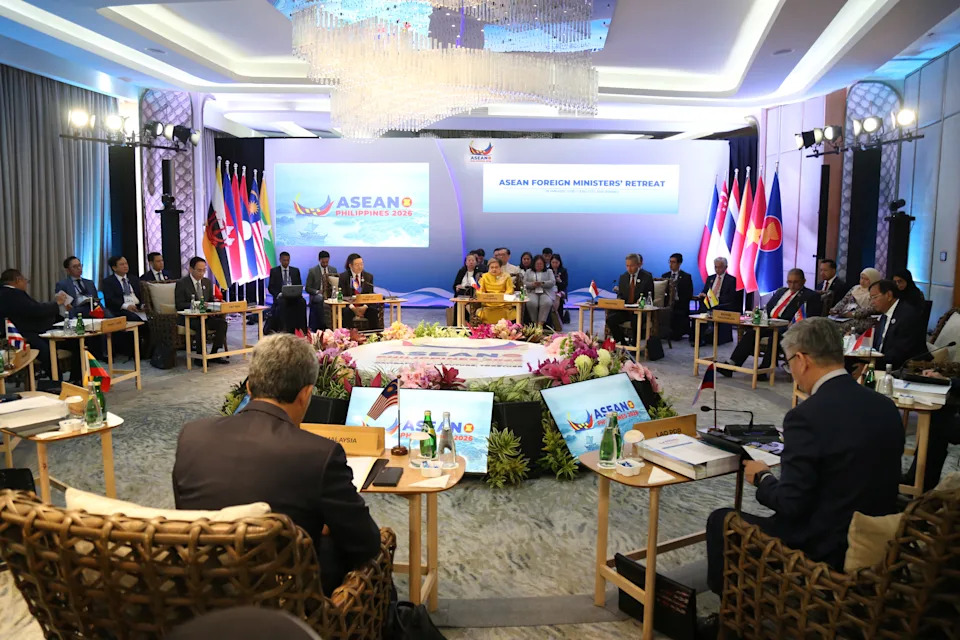
Philippine Foreign Secretary Theresa Lazaro, rear center, delivers her speech during the Association of Southeast Asian Nations (ASEAN) Foreign Ministers' Retreat in Cebu, Philippines Thursday, Jan. 29, 2026. (AP Photo/Jacqueline Hernandez, Pool)(ASSOCIATED PRESS)
The Philippines holds ASEAN’s rotating chairmanship this year, taking the slot that would have gone to Myanmar before the military junta was suspended from chairing after the 2021 coup that ousted Aung San Suu Kyi’s democratically elected government.
Founded in 1967 during the Cold War, ASEAN brings together a diverse set of states — from vibrant democracies such as the Philippines, a long-standing treaty ally of the United States, to more authoritarian governments like Laos and Cambodia, which have close ties to Beijing.
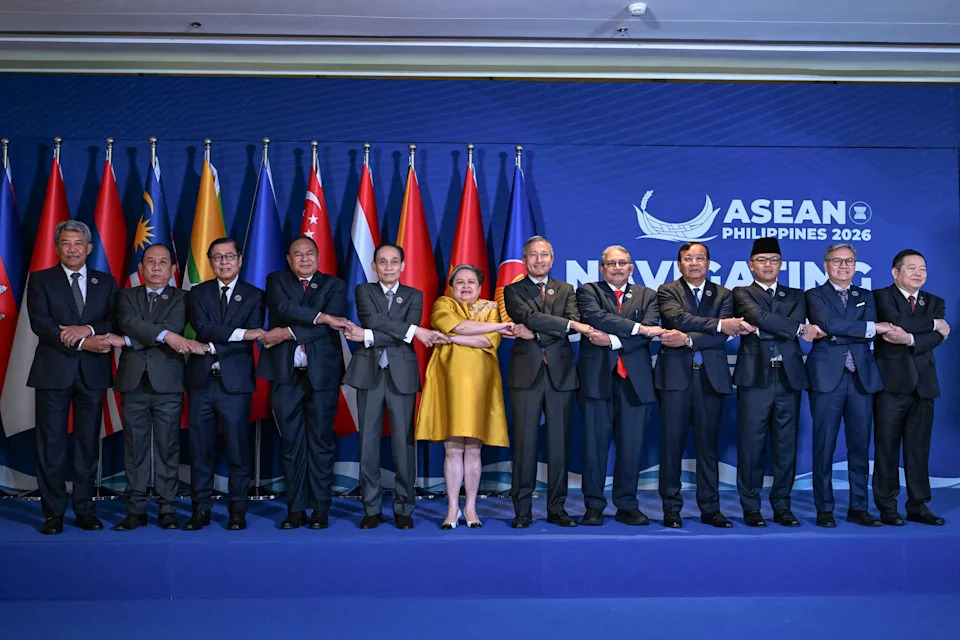
CORRECTS ID OF THAI FOREIGN MINISTER - From left, Malaysian Foreign Minister Mohamad Hasan, Myanmar's Permanent Secretary of the Ministry of Foreign Affairs Hau Khan Sum, Thai Foreign Minister Sihasak Phuangketkeow, East Timor's Foreign Minister Bendito dos Santos Freitas, Vietnam's Foreign Minister Le Hoai Trung, Philippine Foreign Secretary Theresa Lazaro, Singapore's Foreign Minister Vivian Balakrishnan, Brunei's Second Minister of Foreign Affairs Erywan Yusof, Cambodian Foreign Minister Prak Sokhonn, Indonesia's Foreign Minister Sugiono, Laos' Foreign Minister Thongsavanh Phomvihane, and ASEAN Secretary-General Kao Kim Hourn pose for a group photo during the Association of Southeast Asian Nations (ASEAN) Foreign Ministers' Retreat in Cebu, Philippines Thursday, Jan. 29, 2026. (Jam Sta Rosa/Pool Photo via AP)(ASSOCIATED PRESS)
The bloc adopted the theme “Navigating Our Future, Together” for 2026, but efforts to project unity have been tested. Deadly clashes between Thailand and Cambodia last year over a longstanding border dispute required international mediation and a U.S.-backed ceasefire.
Aside from addressing Thailand-Cambodia tensions, ASEAN foreign ministers will consider how to advance the bloc’s 2021 five-point peace plan for Myanmar, which calls for an immediate cessation of hostilities and a return to dialogue but has so far failed to halt the violence.
Ministers are also under pressure to conclude negotiations with China ahead of a self-imposed deadline this year for a code of conduct to manage long-standing territorial disputes in the South China Sea. China’s expansive maritime claims overlap with those of four ASEAN members — the Philippines, Malaysia, Vietnam and Brunei — in a critical global shipping lane.
Jacqueline Hernandez in Cebu contributed to this report.
Help us improve.