The Democratic Party has shifted toward supporting universal childcare, driven by candidates, advocates and pandemic-era attention. States and cities — including New Mexico, New York and San Francisco — have moved toward broader or universal programs, while federal proposals such as the Child Care For Working Families Act continue to shape debate. Key questions about definitions, inclusion of home-based providers, pace of expansion and financing remain, even as shared principles—broad access, workforce investment and family-based options—have emerged.
How Democrats Came to Back Universal Childcare: From Crisis to Consensus
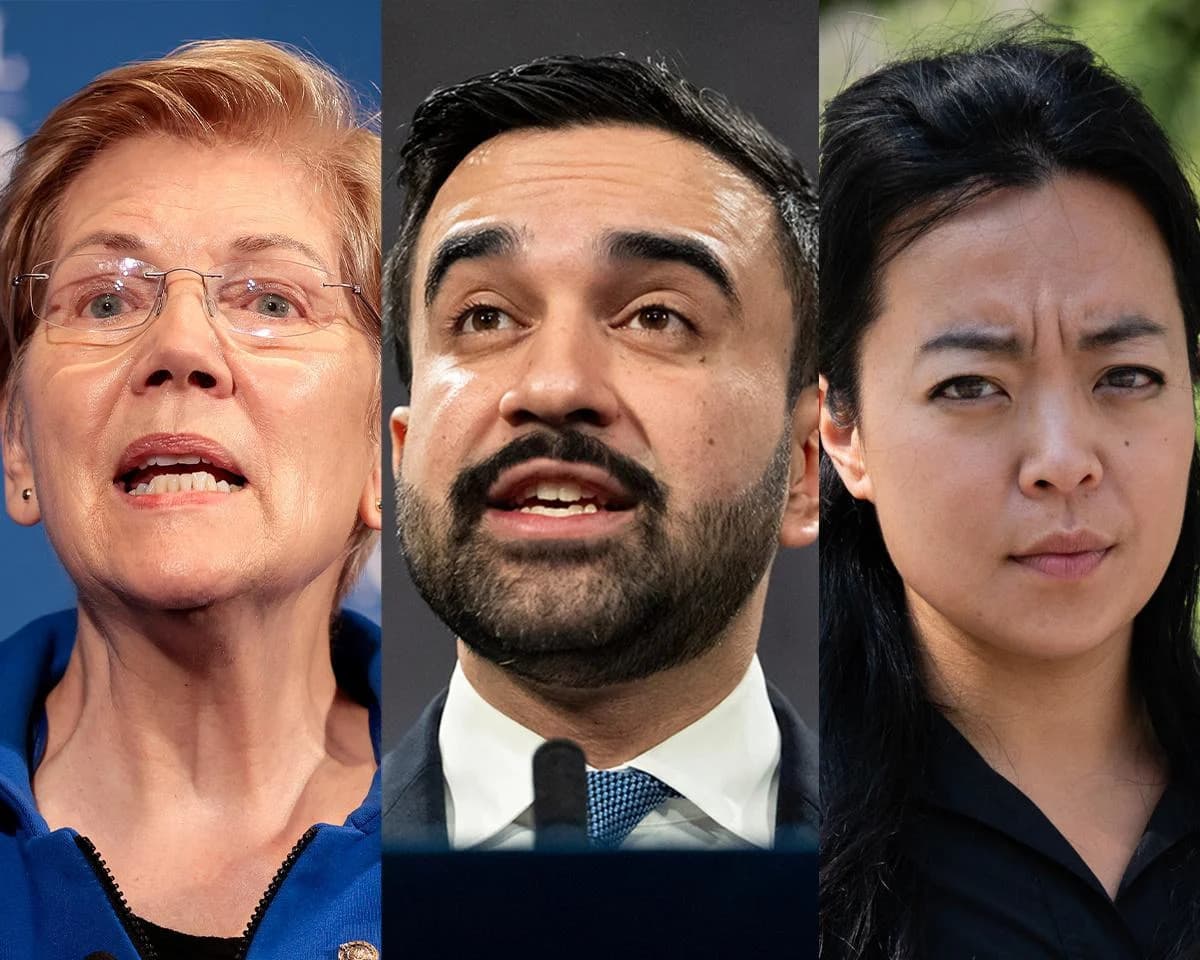
Elizabeth Warren, Zohran Mamdani and Francesca Hong.Photograph: Getty Images, AP(Photograph: Getty Images, AP)
When Francesca Hong ran for the Wisconsin state assembly in 2020, childcare was not a central plank of her campaign. Now a state representative, restaurateur and mother running for governor, Hong has said that a universal childcare bill would be among the first measures she would sign into law if elected.
“We’re in a childcare catastrophe. We haven’t invested enough in this infrastructure,”— Francesca Hong, on why universal childcare is urgent.
Why the Shift Happened
In recent months, an increasing number of Democratic candidates and elected officials across the country have embraced universal childcare as a core policy priority. Candidates from Georgia gubernatorial hopeful Jason Esteves to Maine congressional candidate Jordan Wood and Washington, D.C., mayoral contender Janeese Lewis George have put the idea at the center of their platforms.
Prominent party operatives and former campaign officials have also signaled support. James Carville wrote in a New York Times op-ed that when 70% of Americans say raising children is too expensive, universal childcare should be considered a public good. David Plouffe argued the party should include universal childcare in its future platform, and longtime advocates such as Bernie Sanders have long called for broadly accessible care.
Policy Moves And Momentum
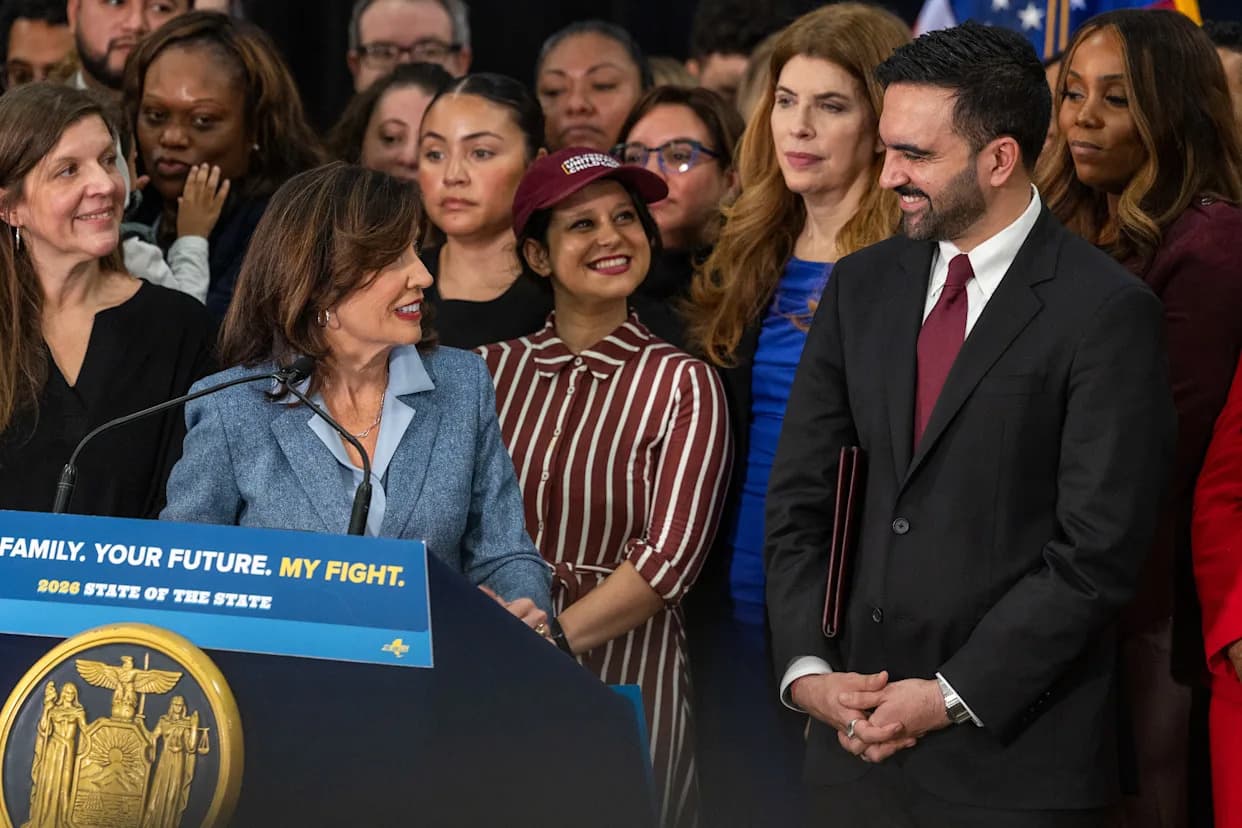
The rhetorical shift has already produced concrete policy changes at the state and city level. Since last fall, New Mexico removed income limits from its free childcare program; New York announced a pathway toward universal free childcare; and San Francisco expanded free childcare eligibility to families of four earning up to $230,000 a year. These moves signal a growing appetite for policies that treat childcare as a public-service infrastructure similar to public education or transit.
The Child Care For Working Families Act, introduced in 2017 by Senator Patty Murray and Representative Bobby Scott, remains a central federal framework: it would substantially increase federal support for childcare but originally tied aid to a sliding scale. Earlier national proposals, including elements of the House’s Build Back Better package in 2021, used non-universal eligibility thresholds tied to state median income, reflecting an ongoing debate about universality versus targeted aid.
Historical Context
The party’s evolution is rooted in history. In 1971, Congress passed the Comprehensive Child Development Act to create wide-ranging child development programs; President Richard Nixon vetoed the bill, arguing it privileged communal child-rearing over family-centered approaches. The political backlash of the 1970s contributed to decades in which many Democrats avoided advocating for universal public daycare and instead focused on welfare-style aid for low-income families and employer incentives for others.
What Changed
Several factors helped shift the debate back toward universal approaches. Senator Elizabeth Warren’s 2019 childcare proposal, which would make childcare free for families under 200% of the federal poverty line while extending some benefits to all households, pushed the idea into mainstream policy discussion. Organizers and advocacy groups — especially those representing historically underserved communities such as Latino parents and childcare educators — built sustained pressure at the state level for years. The Covid-19 pandemic served as a critical inflection point: media coverage and public awareness of childcare’s economic role surged, and employers, grandparents and policymakers increasingly saw childcare as essential to a functioning economy.
As Celinda Lake, a veteran Democratic pollster, put it: childcare became an issue that small businesses, employers and extended families all cared about because the economy depends on a working childcare system.
Ongoing Debates And Implementation Questions
Despite growing consensus, key questions remain unresolved. What precisely counts as “universal” varies across proposals: some programs exclude families where available parents are not working or in school; others focus on eliminating waitlists first. Policymakers are debating how to integrate home-based childcare providers into expanded systems, how quickly to scale programs, whether care should be entirely free for everyone, and how to sustainably finance a universal model.
There is growing agreement on several principles: broadly accessible or free care for most families, significant investment in the underpaid childcare workforce to ensure adequate supply and quality, and a more inclusive approach to family-based care options such as paid stipends for relatives who provide primary care.
What This Means Politically
Universal childcare has moved from a politically risky idea to a mainstream Democratic objective. While it may still face partisan pushback, childcare scarcity is a cross-cutting problem that attracts bipartisan interest, and several bipartisan childcare bills have been introduced in recent Congresses. Advocates argue that universal childcare is not only a benefit for families who receive it, but a systemic investment that supports the broader economy.
Bottom line: The Democratic Party’s embrace of universal childcare reflects years of organizing, high-profile policy proposals, and a pandemic-era recognition of childcare’s central role in economic resilience. Significant policy design and financing debates remain, but the political momentum for broad access is unmistakable.
Help us improve.