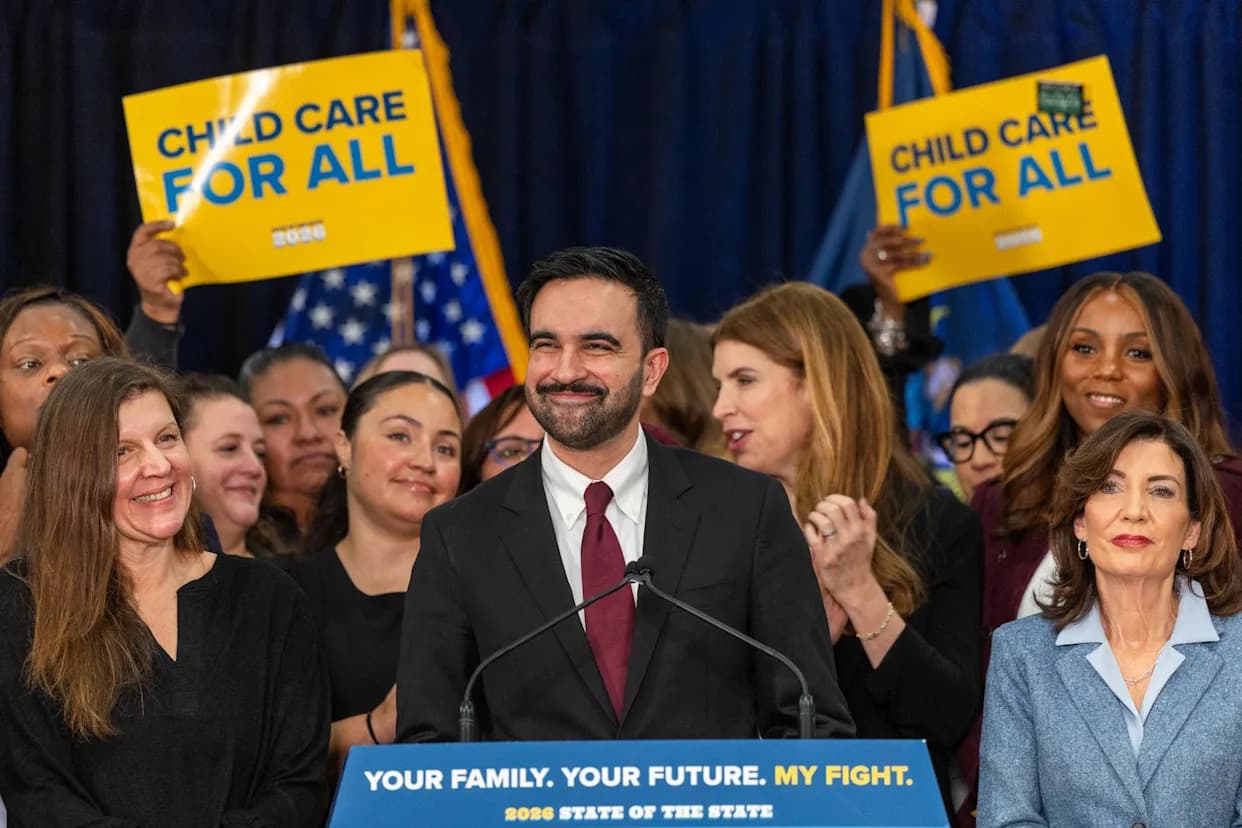
Zohran Mamdani’s ambitious pledge to expand universal child care in New York—once dismissed as infeasible—moved forward after Gov. Kathy Hochul backed a $4.5 billion plan to expand care for nearly 100,000 children. The proposal aims to make 3-K universal, launch a 2-Care program for 2-year-olds, and build on the city’s established 4-K system. Major hurdles remain, including funding beyond two years, workforce pay and training, and expanded facilities, but advocates say New York could become a national model if it secures sustained investment and scales infrastructure.
Why Universal Child Care in New York Just Took a Big Step Forward
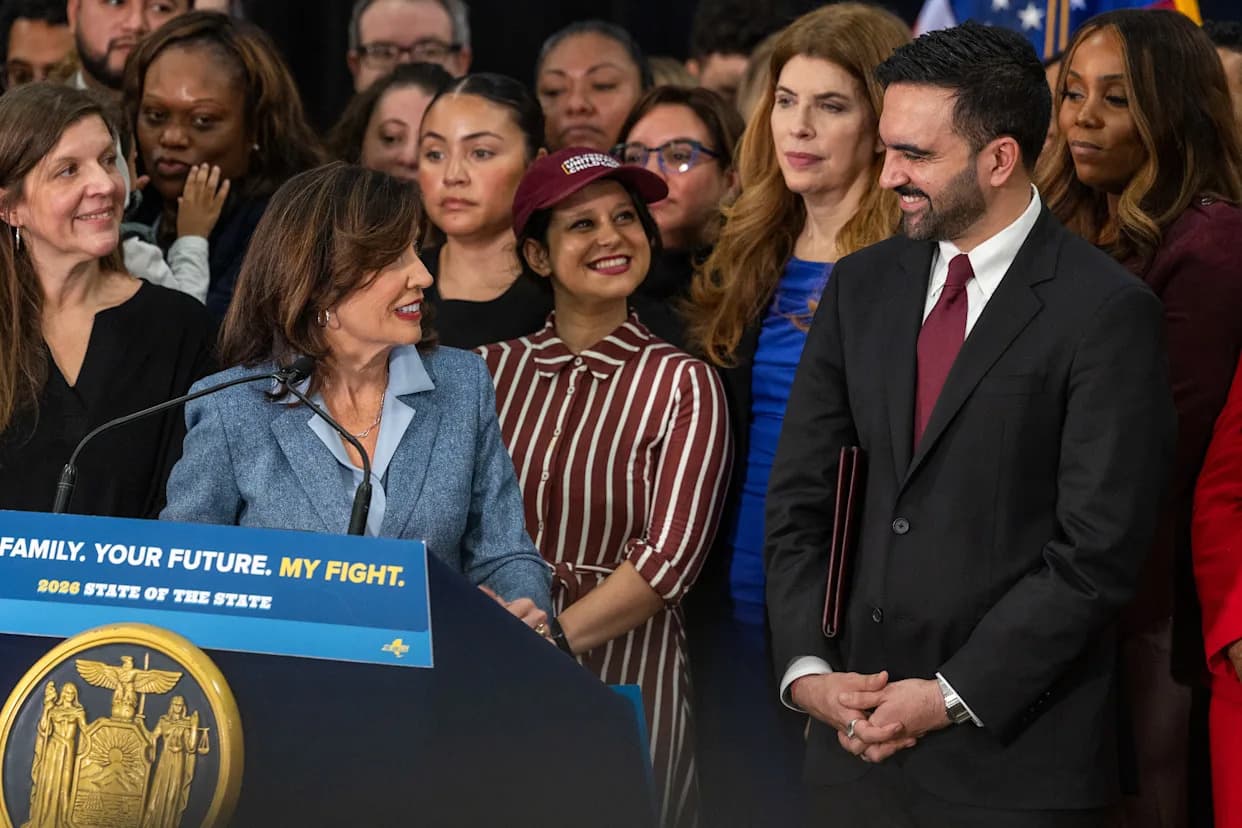
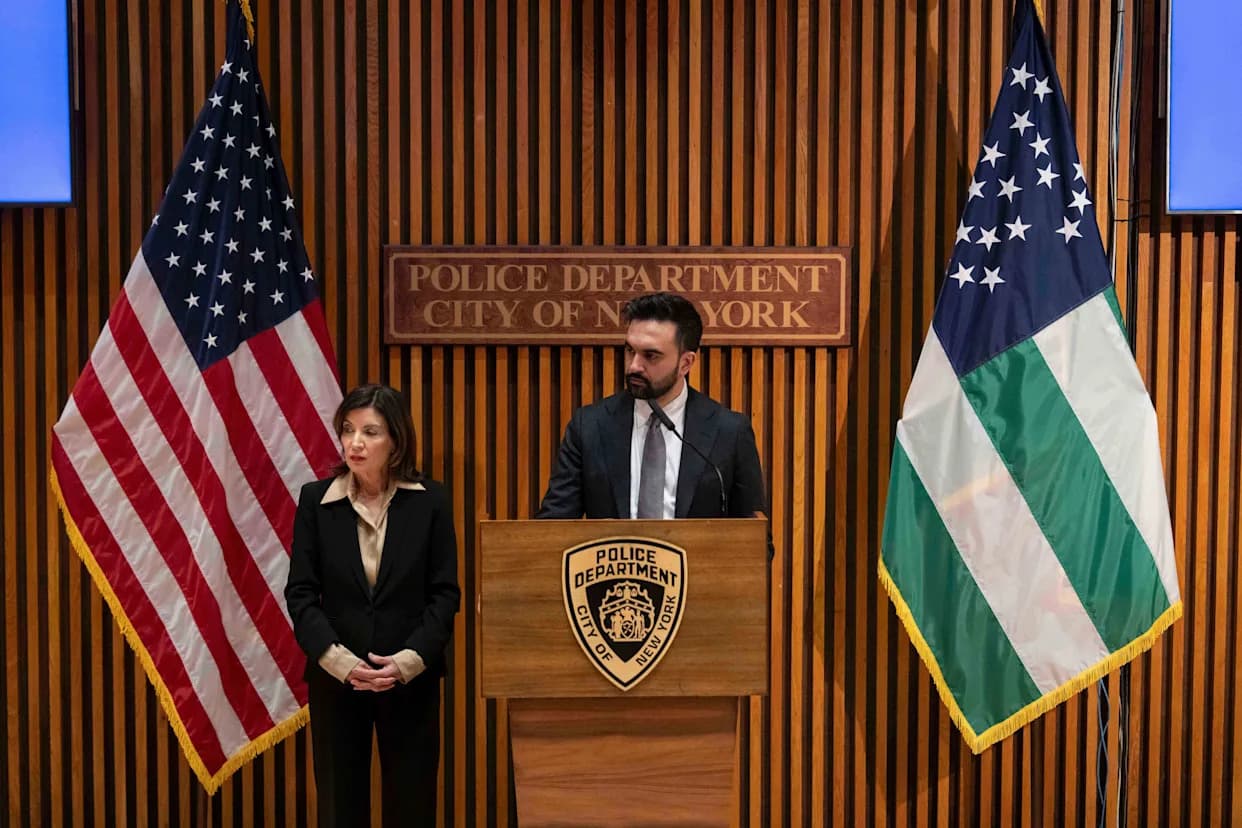
New York Gov. Kathy Hochul and New York City Mayor Zohran Mamdani announce a major child care expansion on January 8, 2026.
What once sounded like an almost impossible promise from Zohran Mamdani—a roughly $6 billion price tag and the daunting task of hiring and training potentially thousands of educators—has taken a surprising step forward in New York City. During last year’s mayoral campaign, polls showed broad public support for universal child care (one survey found 71 percent of likely voters backed the idea), yet many doubted Mamdani could make it happen. Critics warned the proposal would require massive new revenue that Albany might resist.
Major Early Win
Barely a week into his term, Mamdani joined Gov. Kathy Hochul at a Brooklyn YMCA to unveil a plan to expand care for nearly 100,000 children, backed by a $4.5 billion state commitment. The announcement sent a clear signal: momentum for publicly funded child care is building not just in New York but across the country.
Why This Moment Matters
Advocates and experts say the politics of child care are shifting. Once dismissed as radical, taxpayer-funded child care now finds broader support across the political spectrum. Raysa Rodriguez, executive director of the Citizens’ Committee for Children, described the announcement as unusually hopeful: she could count on one hand the number of times she’d seen that level of optimism in a policy rollout.
"It is something that is so broadly needed...that it really resonates," said Elliot Haspel, a family policy expert and senior fellow at the think tank Capita.
What Mamdani’s Plan Would Do
The proposal builds on New York City’s existing universal preschool for 4-year-olds. Key elements include making 3-year-old preschool truly universal and launching a new program, called 2-Care, to provide free care for 2-year-olds. 2-Care would begin with 2,000 children and aims to offer a seat to any family that wants one within four years. Hochul has also pledged to pursue universal preschool for every 4-year-old in New York State, pending legislative approval.
Political and Practical Advantages
New York’s deep experience with universal pre-K gives the city important advantages. The 4-K rollout begun under Mayor Bill de Blasio in 2014 became a lifeline for many families in a city where private daycare can cost thousands per month. Parent organizing—most visibly by groups like New Yorkers United for Child Care—helped restore and protect 3-K access after cuts were proposed under Mayor Eric Adams, demonstrating strong grassroots support for expansion.
Major Challenges Ahead
Despite the progress, substantial obstacles remain. Hochul’s $4.5 billion pledge would cover roughly two years of the program, leaving a large funding gap afterward. Early-childhood care is expensive: low child-to-staff ratios and specialized training raise costs, and Mamdani has proposed closing the pay gap by moving toward pay parity with public school teachers (roughly $85,000 a year), while many current child care workers earn as little as $25,000. Raising wages will significantly increase the program’s long-term cost.
The city must also expand a mixed infrastructure of public-school classrooms, larger centers, and smaller home-based providers, while recruiting, training, and credentialing a substantially larger workforce. "It’s paying the workforce, training the workforce, and then finding spaces for that workforce," said Grace Bonilla, president and CEO of United Way of New York City.
National Context And Headwinds
The New York effort follows a national trend: New Mexico announced universal child care, and conservative states from Montana to Kentucky have expanded offerings in different forms. Even recent federal proposals included increased child care funding, though not all approaches reach the lowest-income families effectively.
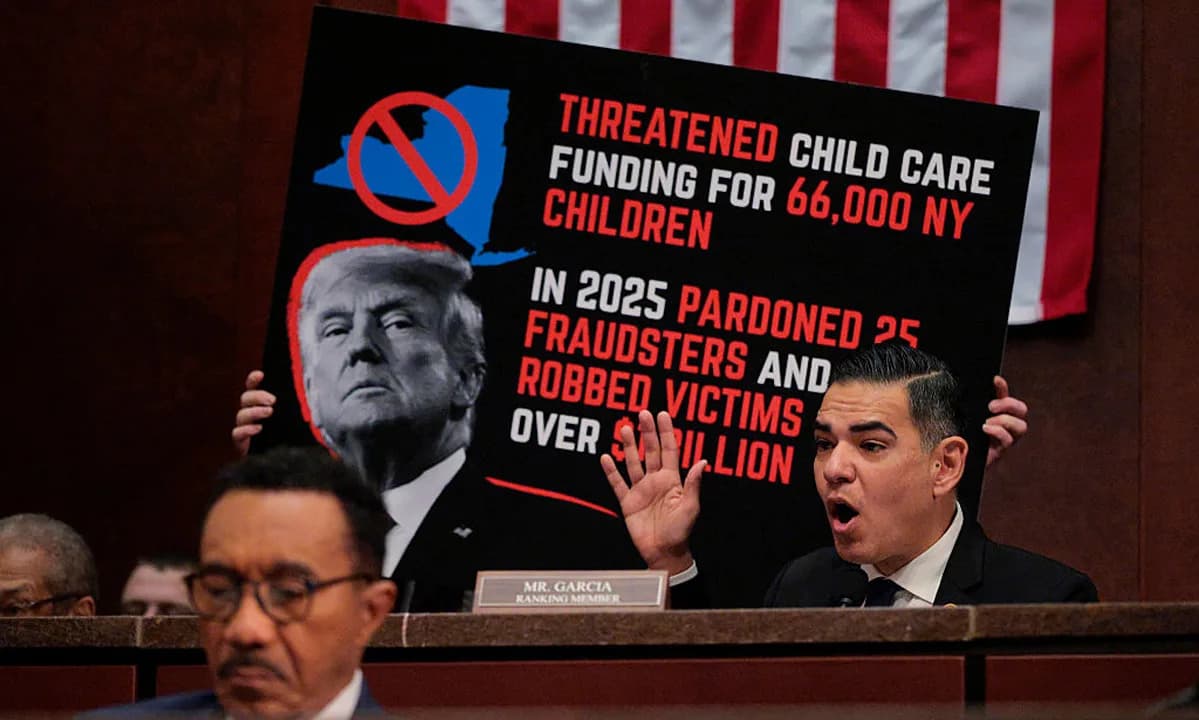
Political headwinds remain. Federal funding for child care in five states, including New York, was briefly frozen after a viral video alleging fraud in Minnesota; that freeze has been blocked in court for now. The video’s creator has criticized Mamdani’s plan, but experts say such claims are unlikely to derail coordinated local and state efforts.
Why It Could Still Succeed
Experts say Mamdani’s early win wasn’t accidental: child care is a widely felt, persistently expensive problem that resonates across income and political lines. By framing child care as central to city affordability and quality of life—not just a workplace benefit—Mamdani tapped a message that can attract broader support.
There’s cautious optimism that New York could become a national model if leaders secure sustainable funding, scale physical capacity, and build the workforce needed to deliver high-quality early care and education.
"There’s an opportunity for New York to be a national model of what it looks like when local and state government work together to put children and families first," Rodriguez said.
Help us improve.