U.S. intelligence reports express uncertainty about whether interim Venezuelan President Delcy Rodriguez will follow Washington’s demand to sever ties with Iran, China and Russia. Rodriguez, installed after the U.S. capture of Nicolas Maduro on Jan. 3, has not publicly cut those relationships and met with representatives of those countries at her inauguration. CIA Director John Ratcliffe visited Caracas on Jan. 15, but U.S. agencies say it’s unclear whether Rodriguez is fully aligned with U.S. strategy. The administration is also weighing opposition leader Maria Corina Machado as a longer-term option, though assessments say she currently lacks strong security and oil-sector ties.
US Intelligence Questions Whether Venezuela’s Interim Leader Will Sever Ties With Iran, China and Russia
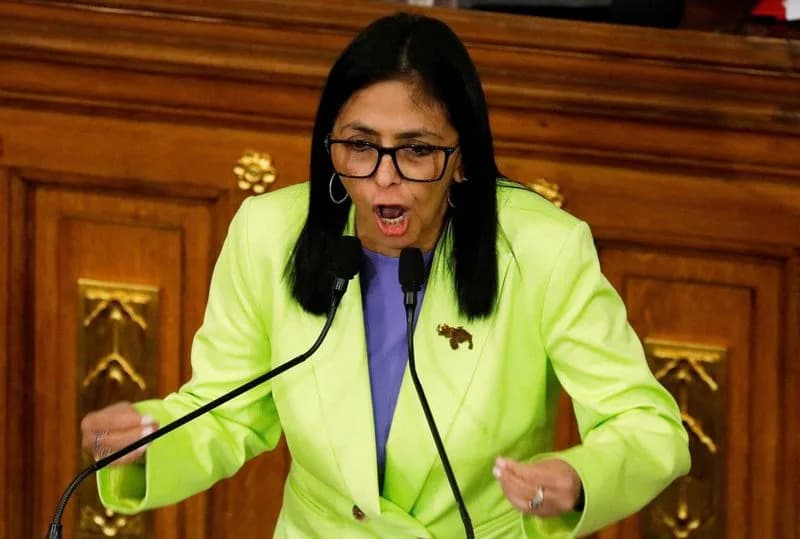
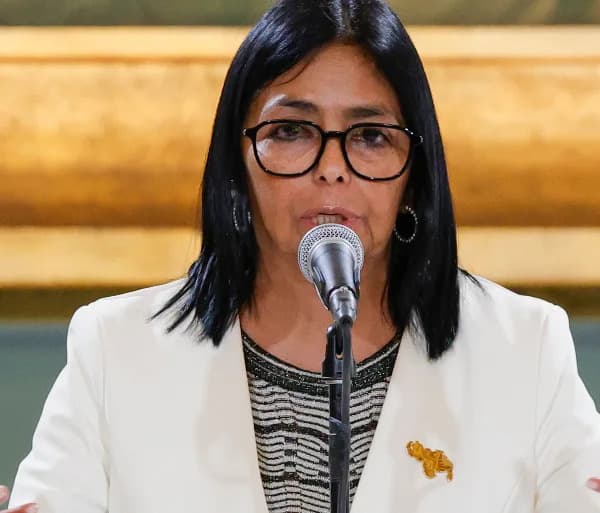
FILE PHOTO: Venezuela's interim president Delcy Rodriguez delivers her first annual address to the nation at the National Assembly, following the U.S. strike in Caracas that resulted in the capture of President Nicolas Maduro and his wife, Cilia Flores, in Caracas, Venezuela, January 15, 2026. REUTERS/Leonardo Fernandez Viloria/File Photo
By Erin Banco, Jonathan Landay and Matt Spetalnick | NEW YORK, Jan 27 (Reuters)
Recent U.S. intelligence assessments have cast doubt on whether interim Venezuelan President Delcy Rodriguez will follow Washington’s directive to formally break ties with countries the U.S. views as adversaries, according to four people familiar with the reports.
Uncertain Commitment
U.S. officials have publicly urged Rodriguez to cut diplomatic and advisory links with longtime partners such as Iran, China and Russia—including expelling their diplomats and advisers. Rodriguez, who assumed the interim presidency after the U.S. capture of former President Nicolas Maduro on January 3, has not publicly announced any such rupture. Her swearing-in ceremony earlier this month was attended by representatives from those countries.
The intelligence reports, based on classified assessments, say it remains unclear whether Rodriguez is fully aligned with U.S. strategy for Venezuela, the sources said on condition of anonymity. It was also not possible to determine from public reporting whether conversations between Rodriguez and CIA Director John Ratcliffe, who traveled to Caracas on January 15, have changed agency judgments.
Washington’s Objectives And Stakes
Washington’s stated aim is to curb the influence of adversarial governments in the Western Hemisphere and to open Venezuela’s large oil sector to greater U.S. commercial and strategic engagement. If Rodriguez severs ties with Tehran, Beijing and Moscow, the United States could gain broader opportunities to invest in Venezuela’s energy industry. But if Washington cannot secure Rodriguez’s cooperation, its ability to direct interim authorities from afar could be undermined and political pressure could grow for deeper military involvement.
Asked for comment, the Central Intelligence Agency and the Venezuelan government did not respond. A senior Trump administration official, speaking anonymously, said the president "continues to exert maximum leverage" over Venezuela’s leaders and "expects this cooperation to continue."
Why U.S. Officials Are Cautious
The CIA previously assessed that officials loyal to Maduro, including Rodriguez, were best positioned to govern after his ouster. Critics of the White House strategy have warned against relying on Maduro loyalists to run the interim government. Several sources said doubts about Rodriguez’s reliability predated the U.S. military operation.
For Caracas, complying with U.S. demands would mean distancing itself from traditional partners: Iran has helped repair Venezuelan refineries; China has accepted oil shipments as debt repayment; and Russia has supplied military hardware. Havana, long a close partner, has provided intelligence and security support while receiving subsidized Venezuelan oil.
Actions Taken So Far
Since Maduro’s removal, Rodriguez — whose connections in the oil sector are viewed as critical to stabilizing the country — has taken gestures meant to reassure Washington, including releasing political prisoners and authorizing the sale of an estimated 30 million to 50 million barrels of oil to the United States. In a recent speech she said she had had "enough" of U.S. intervention, but U.S. officials have also reported positive phone conversations with her in recent days.
The administration currently sees no immediate alternative to engaging Rodriguez, given its public backing of her, though U.S. officials are cultivating contacts with senior Venezuelan military and security figures as a contingency.
Maria Corina Machado As A Longer-Term Option
Intelligence assessments also concluded that opposition leader Maria Corina Machado is not yet prepared to run the country effectively, in part because she lacks deep ties to the security services and the oil sector, the sources said. Machado and her supporters maintain she and her movement enjoyed strong electoral support in 2024 despite state-backed results favoring Maduro. The White House views her favorably and has discussed keeping her "involved," possibly in an advisory or longer-term leadership role, though no firm decision has been made. Machado’s representatives did not respond to requests for comment.
Reporting: Erin Banco, Jonathan Landay and Matt Spetalnick. Editing: Don Durfee and Cynthia Osterman.
Help us improve.