
The Trump administration is reportedly rushing to install a compliant interim government in Venezuela after Nicolás Maduro’s capture, prioritizing administrative control and oil-industry rehabilitation over an immediate democratic transition. U.S. officials are concentrating on Vice President Delcy Rodríguez as a potential temporary leader and leveraging naval forces, a tanker blockade, and sanctions to press Caracas. The plan seeks to protect American energy interests but carries significant political and security risks, and Washington says it will judge leaders by actions rather than rhetoric.
Inside the Plan: How the U.S. Seeks to ‘Run’ Venezuela After Maduro’s Capture

US President Donald Trump speaks during a news conference at the Mar-a-Lago in Palm Beach, Florida, on January 3, 2026. - Nicole Combeau/Bloomberg/Getty Images
The Trump administration is reportedly moving quickly to install a compliant interim government in Venezuela following the dramatic capture of Nicolás Maduro, prioritizing administrative stability and the rehabilitation of the country’s oil infrastructure over an immediate return to full democracy.
What Officials Say
Administration officials describe a multipronged effort that uses U.S. military presence and economic pressure to influence elements of Maduro’s remaining regime. Senior advisers — including Senator Marco Rubio and other White House and defense figures — have been working on a governance framework for Venezuela after Maduro’s ouster. Other administration officials have been tasked with persuading American energy firms to consider returning to Venezuela to help repair aging oil facilities.
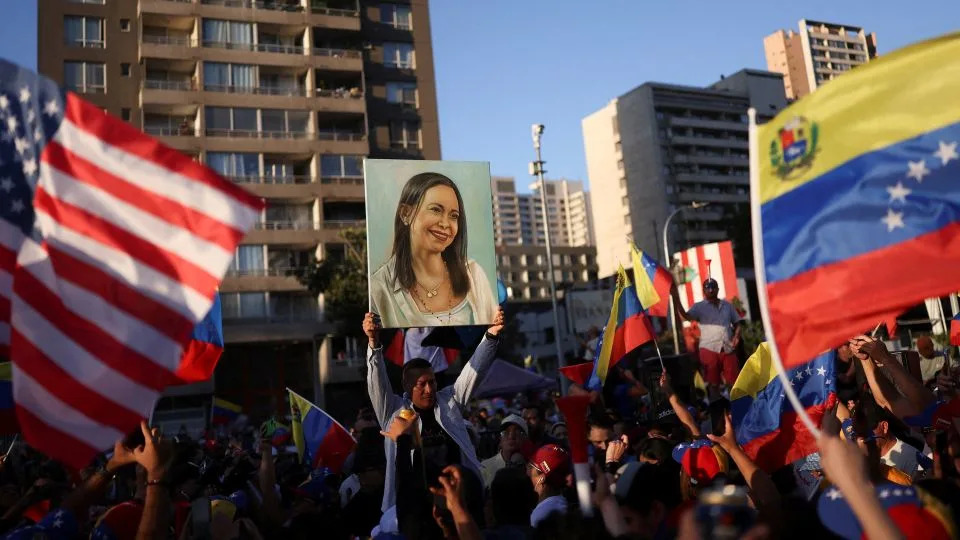
A person holds up an image depicting Venezuelan opposition leader María Corina Machado in Santiago, Chile, on January 3, 2026. - Pablo Sanhueza/Reuters
Focus on Delcy Rodríguez
U.S. officials have publicly and privately focused on Vice President Delcy Rodríguez as a potential interim leader who might provide administrative continuity while meeting Washington’s core demands. Although Rodríguez initially condemned the operation that removed Maduro, her public tone softened in later statements calling for “cooperation” and “balanced and respectful international relations” with the United States and the region.
“What we are running is the direction that this is going to move moving forward,” said Senator Rubio, describing U.S. leverage offshore and through sanctions as tools to shape the transition.
Leverage, Objectives, and Risks
Officials cited several levers: a robust naval presence, a tanker blockade aimed at cutting Caracas’s oil revenue, and continued sanctions on Venezuela’s energy sector. The administration has publicly linked compliance to a list of demands, including halting drug and weapons trafficking and expelling foreign security partners. The administration has also warned of further military measures if Venezuela’s interim leaders do not comply.
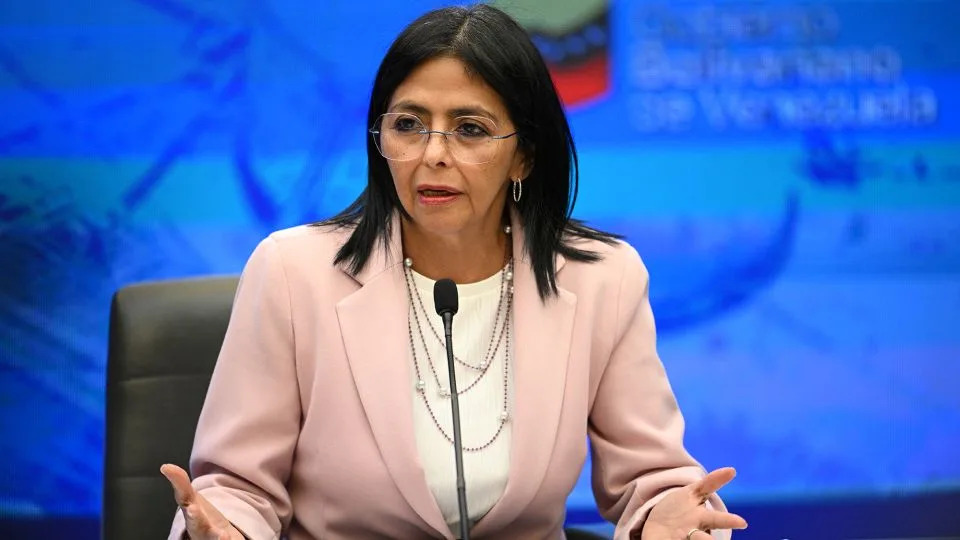
Venezuelan Vice President Delcy Rodríguez speaks during a press conference in Caracas on November 18, 2024. - Federico Parra/AFP/Getty Images
Those objectives carry significant risks. Establishing what amounts to a temporary protectorate over a country of roughly 31 million people would be complex and politically fraught, especially given the absence of an official U.S. presence since the embassy in Caracas closed in 2019. Even short-term goals such as securing access to oil fields could place U.S. personnel in harm’s way if military forces are used to protect infrastructure.
Opposition Figures and Political Calculations
Some administration advisers reportedly discounted opposition leader María Corina Machado as an immediate alternative, citing concerns about her readiness to govern. (Contrary to an earlier report, Machado has not been awarded a Nobel Prize.) The administration appears to be weighing practical stability and the protection of energy investments alongside longer-term aspirations for a democratic transition.
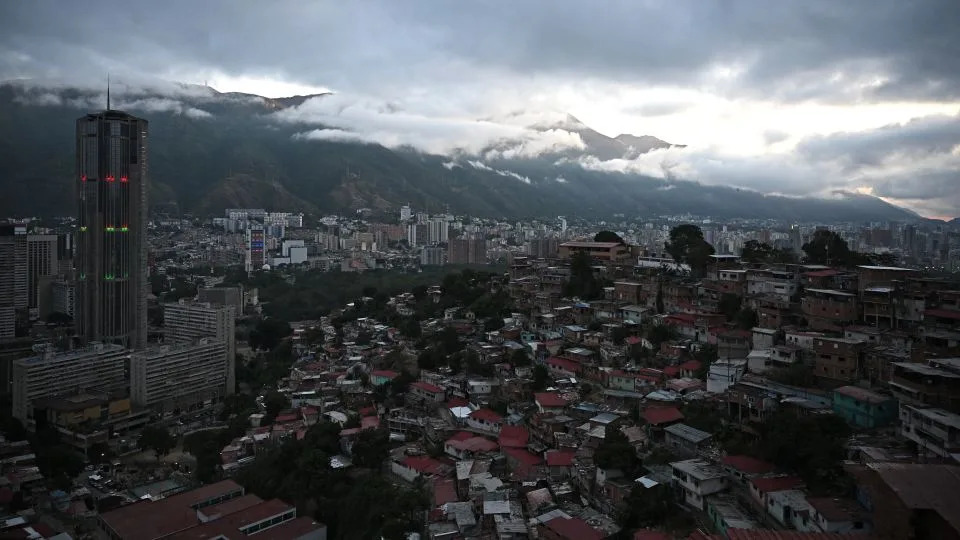
View of Caracas from the San Agustin neighborghood on January 4, 2026. - Federico Parra/AFP/Getty Images
What Comes Next
U.S. officials say they will judge interim Venezuelan leaders by their actions rather than rhetoric. Many questions remain about timelines, guarantees for outgoing leaders, and how any transition will move toward genuinely free elections. For now, Washington’s stated priority is to stabilize administration of the state and secure critical energy infrastructure while pressuring Caracas to meet specified conditions.
Note: This report reflects statements and descriptions from U.S. administration officials and media reporting. Some personnel and role descriptions in earlier drafts were revised to avoid attributing inaccurate official titles; the text uses neutral terms such as "senior advisers" or "administration officials" where appropriate.
Help us improve.


