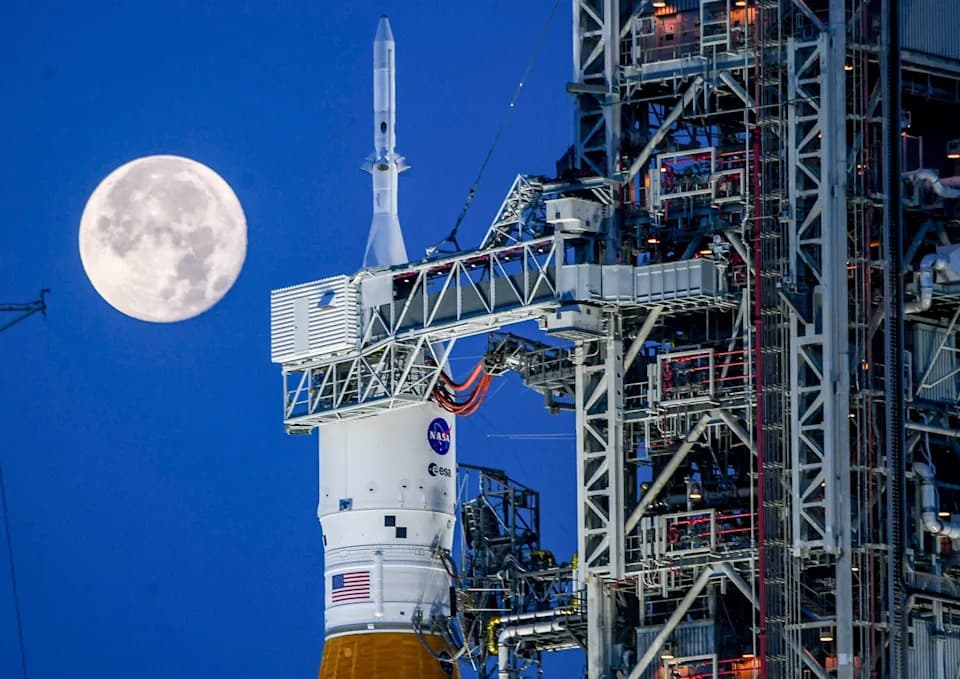
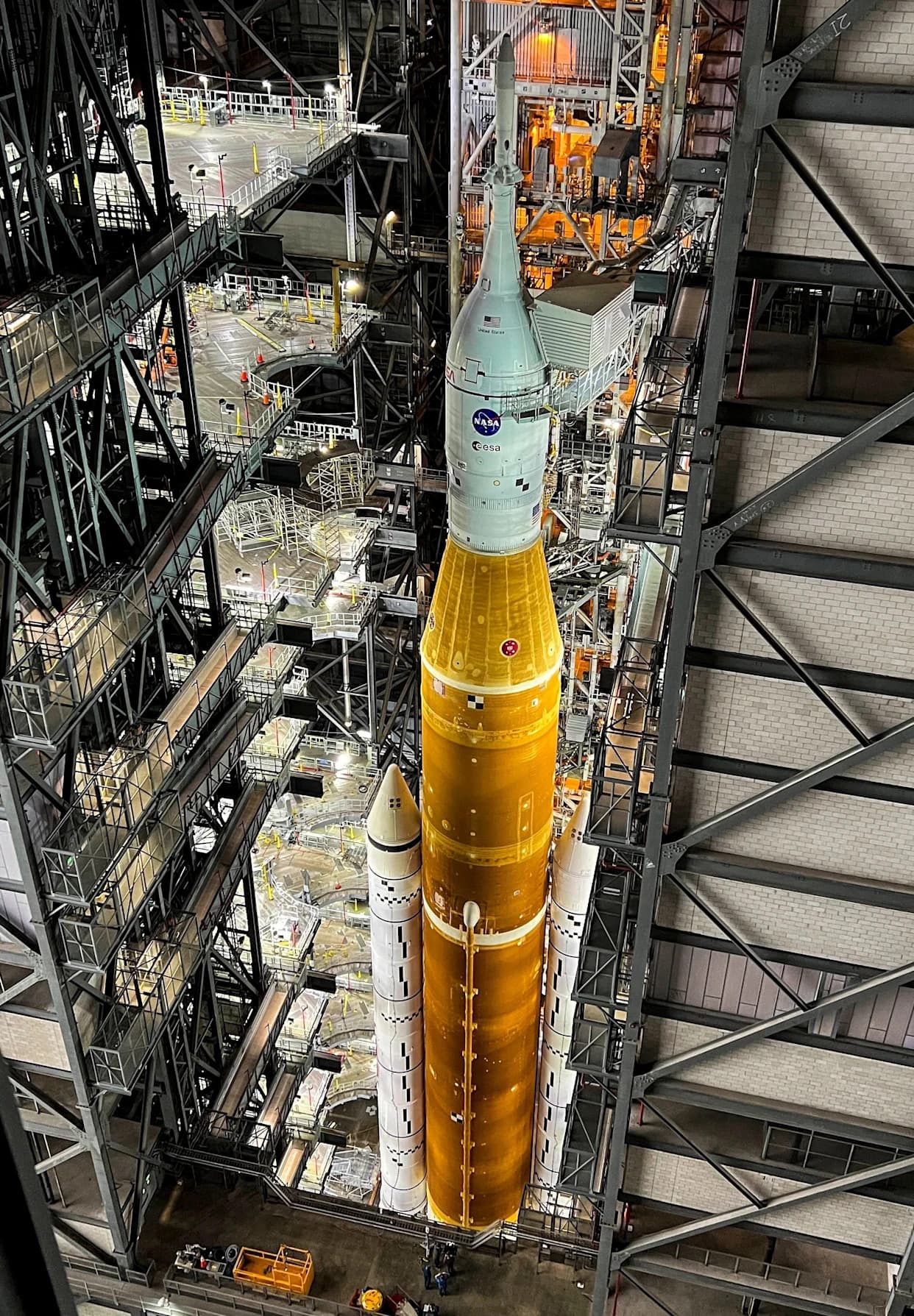
NASA astronaut Chris Williams photographed the Artemis 2 Space Launch System on Launch Pad 39B as the rocket arrived at Kennedy Space Center on Jan. 17. Artemis 2 — commanded by Reid Wiseman with Victor Glover, Christina Koch and Jeremy Hansen — will conduct a roughly 10-day crewed test of the Orion spacecraft, including a trans-lunar injection to loop around the moon. The SLS rolled to the pad atop a crawler-transporter after a nearly 12-hour move; a wet dress rehearsal is required no later than Feb. 2. NASA has issued launch windows from February through April and stresses that safety will determine the final launch date.
ISS Astronaut Captures Artemis 2 SLS on Launch Pad 39B as Moon Mission Readies for Liftoff
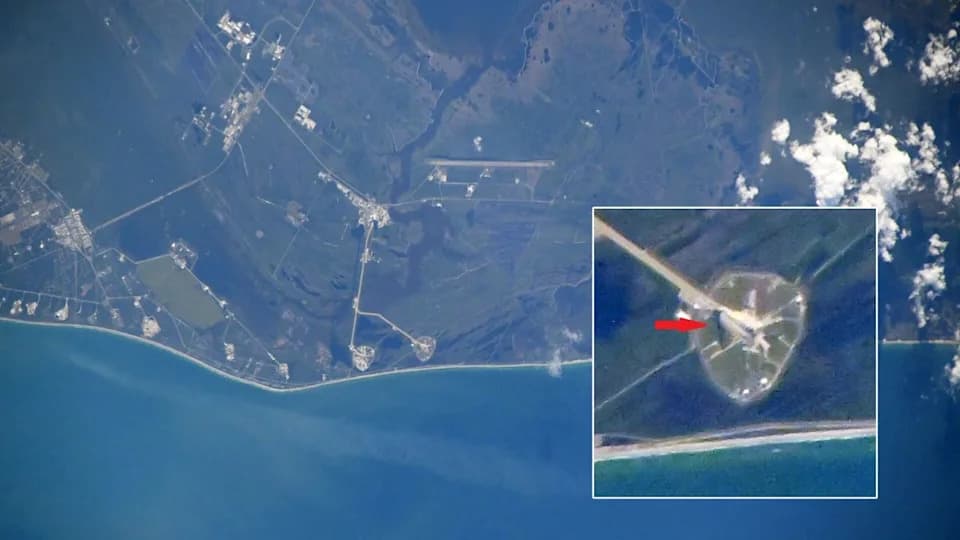
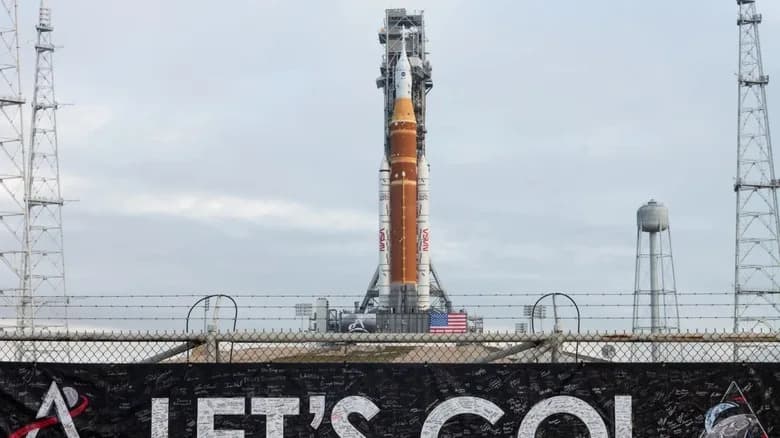
A view of the launchpad in Florida where the Space Launch System will blast off for the Artemis 2 mission. . | Credit: Chris Williams/NASA
The only U.S. astronaut currently aboard the International Space Station photographed NASA's Space Launch System (SLS) sitting on Launch Pad 39B after it arrived at Kennedy Space Center on Jan. 17. The image, taken by NASA astronaut Chris Williams from orbit, shows the rocket and launch tower casting a distinct shadow on the pad as teams prepare for the Artemis 2 flight.
Photo From Orbit Highlights Historic Rollout
Williams posted the image to X (formerly Twitter) on Jan. 19, noting that "if you zoom in on the rightmost launch pad, you can see a shadow just to the left of the center of the pad. That shadow is from the rocket (and launch tower) that will soon take four of my friends on a trip around the moon." He added with a smile that the shot "was not his best effort" — "should have grabbed a different lens" — but called the moment special.
Who’s Flying on Artemis 2
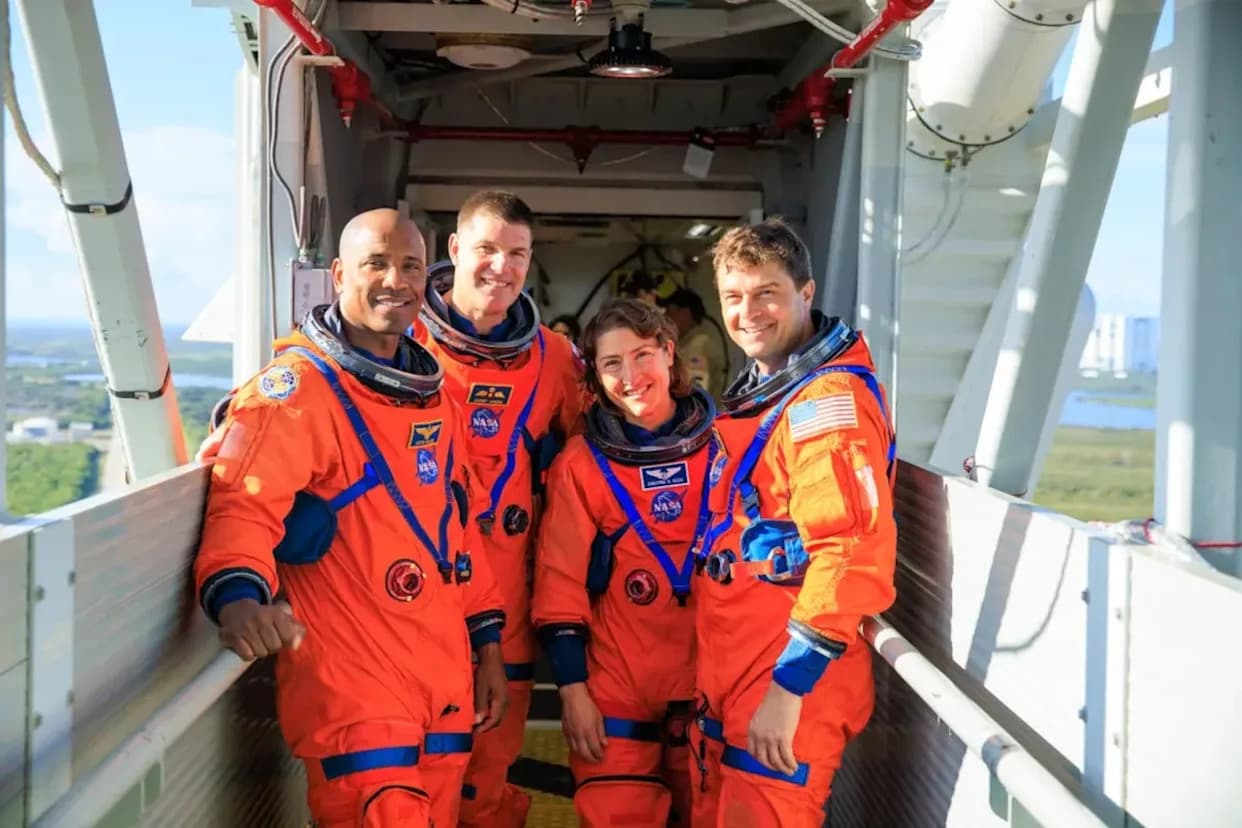
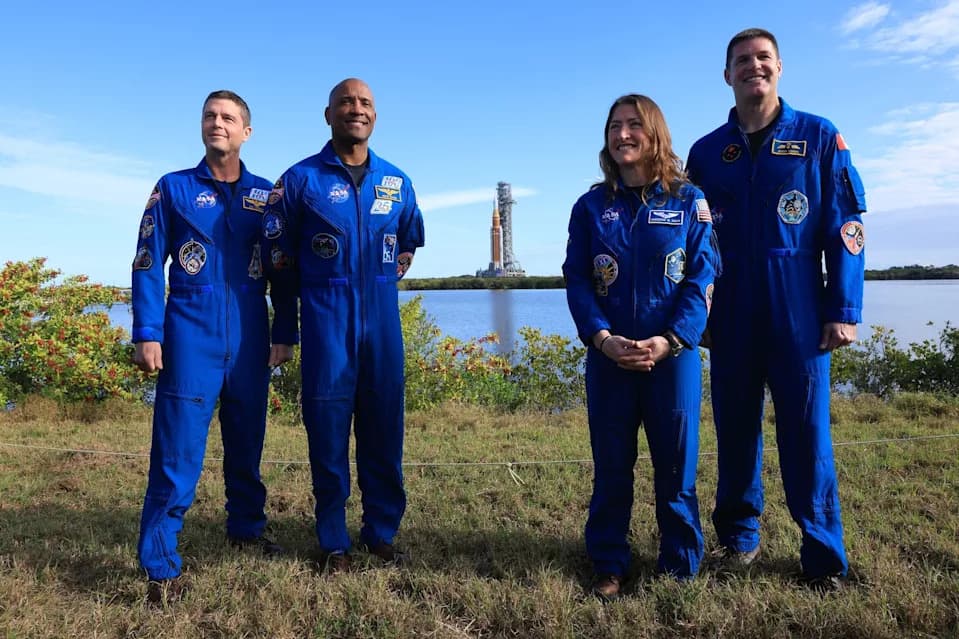
Artemis 2 will carry four astronauts on a roughly 10-day test flight of the Orion spacecraft. The crew is led by commander Reid Wiseman, with Victor Glover as pilot, Christina Koch as mission specialist, and Jeremy Hansen of the Canadian Space Agency as mission specialist. If the mission proceeds as planned, Glover would become the first person of color to travel beyond low Earth orbit, Koch would be the first woman to travel beyond LEO, and Hansen would be the first non-American on such a lunar-loop mission.
Mission Objectives
The primary goals of Artemis 2 are to evaluate Orion's systems with a crew on board and to test crew operations in deep space. Following an initial checkout in Earth orbit, the crew will execute a trans-lunar injection burn to send the spacecraft around the moon before returning to Earth. The flight will also carry a variety of science and human-health experiments designed to inform longer-duration lunar missions.
Rollout Details and Next Steps
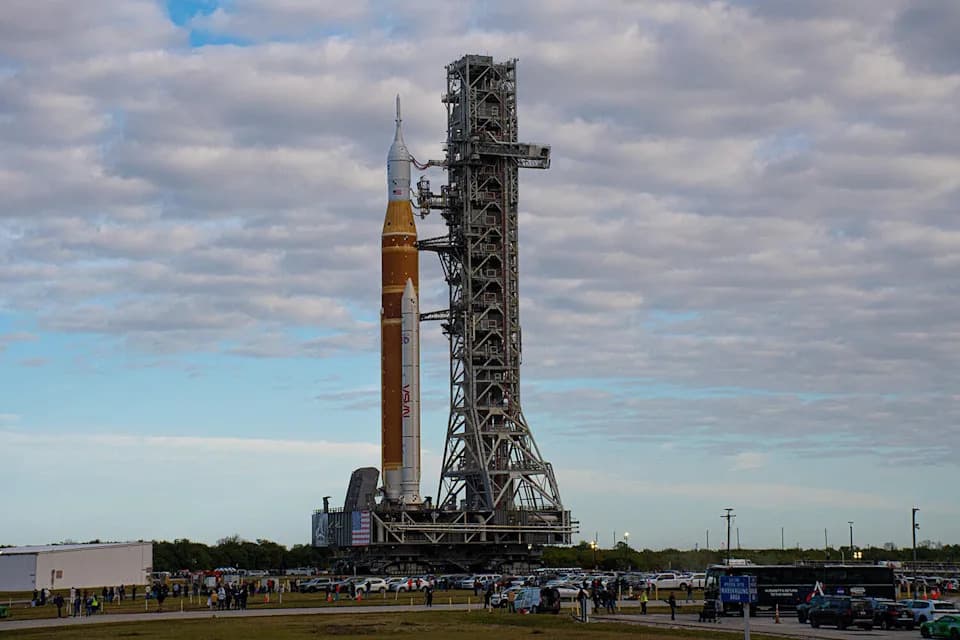
The SLS rolled to Launch Pad 39B on Jan. 17 atop a crawler-transporter, taking nearly 12 hours to move across Kennedy Space Center. The vehicle used for the move is a modern iteration of the crawler that supported Apollo and space-shuttle-era rollouts. SLS arrived at the pad at about 6:42 p.m. EST (2342 GMT).
Schedule, Tests, and Artemis Program Context
Engineers will conduct several pad tests before liftoff, including a wet dress rehearsal — a full fueling simulation that must be completed to certify the vehicle for launch. That rehearsal is scheduled to occur no later than Feb. 2, and NASA has released launch windows for February, March and April. Agency officials at Kennedy Space Center have emphasized that safety will dictate the launch date and that teams will not rush the process.
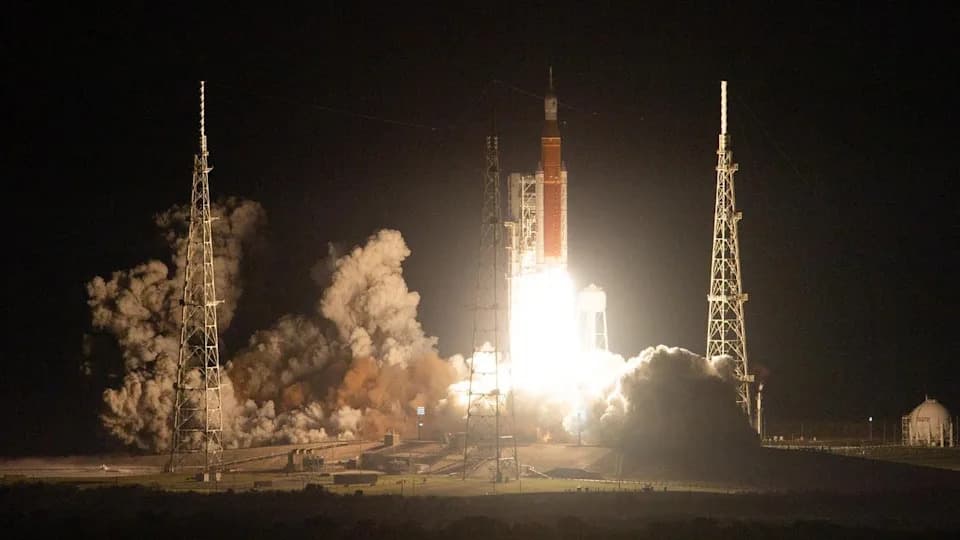
While Artemis 2 will be the first crewed Orion mission, earlier uncrewed flights tested the capsule: an Orion flew an uncrewed test around Earth in 2014 atop a United Launch Alliance Delta IV rocket, and Artemis 1 sent an uncrewed Orion around the moon in 2022 on SLS's maiden flight. Artemis 3 is targeted to return astronauts to the lunar surface in 2027 or 2028, contingent on the readiness of the SpaceX Starship lander currently assigned to perform lunar landings under NASA plans.
Help us improve.