The Trump administration has expanded the Mexico City policy to bar recipients of U.S. foreign aid from funding DEI programs and initiatives it describes as "gender ideology," a change expected to touch roughly $30 billion in assistance. The move extends a policy that historically applied mainly to family planning funds to cover a far broader set of aid streams and organizations, including international and U.S.-based NGOs operating abroad. Critics warn the expansion could undermine global health services, close clinics, and roll back protections for transgender and nonbinary people. The State Department will publish three final rules on Friday that will clarify the policy’s scope and implementation.
Trump Administration Expands Mexico City Policy — Bars Foreign Aid For DEI Programs And What It Calls "Gender Ideology"
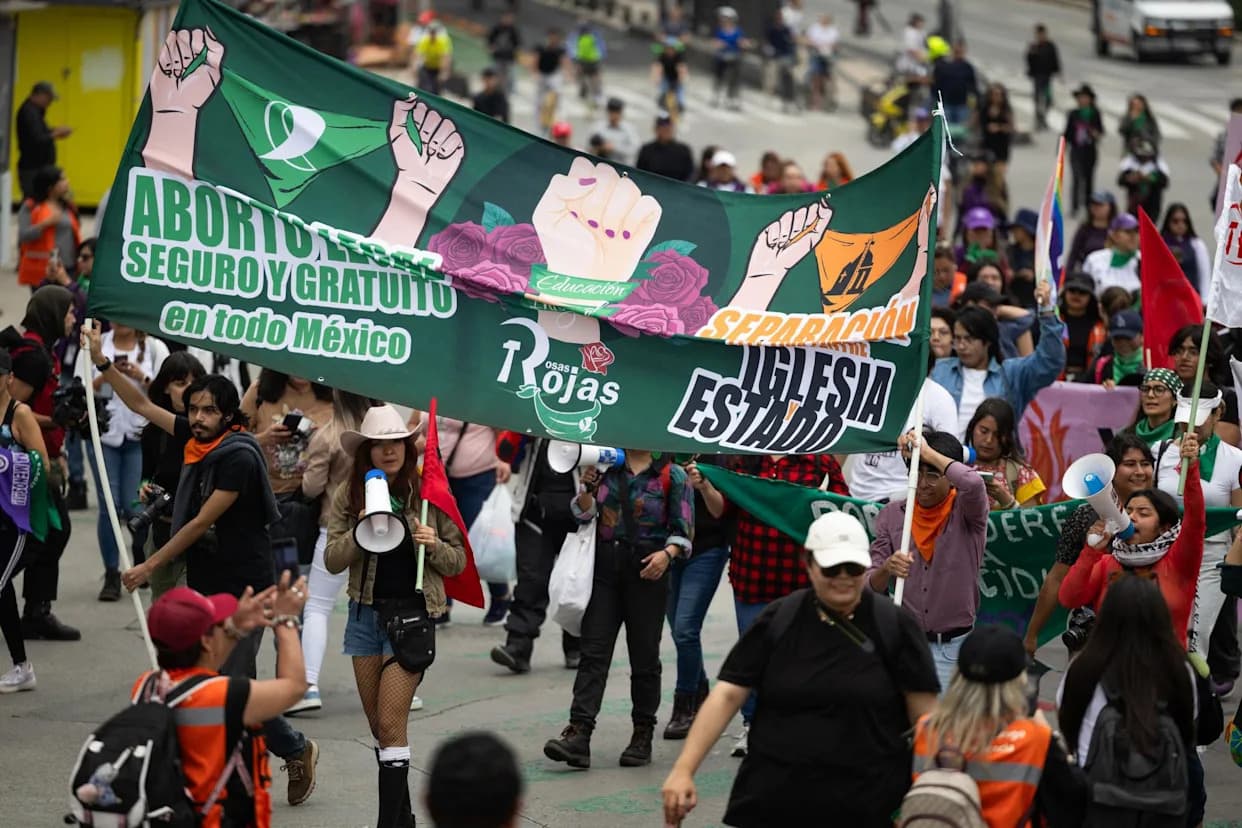
Members of feminist organizations march in favor of the decriminalization of abortion in Mexico City on 28 September 2025.Photograph: Eva Fonseca/AFP via Getty Images(Photograph: Eva Fonseca/AFP via Getty Images)
The Trump administration announced a major expansion of the Mexico City policy, barring organizations that receive U.S. foreign assistance from using those funds to subsidize diversity, equity and inclusion (DEI) programs and what officials describe as "gender ideology." The White House says the change will affect roughly $30 billion in U.S. foreign aid and will apply to international organizations and U.S.-based NGOs operating overseas.
A State Department spokesperson confirmed the decision to the Guardian, calling it a broadening of the longstanding Mexico City policy. Historically, that policy has prevented non-U.S. NGOs from receiving certain U.S. funds if they provide abortion-related services or advocate for abortion rights abroad. In previous iterations it typically covered family planning funds — about $600 million — though the Trump administration’s first-term expansion covered all global health assistance (about $7.3 billion).
What the Administration Says
“President Trump continues to deliver on his promise to end woke foreign assistance,” the State Department spokesperson said in an emailed statement. Officials also said the new rules will prohibit organizations from using foreign assistance to pay for what the department characterized as “abortion as a form of family planning,” though the spokesperson did not immediately clarify how that restriction differs from past versions of the policy.
Reactions and Potential Impact
Advocacy groups and health experts warn the expansion could have deep and lasting effects on global health, rights, and equity programs. During Mr. Trump’s first term, the broader Mexico City policy prompted organizations such as MSI Reproductive Choices to close services in countries including Uganda, Madagascar and Nepal, advocates say.
“You then end up with a whole generation of women and girls who are growing up in this stigmatized environment with no notion of where to go to find out information about their health and their rights,” said Sarah Shaw, associate director of advocacy at Marie Stopes International. “Any effort to expand this is even more catastrophic.”
Critics also say the move is part of a wider campaign by the administration to curtail DEI efforts and rights for transgender and nonbinary people. The term “gender ideology” is commonly used by the political right to describe the belief that gender can be fluid and that transgender and nonbinary identities should be recognized and accommodated. The administration has issued executive orders and policy changes rolling back federal DEI initiatives and limiting government recognition of transgender people.
Fox News Digital first reported the extension of the policy. The State Department plans to publish three final rules that spell out the details on Friday — a timetable that coincides with the annual March for Life gathering in Washington, D.C., where thousands of anti-abortion activists are expected to assemble.
Legal and policy experts caution that, without the final regulatory text, the full scope and mechanisms of the policy remain unclear. “The impacts could be endless. They could have impacts in ways we can’t even imagine right now,” said Amy Friedrich-Karnik, director of federal policy at the Guttmacher Institute. “This policy not only exports harsh U.S. abortion bans around the world — we’re also exporting ideologically driven mandates to countries and the world that are anti-human rights, anti-health, anti-equity. It’s just devastating.”
What to watch next: the three final State Department rules, which will determine how broadly the restrictions apply across aid streams and which organizations and programs will be affected.
Help us improve.