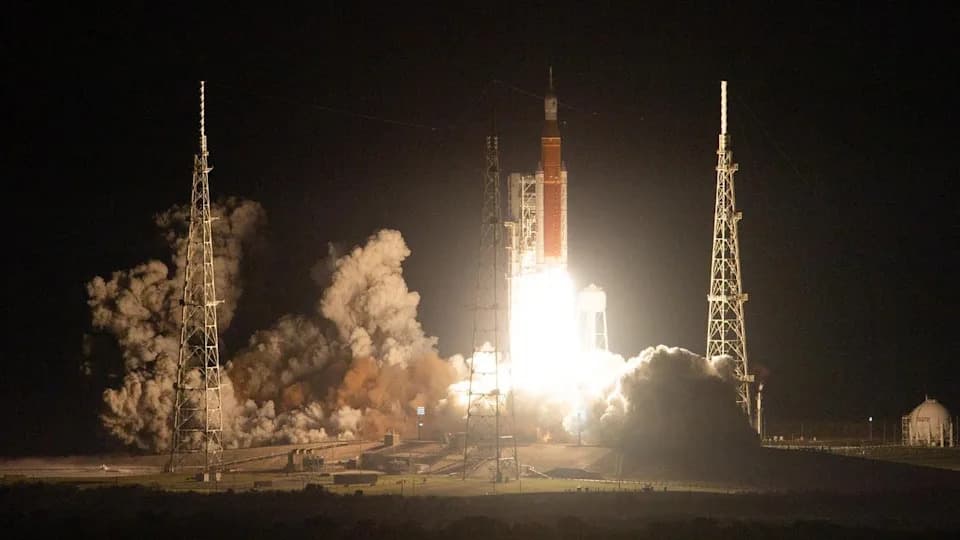
NASA plans to roll the SLS-Orion stack to Launch Pad 39B on Jan. 17 with an earliest launch target of Feb. 6 for Artemis II. The four-mile transfer, conducted by Crawler-Transporter 2, could take up to 12 hours and remains subject to technical or weather delays. Artemis II will carry four astronauts on an approximately 10-day circumlunar flight. Marshall Space Flight Center is leading critical testing, hardware integration and mission simulations and will support future lunar landings.
NASA Sets Jan. 17 Rollout for Artemis II, Eyes Feb. 6 Earliest Launch for Crewed Lunar Flyby
NASA plans to roll the stacked Space Launch System (SLS) rocket and Orion spacecraft to Launch Pad 39B on Jan. 17, with an earliest possible liftoff of Feb. 6 for Artemis II, Space.com reports. The transfer will be carried out by the agency's Crawler-Transporter 2 from the Vehicle Assembly Building (VAB) at Kennedy Space Center in Florida.
The roughly four-mile move to the pad could take as long as 12 hours. Agency officials say teams are working around the clock to complete remaining technical checks; the dates remain provisional and could change if additional time is needed for preparations or if weather interferes.
"We are moving closer to Artemis II, with rollout just around the corner," said Lori Glaze, acting associate administrator for NASA's Exploration Systems Development Mission Directorate. "We have important steps remaining on our path to launch and crew safety will remain our top priority at every turn, as we near humanity's return to the moon."
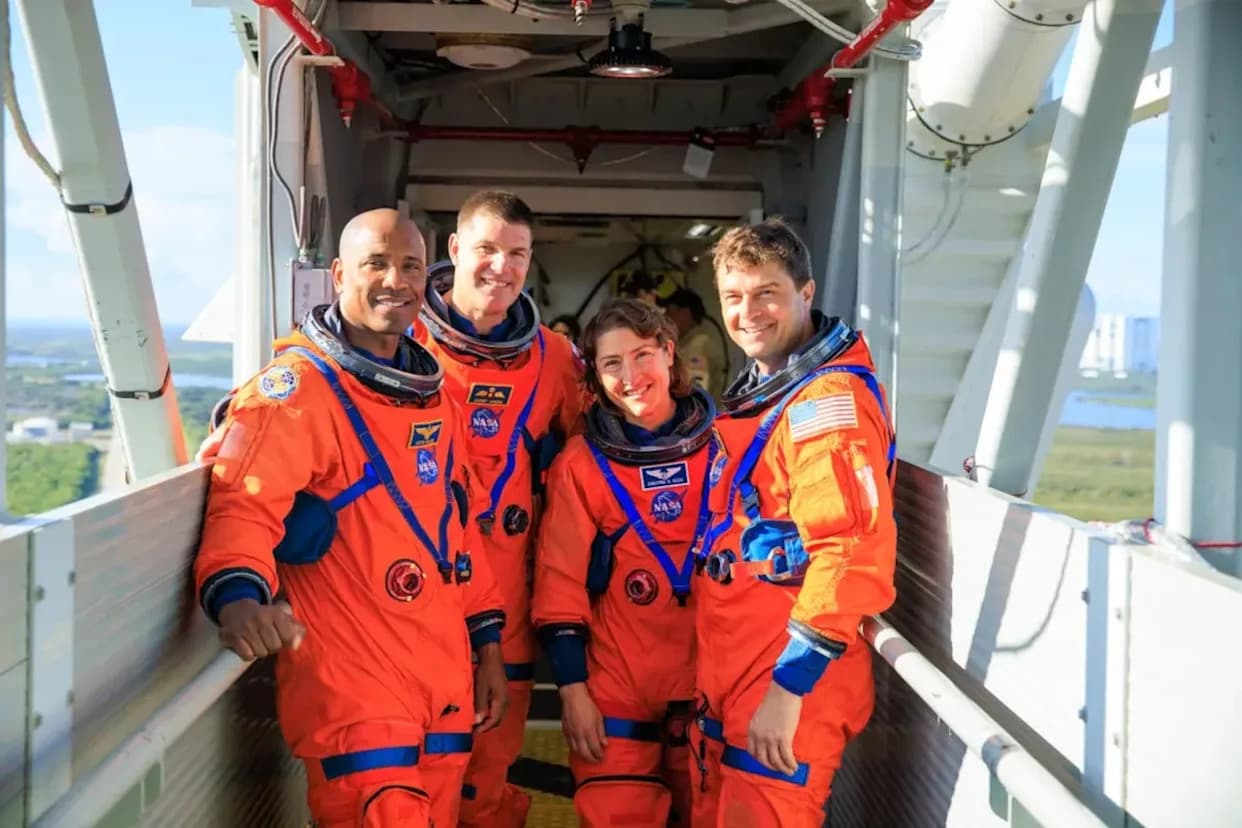
Artemis II will carry four astronauts — NASA's Reid Wiseman, Victor Glover and Christina Koch, along with Jeremy Hansen of the Canadian Space Agency — on an approximately 10-day circumlunar mission that will loop around the Moon and return to Earth.
Marshall Center's Key Role
Huntsville's Marshall Space Flight Center has played a central role in preparing the SLS and mission systems. Roger Baird, an associate director at Marshall, told attendees at a recent Redstone Arsenal update that Marshall supported critical tests, reviews and hardware integration to keep the mission on schedule.
Last year, Marshall teams participated in stacking the solid rocket boosters and assembling the launch vehicle — which the crew has nicknamed Integrity. Engineers powered up the vehicle, exercised systems and uploaded flight software to onboard computers to verify readiness. Crews have also run full mission simulations covering prelaunch, ascent and contingency scenarios.
"Preparing the team is just as important as preparing the hardware," Baird said, noting that mission rehearsals and anomaly management exercises are ongoing.
Looking ahead, Marshall will support Artemis III and future missions by managing industry-led human landing system efforts that aim to ferry astronauts to and from the lunar surface and lay groundwork for eventual missions to Mars.
NASA emphasizes that the Jan. 17 rollout and Feb. 6 liftoff target are provisional and could change if teams require more time for technical checks or if weather conditions are unfavorable.
Help us improve.