Veterans' Theatre in Kyiv helps about 15 wounded Ukrainian ex-soldiers recover confidence and social connection by tailoring roles to their injuries. Andrii Onopriienko, blind after a 2023 wounding in Avdiivka, and others who suffered burns, amputations and facial injuries rehearsed and performed an avant-garde adaptation of an 18th-century parody of Virgil's Aeneid. The bespoke production emphasises movement and ensemble work, drawing an emotional ovation at its Kyiv premiere and illustrating how arts programs can aid reintegration.
From Frontlines to Footlights: Wounded Ukrainian Veterans Heal and Find Purpose Through Theatre
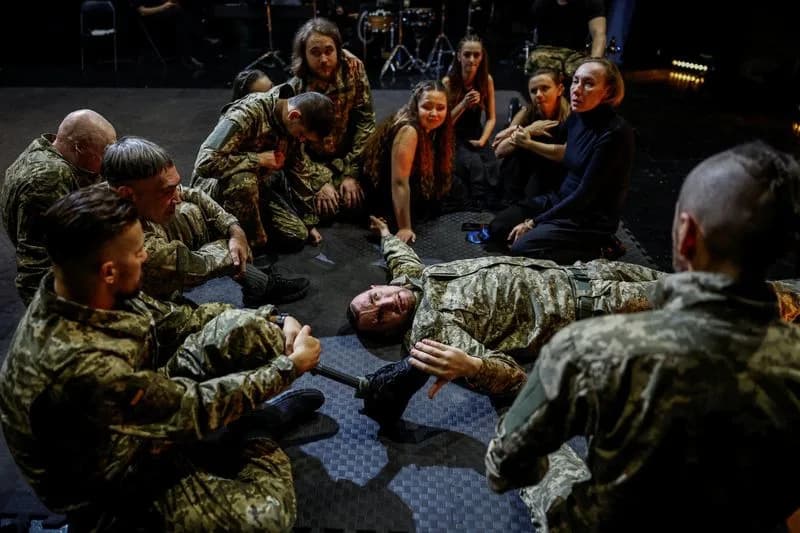
Olha Semoshkina (top right), chief choreographer of the Veterans' Theatre group, talks to the actors before the premiere of an 18th‑century Ukrainian parody of Virgil's "Aeneid", amid Russia's attack on Ukraine, in Kyiv, Ukraine, December 4, 2025. Fellow member and veterans' psychologist Yehor Babenko, 27, said the transformative trauma of serious injury often compels people to seek meaning in something new. He said it was critical for his fellow comrades to understand that life does not simply end after a serious injury. "Sometimes, you understand it’s the opposite - that it just starts getting going." REUTERS/Alina Smutko
KYIV — A group of wounded Ukrainian soldiers is discovering new purpose and rebuilding confidence on the stage. The Kyiv-based Veterans' Theatre, a company of roughly 15 former service members, prepares and performs plays adapted to the physical and emotional needs of its participants.
Finding Purpose On Stage
Thirty-one-year-old Andrii Onopriienko lost both eyes in 2023 when two Russian anti-tank rounds struck his position in Avdiivka. He now learns his lines by ear and memorised his role for the company's latest production, an avant-garde staging of an 18th-century Ukrainian parody of Virgil's Aeneid.
“Yes, we might not have an arm, or legs, or eyes - but we aren't giving up,” Onopriienko said. “It's rehabilitation and socialisation. It's... positive emotions.”
Tailored Roles And Rehabilitation
Director Olha Semoshkina designs parts around each veteran's abilities and limitations, emphasising movement and ensemble work rather than conventional acting techniques. That bespoke approach helps participants rebuild physical skills, social confidence and a sense of belonging after traumatic injuries.
Yehor Babenko, 27, was wounded in the first year of the war when Russian forces struck his base in Mykolaiv. Severe burns changed his facial features; he now speaks by regulating a tube in his throat and uses one of two mangled hands without fingers. Babenko threw himself into months of demanding rehearsals — dancing, twirling and tumbling — and has since begun work as a veterans' psychologist.
“The shock of a serious injury often pushes people to try things they never dared to try,” Babenko said. “I know a lot of cases where people opened up or took risks they would never have before.”
Adaptation, Honesty And Craft
For some veterans the stage also carries psychological strain. Taras Kozub, 53, who lost his left arm after storming an enemy position on the southeastern front, now plays a hurdy-gurdy with a custom prosthetic attached to the instrument. He says theatre demands presence and honesty.
“The first thing I realised is that you can't fool anyone while onstage. It's like you're standing there naked,” Kozub said.
Roman Trokhymenko, 57, who lost his right leg in 2024, says performing has helped him rebuild confidence and retain a sense of self outside his injury.
A Night To Remember
At the Kyiv premiere, neon lights, live music and the veterans' physical storytelling drew a strong emotional response: the audience gave a boisterous ovation, with some people crying or embracing in the theatre. The production offered a visible demonstration of how creative projects can aid reintegration and mental recovery for those wounded in conflict.
Russia's war in Ukraine, now entering its fifth year, has left tens of thousands of service members with amputations or other life-changing wounds. Programs such as Veterans' Theatre show one pathway through which injured veterans can reclaim agency, build community and find meaning after trauma.
Reporting: Alina Smutko and Anna Voitenko. Additional writing by Dan Peleschuk; editing by Alexandra Hudson.
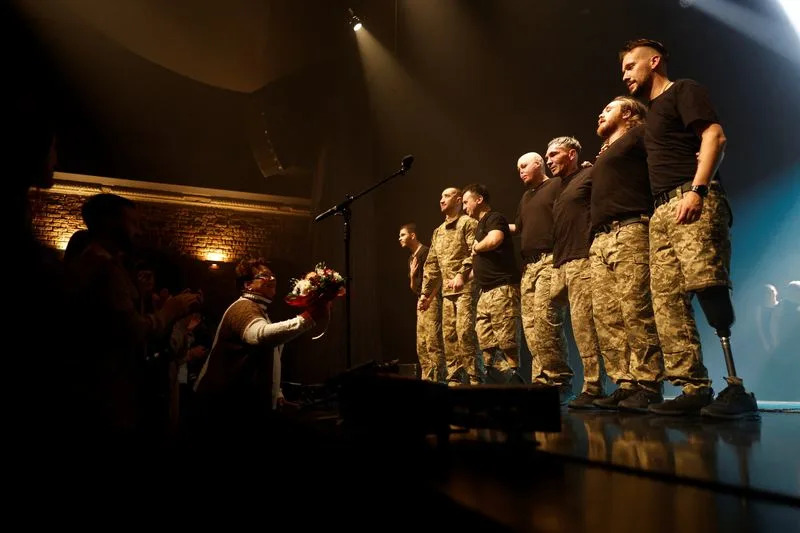
A person gives flowers to the Veterans' Theatre group at the end of the premiere of an 18th‑century Ukrainian parody of Virgil's "Aeneid", amid Russia's attack on Ukraine, in Kyiv, Ukraine, December 4, 2025. Fellow member and veterans’ psychologist Yehor Babenko, 27, said the transformative trauma of serious injury often compels people to seek meaning in something new. He said it was critical for his fellow comrades to understand that life does not simply end after a serious injury. "Sometimes, you understand it’s the opposite - that it just starts getting going." REUTERS/Alina Smutko
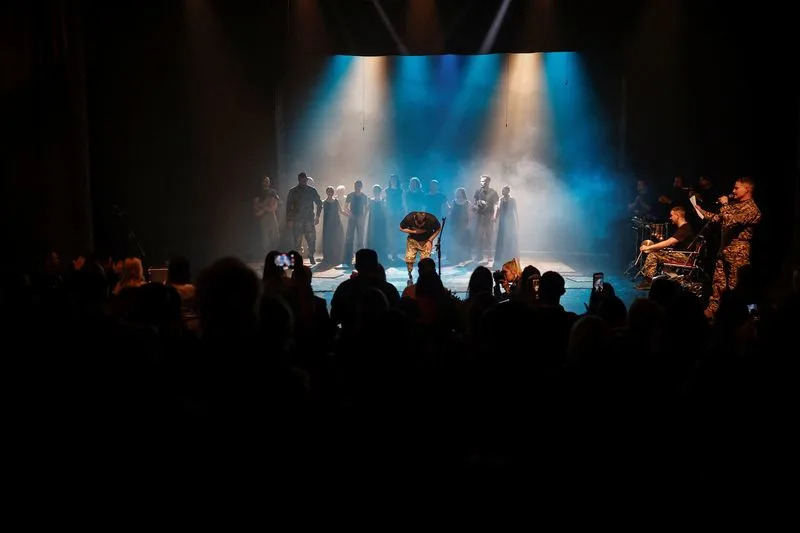
Ukrainian soldier Artem Moroz, 46, bows to the audience after the premiere of an 18th‑century Ukrainian parody of Virgil's "Aeneid", performed by the Veterans' Theatre group amid Russia's attack on Ukraine, in Kyiv, Ukraine, December 4, 2025. Fellow member and veterans’ psychologist Yehor Babenko, 27, said the transformative trauma of serious injury often compels people to seek meaning in something new. He said it was critical for his fellow comrades to understand that life does not simply end after a serious injury. "Sometimes, you understand it’s the opposite - that it just starts getting going." REUTERS/Alina Smutko
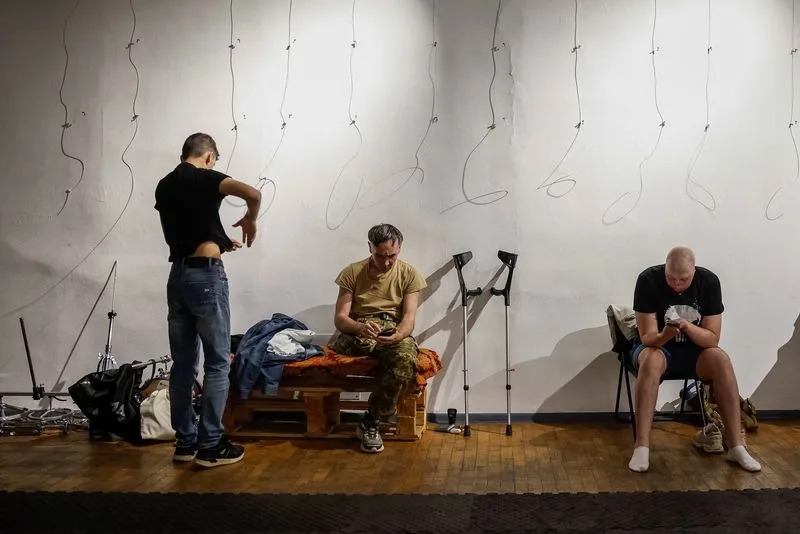
Members of the Veterans' Theatre group prepare to rehearse an 18th‑century Ukrainian parody of Virgil's "Aeneid", amid Russia's attack on Ukraine, in Kyiv, Ukraine, September 7, 2025. Fellow member and veterans' psychologist Yehor Babenko, 27, said the transformative trauma of serious injury often compels people to seek meaning in something new. He said it was critical for his fellow comrades to understand that life does not simply end after a serious injury. "Sometimes, you understand it’s the opposite - that it just starts getting going." REUTERS/Alina Smutko
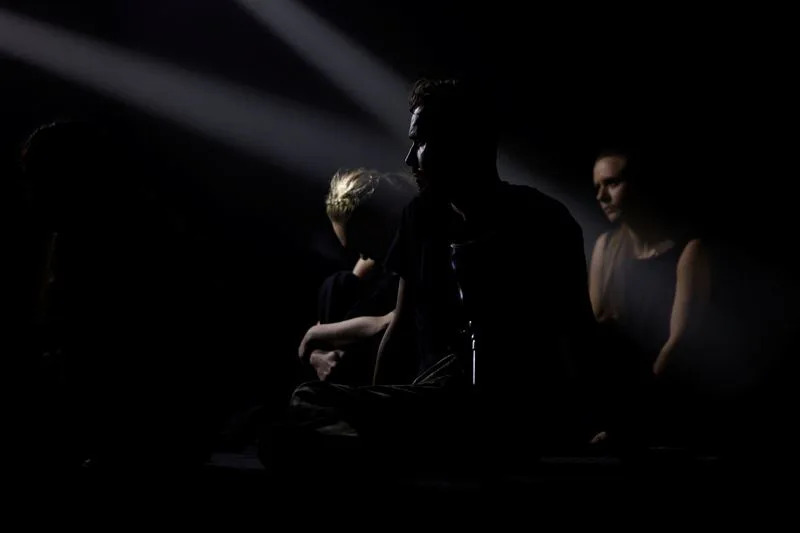
Ivan Voinov (front), 33, and fellow members of the Veterans' Theatre group perform during the premiere of an 18th‑century Ukrainian parody of Virgil's "Aeneid", amid Russia's attack on Ukraine, in Kyiv, Ukraine, December 4, 2025. Fellow member and veterans’ psychologist Yehor Babenko, 27, said the transformative trauma of serious injury often compels people to seek meaning in something new. He said it was critical for his fellow comrades to understand that life does not simply end after a serious injury. "Sometimes, you understand it’s the opposite - that it just starts getting going." REUTERS/Alina Smutko
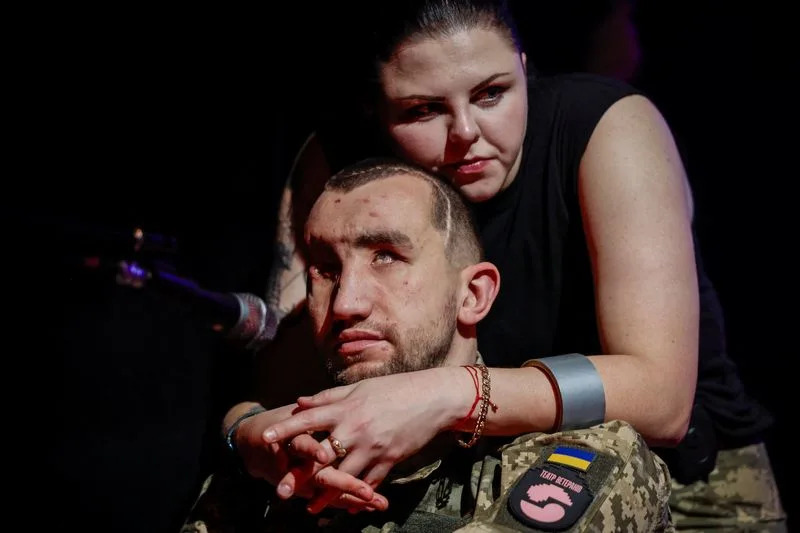
Inna Korolenko, 26, hugs fellow veteran Andrii Onopriienko, 31, who lost both eyes when two Russian anti‑tank rounds struck his position in the eastern city of Avdiivka in 2023, during rehearsal with the Veterans' Theatre for an 18th‑century Ukrainian parody of Virgil's "Aeneid", amid Russia's attack on Ukraine, in Kyiv, Ukraine, December 4, 2025. Like the other veterans in his Kyiv-based group of around 15 actors, Onopriienko has found healing and fulfilment on stage, after a friend told him about a theatre looking for injured veterans and suggested he join. "Yes, we might not have an arm, or legs, or eyes - but we aren't giving up," he said. "It's rehabilitation and socialisation, it's...positive emotions." REUTERS/Alina Smutko
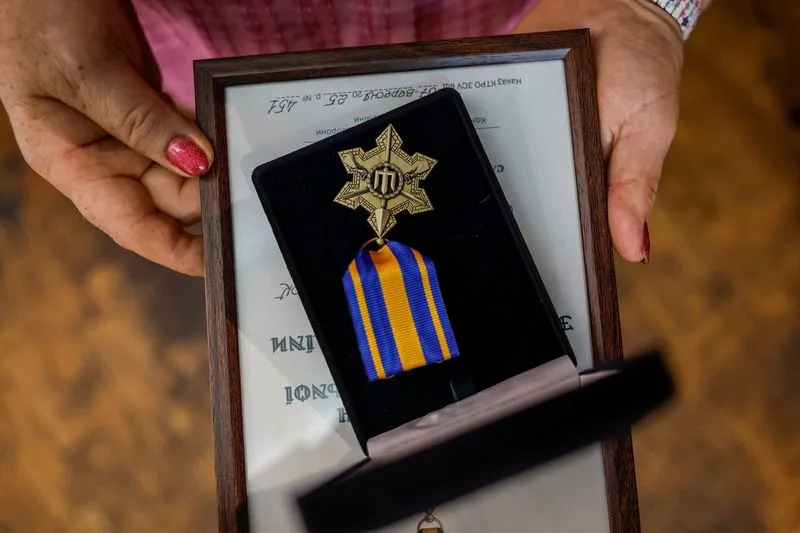
Nataliia Plokhotniuk, 61, a member of the Veterans' Theatre group, holds an awarded medal she got during rehersal for an 18th‑century Ukrainian parody of Virgil's "Aeneid", amid Russia's attack on Ukraine, in Kyiv, Ukraine, September 10, 2025. Fellow member and veterans’ psychologist Yehor Babenko, 27, said the transformative trauma of serious injury often compels people to seek meaning in something new. He said it was critical for his fellow comrades to understand that life does not simply end after a serious injury. "Sometimes, you understand it’s the opposite - that it just starts getting going." REUTERS/Alina Smutko
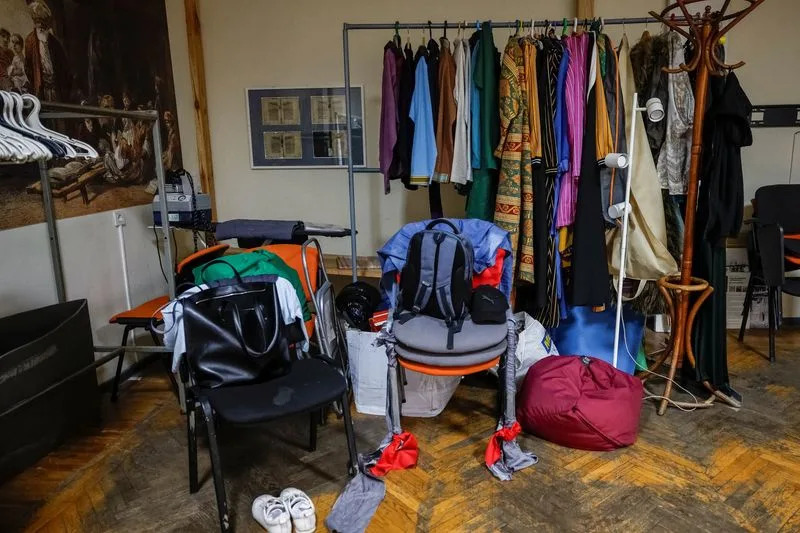
Costumes and items belonging to members of the Veterans' Theatre group are displayed during rehearsal for an 18th‑century Ukrainian parody of Virgil's "Aeneid", amid Russia's attack on Ukraine, in Kyiv, Ukraine, September 10, 2025. Fellow member and veterans' psychologist Yehor Babenko, 27, said the transformative trauma of serious injury often compels people to seek meaning in something new. He said it was critical for his fellow comrades to understand that life does not simply end after a serious injury. "Sometimes, you understand it's the opposite - that it just starts getting going." REUTERS/Alina Smutko
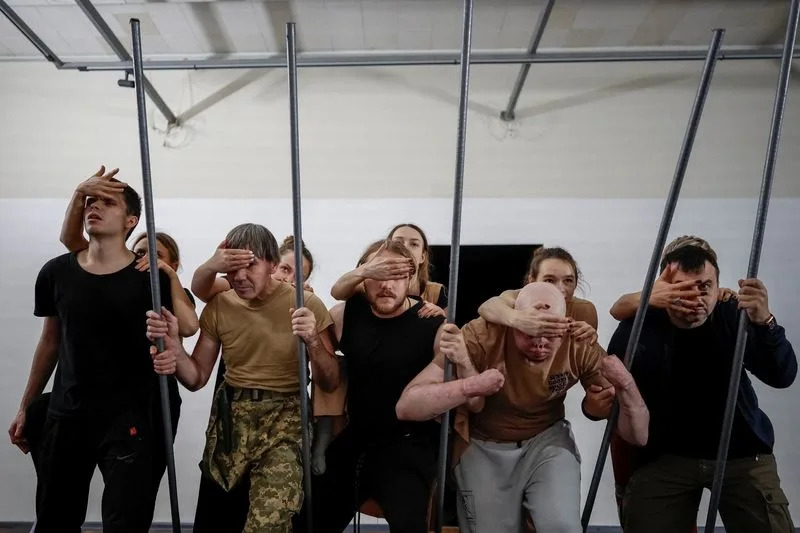
Members of the Veterans' Theatre group rehearse for an 18th‑century Ukrainian parody of Virgil's "Aeneid", amid Russia's attack on Ukraine, in Kyiv, Ukraine, November 12, 2025. Fellow member and veterans’ psychologist Yehor Babenko, 27, said the transformative trauma of serious injury often compels people to seek meaning in something new. He said it was critical for his fellow comrades to understand that life does not simply end after a serious injury. "Sometimes, you understand it’s the opposite - that it just starts getting going." REUTERS/Alina Smutko
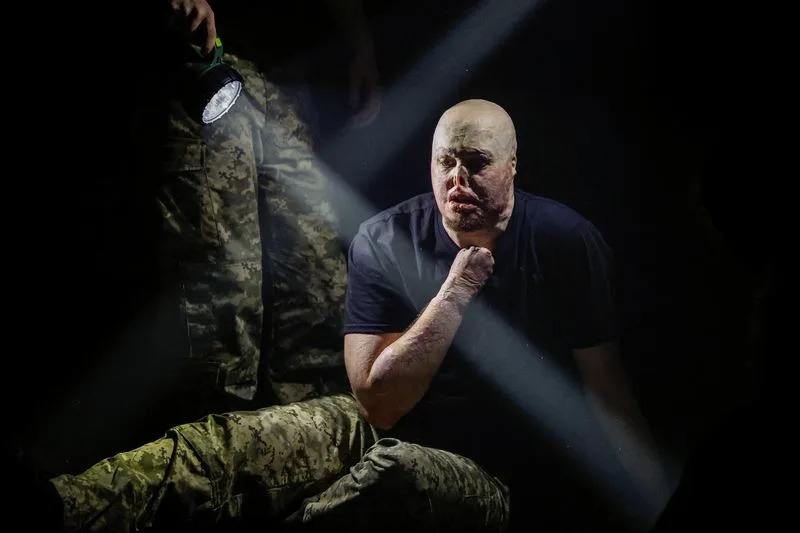
Ukrainian soldier Yehor Babenko, 27, who began working as a veterans' psychologist last year, performs at the premiere of an 18th‑century Ukrainian parody of Virgil's "Aeneid", performed by the Veterans' Theatre group amid Russia's attack on Ukraine, in Kyiv, Ukraine, December 4, 2025. Babenko was wounded in the first year of fighting when Russian forces struck his base in the southern region of Mykolaiv, but that did not stop him from committing to months of taxing rehearsals full of dancing, twirling and tumbling. He said said the transformative trauma of serious injury often compels people to seek meaning in something new. "I know a lot of cases where people opened up or tried things they never dared to try." REUTERS/Alina Smutko
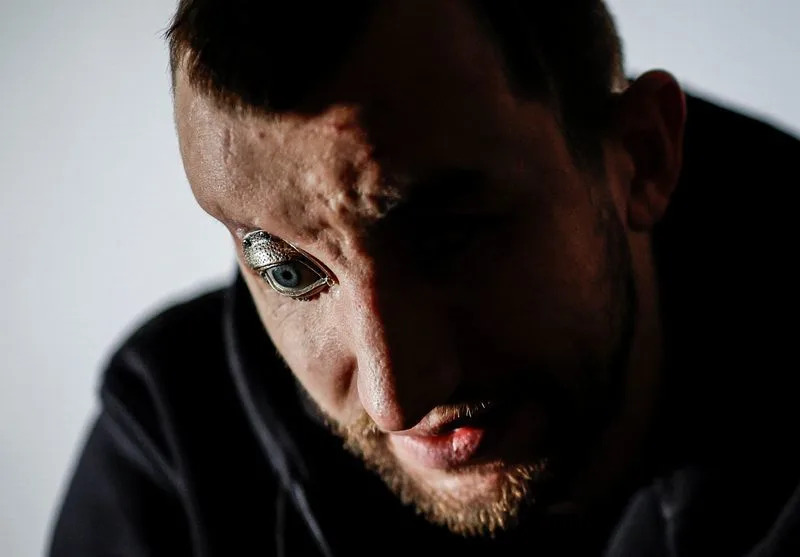
Ukrainian soldier Andrii Onopriienko, 31, who lost both eyes when two Russian anti‑tank rounds struck his position in the eastern city of Avdiivka in 2023, rehearses with the Veterans' Theatre for an 18th‑century Ukrainian parody of Virgil's "Aeneid", amid Russia’s attack on Ukraine, in Kyiv, Ukraine, November 19, 2025. Like the other veterans in his Kyiv-based group of around 15 actors, Onopriienko has found healing and fulfilment on stage, after a friend told him about a theatre looking for injured veterans and suggested he join. "Yes, we might not have an arm, or legs, or eyes - but we aren't giving up," he said. "It's rehabilitation and socialisation, it's...positive emotions." REUTERS/Alina Smutko
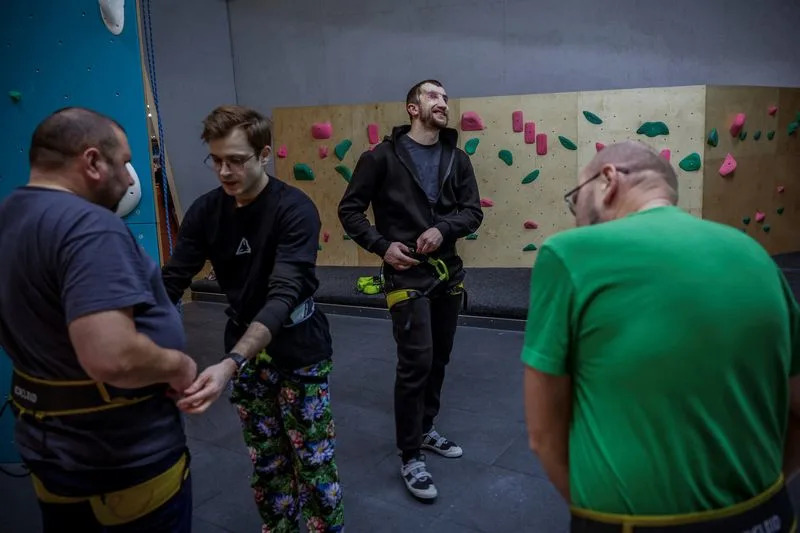
Ukrainian soldier Andrii Onopriienko (center), 31, who lost both eyes in 2023 and is now a member of the Veterans' Theatre group, attends rehabilitation classes with fellow veterans at a climbing wall, amid Russia's attack on Ukraine, in Kyiv, Ukraine, December 2, 2025. Like the other veterans in his Kyiv-based group of around 15 actors, Onopriienko has found healing and fulfilment on stage, after a friend told him about a theatre looking for injured veterans and suggested he join. "Yes, we might not have an arm, or legs, or eyes - but we aren't giving up," he said. "It's rehabilitation and socialisation, it's...positive emotions." REUTERS/Alina Smutko
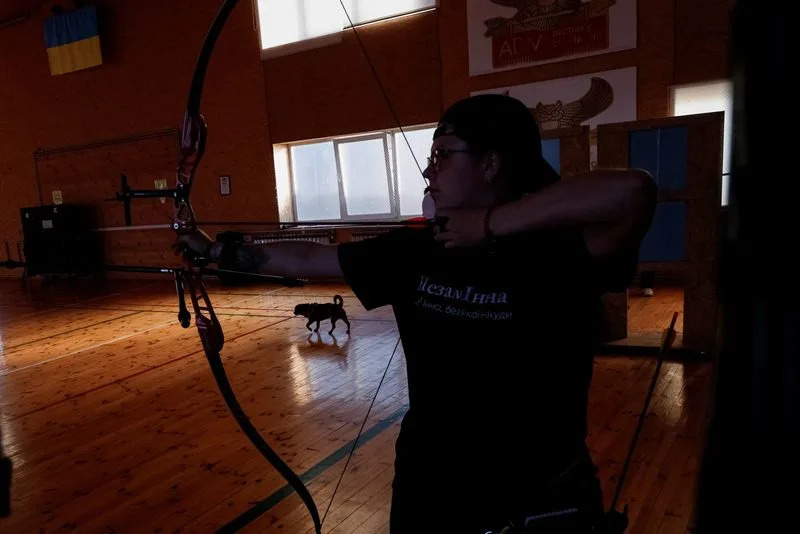
Inna Korolenko, 26, a veteran combat medic, practices ahead of a national archery competition, amid Russia's attack on Ukraine, in Kyiv, Ukraine, September 11, 2025. Fellow member and veterans' psychologist Yehor Babenko, 27, said the transformative trauma of serious injury often compels people to seek meaning in something new. He said it was critical for his fellow comrades to understand that life does not simply end after a serious injury. "Sometimes, you understand it's the opposite - that it just starts getting going." REUTERS/Alina Smutko
Help us improve.