
Overview: These 25 photographs chronicle a volatile 2025 in U.S. politics following Donald Trump’s return to the presidency. The year featured aggressive immigration enforcement, tariff-driven diplomacy, high-profile deaths, shocking political violence, and mass protests. Photographs of policy shifts, courtroom and congressional battles over Epstein-related records, changes at the White House, and contentious media access underscore a sharply divided nation uncertain about its future.
25 Photographs That Defined a Tumultuous 2025 in U.S. Politics

Al Drago/Bloomberg via GettyVice President Kamala Harris certifies her opponent Donald Trump's victory in the 2024 presidential election on Jan. 6, 2025
The United States experienced extraordinary political upheaval in 2025 after a historic presidential election returned Donald Trump to the White House in January. Over the course of the year, federal priorities shifted toward aggressive immigration enforcement, steep tariffs and confrontational foreign-policy moves. The year was also marked by mass protests, political violence, high-profile deaths and fierce debates over transparency and media access. These 25 images captured the moments that shaped a highly polarized national narrative.
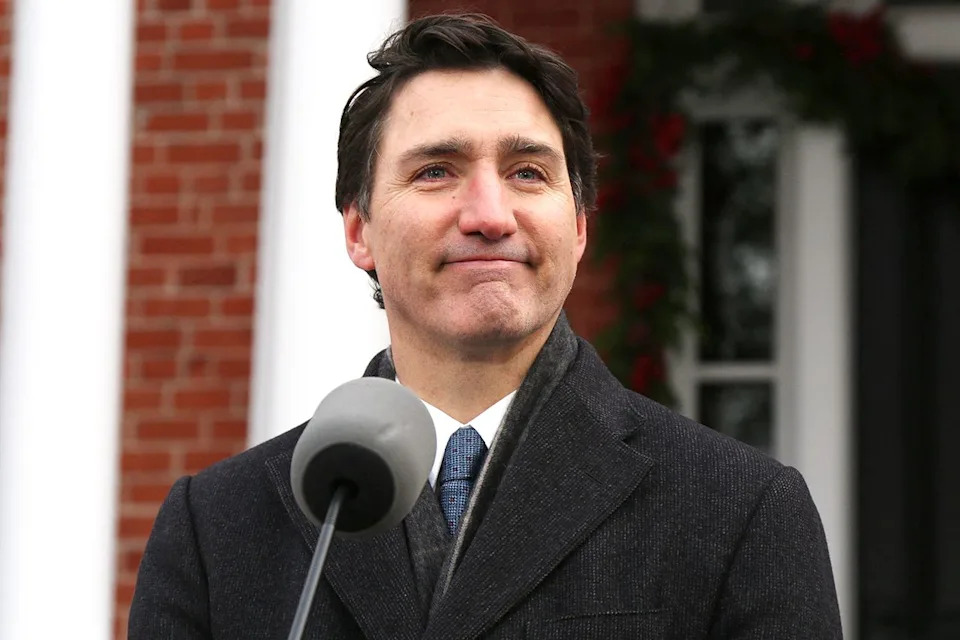
DAVE CHAN/AFP via GettyCanadian Prime Minister Justin Trudeau hosts a conference outside his Rideau Cottage residence in Ottawa to announce his resignation on Jan. 6, 2025
Photo Highlights
01. On the four-year anniversary of the Jan. 6, 2021 Capitol attack, Vice President Kamala Harris presided over the Senate to certify the 2024 election results. In a solemn moment she announced the electoral vote totals and reflected on the fragility of American democracy.
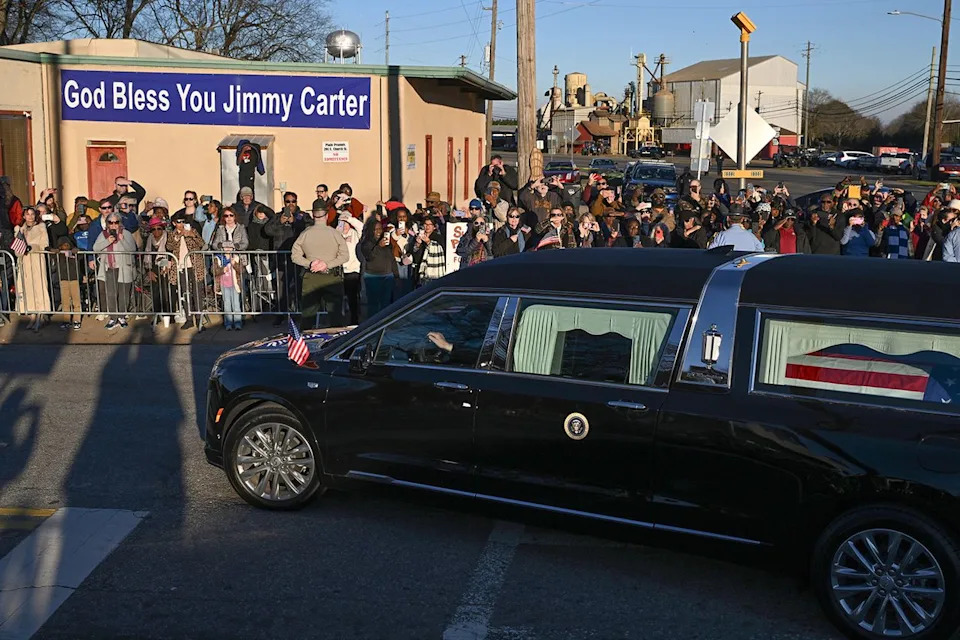
Matt McClain/The Washington Post via GettyA hearse carrying former President Jimmy Carter's casket drives past mourners in Plains, Ga., on Jan. 9, 2025
02. Trump’s return to the presidency had international ripple effects. In Canada, longtime Prime Minister Justin Trudeau announced he would step back in the months after the inauguration; banker Mark Carney later succeeded him after the Liberal Party retained power. Trudeau subsequently entered a relationship with pop star Katy Perry.
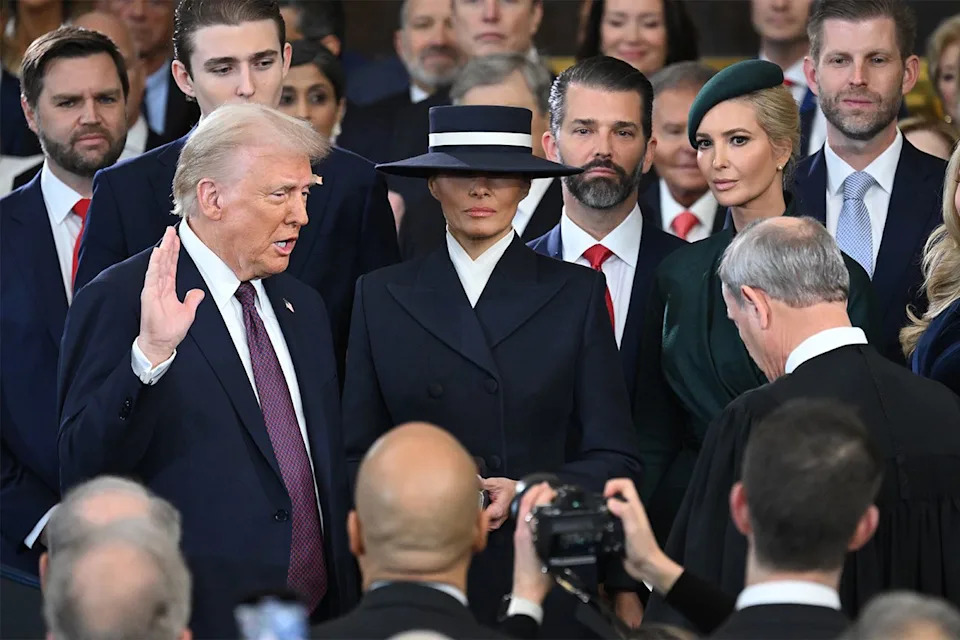
Saul Loeb - Pool/GettyPresident Donald Trump takes the oath of office at his inauguration in the U.S. Capitol Rotunda on Jan. 20, 2025
03. Former President Jimmy Carter, who died at 100 on Dec. 29, 2024, was honored with funeral services in Washington, D.C., and Plains, Georgia, where residents lined the streets to pay tribute as his casket passed en route to interment beside his wife Rosalynn.
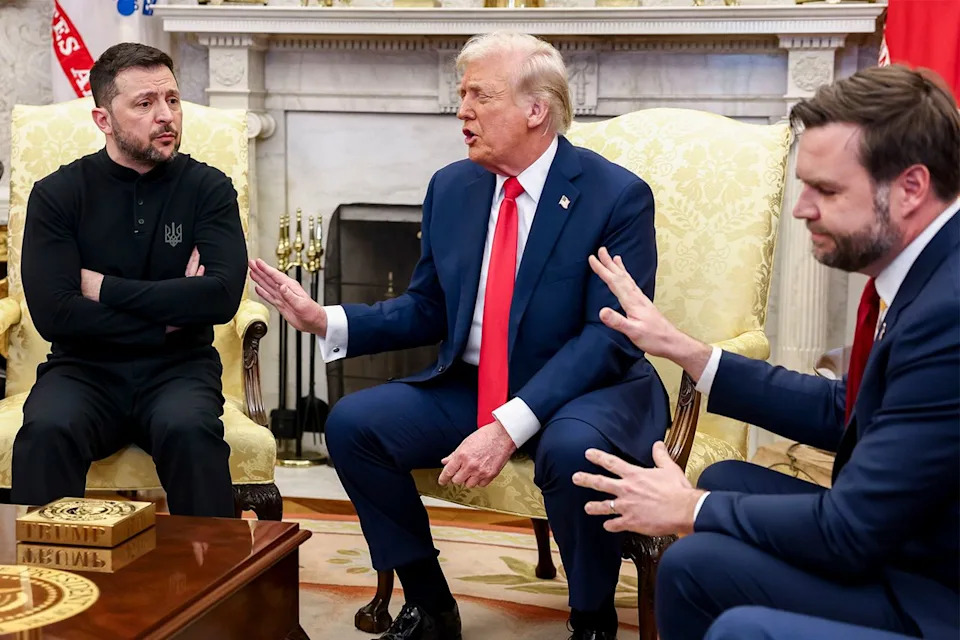
Jim Lo Scalzo/EPA/Bloomberg via GettyUkraine President Volodymyr Zelenskyy is berated by President Donald Trump and Vice President JD Vance in the Oval Office on Feb. 28, 2025
04. Trump was sworn in for a second, nonconsecutive term on Jan. 20. At 78 he became the oldest U.S. president to take the oath and delivered an inaugural address that criticized the prior administration and promised a so-called golden age for the country.
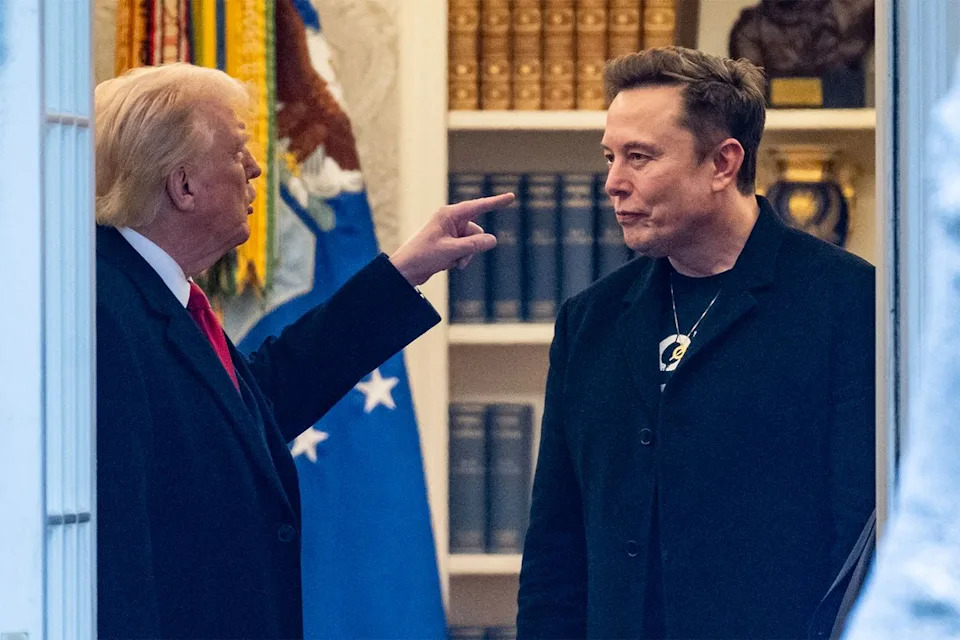
ROBERTO SCHMIDT/AFP via GettyPresident Donald Trump is seen through an Oval Office window pointing at DOGE leader Elon Musk on March 14, 2025
05. A tense Oval Office meeting with Ukrainian President Volodymyr Zelenskyy in the spring ended without a signed natural-resources agreement after a public dispute with Vice President JD Vance; Zelenskyy reportedly left early and the conflict underscored uncertain prospects for resolving the Russia-Ukraine war.
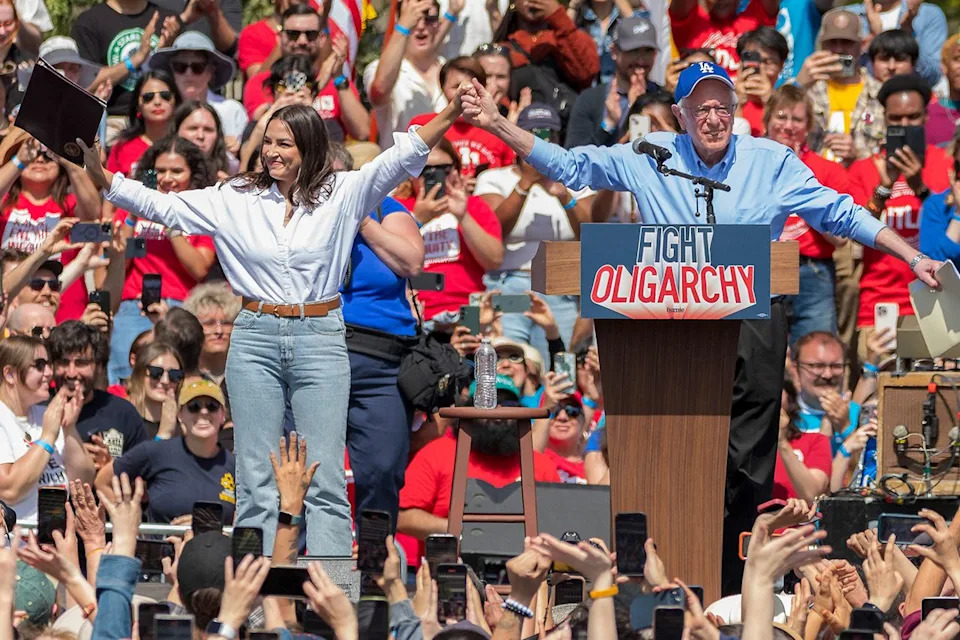
SAM GHAZI/Middle East Images/AFP via GettyDemocratic socialists Rep. Alexandria Ocasio-Cortez and Sen. Bernie Sanders stop in Los Angeles on their "Fighting Oligarchy" tour on April 12, 2025
06. Elon Musk, a prominent 2024 Trump backer, served briefly as an adviser heading the new Department of Government Efficiency (DOGE) before their relationship fractured. Musk criticized administration policies, accused leaders of mishandling Epstein-related records, launched the America Party and later attended a controversial state dinner in November.
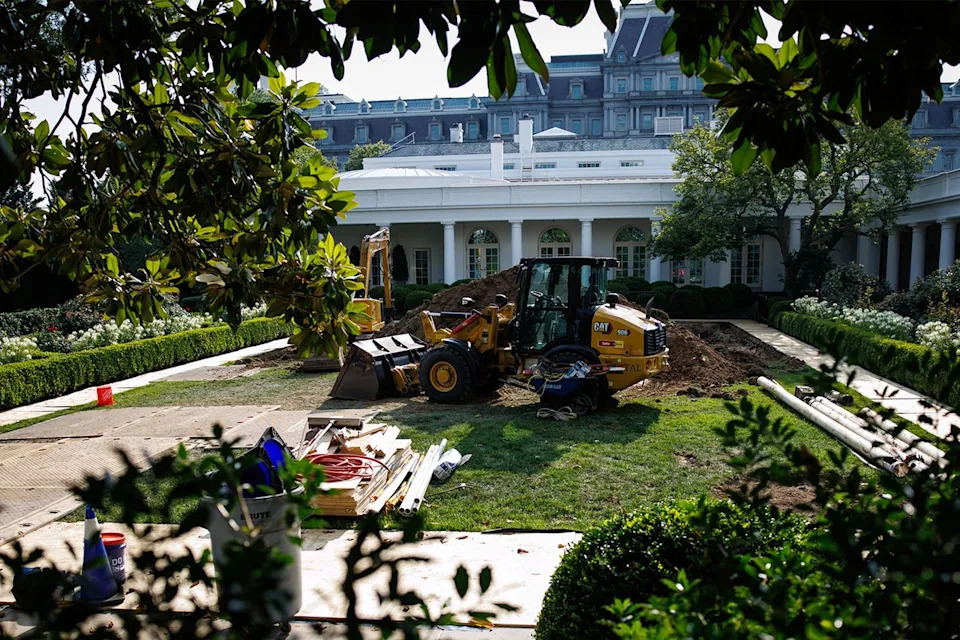
Samuel Corum/Sipa/Bloomberg via GettyThe lawn of the White House Rose Garden is torn out on June 11, 2025
07. Progressive leaders mobilized in response. Rep. Alexandria Ocasio-Cortez and Sen. Bernie Sanders launched a nationwide 'Fighting Oligarchy' tour, staging dozens of events to spotlight wealth concentration and push back against perceived corporate influence on politics.
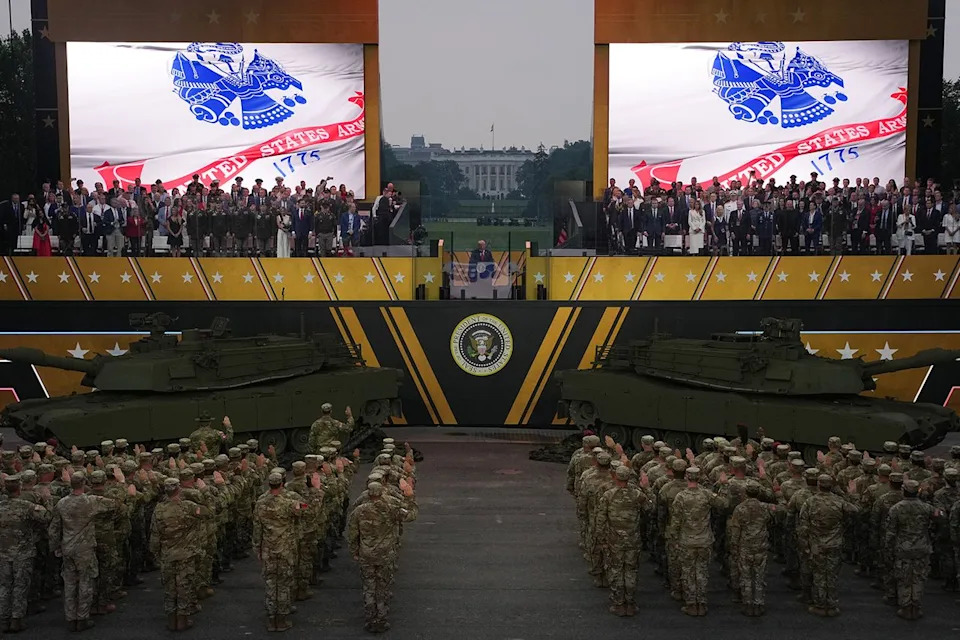
Andrew Harnik/GettyPresident Donald Trump conducts an Army re-enlistment ceremony during a military parade in Washington, D.C., on June 14, 2025
08. The White House Rose Garden was dramatically altered when the lawn was removed and replaced with a paved patio later dubbed the 'Rose Garden Club,' a change that generated debate about preservation and presidential style.
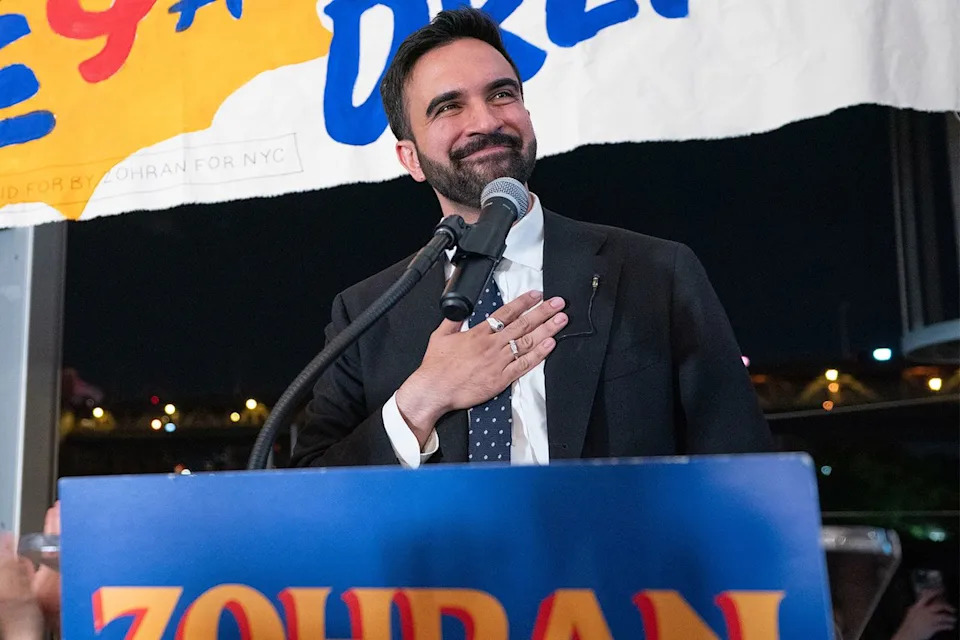
Barry Williams/New York Daily News/Tribune News Service via GettyDemocratic socialist Zohran Mamdani declares victory in the New York City Democratic mayoral primary shortly in the early morning hours in Queens on June 25, 2025
09. To mark his 79th birthday, Trump staged a military parade in Washington, D.C., involving thousands of soldiers and costing an estimated tens of millions of dollars; the spectacle prompted counterprotests branded 'No Kings Day' in hundreds of cities.
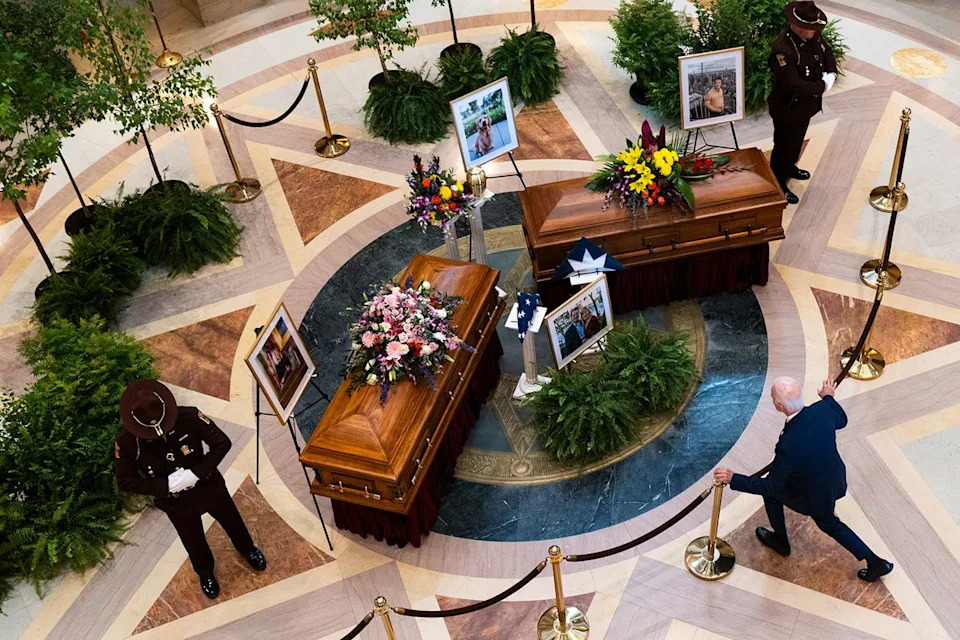
Stephen Maturen/GettyFormer President Joe Biden kneels at the caskets of Minnesota state Rep. Melissa Hortman, her husband, Mark; and their dog, Gilbert at the Minnesota State Capitol on June 27, 2025
10. In a major upset, New York Assemblyman Zohran Mamdani defeated former Gov. Andrew Cuomo to win the Democratic mayoral nomination and later won the general election, becoming New York City's first democratic socialist and first Muslim mayor.
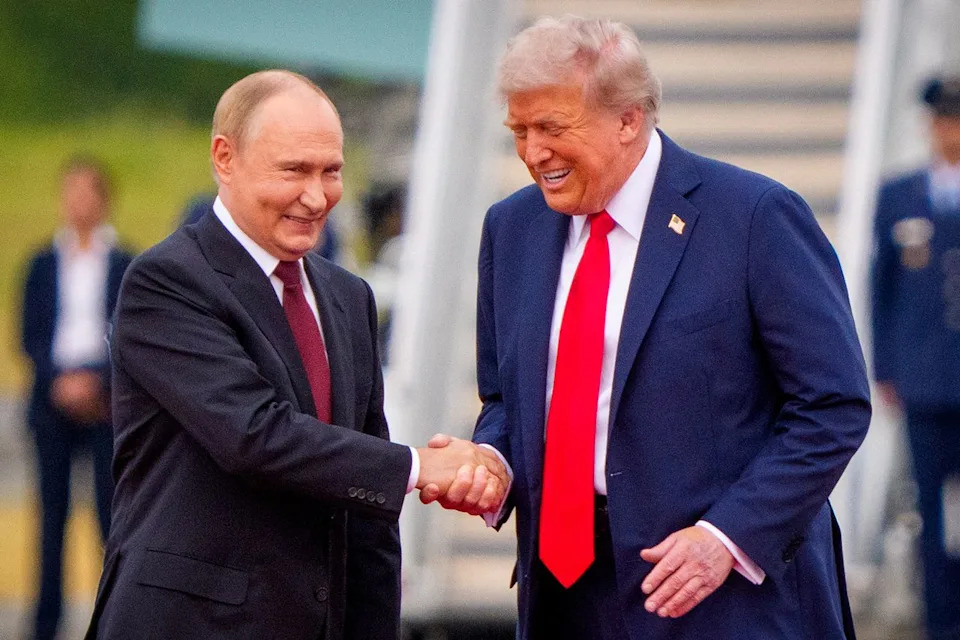
Andrew Harnik/GettyRussian President Vladimir Putin and U.S. President Donald Trump greet one another in Anchorage, Alaska, on Aug. 15, 2025
11. Political violence devastated Minnesota when a gunman allegedly disguised as a law-enforcement officer attacked lawmakers at home on June 14. State Rep. Melissa Hortman, her husband Mark and their dog were killed; State Sen. John Hoffman and his wife survived. The suspect, Vance Boelter, faced multiple charges.
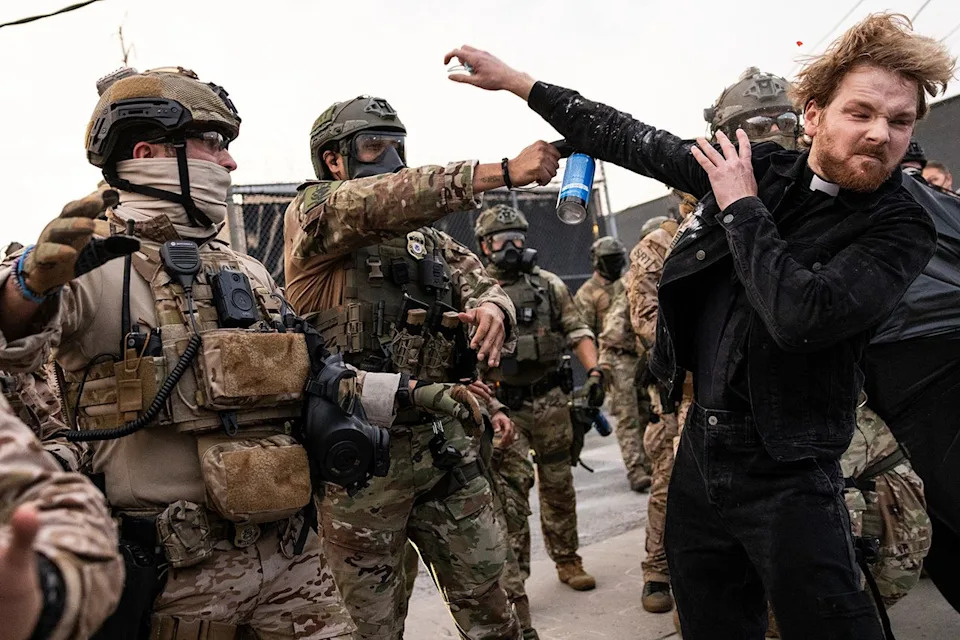
Ashlee Rezin/Chicago Sun-Times via APA federal immigration enforcement agent sprays Presbyterian Rev. David Black in Broadview, Ill., after he was struck by a pepper ball on Sept. 19, 2025
12. Russian President Vladimir Putin returned to the United States for talks with Trump in Anchorage, Alaska — his first U.S. visit since 2015. The summit aimed to advance negotiations on the Russia-Ukraine conflict but failed to produce a ceasefire resolution.
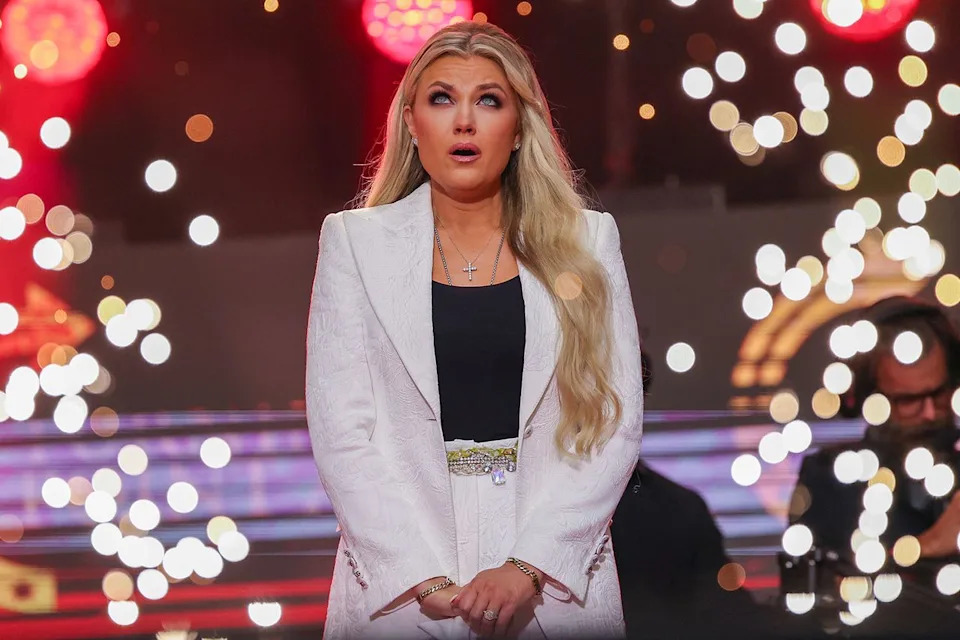
Win McNamee/GettyErika Kirk speaks at the memorial service for her husband, Charlie Kirk, at State Farm Arena on Sept. 21, 2025
13. Protests over ICE operations in Chicago captured a disturbing image of Rev. David Black being struck by a pepper-ball projectile and pepper-sprayed by agents. DHS officials said protesters obstructed ICE operations; demonstrators denied those claims, and the episode fueled scrutiny of immigration-enforcement tactics.
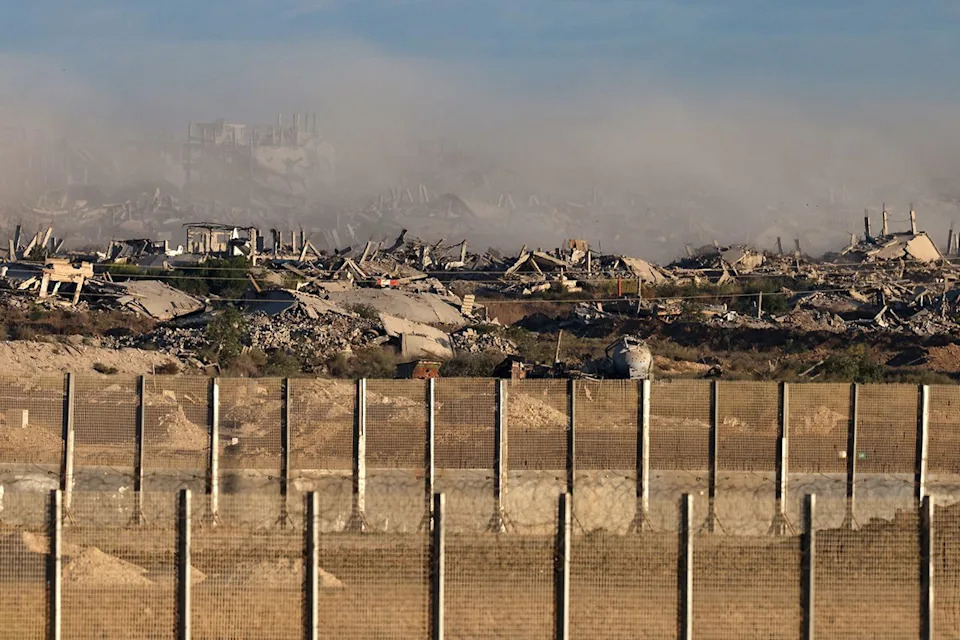
MENAHEM KAHANA/AFP via GettyDestruction in the Gaza Strip is pictured from the Israel-Gaza border fence on Oct. 11, 2025
14. The assassination of conservative activist Charlie Kirk at a Turning Point USA event on Sept. 10 shocked the nation. A large memorial in Glendale, Arizona, blended grief with partisan politics; Kirk's widow Erika publicly forgave the accused shooter during the ceremony.
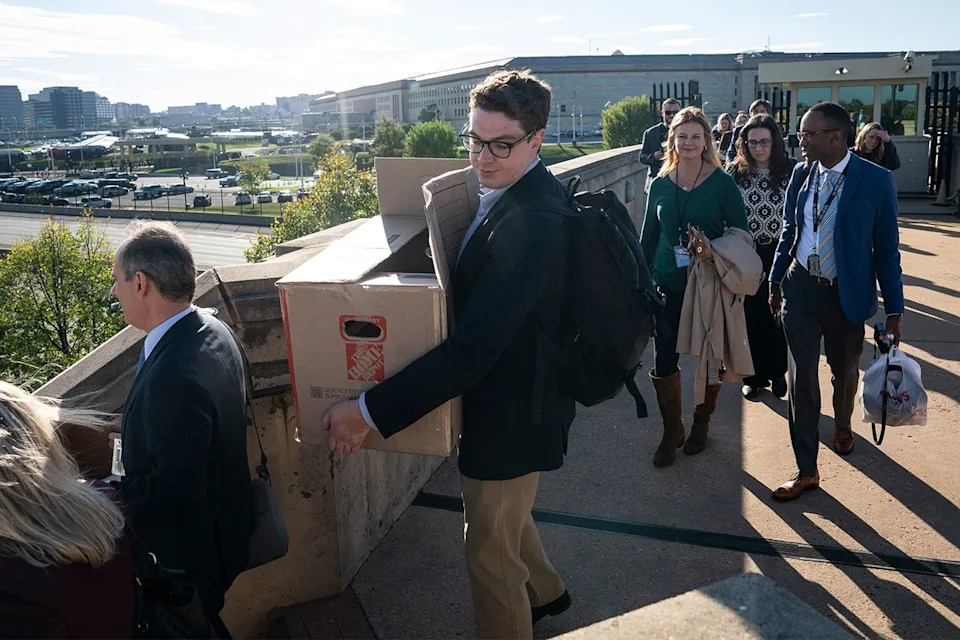
Jabin Botsford/The Washington Post via GettyReporters carry their belongings as they leave the Pentagon in unison on Oct. 15, 2025
15. On Oct. 8 the administration announced a ceasefire framework between Israel and Hamas that included a phased Israeli troop withdrawal from much of Gaza and the return of hostages. Hamas released living hostages five days later, though tensions and sporadic violence continued.
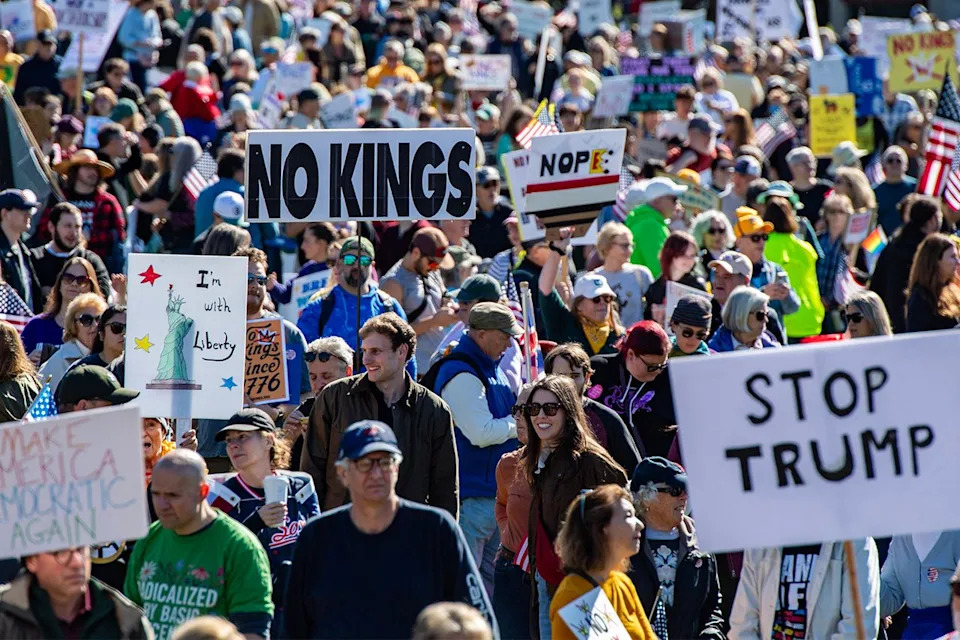
JOSEPH PREZIOSO/AFP via GettyBostonians participate in a "No Kings" national day of protest on Oct. 18, 2025
16. Pentagon reporters staged a high-profile walkout after Defense Secretary Pete Hegseth introduced a new press agreement that many journalists said would severely limit independent coverage. Most reporters refused to sign, and a new press corps of pro-administration figures later emerged.
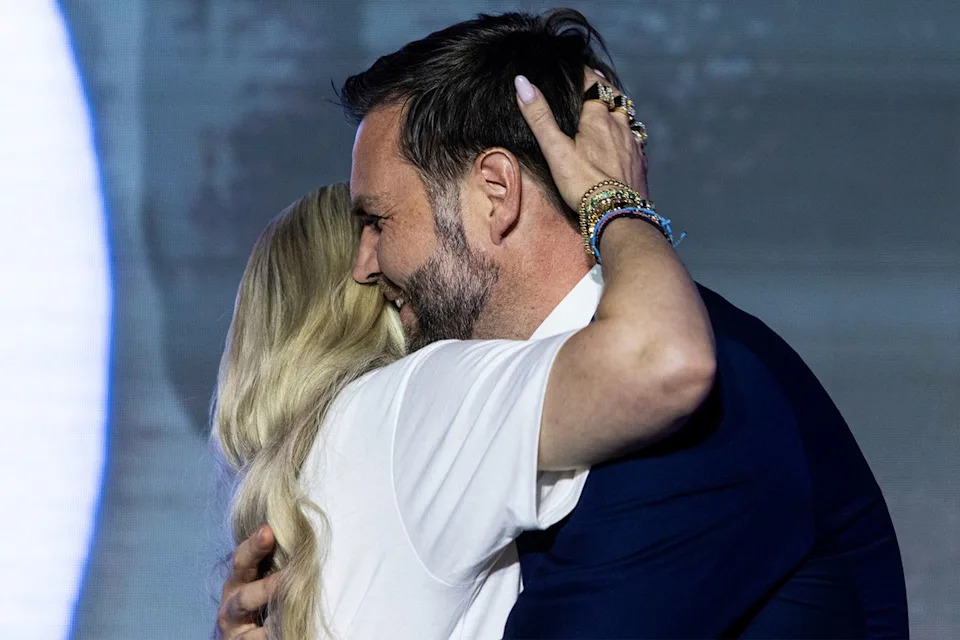
Brad Vest/GettyErika Kirk embraces Vice President JD Vance at a Turning Point USA event at Ole Miss on Oct. 29, 2025
17. The No Kings protests returned in October to oppose federal deployments of law-enforcement and military forces in Democratic-led cities. Organizers framed the demonstrations as a defense of democratic norms, while some officials warned of extremist elements infiltrating protests.
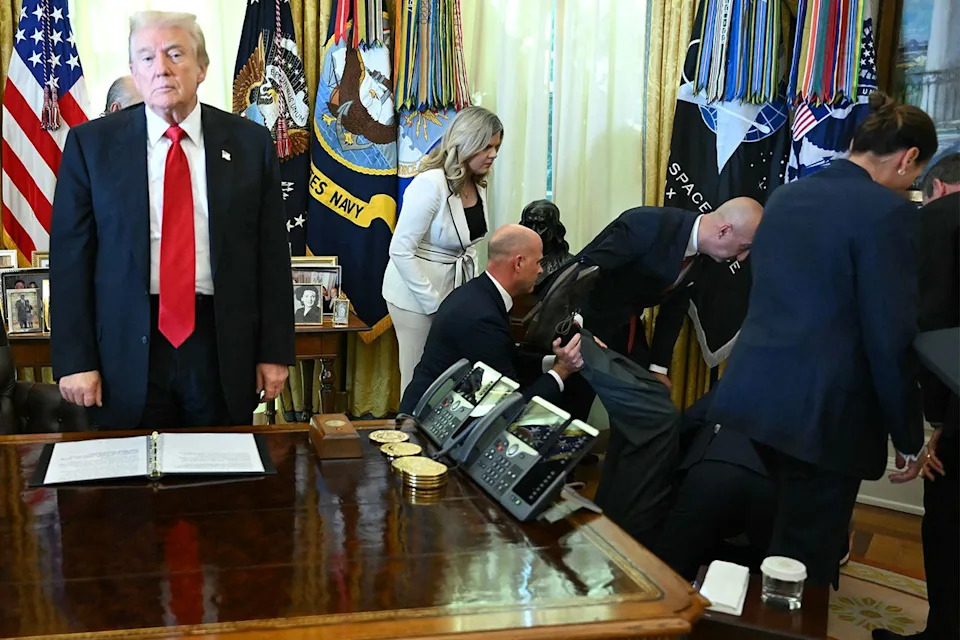
ANDREW CABALLERO-REYNOLDS/AFP via GettyPresident Donald Trump looks on after a man faints in the Oval Office during a weight-loss drug announcement on Nov. 6, 2025
18. Erika Kirk, who became Turning Point CEO after her husband's death, drew attention when she introduced Vice President Vance at a campus event with a public embrace that prompted social-media discussion about political optics and mourning in public life.
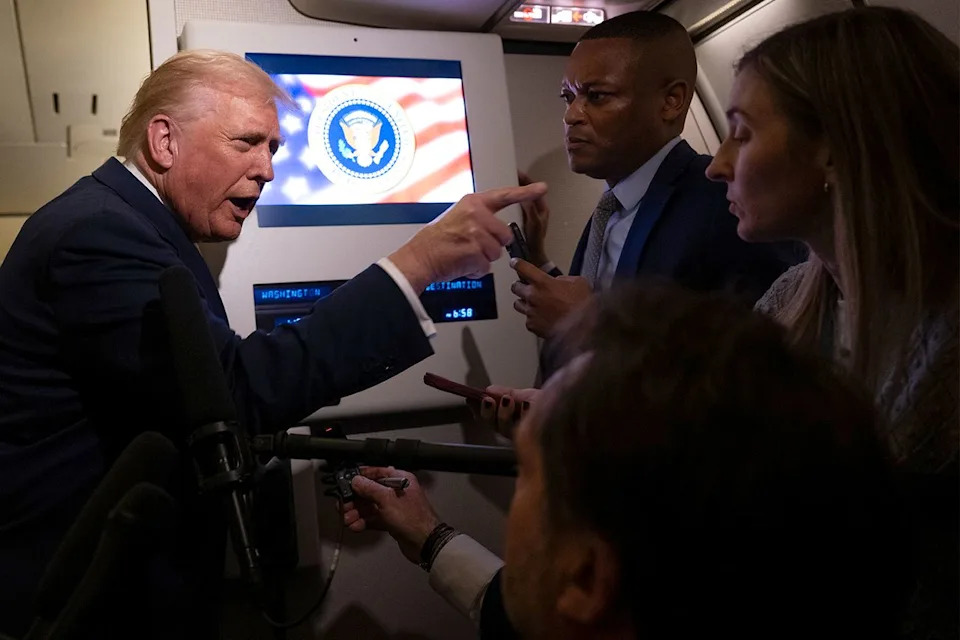
Roberto Schmidt/GettyPresident Donald Trump points at a White House reporter as he snaps, "Quiet, Piggy"
19. A man fainted during a White House press conference on Nov. 6 about lower costs for weight-loss medications, abruptly halting the event. An image of President Trump standing as staffers rushed to help went viral as a snapshot of an often chaotic administration year.
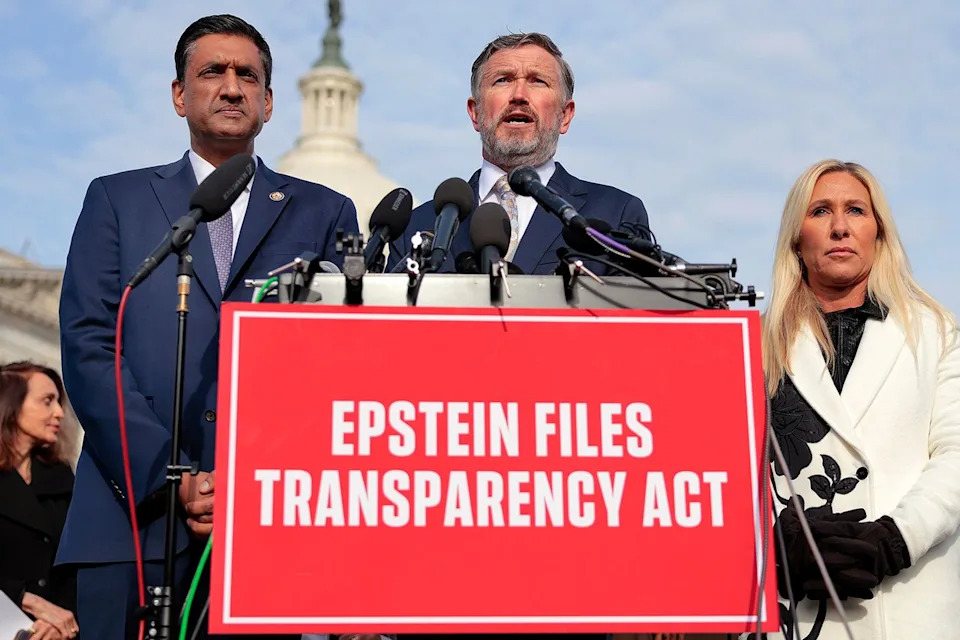
Heather Diehl/GettyReps. Ro Khanna, Thomas Massie and Marjorie Taylor Greene join Epstein survivors outside the U.S. Capitol before a vote on the Epstein Files Transparency Act on Nov. 18, 2025
20. On Air Force One on Nov. 14, President Trump rebuked Bloomberg reporter Catherine Lucey when she asked about potentially incriminating material in Jeffrey Epstein's private emails, calling for quiet in language that many critics described as demeaning. The exchange sparked a wave of press-conduct concerns.
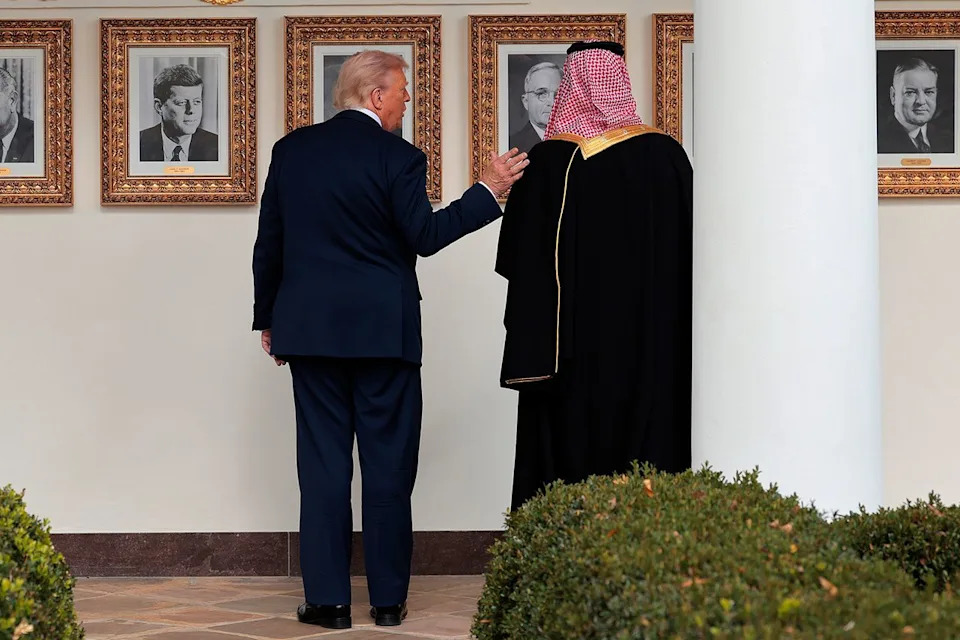
Chip Somodevilla/GettyPresident Donald Trump shows off his "Presidential Walk of Fame" to Saudi Crown Prince Mohammad bin Salman at the White House on Nov. 18, 2025
21. The Epstein files dominated late-year controversy and prompted bipartisan calls for transparency. The House passed the Epstein Files Transparency Act by a 427-1 margin, and a high-profile press conference with survivors and members of both parties intensified pressure for disclosure. Rep. Marjorie Taylor Greene later announced her resignation effective Jan. 5, 2026, citing tensions that included disputes over Epstein-related revelations.
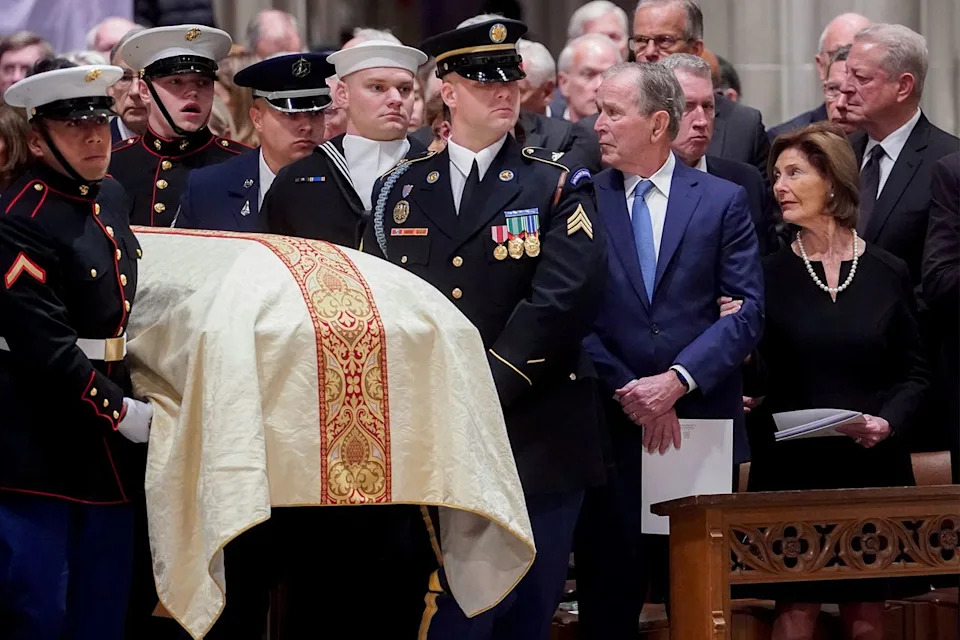
Al Drago/Bloomberg via GettyGeorge and Laura Bush watch pallbearers carry the casket of former Vice President Dick Cheney at Washington National Cathedral on Nov. 20, 2025
22. The White House installed a 'Presidential Walk of Fame' along the West Colonnade featuring portraits of presidents in election order. President Joe Biden's portrait was replaced with an image of an autopen, reflecting the president's critics' accusations about his use of signature-reproducing tools.
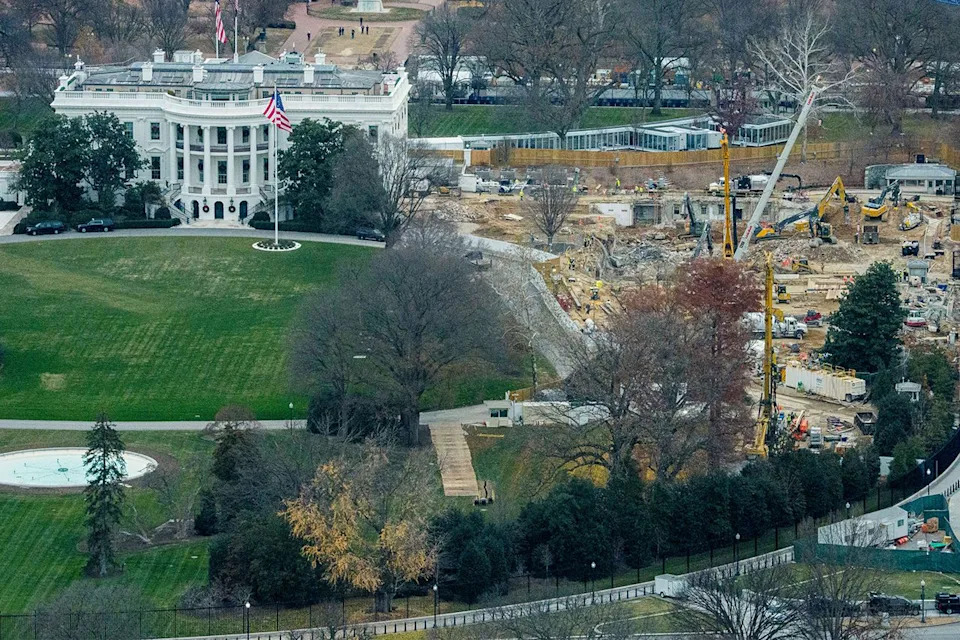
Aaron Schwartz/Bloomberg via GettyThe rubble of the White House East Wing, where President Donald Trump is building the White House Ballroom, pictured on Dec. 9, 2025
23. Former President George W. Bush delivered a eulogy at the funeral of former Vice President Dick Cheney, who died at 84. Cheney was remembered for his influence in modern vice-presidential power and for crossing party lines on key endorsements late in life.
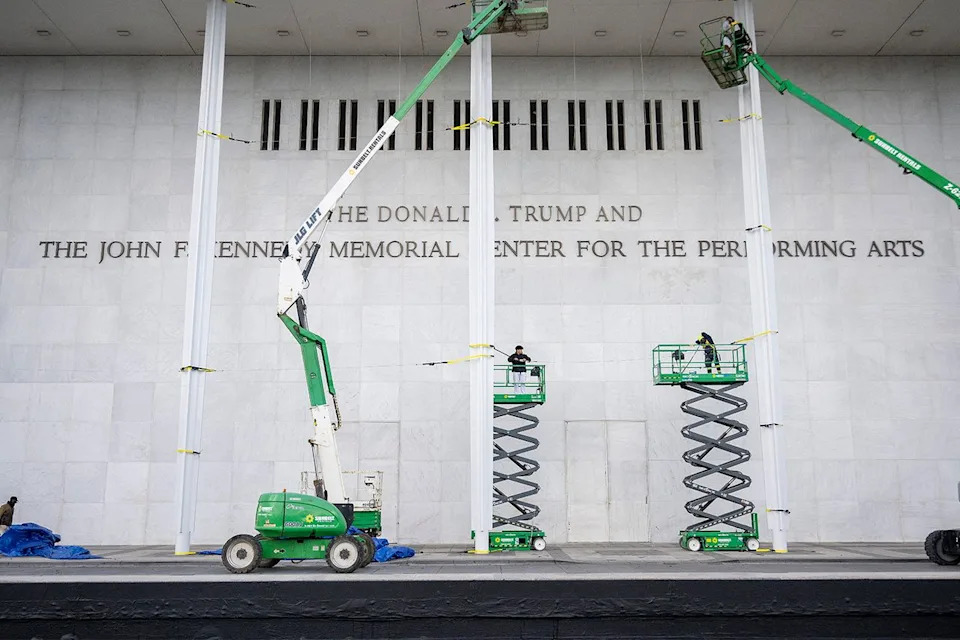
Jim WATSON / AFP via GettyWorkers install Donald Trump's name on the exterior of the Kennedy Center on Dec. 19, 2025
24. Controversial demolition and construction on the White House east side began in October to make way for a proposed 90,000-square-foot ballroom. The work affected the First Lady's Office, the East Colonnade, the family theater and historic gardens, drawing criticism from preservationists and the public.
25. After a MAGA-aligned Kennedy Center board voted to rename the institution to include Donald Trump's name, crews were photographed updating the signage — a move that sparked condemnation from members of the Kennedy family and public debate about monuments, legacy and cultural institutions.
These photographs, taken together, tell a story of a polarized nation confronting legal, cultural and geopolitical upheaval, with images that will likely inform how historians interpret 2025.


