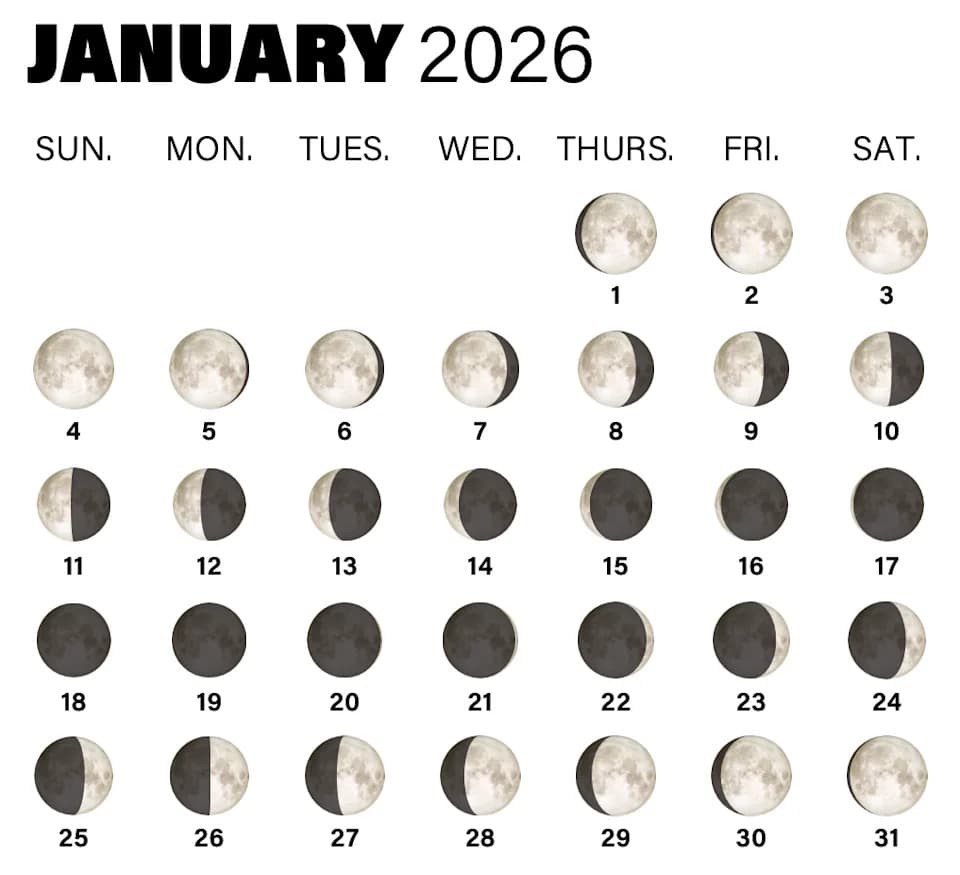
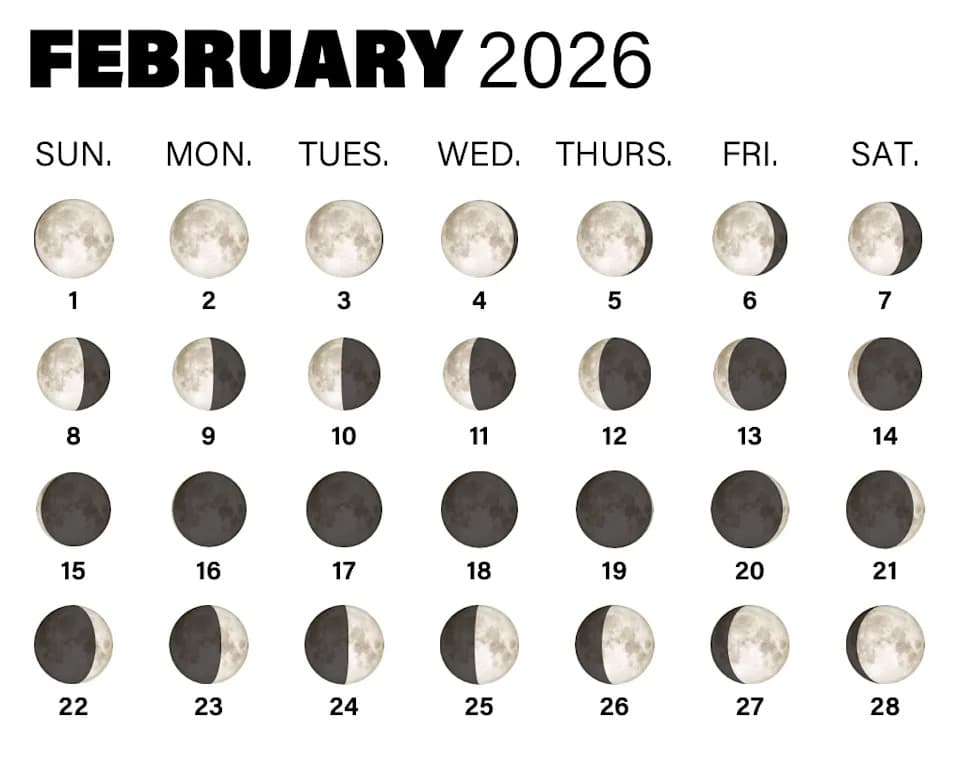
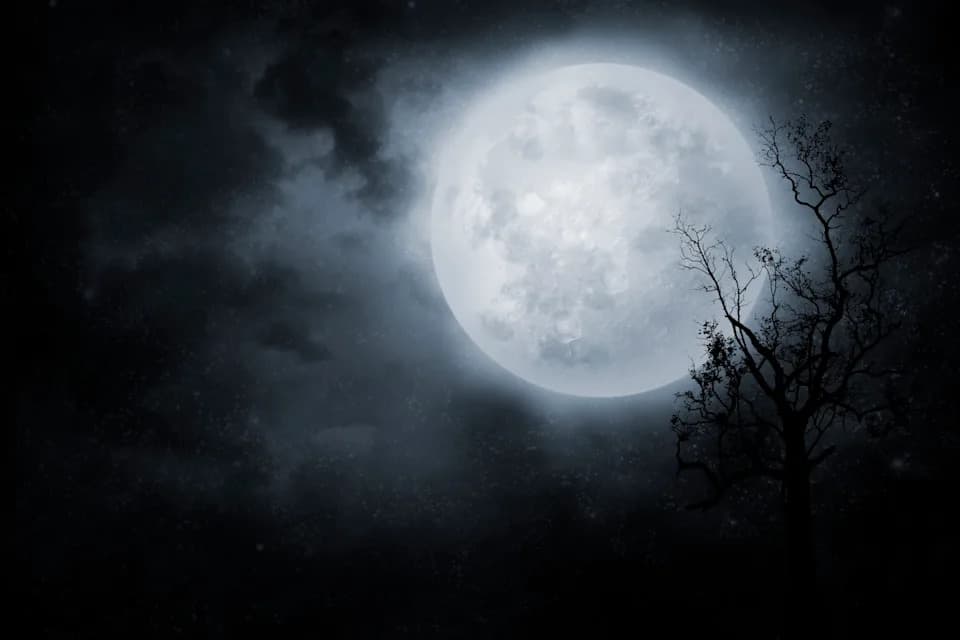
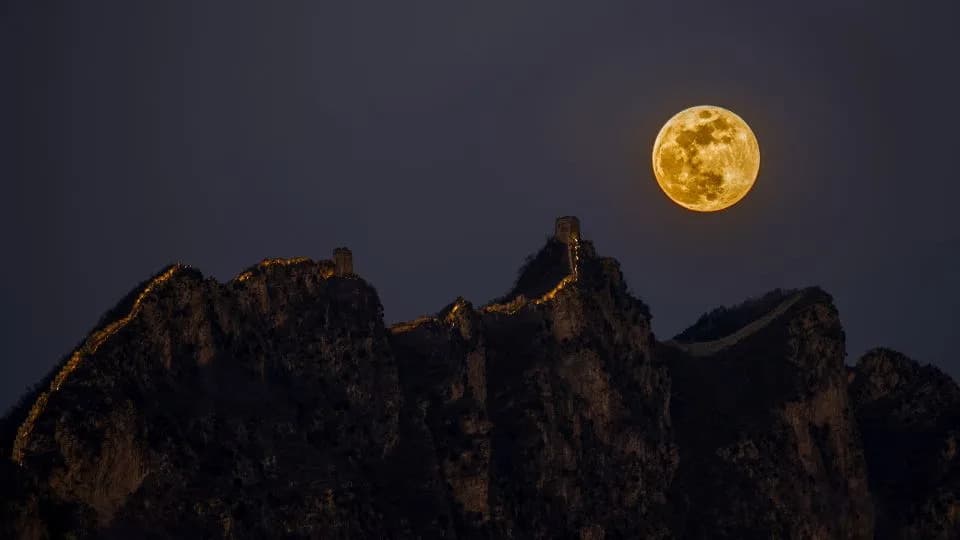
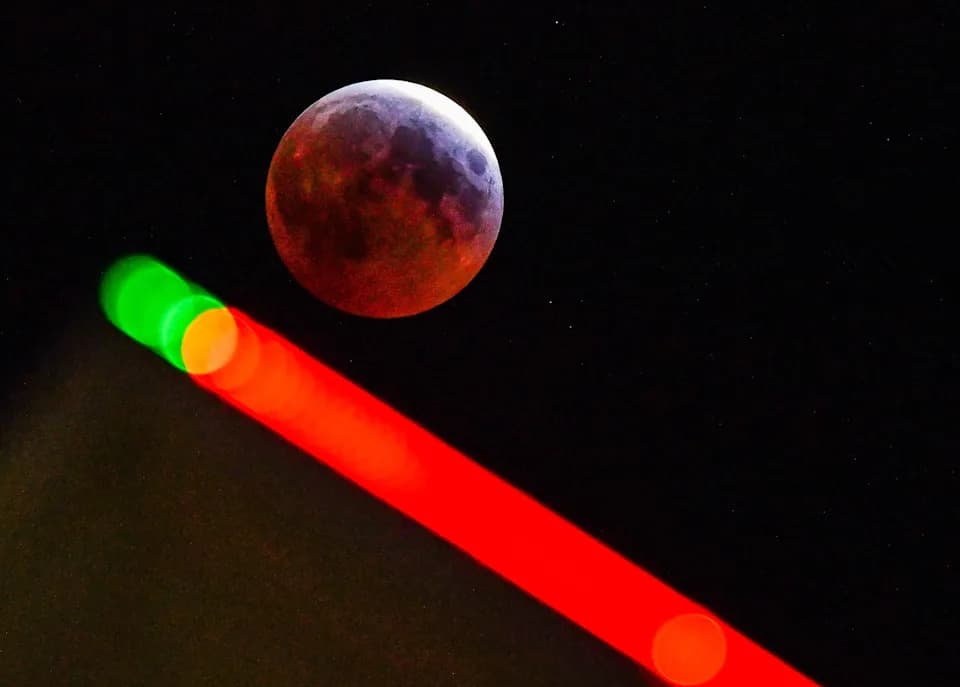
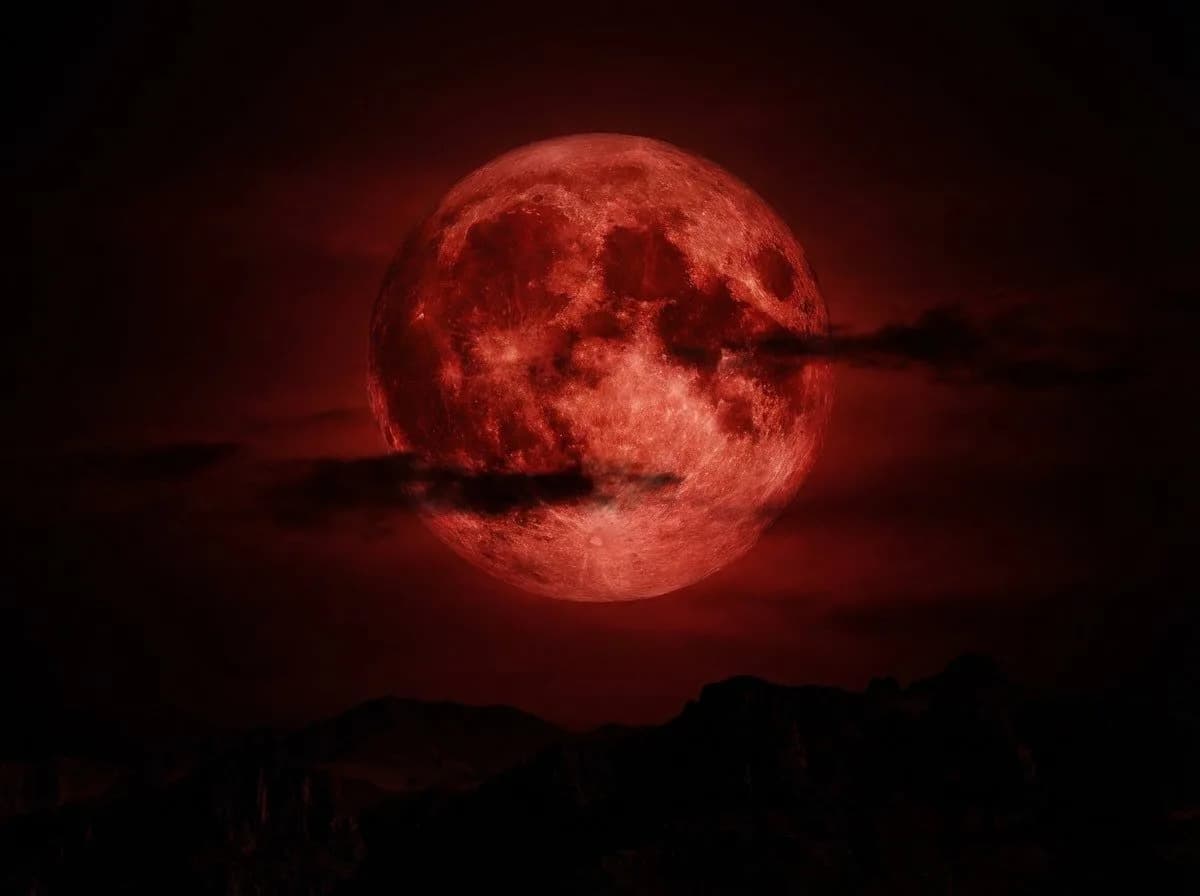
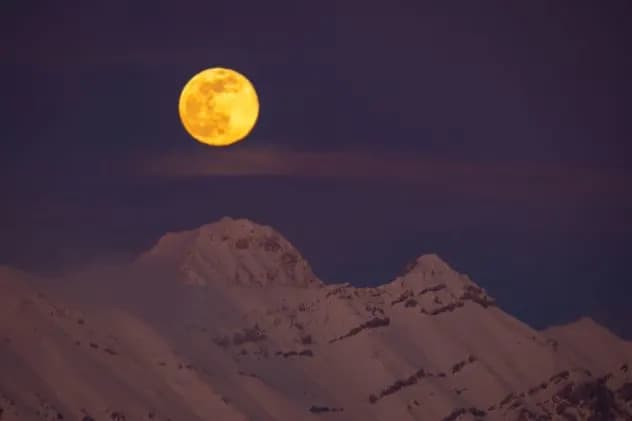
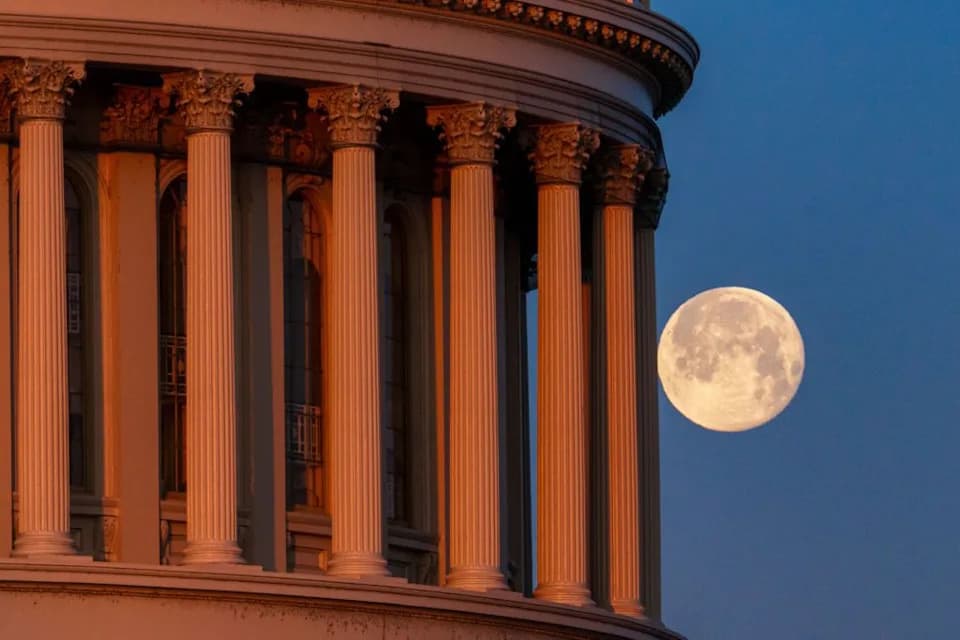
The Full Moon occurs when Earth lies between the Sun and the Moon, lighting the Moon's near side. The next Full Moon is the Snow Moon, peaking at 5:09 p.m. EST on Feb. 1, 2026. This calendar lists every Full Moon in 2026, notes two lunar eclipses (total on March 3 and partial on Aug. 28), marks Super Moons and a Blue Moon on May 31, and explains traditional names and tidal effects.
2026 Full Moon Calendar: Dates, Traditional Names, Eclipses, and Viewing Notes
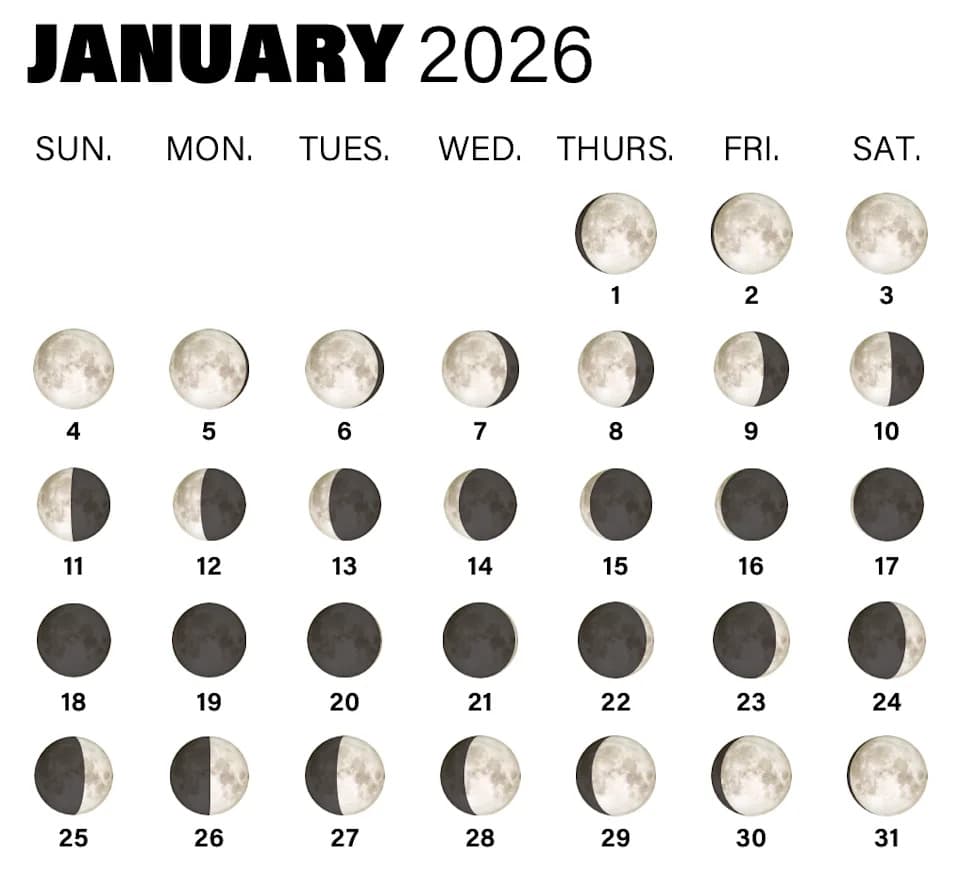
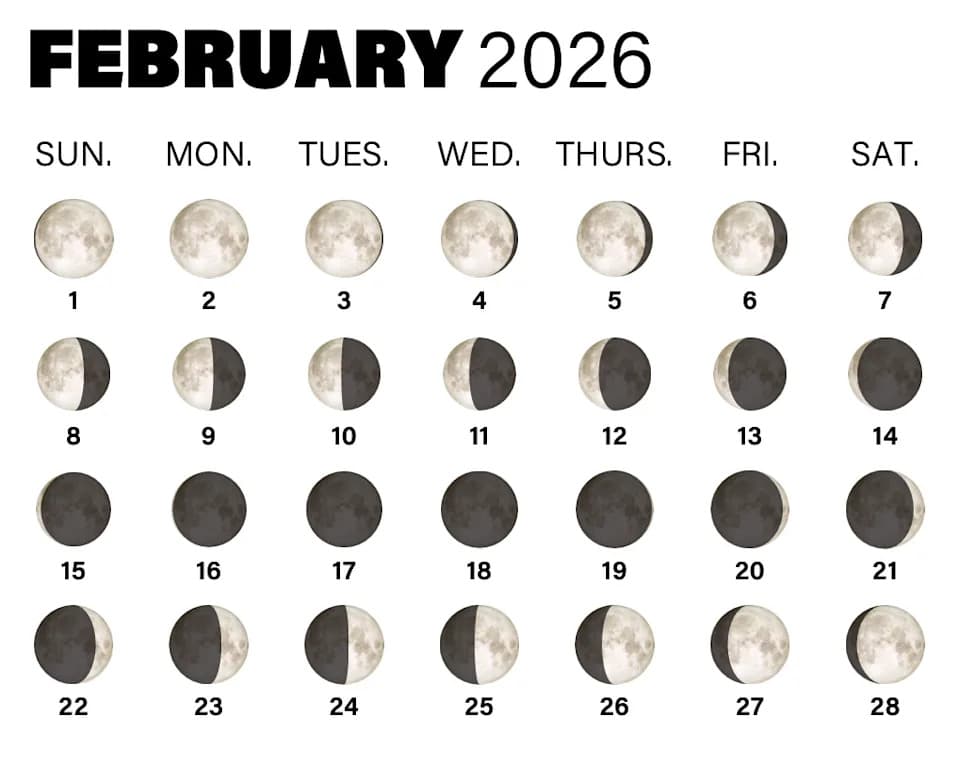
Note: Moon phases in the calendar vary in size due to the distance from Earth and are shown at 0h Universal Time. Credit: Astronomy: Roen Kelly
The Full Moon occurs when Earth sits nearly directly between the Sun and the Moon, allowing the Moon's near side to be fully illuminated. As the Moon orbits Earth, the angle of sunlight striking the lunar surface shifts, producing the familiar sequence of lunar phases.
Next Full Moon: The Snow Moon, peaking at 5:09 p.m. EST on Sunday, Feb. 1, 2026.
We will refresh this guide multiple times a week with updated moonrise and moonset times and notes on notable sky events.
Full Moons in 2026 (All times Eastern; * = Super Moon)
- Saturday, Jan. 3 — 5:03 a.m. — Wolf Moon *
- Sunday, Feb. 1 — 5:09 p.m. — Snow Moon
- Tuesday, March 3 — 6:38 a.m. — Worm Moon | Total Lunar Eclipse
- Wednesday, April 1 — 10:12 p.m. — Pink Moon
- Friday, May 1 — 1:23 p.m. — Flower Moon
- Sunday, May 31 — 4:45 a.m. — Blue Moon (second Full Moon in May)
- Monday, June 29 — 7:57 p.m. — Strawberry Moon
- Wednesday, July 29 — 10:36 a.m. — Buck Moon
- Friday, Aug. 28 — 12:19 a.m. — Sturgeon Moon | Partial Lunar Eclipse
- Saturday, Sept. 26 — 12:49 p.m. — Corn Moon
- Monday, Oct. 26 — 12:12 a.m. — Hunter's Moon
- Tuesday, Nov. 24 — 9:54 a.m. — Beaver Moon *
- Wednesday, Dec. 23 — 8:28 p.m. — Cold Moon *
Note: Times for sunrise, sunset, moonrise and moonset in the daily notes are local for 40° N, 90° W unless otherwise specified. All other times listed are Eastern.
Daily Notes: Late January
Wednesday, January 21
Sunrise: 7:17 a.m. • Sunset: 5:06 p.m. • Moonrise: 8:58 a.m. • Moonset: 8:16 p.m. • Moon Phase: Waxing crescent (11%)
Thursday, January 22
Sunrise: 7:16 a.m. • Sunset: 5:07 p.m. • Moonrise: 9:21 a.m. • Moonset: 9:24 p.m. • Moon Phase: Waxing crescent (19%)
Friday, January 23
The Moon passes 4° north of Saturn at 8:00 a.m. EST and 4° north of Neptune at 11:00 a.m. EST. That trio will be visible in the southwestern sky after sunset and remain observable for several hours; around 6:30 p.m. local time they will sit roughly 40° above the horizon.
Saturn, at first magnitude, is easy to spot below the crescent Moon and is brighter than any nearby star. Neptune requires binoculars or a telescope; it lies about 2.2° northeast of Saturn and shines at magnitude +7.8.
Sunrise: 7:16 a.m. • Sunset: 5:09 p.m. • Moonrise: 9:43 a.m. • Moonset: 10:31 p.m. • Moon Phase: Waxing crescent (28%)
About Lunar Phases and Traditional Names
The standard cycle of lunar phases is: New Moon, Waxing Crescent, First Quarter, Waxing Gibbous, Full Moon, Waning Gibbous, Last Quarter, and Waning Crescent. The interval from one Full Moon to the next — the synodic month — averages about 29.5 days. Although the exact instant of Full Moon is brief, the Moon often appears essentially full to the eye for about three days centered on that moment.
Many Full Moon names come from Native American, Colonial American, and other North American traditions and reflect seasonal or natural events. Common traditional names for the 12 Full Moons are:
- Wolf Moon (January) — From wolf howls heard in winter.
- Snow Moon (February) — Reflecting winter snowfall.
- Worm Moon (March) — Signaling earthworms returning as ground thaws.
- Pink Moon (April) — For spring wildflowers with pink blooms.
- Flower Moon (May) — Celebrating abundant blossoms.
- Strawberry Moon (June) — Marking the peak strawberry harvest.
- Buck Moon (July) — When bucks grow new antlers.
- Sturgeon Moon (August) — From abundant sturgeon catches.
- Corn Moon (September) — Associated with corn harvesting.
- Hunter's Moon (October) — Linked to autumn hunting season.
- Beaver Moon (November) — When beavers prepare winter dams.
- Cold Moon (December) — Reflecting the deepening winter chill.
Other Terms You May See
- Super Moon — A Full Moon near lunar perigee, when the Moon is close to Earth and appears slightly larger and brighter. A common convention calls a Full Moon a Super Moon if it is within about 90% of its closest orbital distance.
- Blue Moon — The second Full Moon in a calendar month with two Full Moons; occurs about every 2.7 years. The name does not mean the Moon turns blue except under rare atmospheric conditions.
- Black Moon — An informal term with multiple definitions, often meaning the second New Moon in a month or the third of four New Moons in a season. It refers to a New Moon, which is not visible.
- Harvest Moon — The Full Moon nearest the autumnal equinox, typically providing prolonged evening moonlight useful historically for harvest work.
Full Moon, New Moon, and Tides
During Full and New Moons, the Sun, Earth, and Moon are aligned, producing stronger-than-usual spring tides. These tides create higher high tides and lower low tides because the gravitational forces of the Sun and Moon act together.
All Lunar Phase Dates for 2026
New • First Quarter • Full • Last Quarter
Jan. 3 • Jan. 10 • Jan. 18 • Jan. 25
Feb. 1 • Feb. 9 • Feb. 17 • Feb. 24
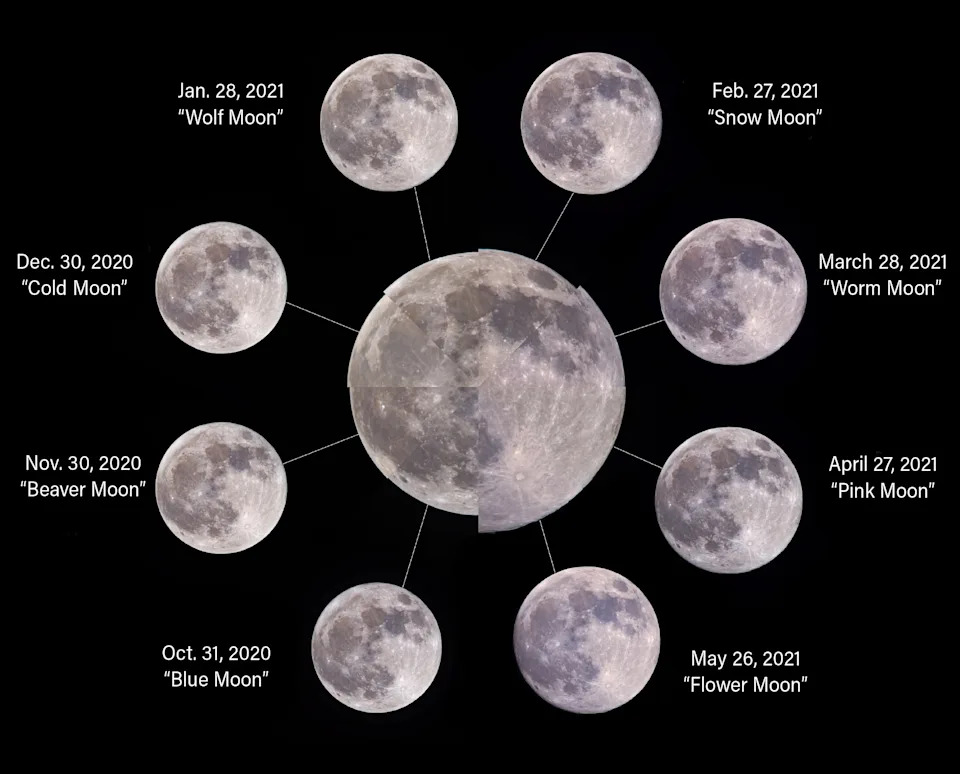
A composite of each month’s Full Moon in 2020 and 2021. Credit: Soumyadeep Mukherjee
March 3 • March 11 • March 18 • March 25
April 1 • April 10 • April 17 • April 23
May 1 • May 9 • May 16 • May 23
May 31 • June 8 • June 14 • June 21
June 29 • July 7 • July 14 • July 21
July 29 • Aug. 5 • Aug. 12 • Aug. 19
Aug. 28 • Sept. 4 • Sept. 10 • Sept. 18
Sept. 26 • Oct. 3 • Oct. 10 • Oct. 18
Oct. 26 • Nov. 1 • Nov. 9 • Nov. 17
Nov. 24 • Dec. 1 • Dec. 8 • Dec. 17
Dec. 23 • Dec. 30
We will continue to refresh this calendar with updated local moonrise and moonset times and additional observing notes as new data and eclipse timings become available.
Originally published by Astronomy Magazine.
Help us improve.