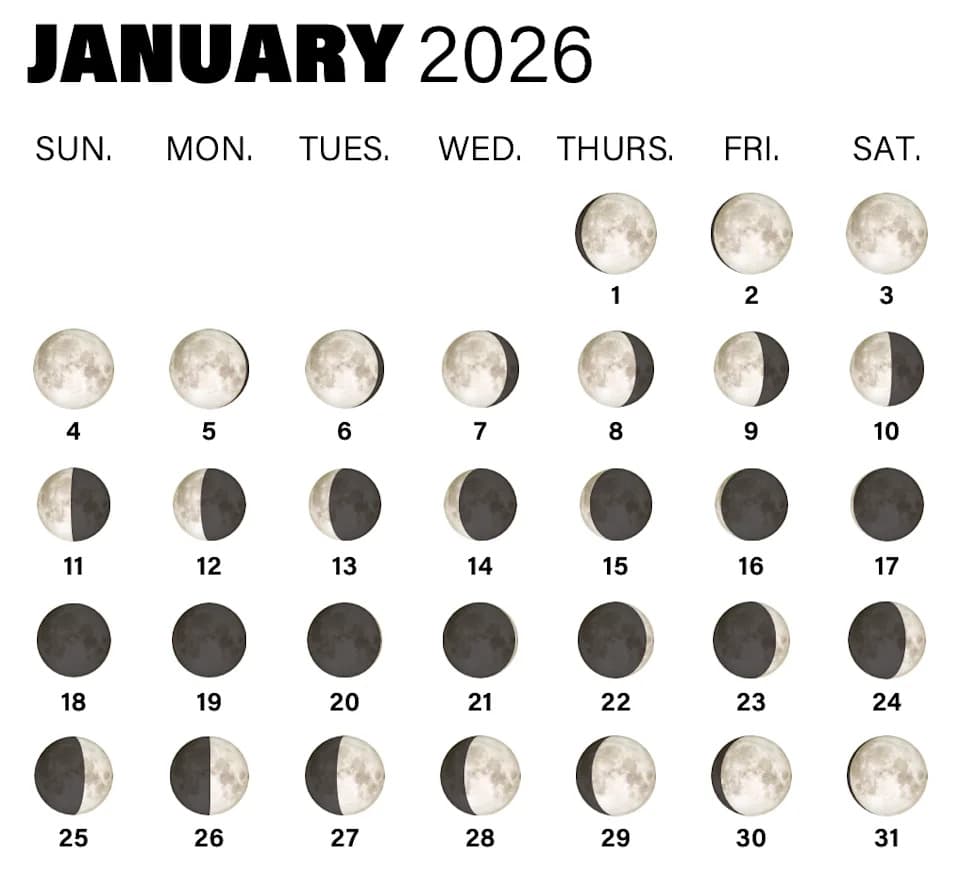
New Yorkers will witness 13 full moons in 2026, including three supermoons (Jan. 3, Nov. 24 and Dec. 23), a blue moon on May 31 and two lunar eclipses — a total eclipse on March 3 and a partial eclipse on Aug. 28. The guide lists peak illumination times from Space.com and moonrise/moonset estimates for Rochester and White Plains from the Old Farmer's Almanac. Explanations of supermoons, blue moons and micro full moons are included, plus viewing tips and source credits.
Full Moon Guide 2026: Dates for Supermoons, a Blue Moon and Two Lunar Eclipses
Join a biologist for evening walks beneath the full moon, where the wild world comes to life after dark.
New Yorkers — and skywatchers across the Eastern Time zone — can look forward to 13 full moons in 2026, including three supermoons, a blue moon and two lunar eclipses. Below are the full-moon names, peak illumination times (ET) from Space.com, and moonrise/moonset estimates for Rochester and White Plains from the Old Farmer's Almanac.
2026 Full-Moon Calendar (Dates & Local Times)
Wolf Moon — Jan. 3, 2026
This was the first of three 2026 supermoons (occurred Jan. 3).
Snow Moon — Feb. 1, 2026
Peak illumination: 5:09 p.m. ET (Space.com). Moonrise/set estimates: Rochester — moonrise ~5:12 p.m. on Feb. 1, moonset ~7:30 a.m. on Feb. 2; White Plains — moonrise ~5:01 p.m. on Feb. 1, moonset ~7:08 a.m. on Feb. 2 (Old Farmer's Almanac).
Worm Moon — March 3, 2026
Peak illumination: 6:38 a.m. ET (Space.com). A total lunar eclipse will occur on March 3 and is expected to be visible across the Americas, East Asia, Australia and the Pacific (NASA). Moonrise/set estimates: Rochester — moonrise ~5:20 p.m. on March 2, moonset ~6:24 a.m. on March 3; White Plains — moonrise ~5:07 p.m. on March 2, moonset ~6:05 a.m. on March 3 (Old Farmer's Almanac).
Pink Moon — April 1, 2026
Peak illumination: 10:12 p.m. ET (Space.com). Moonrise/set estimates: Rochester — moonrise ~7:31 p.m. on April 1, moonset ~6:29 a.m. on April 2; White Plains — moonrise ~7:13 p.m. on April 1, moonset ~6:14 a.m. on April 2 (Old Farmer's Almanac).
Flower Moon — May 1, 2026
Peak illumination: 1:23 p.m. ET (Space.com). Moonrise/set estimates: Rochester — moonrise ~8:39 p.m. on May 1, moonset ~5:36 a.m. on May 2; White Plains — moonrise ~8:16 p.m. on May 1, moonset ~5:25 a.m. on May 2 (Old Farmer's Almanac).
Blue Moon (Second Full Moon in May) — May 31, 2026
Peak illumination: 4:45 a.m. ET (Space.com). This blue moon is also a micro full moon and will appear slightly smaller than average. Moonrise/set estimates: Rochester — moonrise ~8:39 p.m. on May 30, moonset ~4:35 a.m. on May 31; White Plains — moonrise ~8:14 p.m. on May 30, moonset ~4:27 a.m. on May 31 (Old Farmer's Almanac).
Strawberry Moon — June 29, 2026
Peak illumination: 7:57 p.m. ET (Space.com). This is also a micro full moon. Moonrise/set estimates: Rochester — moonrise ~9:13 p.m. on June 29, moonset ~4:45 a.m. on June 30; White Plains — moonrise ~8:48 p.m. on June 29, moonset ~4:38 a.m. on June 30 (Old Farmer's Almanac).
Buck Moon — July 29, 2026
Peak illumination: 10:36 a.m. ET (Space.com). Moonrise/set estimates: Rochester — moonrise ~8:53 p.m. on July 29, moonset ~5:43 a.m. on July 30; White Plains — moonrise ~8:32 p.m. on July 29, moonset ~5:34 a.m. on July 30 (Old Farmer's Almanac).
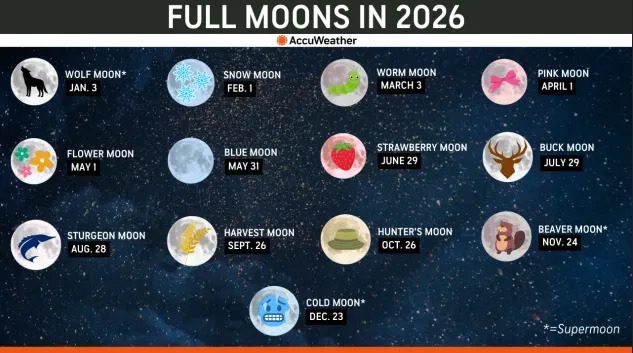
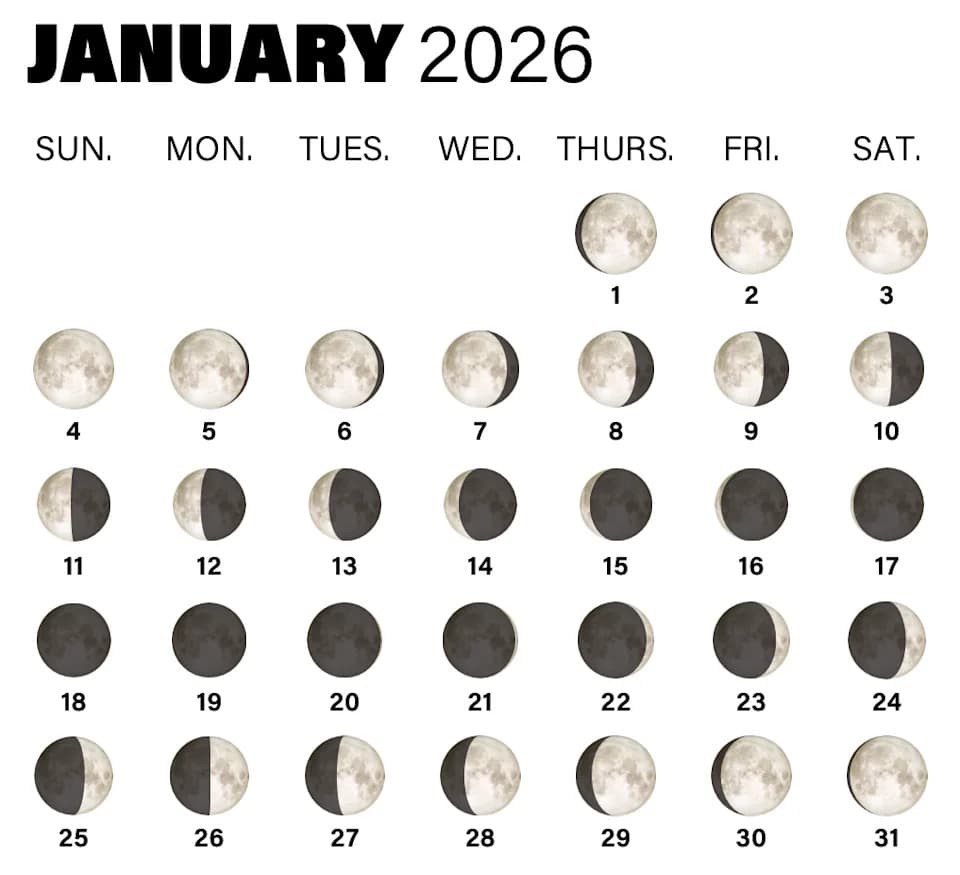
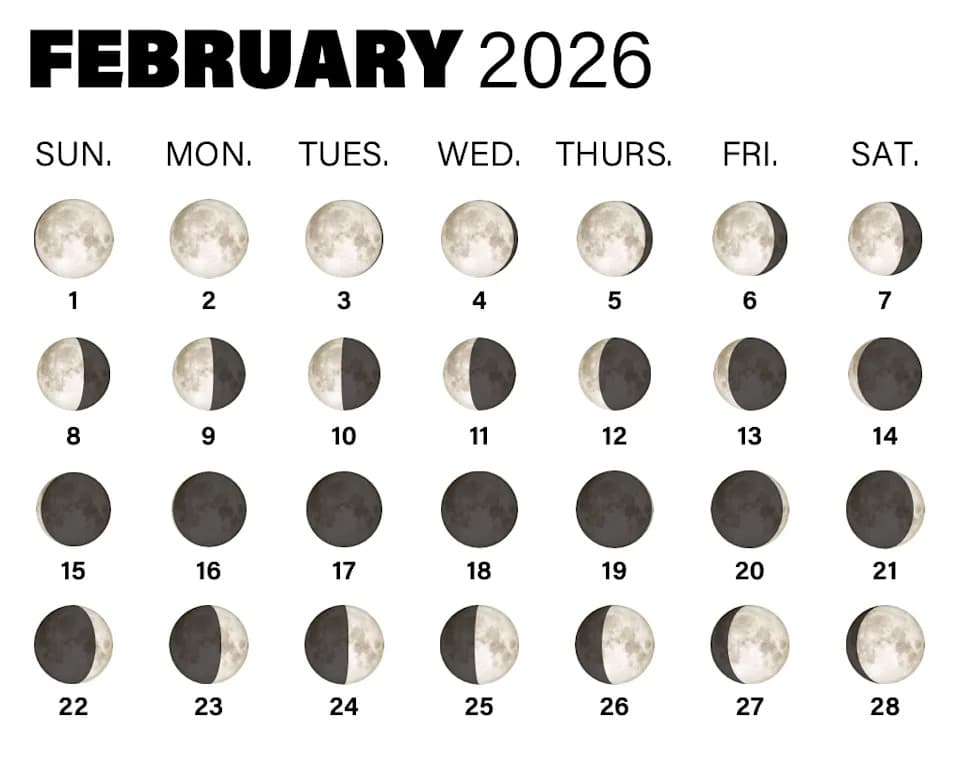
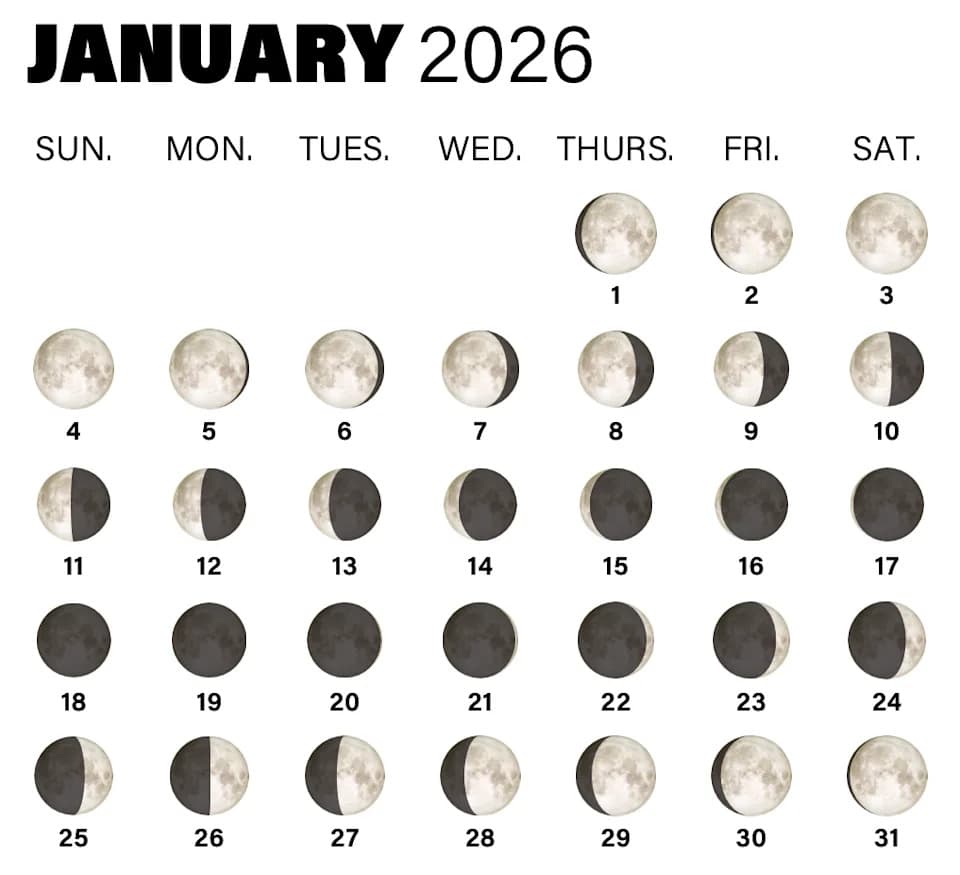
This graphic shows the dates of all 13 full moons in 2026, and their common names. This includes an extra full moon, called the blue moon, the second full moon in a single calendar month.
Sturgeon Moon — Aug. 28, 2026
Peak illumination: 12:18 a.m. ET (Space.com). That night will include a partial lunar eclipse visible from the Americas, Europe, Africa and parts of Asia. Moonrise/set estimates: Rochester — moonrise ~7:43 p.m. on Aug. 27, moonset ~5:45 a.m. on Aug. 28; White Plains — moonrise ~7:24 p.m. on Aug. 27, moonset ~5:33 a.m. on Aug. 28 (Old Farmer's Almanac).
Corn Moon — Sept. 26, 2026
Peak illumination: 12:49 p.m. ET (Space.com). Moonrise/set estimates: Rochester — moonrise ~6:47 p.m. on Sept. 26, moonset ~6:56 a.m. on Sept. 27; White Plains — moonrise ~6:33 p.m. on Sept. 26, moonset ~6:39 a.m. on Sept. 27 (Old Farmer's Almanac).
Hunter's Moon — Oct. 25, 2026
Peak illumination: 11:12 p.m. ET (Space.com). Moonrise/set estimates: Rochester — moonrise ~5:35 p.m. on Oct. 25, moonset ~7:00 a.m. on Oct. 26; White Plains — moonrise ~5:24 p.m. on Oct. 25, moonset ~6:40 a.m. on Oct. 26 (Old Farmer's Almanac).
Beaver Moon — Nov. 24, 2026
Peak illumination: 9:53 a.m. ET (Space.com). This is the second supermoon of 2026. Moonrise/set estimates: Rochester — moonrise ~4:20 p.m. on Nov. 24, moonset ~7:31 a.m. on Nov. 25; White Plains — moonrise ~4:13 p.m. on Nov. 24, moonset ~7:06 a.m. on Nov. 25 (Old Farmer's Almanac).
Cold Moon — Dec. 23, 2026
Peak illumination: 8:28 p.m. ET (Space.com). This is the third and final supermoon of 2026. Moonrise/set estimates: Rochester — moonrise ~4:02 p.m. on Dec. 23, moonset ~7:32 a.m. on Dec. 24; White Plains — moonrise ~3:55 p.m. on Dec. 23, moonset ~7:06 a.m. on Dec. 24 (Old Farmer's Almanac).
What Is a Supermoon, a Blue Moon and a Micro Moon?
Supermoon: When a full moon coincides with the Moon's closest approach to Earth in its elliptical orbit (perigee), the Moon can appear slightly larger and brighter than usual (NASA).
Blue Moon: Commonly defined as the second full moon in a single calendar month. Blue moons typically occur every two to three years (Space.com). The last blue moon before 2026 happened on Aug. 19, 2024.
Micro Full Moon: When a full moon occurs near apogee (the Moon's farthest point from Earth), it appears slightly smaller than average.
Viewing Tips
For eclipse viewing, check local visibility windows and weather forecasts in advance. To best appreciate differences in apparent lunar size for supermoons and micro moons, compare photos taken with the same lens or view the Moon near the horizon where foreground objects provide scale.
Reporting and Sources: Peak illumination times — Space.com. Local moonrise/moonset estimates — Old Farmer's Almanac. Eclipse visibility — NASA. Reporting: Emily Barnes, USA TODAY Network.
Help us improve.