Community colleges across North Carolina are expanding child care solutions — from on‑campus centers and drop‑in programs to state grants and short "child care academies" — to help student parents persist and complete credentials. The state faces a large unmet need (44% in 2020) and recent drops in licensed programs, particularly family child care homes. Colleges and state leaders recommend embedding child care in strategic planning, improving grant delivery, and scaling workforce pipelines to boost student success and local economies.
How North Carolina Community Colleges Are Helping Student Parents Find Child Care
Community college students who are also parents face a stark reality: balancing coursework with work and family responsibilities is difficult, and the lack of affordable, reliable child care often pushes students to reduce hours, pause their studies, or drop out. Across North Carolina, community colleges are testing a range of solutions — from on‑campus centers and drop‑in care to state grants and workforce training — while state leaders and researchers push for broader, coordinated action.
The Scale of the Problem
Analyses show a significant unmet need: a 2020 Buffett Early Childhood Institute estimate found 44% of child care demand in North Carolina was unmet, leaving roughly 257,670 children without reasonable access to care. Licensed child care programs declined by 5.8% during the pandemic stabilization grant period and rose to a 6.1% net loss between March and September 2025, with family child care homes accounting for 97% of that loss.
Why This Matters For Colleges
Child care affects enrollment, retention, and economic outcomes. The 2024 Community College Survey of Student Engagement reported 71% of caregiving students nationwide said caregiving could push them to drop out. Yet parenting students show high motivation and engagement and often persist when colleges offer supports like full‑time care, drop‑in options, or subsidies.
What Colleges Are Doing
- On‑Campus Child Care: As of May 2025, 17 community colleges operated on‑campus child care (down from 29 in 2004). Remaining programs vary in hours, funding, and services; 13 are five‑star licensed centers and several operate Head Start or NC Pre‑K slots.
- Flexible Care Models: Drop‑in care (limited in NC to 4 hours/day), after‑school programs, and financial assistance for off‑campus family child care or relative care help meet irregular scheduling needs. Cape Fear Community College’s free drop‑in model expanded from 20 to 40 slots after launching in 2023.
- State Child Care Grant: North Carolina allocated just over $3 million for the Community College Child Care Grant in 2024–25. Grants reached 737 students (average award $3,726) and can cover licensed or unlicensed care, though reimbursement timing and up‑front payment requirements remain challenges for many families.
- Workforce Development: Colleges educate early childhood educators (5,524 enrolled in fall 2024) and host short "child care academies" (at least 11 by September 2025) that provide rapid, low‑cost training to expand the workforce.
Examples & Partnerships
Forsyth Technical Community College’s SPARC (Student Parent Advocacy Resource Center) is highlighted as a one‑stop model that connects student parents to child care, food, housing, and emotional supports. Sandhills Community College partners with the Boys & Girls Club for after‑school care, holds a Family Forward employer designation, and is developing a Center for Excellence in Child Care to co‑locate training, lab classrooms, and community services. Bladen Community College co‑locates Smart Start headquarters and plans classroom space for future child care.
Policy And Coordination Needs
Researchers recommend embedding child care in college strategic and equity plans, collecting data on student caregiving roles, coordinating child care navigation with student supports, and centralizing family‑friendly policies. State leaders say peer‑to‑peer sharing across colleges and predictable funding would help scale local successes into broader solutions.
Bottom Line
Community colleges can’t solve the statewide child care system alone, but they are essential partners: supporting student parents increases credential completion, strengthens the early childhood workforce, and yields economic benefits for families and communities. Strategic investments, flexible programs, and stronger cross‑sector coordination would amplify those gains.
"Two of the most effective strategies for reducing poverty are providing high‑quality early childhood education for young children and supporting parents through education and training." — Kids on Campus report (March 2025)
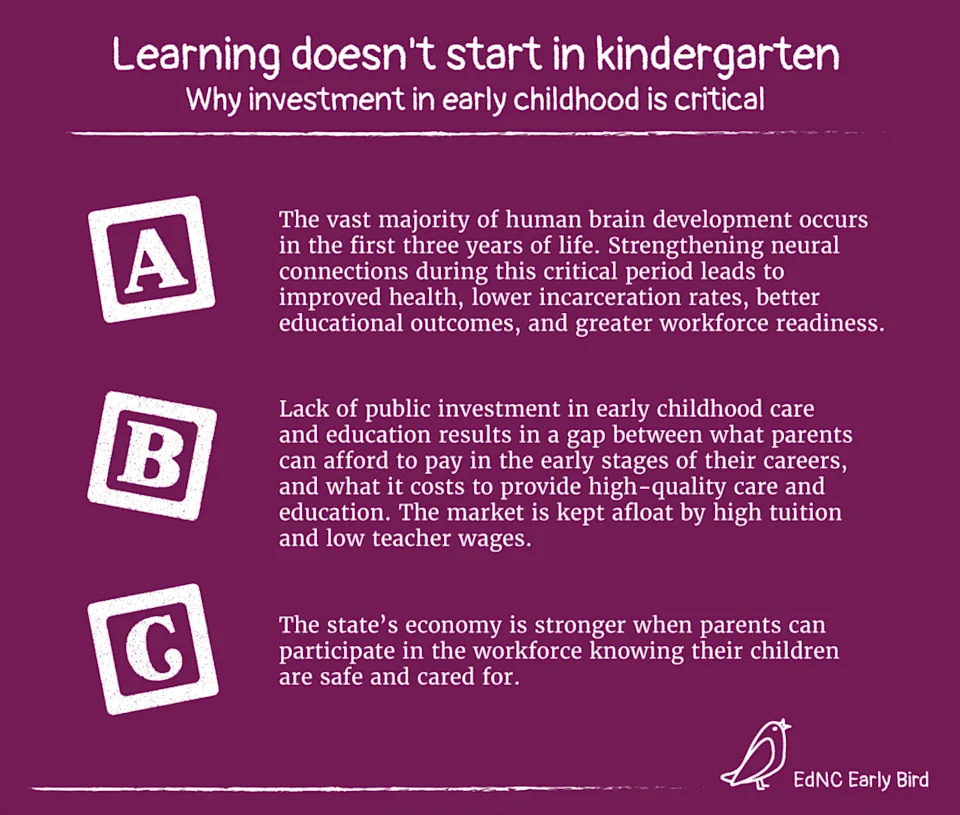
Graphic by Lanie Sorrow
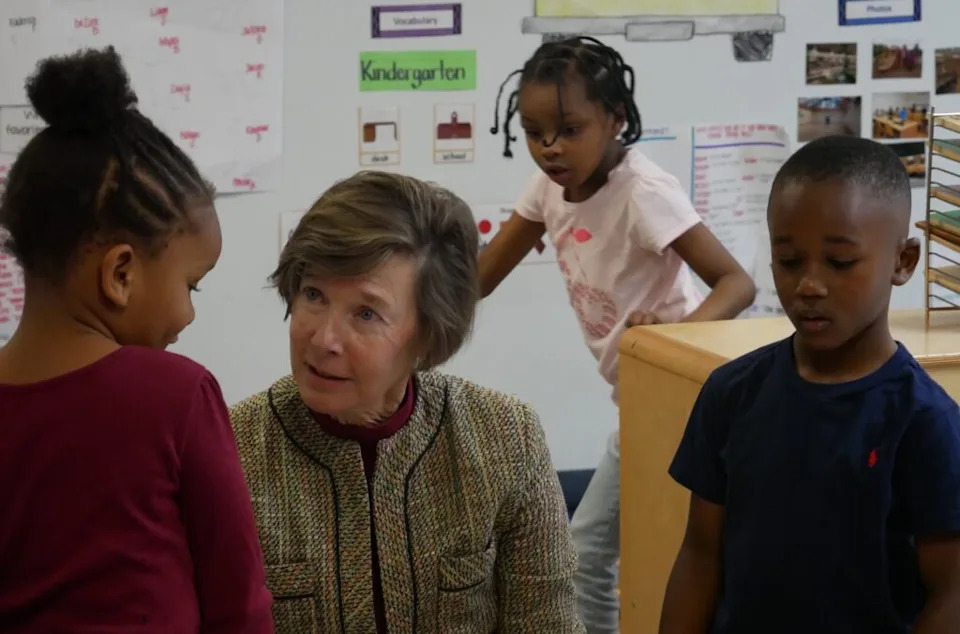
Lt. Gov. Rachel Hunt visits students at Kid Appeal Learning Center, a child care program in High Point. Liz Bell/EdNC
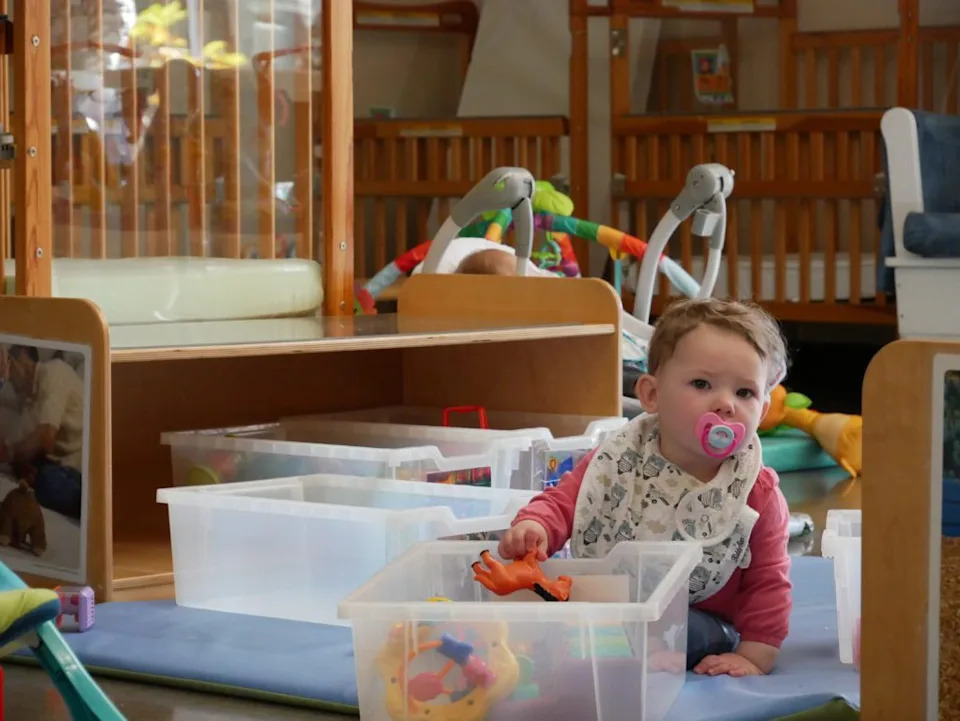
An infant at Haywood Community College’s Regional Center for the Advancement of Children. Liz Bell/EdNC

A teacher helps a student with writing at Cape Fear Community College’s drop-in child care program. Liz Bell/EdNC

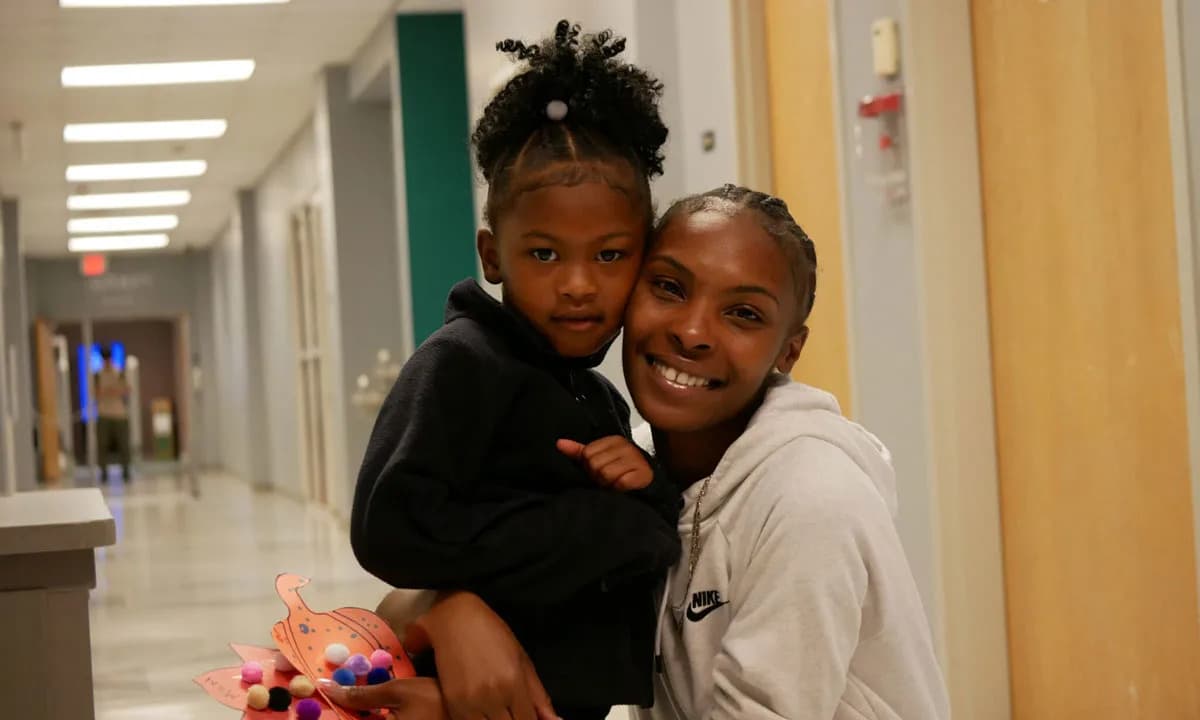
Krystle Malcolm, a student at Cape Fear Community College, picks up her 3-year-old son, Mavryk, from drop-in child care. Liz Bell/EdNC

PlayWorks teacher Angela Foster engages students during a fire drill. Liz Bell/EdNC
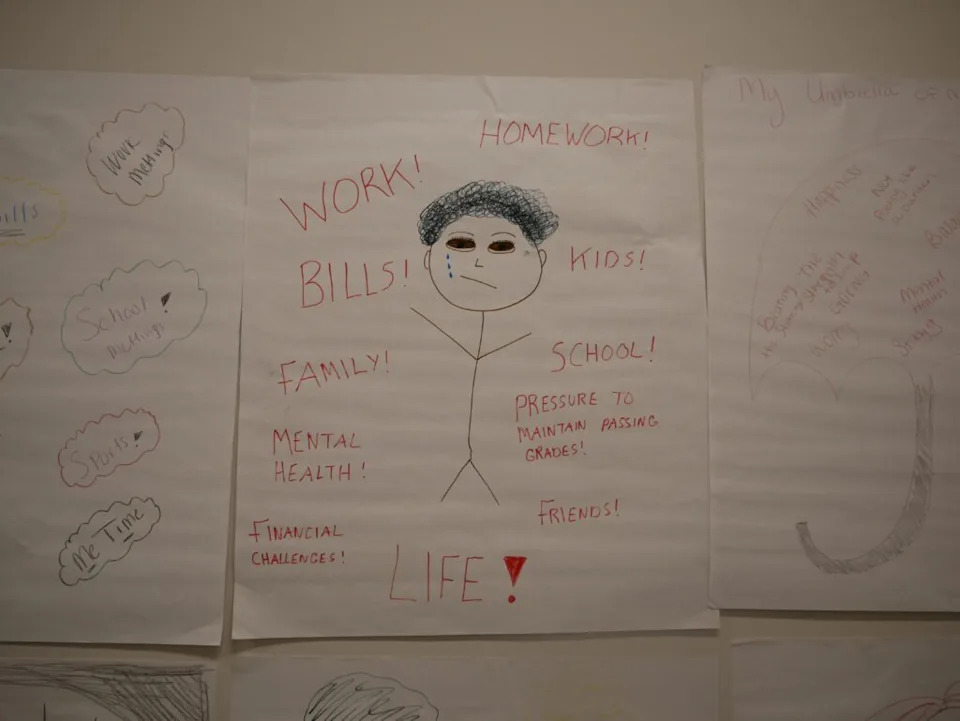
Posters created by student parents during a focus group at Forsyth Technical Community College. Liz Bell/EdNC

Help us improve.