The ELN attacked a military outpost in Aguachica near the Venezuelan border using drones and explosive devices, killing seven soldiers and wounding 30, the army said. Defense Minister Pedro Sánchez condemned the strike as a "terrorist action" after an initial report of six fatalities was revised. The assault follows other deadly confrontations this week and underscores stalled peace efforts, rising security challenges, and international tensions linked to Colombia's role as a leading cocaine producer.
ELN Drone and Explosive Strike Near Venezuela Kills Seven Colombian Soldiers

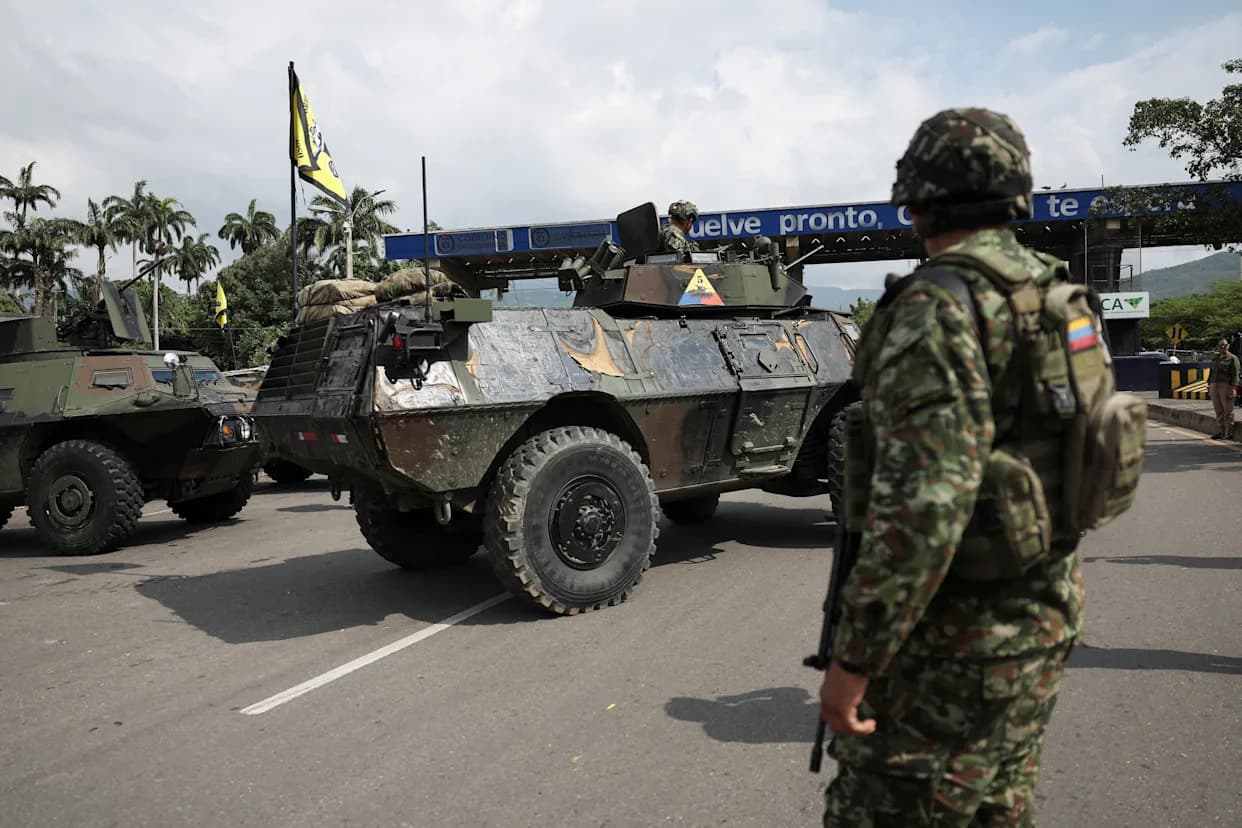
Colombian soldiers take part in an operation to deactivate gas cylinders allegedly loaded with explosives by the ELN on a road near Cucuta, department of Norte de Santander, Colombia, on December 15, 2025 (SCHNEYDER MENDOZA)(SCHNEYDER MENDOZA/AFP/AFP)
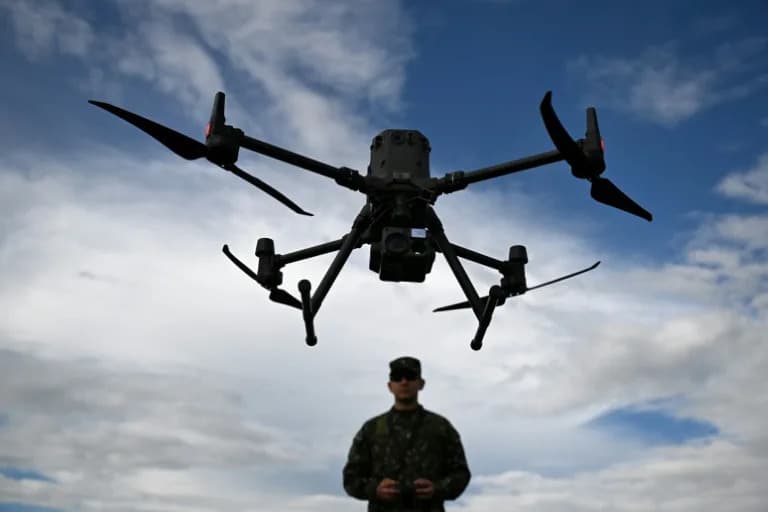
Colombia's National Liberation Army (ELN) launched a deadly attack on a rural military outpost near the Venezuelan border, killing seven soldiers and wounding 30, the army said on Friday. The assault, which used drones and explosive devices, took place Thursday night in Aguachica and was described by authorities as a coordinated strike against the base.
Casualties and immediate aftermath
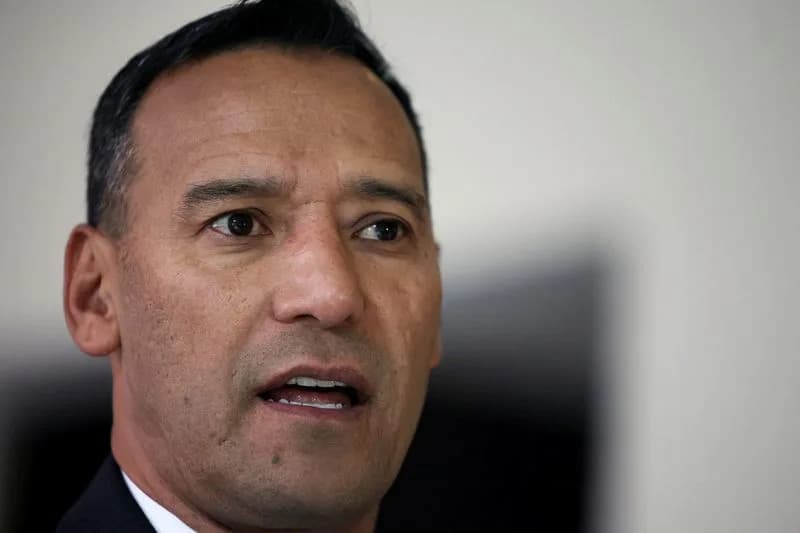
Defense Minister Pedro Sánchez condemned the operation as a "terrorist action" on X, saying the ELN "must be completely dismantled." Sánchez initially reported six fatalities; the army later updated reporters with a revised toll of seven dead and 30 wounded. Videos circulating on social media showed wounded troops arriving at a local medical center on stretchers and in wheelchairs, and images reportedly captured a fire at the outpost consistent with explosions.
Context and recent violence
The assault in Aguachica was the second deadly security clash in a week: two police officers were killed earlier this week in Cali. The ELN, founded in 1964 and inspired by the Cuban revolution, is Colombia's longest-surviving guerrilla organization and operates in a significant portion of the country, including drug-producing regions. The group said last week it would defend Colombia in response to what it called U.S. "threats of imperialist intervention."
Political and international dimensions
Since taking office in 2022, President Gustavo Petro — a former guerrilla — has prioritized talks with well-armed criminal groups over large-scale military offensives, but negotiations with some armed factions have stalled. In October, the United States imposed sanctions on President Petro over concerns about his government's willingness to confront drug cartels. Washington is also conducting operations targeting alleged narco-trafficking off Venezuela's coast and has warned Bogotá over Colombia's large cocaine output.
Why it matters
According to the United Nations, Colombia remains the world's largest producer of cocaine, and the ELN maintains a presence in more than one-fifth of the country's municipalities. The attack highlights continuing security challenges for the Petro administration, the complex role of armed groups in drug-producing regions, and rising tensions involving regional and international actors.
"We will not tolerate attacks against our security forces," Defense Minister Pedro Sánchez said, calling for intensified action against the ELN.
Officials said investigations and operations to locate and dismantle the responsible ELN cells were underway. Local authorities and the military have not released additional details about the attackers' identities or the exact type of drones used.
Help us improve.