Faith leaders across the U.S. say 2025 brought growing threats to immigrant communities as President Trump’s rhetoric and policy shifts intensified fear among Haitians, Afghans and Somali Americans. TPS protections for many Haitians face expiration in early February, while refugee program cuts and new restrictions have crippled resettlement agencies and raised anxiety for Afghans. Somali community leaders in Minnesota formed a task force to respond to enforcement surges and stigma. Religious groups are expanding sanctuary offers, volunteer services and public advocacy ahead of the 2026 elections.
Faith Leaders Warn Of A Harder Year Ahead As Trump Rhetoric And Policies Target Immigrants
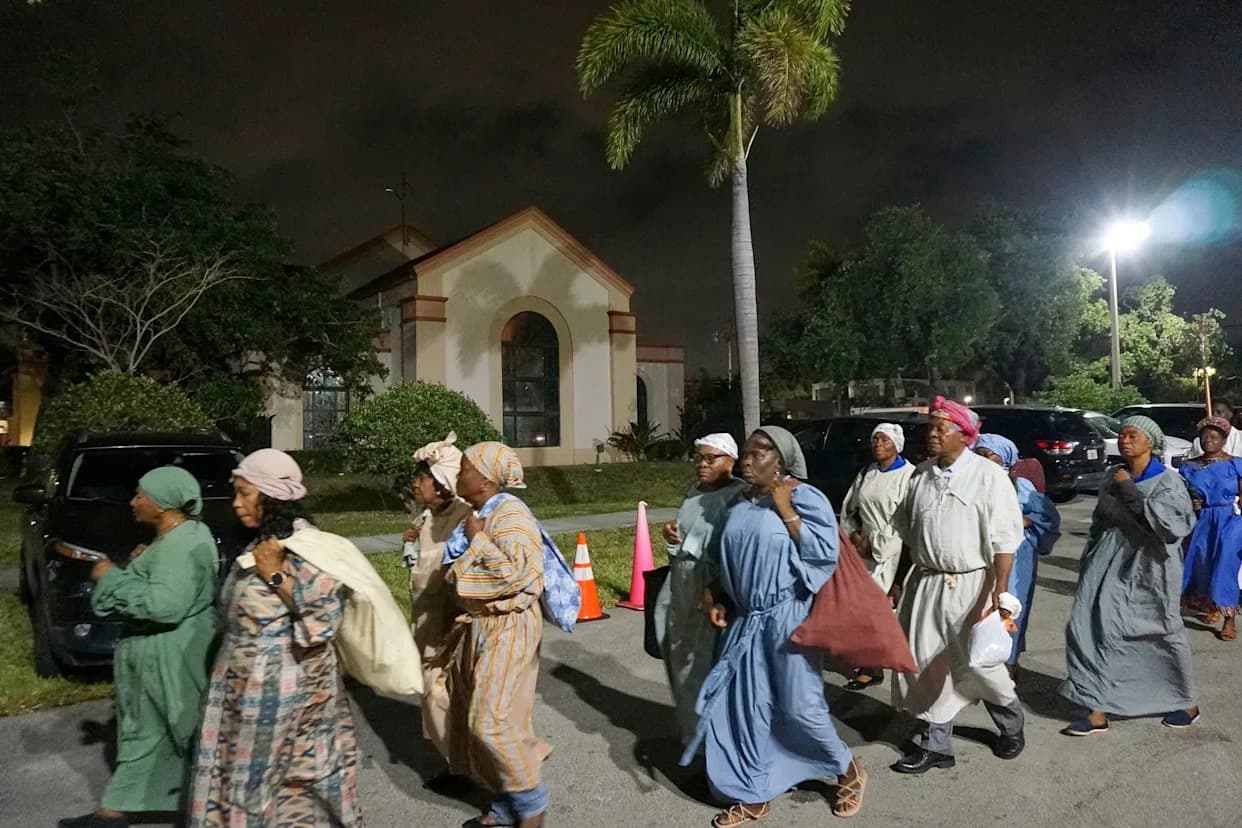
FILE - Parishioners of Notre Dame d'Haiti process outside the Catholic church during a Lent faith event that reenacted the biblical story of the Red Sea passage March 29, 2025, in Miami. (AP Photo/Giovanna Dell'Orto, File)
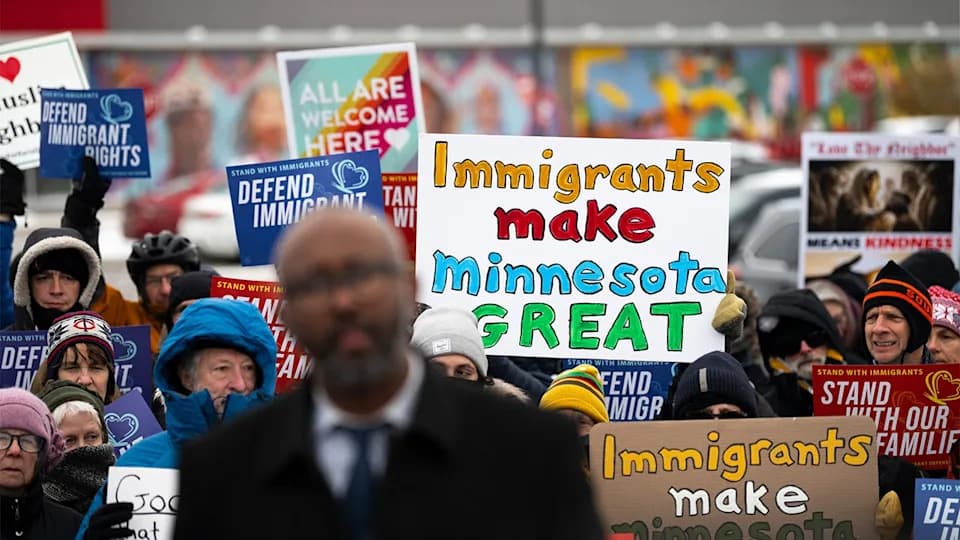
Faith leaders who minister to anxious immigrant communities across the United States describe 2025 as a year of mounting challenges — and warn that the months ahead could be even harder. They say increasingly harsh rhetoric and new policy proposals from President Donald Trump have intensified fear among Haitians, Afghans and Somali Americans, prompting expanded sanctuary offers, volunteer relief and stepped-up advocacy.
Haitians In Limbo
More than 15,000 Haitians live and work in Springfield, Ohio, a largely white, blue-collar city of roughly 59,000. Many arrived under Temporary Protected Status (TPS), which a community leader says is set to expire in early February, putting residents’ legal status and livelihoods at immediate risk.
Local pastors and immigrant leaders say inflammatory comments and false accusations — including a baseless 2024 claim that Haitians were eating neighbors’ pets — have heightened anti-immigrant sentiment. The Rev. Carl Ruby of Central Christian Church called the potential end of TPS “an economic and humanitarian disaster.” Ruby and Haitian community leader Viles Dorsainvil traveled to Washington seeking congressional assistance but found little legislative optimism.
Faith communities in Springfield are preparing to respond. “There are more and more churches in Springfield saying we will provide sanctuary… We will do whatever it takes to protect our members,” Ruby said.
Afghan Refugees Face New Restrictions And Funding Cuts
On the first day of his second term, President Trump suspended the U.S. refugee program and halted federal refugee funding, actions that sharply reduced the capacity of many faith-based resettlement groups. Lutheran Social Services of the National Capital Area (LSSNCA), which serves the Washington, D.C. region, reported a 68% budget loss and staff reductions from nearly 300 to about 100 employees.
Many LSSNCA staff and clients are Afghans who worked with U.S. forces or institutions and fled after the Taliban takeover in 2021. Anxiety rose further after an Afghan national was named a suspect in the Nov. 26 shooting that wounded two National Guard members in Washington, D.C., prompting additional immigration restrictions and stoking a false narrative that Afghan immigrants are a security threat.
“A whole group of people have now been targeted and blamed for this senseless act of violence,” said Kristyn Peck, CEO of LSSNCA.
Despite setbacks, resettlement groups and volunteers continue programs such as English and job-skills training for Afghan women and other vital services.
Somali Communities Respond To Enforcement And Stigma
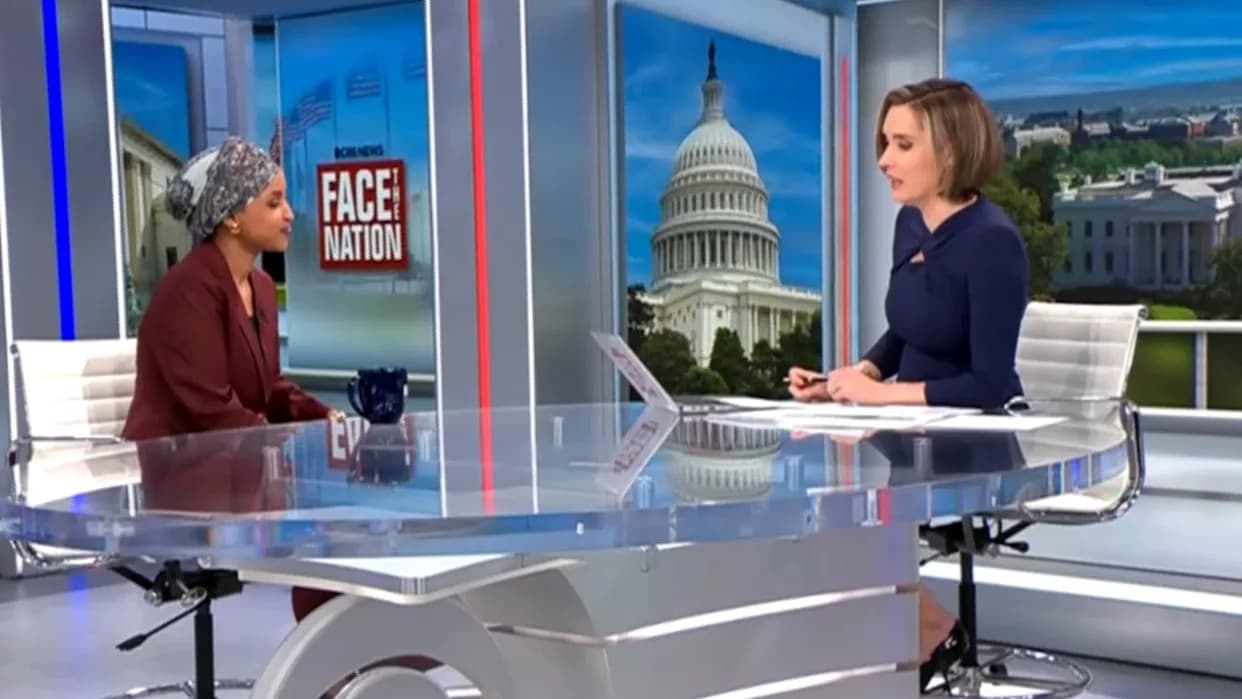
Minnesota’s Somali community — one of the largest Somali populations in the U.S. — has faced a surge in enforcement actions, high-profile fraud scandals and demeaning public remarks. In mid-December, imams and other community leaders created a task force to address fear, rebuild trust and amplify the community’s successes.
Imam Yusuf Abdulle, who leads the Islamic Association of North America, emphasized both resilience and the need to counter negative narratives: “For the number of years here, Somali is a very resilient, very successful community.” The task force includes more than two dozen faith, business and civic leaders and plans targeted advocacy ahead of the 2026 midterm elections.
Faith Leaders Mobilize And Speak Out
Religious leaders across denominations have issued public statements and organized practical support. In mid-November, U.S. Catholic bishops issued a special message condemning dehumanizing rhetoric, calling for better conditions in detention centers and opposing indiscriminate mass deportations. The Evangelical Lutheran Church in America’s presiding bishop, Yehiel Curry, urged congregations to continue accompanying immigrant neighbors amid “aggressive and indiscriminate immigration enforcement.”
Jewish and evangelical groups such as HIAS and World Relief also condemned recent policies that broadly target refugees and asylum-seekers, warning that halting processing for entire groups because of one person’s crime risks abandoning thousands who helped or sought safety alongside the U.S.
What Comes Next
Faith communities report they will continue legal aid, pastoral care, sanctuary offers, volunteer services and public advocacy. Leaders say they are bracing for intensified political battles and increased public scrutiny ahead of the 2026 midterms, while continuing to support vulnerable families whose futures are uncertain.
Key Quotes
“Each child of God has value and dignity,” said Bishop Daniel Garcia of Austin, Texas. “Language that denigrates a person or community based on his or her ethnicity or country of origin is incompatible with this truth.”
Note: This article summarizes the concerns and responses of religious organizations supporting Haitian, Afghan and Somali communities in the United States as they confront changing federal policies and public rhetoric.
Help us improve.