Initial U.S. jobless claims fell by 9,000 to 198,000 for the week ending Jan. 10, coming in below analysts' expectations. Hiring remained weak in December, with employers adding only 50,000 jobs and the unemployment rate slipping to 4.4%. Job openings declined to 7.1 million in November, and the Fed has cut rates for a third straight time amid concerns the labor market may be softer than reported.
U.S. Jobless Claims Dip to 198,000 as Layoffs Stay Low and Hiring Slows
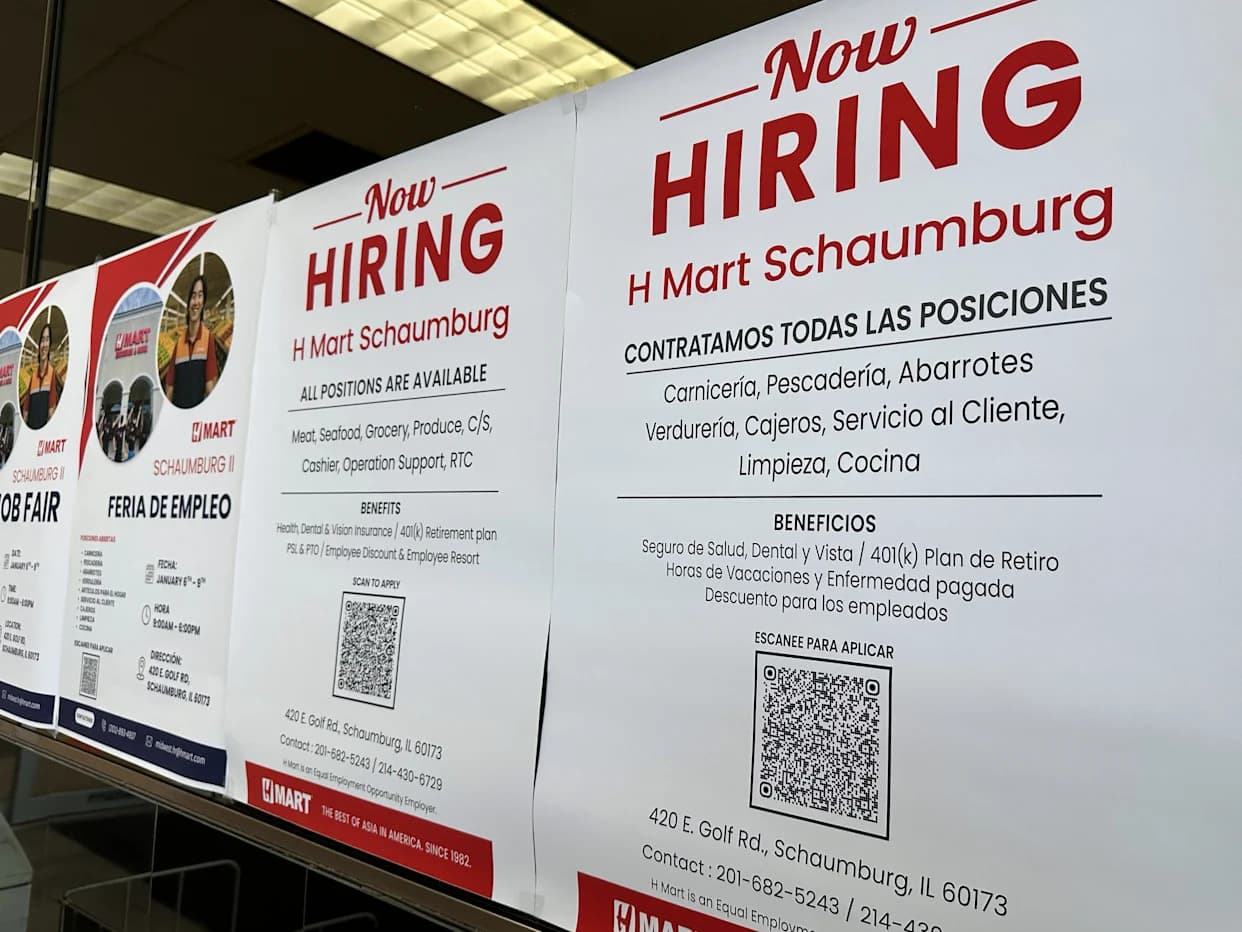
FILE - Hiring sign is displayed at a grocery store in Niles, Ill., Tuesday, Dec. 30, 2025. (AP Photo/Nam Y. Huh)
WASHINGTON — The number of Americans filing new claims for unemployment benefits fell last week, suggesting layoffs remain subdued even as other labor-market indicators show cooling momentum.
For the week ending Jan. 10, initial jobless claims dropped by 9,000 to 198,000, down from 207,000 the prior week, the Labor Department reported Thursday. The figure was well below the 215,000 new claims analysts polled by FactSet had expected.
Key Labor-Market Signals
Economists and policymakers often view claims for unemployment benefits as a near–real-time proxy for layoffs and overall labor-market health. Last week’s report follows government data showing that hiring was sluggish in December, capping a year of weak employment gains that have frustrated many job seekers despite low layoffs and a relatively low official unemployment rate.
The Labor Department reported that employers added only 50,000 jobs in December, nearly unchanged from a downwardly revised gain of 56,000 in November. The unemployment rate edged down to 4.4% in December from 4.5% the month before — the first decline since June; November’s rate was also revised lower.
In addition, businesses and government agencies reported 7.1 million open jobs at the end of November, down from 7.4 million in October. The decline in advertised openings and the modest hiring pace have produced a pattern economists call "low hire, low fire," where companies retain staff but are hesitant to add new workers.
Monetary Policy And Risks
The Federal Reserve last month trimmed its benchmark lending rate by a quarter point — its third consecutive cut — in an effort to stabilize a softening labor market. Fed Chair Jerome Powell warned that the committee is increasingly concerned the job market may be weaker than current data suggest and said recent employment figures could be revised down by as much as 60,000. If revisions are that large, Powell said, employers may have actually been shedding an average of about 25,000 jobs per month since the spring, a period that coincided with the rollout of broad import tariffs.
Several large employers have announced job cuts in recent months, including UPS, General Motors, Amazon and Verizon, though overall layoffs remain low by historical standards.
Short-Term Trend
The Labor Department also reported the four-week moving average of initial claims — which smooths weekly volatility — fell by 6,500 to 205,000. Separately, the total number of people filing for jobless benefits for the prior week (ending Jan. 3) declined by 19,000 to 1.88 million, according to the report.
What It Means: The latest claims data suggest employers are holding onto workers even as they pull back on hiring. Policymakers will be watching whether the slowdown in hiring persists, whether revisions to job data alter the view of the labor market, and how labor conditions influence future Fed policymaking.
Help us improve.