On May 15, 2001, CSX locomotive No. 8888 ran unmanned for roughly 66 miles through northwestern Ohio while pulling 47 cars—including two tanks of molten phenol—after a sequence of brake and control errors. Multiple derail and boarding attempts failed, and troopers even fired at the engine without stopping it. A second locomotive (CSX 6462) coupled to the rear and trainmaster Jon Hosfeld boarded to bring it to a stop. The incident exposed procedural vulnerabilities in yard operations and ended without serious injuries.
Crazy Eights: The 66-Mile Runaway Train That Terrorized Ohio — And How It Was Stopped
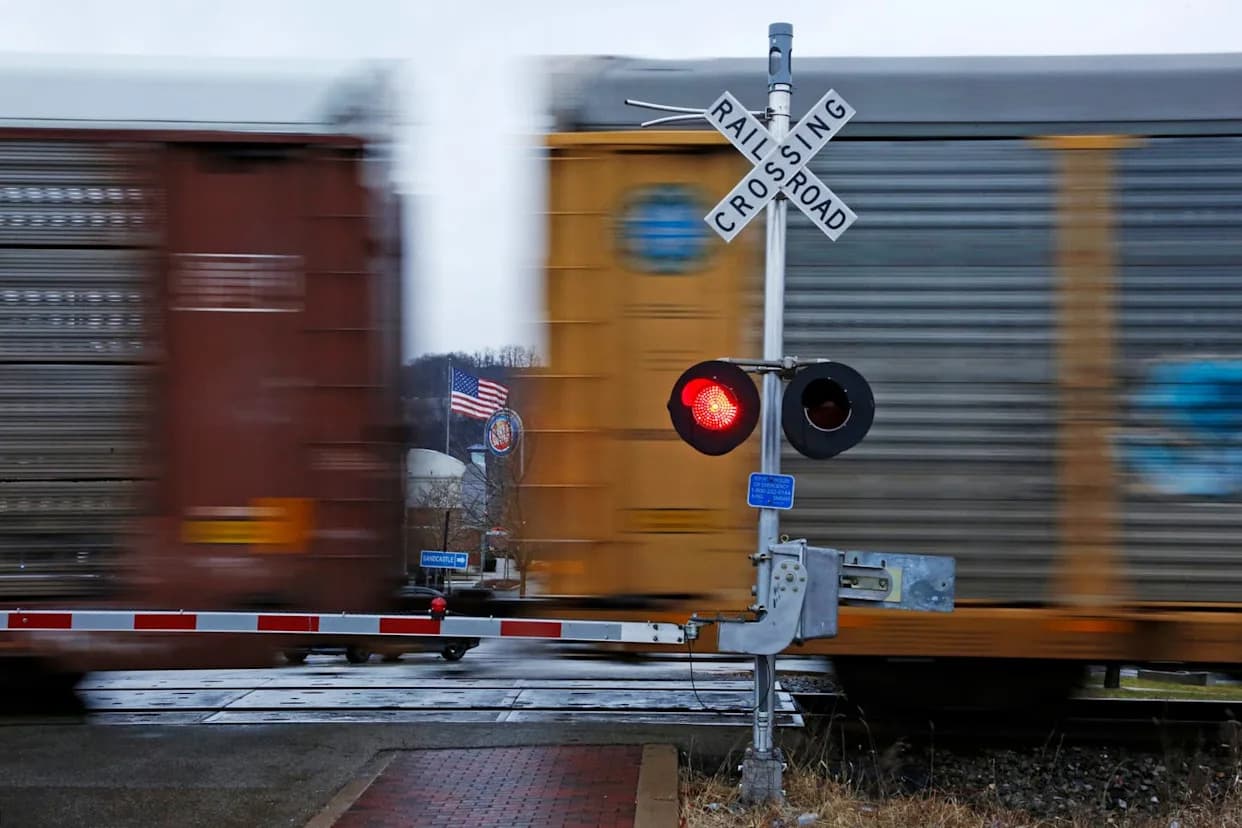
The Crazy Eights Runaway TrainGene J. Puskar
On the gray afternoon of May 15, 2001, a blue-and-yellow SD40-2 locomotive—CSX No. 8888—roared out of Stanley Yard in Walbridge, Ohio, with no one at the controls. For nearly two hours it thundered south through three counties, hauling 47 freight cars (25 empty) and two tanks of molten phenol, while police, railroad crews and media raced to prevent a catastrophic derailment.
What Went Wrong
The incident began as routine yard work. A three-man crew was assembling 47 cars when the conductor spotted a misaligned switch ahead. The engineer slowed the locomotive and climbed down to correct the switch, expecting to reboard quickly. A chain of errors turned a short task into a runaway:
- The yard practice of operating with disconnected air hoses left the trailing cars without automatic brakes engaged.
- Applying the locomotive's independent brake inadvertently disabled the alerter (a "dead-man" safety device).
- An attempted shift to dynamic braking was not completed correctly; instead, the throttle was effectively returned to full power, propelling the engine forward under its own power.
The engineer was dragged about 80 feet while trying to reboard and escaped with scrapes and bruises. The unmanned locomotive soon accelerated to speeds of 40–50 mph and kept gaining.
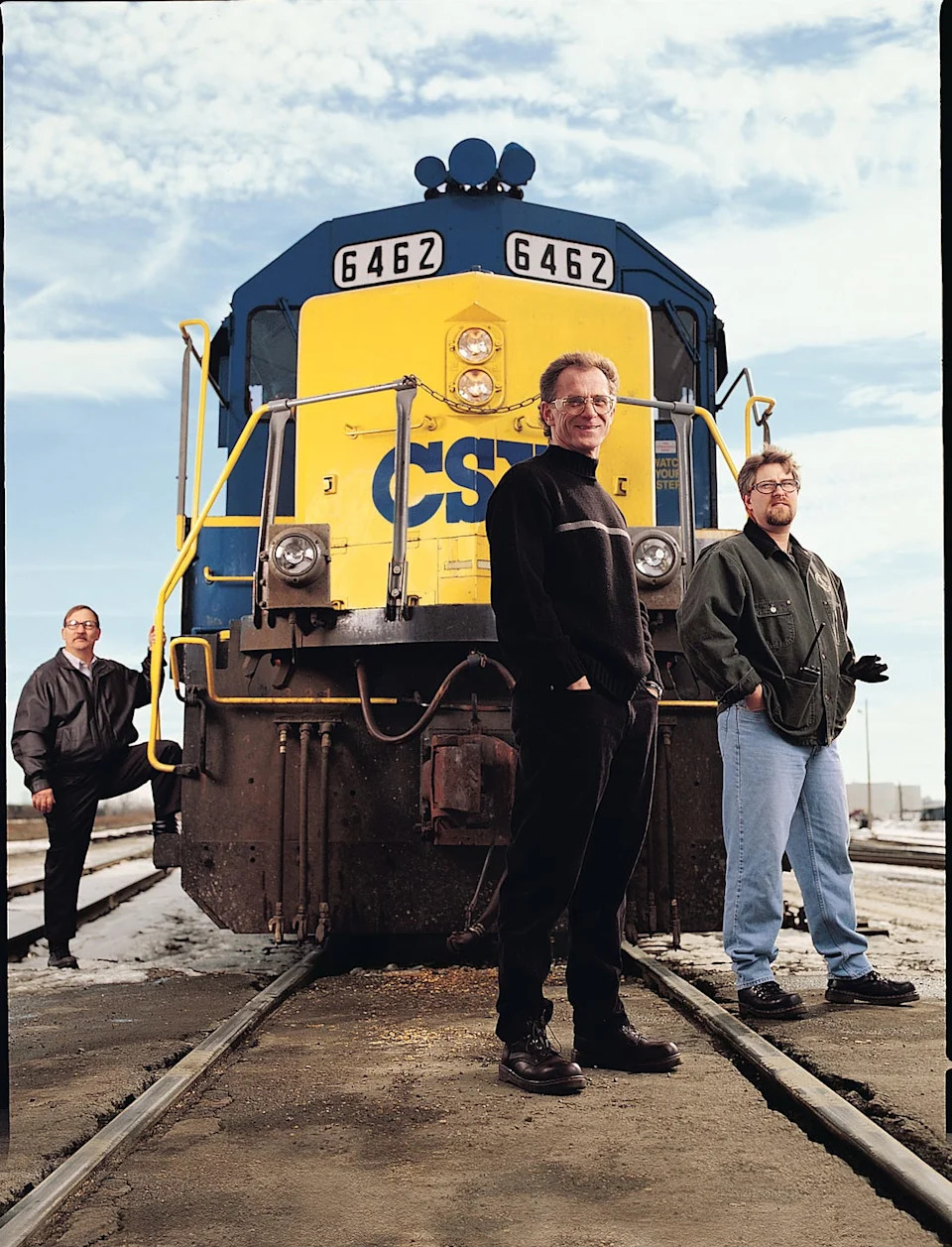
From left: Jon Hosfeld, Jess Knowlton, and Terry Forson photographed in 2002 with locomotive CSX 6462, the engine that played a starring role in one of the most dramatic days of their careers.Michael O'Neill
The Chase
News helicopters, law enforcement and CSX personnel followed as the runaway—quickly nicknamed "Crazy Eights"—plowed through towns and countryside. Crews tried several emergency measures: sidetracking the train to force a derailment, deploying a portable derailer (which the train tossed aside), and even preparing for daring boarding attempts. Local officials evacuated vulnerable sites near the route and closed more than 100 crossings.
Two Ohio State Highway Patrol troopers, Sergeant Tom Gwinn and Trooper Al Leitenberger, were authorized to fire at the engine in hopes of rupturing the radiator or fuel system or striking an inch-wide emergency fuel shutoff. Gwinn, a retired Marine, fired buckshot while Leitenberger used slugs; investigators later concluded the shots hit the fuel cap rather than the shutoff button.
How It Was Stopped
The crucial turn came when CSX locomotive No. 6462, piloted by veteran engineer Jess Knowlton and conductor Terry Forson, accelerated and matched speed with the runaway. On an open main line—well above normal safety speeds for a solo locomotive—they synchronized couplers and successfully joined their engine to the rear of CSX 8888. Using dynamic braking, Knowlton steadily bled speed from the combined consist as they approached the hazardous curves north of Kenton.
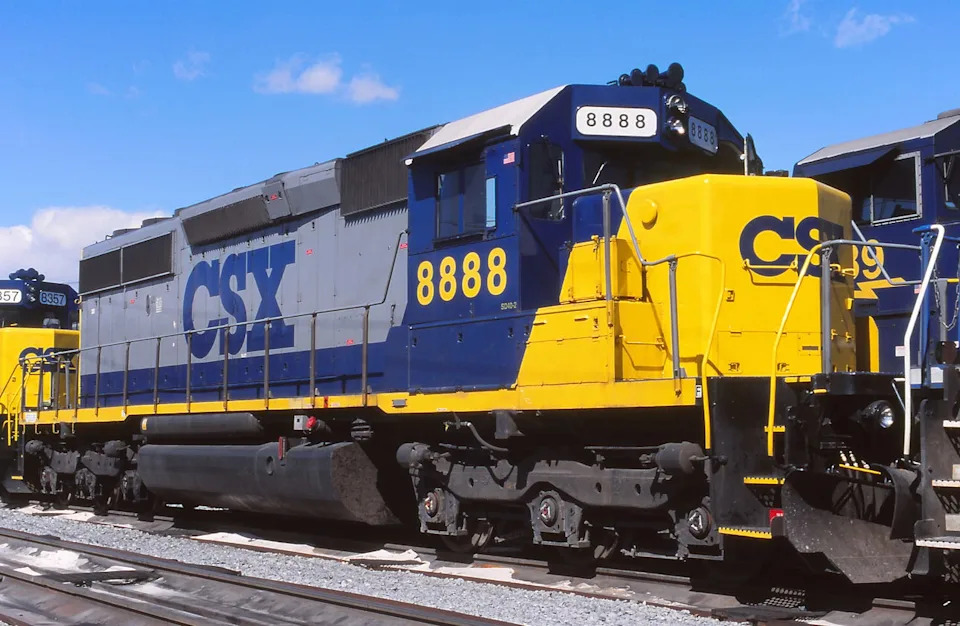
The CSX 8888 locomotive was an SD40-2, built in 1972 by the Electro-Motive Diesel division of General Motors. The 3,000-hp machine was one of the most dependable models of its time.Courtesy Jeff Weaver Photographer, Conrail Historical Society Collection
Trainmaster Jon Hosfeld then executed a high-risk boarding: he jumped from a pickup, grabbed the ladder and climbed into the cab, where he found the throttle still set at 8. Hosfeld brought the engine down to idle and stopped it. In under two hours the runaway had traveled roughly 66 miles; miraculously, no one was seriously injured.
Aftermath and Lessons
A Federal Railroad Administration memo concluded the incident resulted from "multiple gross errors in judgment by the locomotive engineer," a series of mistakes that had to occur in sequence for the runaway to happen. CSX later used the event as a training case: the company held safety sessions for police and other responders and, in a twist of irony, used the same locomotive in a training class months later. The engine was eventually rebuilt and renumbered CSX 4389.
The episode prompted renewed attention to yard operating practices, the importance of consistent brake connections, proper use of alerter and dynamic-brake systems, and coordinated emergency response. The participants—Knowlton, Forson, Hosfeld and others—were widely praised and later advised Hollywood on the 2010 film Unstoppable, which was loosely inspired by the event.
Key Facts: May 15, 2001; CSX SD40-2 No. 8888; 47 cars (about 3,000 tons); two tanks of molten phenol; ~66 miles traveled; no serious injuries.
Help us improve.