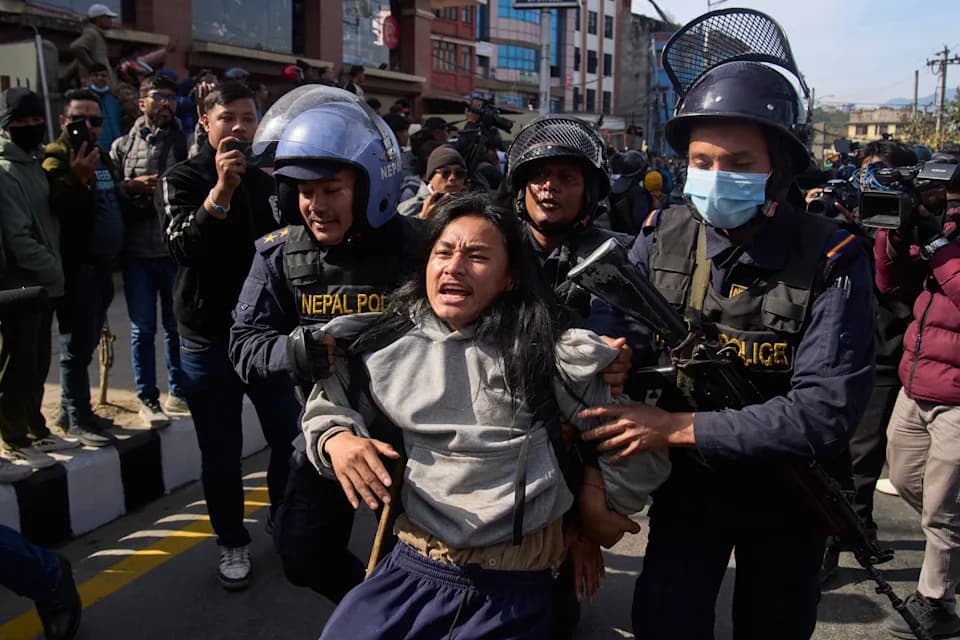
Supporters of Nepal's deposed royal family rallied in Kathmandu on Prithvi Narayan's birth anniversary to demand restoration of the monarchy ahead of March parliamentary elections. The protest was the first by royalists since September's youth-led unrest that brought in an interim government. Although similar annual rallies have sometimes turned violent — two people were killed at a pro-king event last March — Sunday’s gathering remained peaceful under heavy police presence. The interim government, led by Sushila Karki, faces criticism for slow action on corruption cases.
Nepal Royalists Rally in Kathmandu Demanding Return of Monarchy Ahead of March Elections
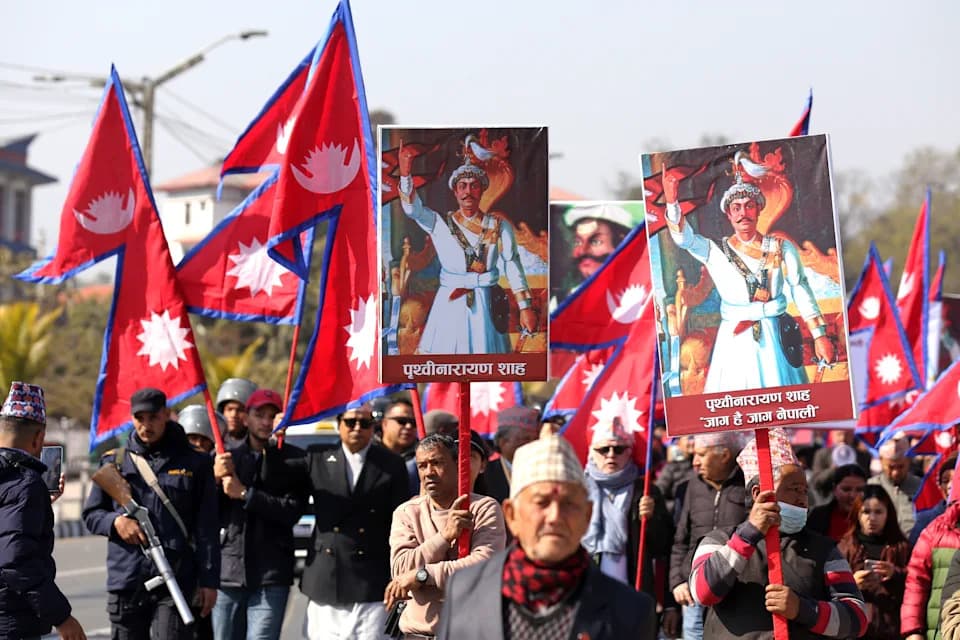
Supporters of Nepal's former royal family participate in a rally demanding the restoration of the monarchy as they mark the birth anniversary of the 18th century king Prithivi Narayan Shah, founder of the Shah dynasty, in Katmandu, Nepal, Sunday, Jan. 11, 2026. (AP Photo/Subash Shrestha)(ASSOCIATED PRESS)
Supporters of Nepal's deposed royal family gathered in Kathmandu on Sunday to press for the restoration of the monarchy before parliamentary elections scheduled for March.
The demonstration — the first public rally by royalist backers since a wave of youth-led protests in September — took place around the statue of King Prithvi Narayan Shah, founder of the Shah dynasty. Demonstrators chanted in support of the former monarch and called for the return of the king.
“We love our king; bring him back,”
protester Samrat Thapa told reporters, adding that, in his view, “the last and only alternative for this country is king and monarchy.” Gyanendra, the last Shah king, was forced from the throne and the monarchy was abolished in 2008, when Nepal became a republic.
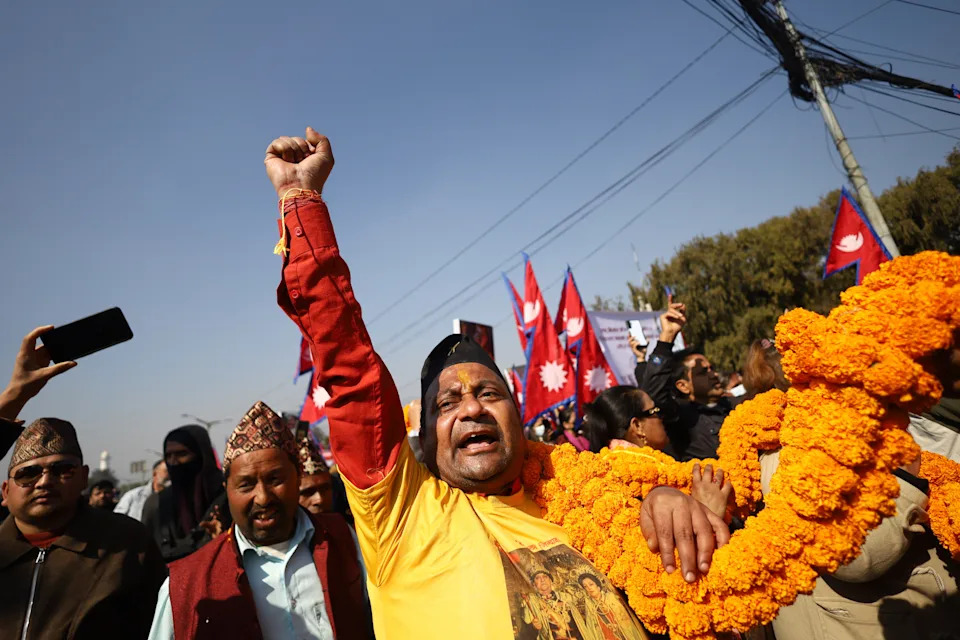
Supporters of Nepal's former royal family participate in a rally demanding the restoration of the monarchy as they mark the birth anniversary of the 18th century king Prithivi Narayan Shah, founder of the Shah dynasty, in Katmandu, Nepal, Sunday, Jan. 11, 2026. (AP Photo/Subash Shrestha)(ASSOCIATED PRESS)
The rally coincided with Prithvi Narayan's birth anniversary. Such annual events have at times turned violent: two people were killed during a pro-monarchy demonstration last March. Sunday’s gathering remained peaceful as riot police monitored the crowd closely.
Despite the abolition of the monarchy, Nepal's royal family still retains significant support in parts of the country.
Political Context
The interim government, led by Nepal’s first female prime minister, Sushila Karki — a retired Supreme Court judge — assumed power following mass protests by Gen Z activists. Those demonstrators mobilized against corruption, limited job opportunities and perceived poor governance; the unrest was intensified by a brief ban on social media imposed by the previous administration.
Karki has faced criticism for moving slowly to file corruption cases, a point of contention as the country heads toward elections in March.
Help us improve.